
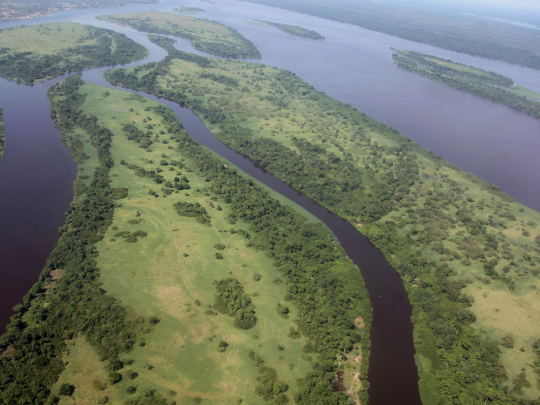
Wikimedia Commons / CC-BY-SA-3.0 / GFDL
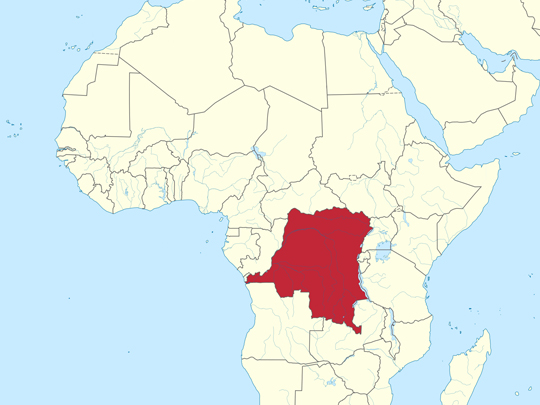
Capital: Kinshasa
Population: 115 million+
Language: French/Lingala/Kikongo/Swahili/Tshiluba
1 – Congo River (also above)
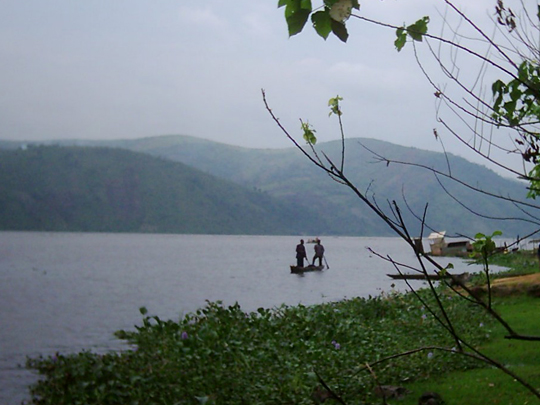
The deepest river on Earth and, after the Amazon, the world’s second-mightiest by the sheer volume of water it pours into the sea; it drains the second-largest rainforest on the planet and is the only major river to cross the equator — twice.
For centuries it has been Central Africa’s great highway, and it still is: riverboats crawl its middle reaches, the capital Kinshasa sprawls along the wide Malebo Pool, and below the city the water erupts into the thunderous cataracts of Livingstone Falls — it was also the river Joseph Conrad journeyed up before writing Heart of Darkness.
Its record depth — over 220m — was betrayed by the pale, blind fish that fishermen kept hauling up dead: creatures that had evolved in the crushing darkness of the world’s deepest river.
2 – Virunga National Park
In the far east of the DRC, Virunga is Africa’s oldest national park (founded in 1925) and its most biodiverse — a UNESCO World Heritage Site sprawling from glacier-capped equatorial peaks down through rainforest and savanna to active volcanoes and lava plains.
Its greatest treasure is the mountain gorilla — Virunga shelters around a thousand of those left on Earth, and numbers are rising — tracked on foot through misty forest, alongside chimpanzees, the strange okapi and one of Africa’s biggest hippo populations.
Guarding all this is one of the most dangerous jobs on the planet: Virunga’s 800-strong ranger corps has lost more than 200 of its members defending it through decades of conflict — a fight captured in the Oscar-nominated 2014 documentary Virunga.
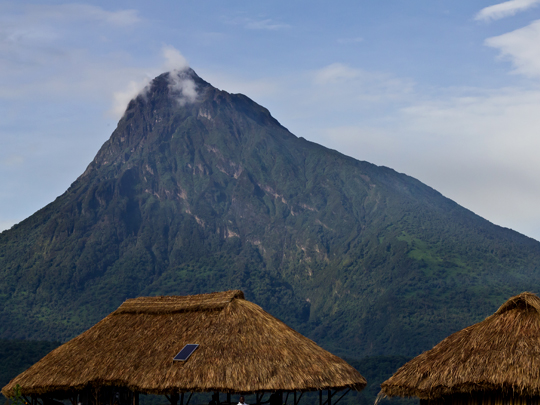
3 – Mount Nyiragongo
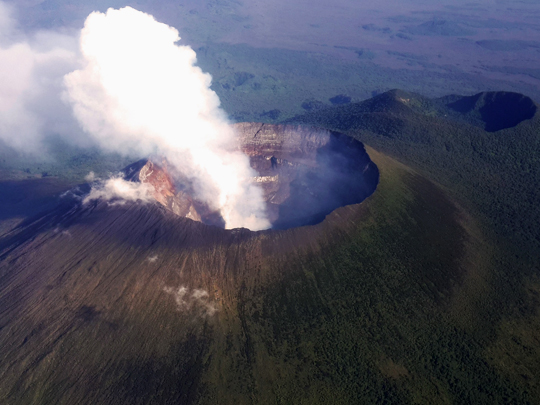
An active volcano rising to about 3,470m inside Virunga National Park, towering over the lakeside city of Goma — one of the most active volcanoes in Africa, whose eruptions have repeatedly swept lava into the region below.
Hardy trekkers climb it in a day and camp on the crater rim, peering down into its greatest wonder — the largest lava lake on Earth, a churning cauldron of molten rock that glows blood-red against the night sky.
Nyiragongo’s lava is so runny — among the most fluid on the planet — that when its lake bursts through the crater walls it can race downhill at highway speeds, faster than anyone can run.
4 – Garamba National Park
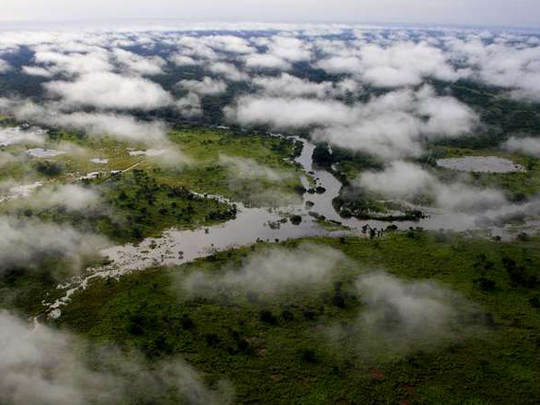
In the DRC’s remote far northeast, on the South Sudan border, Garamba is one of Africa’s oldest national parks (established 1938) and a UNESCO World Heritage Site — a vast sweep of golden savanna and gallery forest utterly unlike the rainforest that covers most of the country.
Its grasslands still shelter herds of elephant, hippo and buffalo, prides of lion, and the last giraffes in the DRC — the rare Kordofan giraffe, one of the most endangered on Earth — best reached by light aircraft into the heart of the wilderness.
Garamba was the final wild home of the northern white rhinoceros, and it was to protect them that it became a World Heritage Site — the last was seen here around 2006, and the subspecies is now gone from the wild, though conservationists have lately begun bringing Southern White Rhinos back.
5 – Boyoma Falls
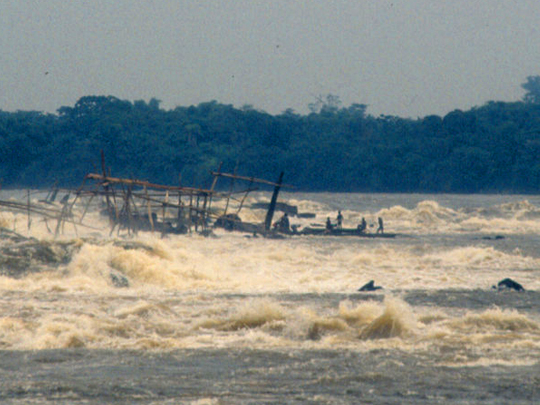
A chain of seven thundering cataracts on the upper Congo (the Lualaba River), stretching some 100km down to the city of Kisangani in the DRC’s northeast; formerly named Stanley Falls after the explorer Henry Morton Stanley, they mark the point where the Lualaba becomes the Congo River proper.
Though none of the seven drops is tall, together they carry a colossal flow of water — often ranked among the most powerful waterfalls on Earth by sheer volume, said to move more water than Niagara — and are best seen at the final cataract just outside Kisangani.
For centuries the local Wagenia people have fished the rapids in an astonishing way — lashing together great wooden tripods across the churning water and lowering giant conical baskets into it to trap fish, a spectacle still performed today.
6 – Lake Tanganyika
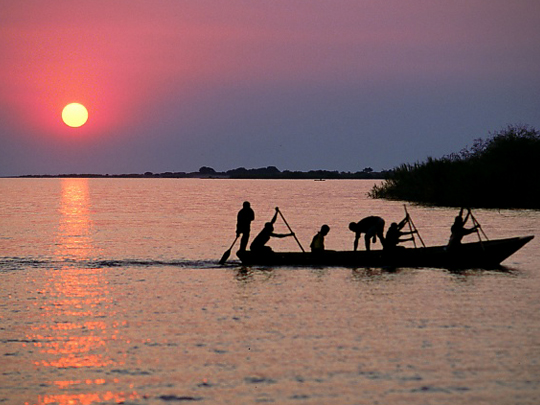
Forming a vast stretch of the DRC’s eastern border, Lake Tanganyika is one of Africa’s Great Lakes and among the most remarkable bodies of water on Earth — the world’s longest freshwater lake, its second-deepest, and one of its oldest, at some 9 to 12 million years old.
On the Congolese shore, fishing towns like Uvira and Kalemie look out over water so clear and blue it feels like an inland sea; after dark the lake glitters with the lamps of fishermen luring shoals of tiny sardines to the surface.
The lake is a living laboratory of evolution — its ancient, isolated waters have produced some 250 species of jewel-coloured cichlid fish found nowhere else on Earth, prized the world over by aquarium keepers.
7 – Kinshasa
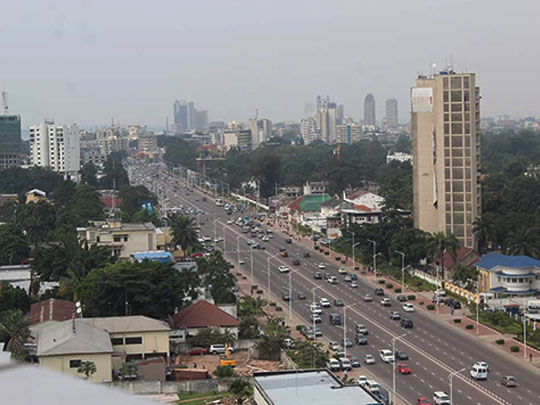
Henry Morton Stanley founded this city in 1881 and named it Léopoldville, after the Belgian king who held the Congo as personal property; Mobutu renamed it Kinshasa in 1966 after the village that once stood on the site, and it has since grown to some 17 million people — already larger than Paris, and on course to be the biggest French-speaking city on Earth.
The Académie des Beaux-Arts and the National Museum anchor the cultural quarter, the Marché Central swallows whole days, and the real draw is the music: Congolese rumba was born in these bars, conquered the continent, and went onto UNESCO’s heritage list in 2021.
In the small hours of 30 October 1974, Muhammad Ali knocked out George Foreman in front of 60,000 people at the Stade du 20 Mai — now the Stade Tata Raphaël — in a fight staged and paid for by Mobutu as propaganda, promoted by Don King, and roared on by a crowd chanting Ali, bomaye, Lingala for “Ali, kill him”.
8 – Lubumbashi
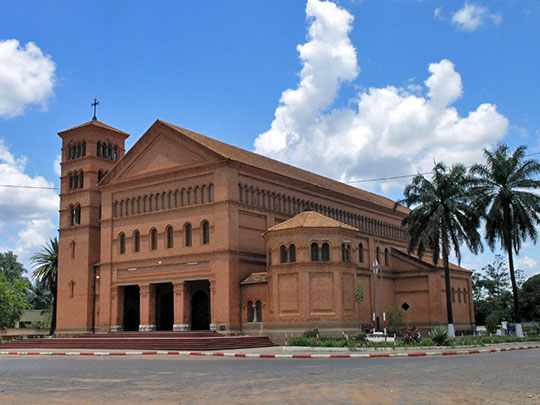
Founded in 1910 as Elisabethville, the country’s second city is the capital of Katanga’s copper belt — mineral wealth that bankrolled the province’s attempt to break away in 1960, wrecking the new republic in its first year, and to which the deposed prime minister Patrice Lumumba was flown and murdered in January 1961.
The city keeps a low-rise colonial grid of broad avenues, the National Museum of Lubumbashi with its ethnographic collections from across Katanga, the twin-towered cathedral of 1920, and, looming over everything, the great black slag heap left by a century of smelting.
At Shinkolobwe, north-west of the city, sat the purest uranium ever found anywhere — around 65% ore, against 0.02% in Canada — and in 1940 the Belgian mining director Edgar Sengier quietly shipped 1,200 tons of it to a warehouse on Staten Island to keep it from Germany, where it sat untouched until American officers came looking; Congolese ore supplied roughly two-thirds of the Manhattan Project.
9 – Salonga National Park
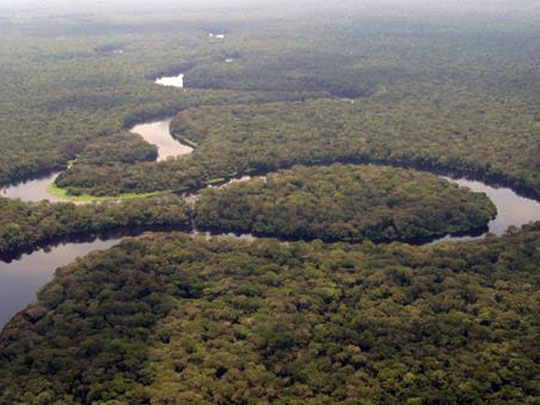
Deep in the central Congo basin, Salonga is the largest tropical rainforest reserve in Africa — around 36,000 km² of untouched forest in two great blocks, UNESCO-listed since 1984, with no roads into it and access only by river.
Almost nothing here is easy to see, which is much of the point: the forest holds bonobos, forest elephants, slender-snouted crocodiles and the Congo peacock, a bird known to science only after an American ornithologist spotted a single unexplained feather in a Belgian museum drawer and spent twenty years tracking down what it belonged to.
The bonobo lives wild in this country and nowhere else on Earth, and shares as much DNA with us as the chimpanzee does — but where chimpanzee society is run by males and turns lethal, bonobo groups are led by females, settle their quarrels with sex rather than violence, and have never been confirmed to kill one of their own.