
By Diego Delso / Wikimedia Commons / CC BY-SA 3.0

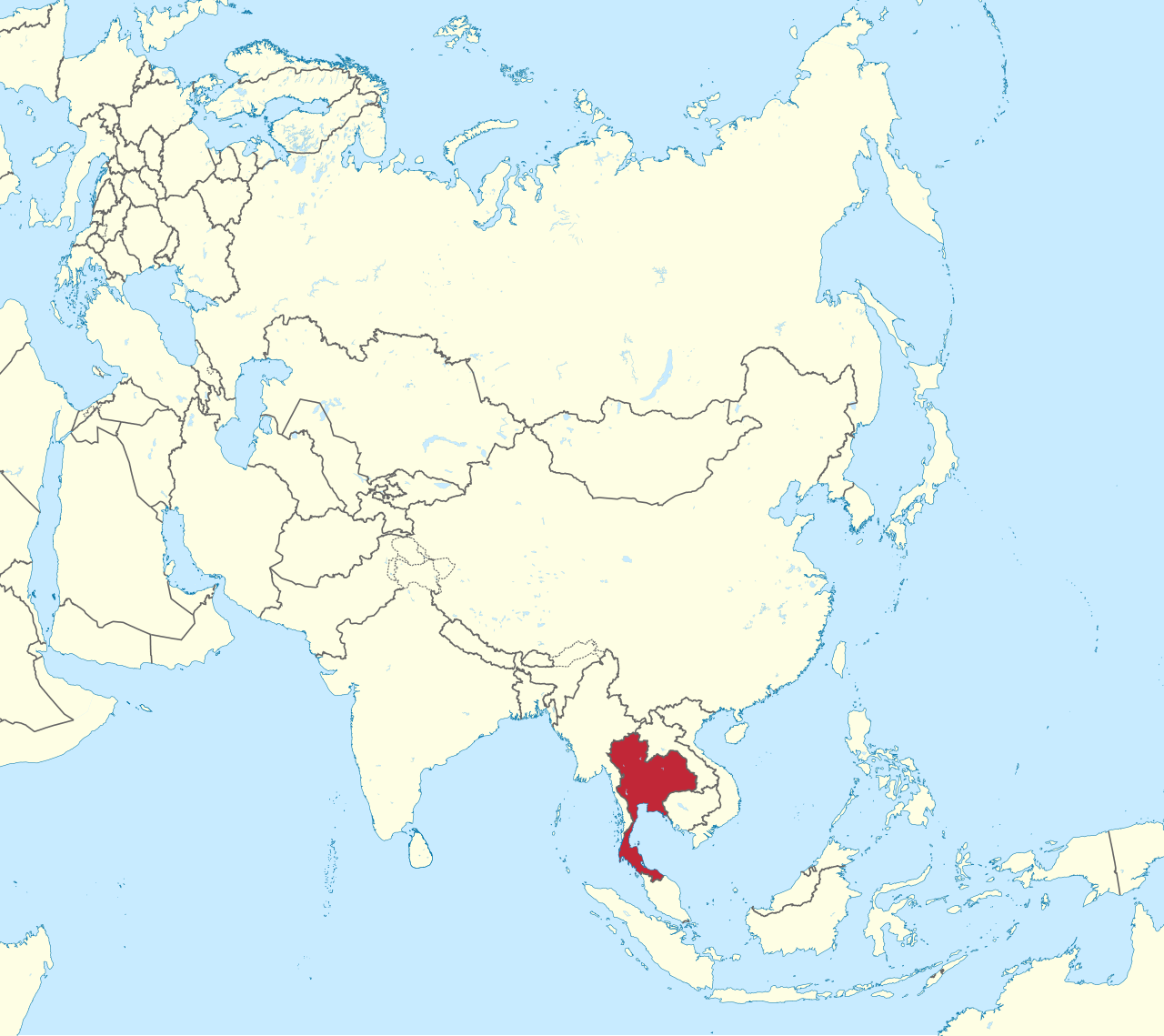
Capital: Bangkok
Population: 65 million+
Language: Thai

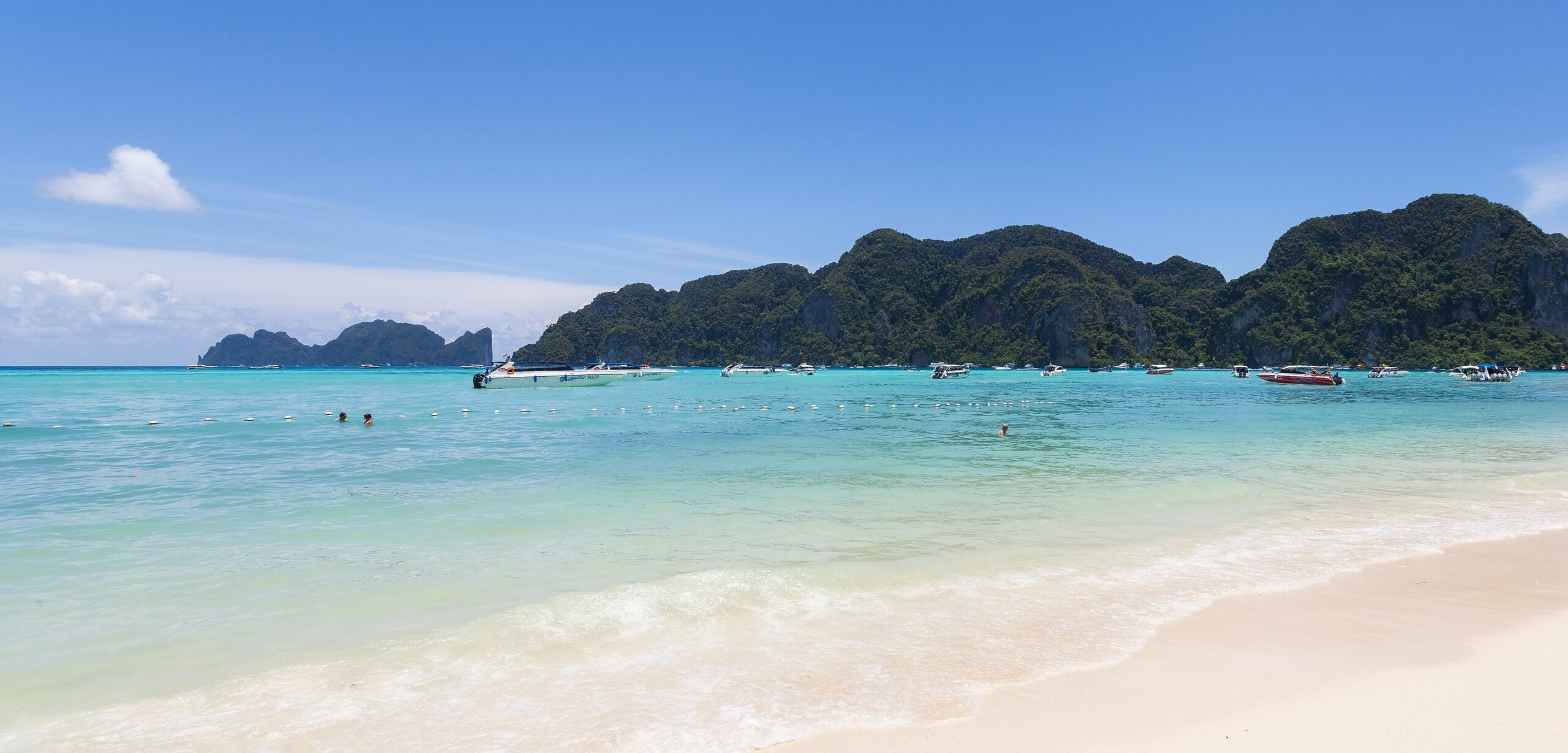
1 – Koh Phi Phi Island (above)
Koh Phi Phi is a small group of limestone islands in the Andaman Sea off Krabi, in southern Thailand, where the village of Phi Phi Don sits on a narrow sandy isthmus between Ton Sai and Loh Dalum bays, and when the tsunami struck on 26 December 2004, more than 850 bodies were recovered here, with hundreds more never found.
Day trips on Koh Phi Phi run from Phi Phi Don to uninhabited Phi Phi Leh, with its cliffs, lagoons and the Viking Cave, where swiftlets’ nests are harvested for bird’s-nest soup, and to Maya Bay, which was closed in June 2018 to let its reefs recover and reopened on 1 January 2022.
Maya Bay on Koh Phi Phi is where The Beach was filmed in 1999, when the crew ripped up dune plants and planted coconut palms to make it look more like a tropical beach, and local authorities sued that year, in a case finally settled by the Supreme Court of Thailand in 2022, which ordered the bay to be restored.
2 – The Sanctuary of Truth, Pattaya
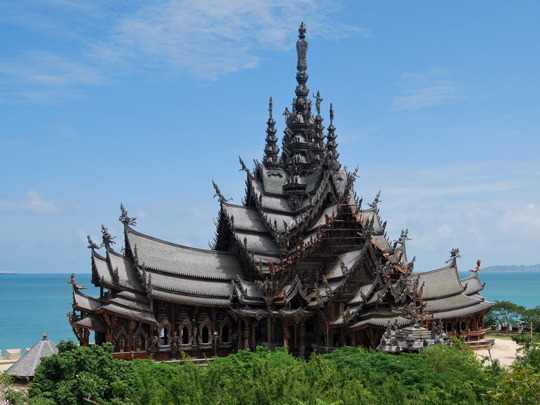

The Sanctuary of Truth stands on the seafront at Pattaya on the eastern Gulf coast of Thailand, a temple-like building made entirely of wood and 105 m tall, begun in 1981 by the businessman Lek Viriyaphant as a monument to philosophy and religion rather than a working temple.
Every surface of the Sanctuary of Truth is carved by hand in teak and other woods, with gods, spirits and figures from Hindu as well as Buddhist tradition, among them Brahma, Ganesha, the Hindu trinity, the bodhisattvas, plus Guanyin, the Chinese goddess of mercy, so that the whole building reads as a vast sculpture.
The Sanctuary of Truth has been a work in progress for decades, which has made it a building people visit precisely to watch it being made, and the popular claim that it contains no nails is best read as meaning that its wooden structure is joined using traditional woodworking techniques.
3 – James Bond Island, Phang Nga Bay
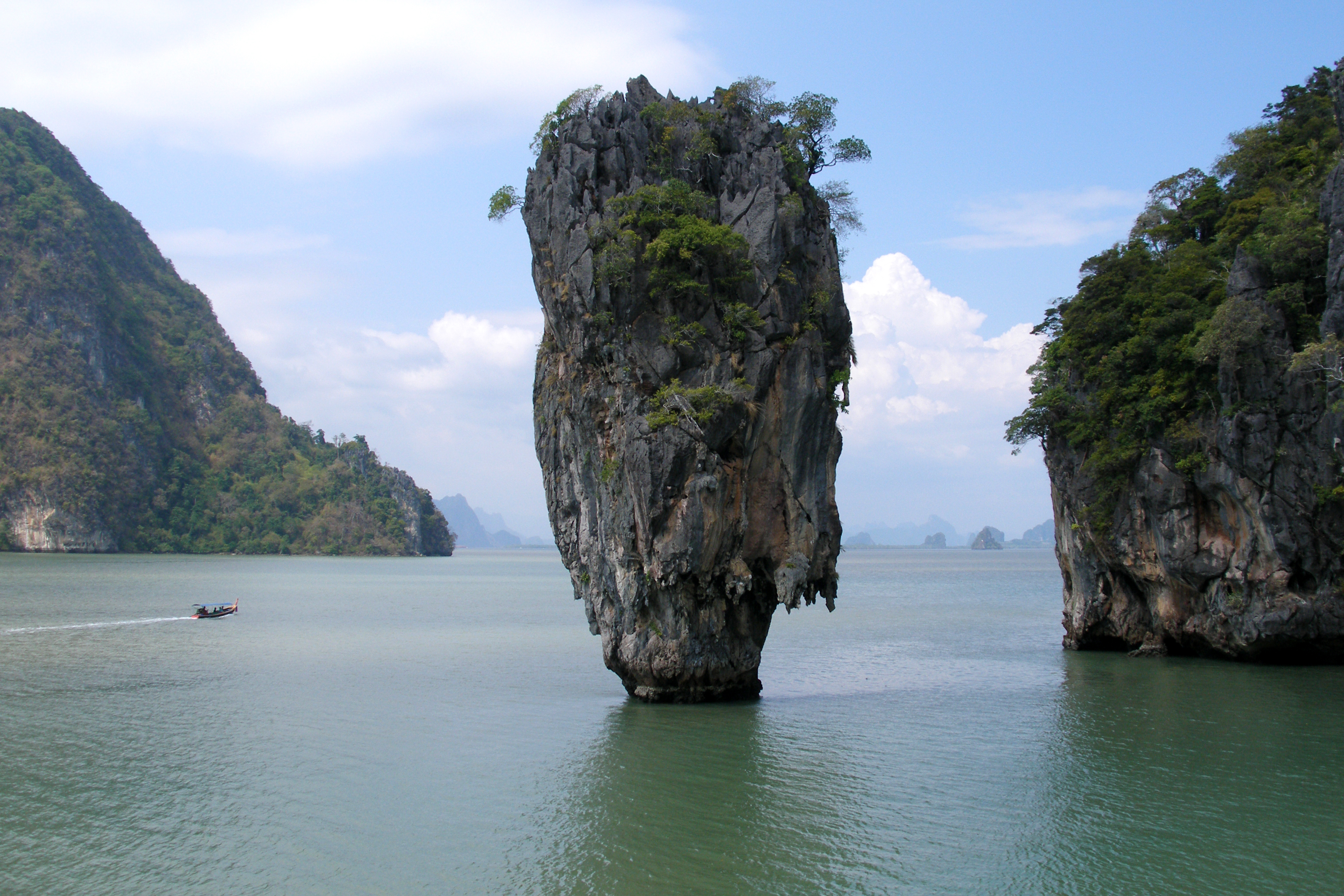

James Bond Island is Khao Phing Kan, a pair of leaning limestone hills in Phang Nga Bay, off the east coast of Phuket, and its fame comes from 1974, when it played the hideout of the villain Scaramanga in The Man with the Golden Gun, with Roger Moore as Bond.
The shot everyone wants at James Bond Island is Ko Tapu, “nail island”, a spike of rock about 20 m high standing in the water, wider at the top than at the waterline, which boats are kept away from to slow its erosion, in a bay protected as Ao Phang Nga National Park since 1981.
In the same bay as James Bond Island, the boys of the stilt village of Koh Panyee had no flat land for football, so after watching the 1986 World Cup they built a floating pitch out of scraps of wood, and their team went on to win youth tournaments on the mainland.
4 – Grand Palace, Bangkok
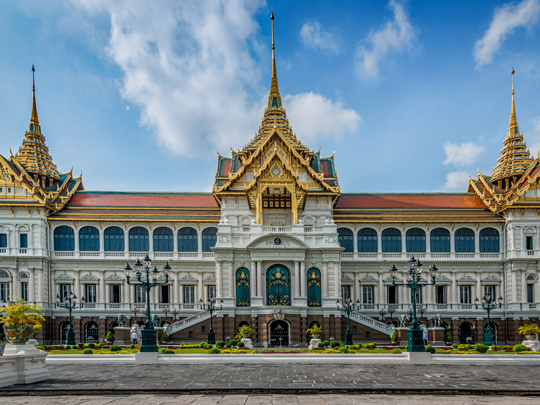

The Grand Palace stands on the east bank of the Chao Phraya in Bangkok, begun in 1782 by King Rama I when he moved the capital across the river from Thonburi, and it was the main residence of the kings of Siam until 1925, while it is used for royal ceremonies and state occasions.
The Grand Palace is a walled compound of about 218,000 m² of throne halls, pavilions and courtyards, with the Temple of the Emerald Buddha inside the same walls, all built as the centre of the new royal capital of Rattanakosin.
The Chakri Maha Prasat throne hall of the Grand Palace, built for Rama V between 1876 and 1882 by John Clunich, a British architect from Singapore, was designed with European domes until the senior minister Chao Phraya Si Suriyawong persuaded the king to give it Thai roofs instead, which is why it has been called a farang wearing a Thai crown.
5 – Chiang Mai
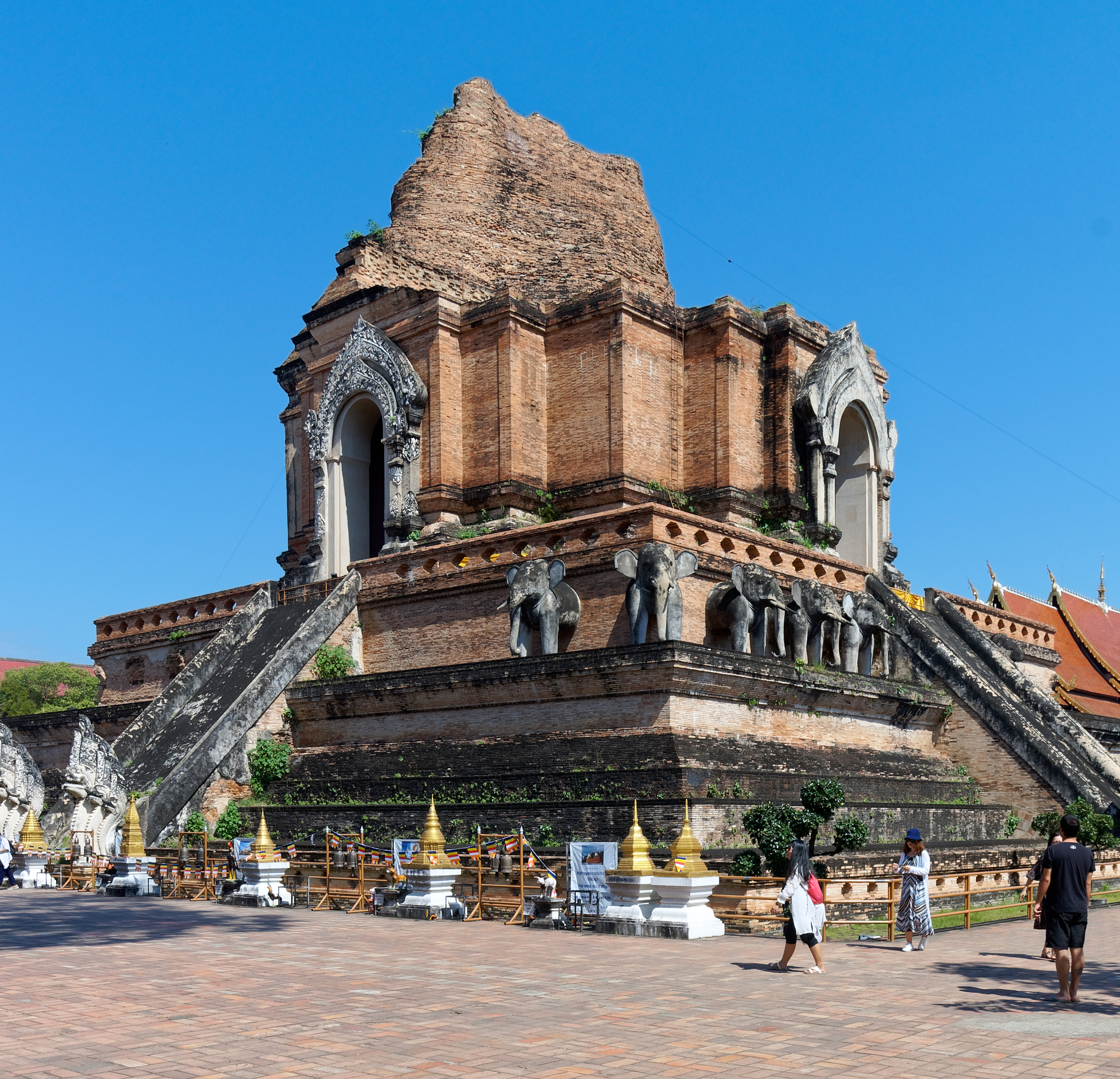

Chiang Mai, the “new city”, was founded in 1296 by King Mangrai as the capital of the northern Lanna kingdom, spent more than two centuries under Burmese rule from 1558 until 1775 and was then left almost empty for some fifteen years before being rebuilt by its ruler, Kawila, as the capital of the north.
The old city of Chiang Mai is a moated square about 1.6 km a side with fragments of its brick walls, packed with temples, while above it on Doi Suthep, up a naga staircase of about 300 steps, is Wat Phra That Doi Suthep, founded, so the story goes, where a white elephant carrying a relic of the Buddha climbed the mountain and died.
Wat Chedi Luang in Chiang Mai, about 82 m high, was the tallest building in Lanna until an earthquake in 1545 brought down its spire, and researchers have suggested that the ground liquefied beneath it, leaving the chedi as a broken giant at the heart of the old city.
6 – Khao Yai National Park
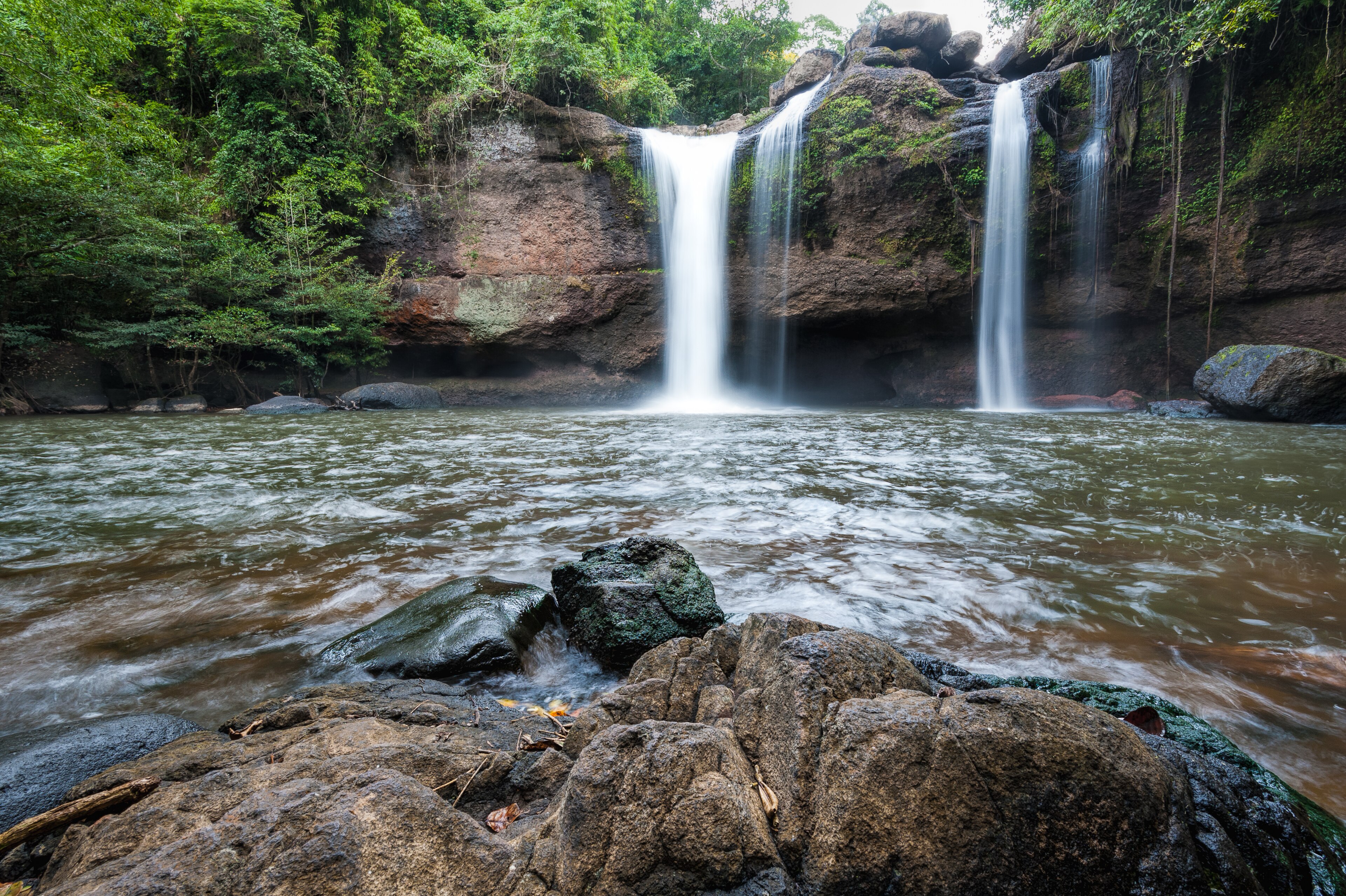

Khao Yai National Park, north-east of Bangkok, became the first national park in Thailand in 1962, and its more than 2,100 km² of forest are part of the Dong Phayayen–Khao Yai Forest Complex, which UNESCO listed as a World Heritage Site in 2005.
Khao Yai is one of the easiest places in Thailand to see wild elephants, around 250 of them, along with gibbons and hornbills, and its waterfalls include Haew Suwat, where Leonardo DiCaprio jumps into the pool below in the film The Beach, shot in Thailand in 1999.
In October 2019, a calf slipped over the Haew Narok falls in Khao Yai, and eleven elephants died trying to reach it, six found at the foot of the falls and five more spotted by drone downstream, while eight elephants had died at the same waterfall in 1992.
7 – Wat Arun Temple
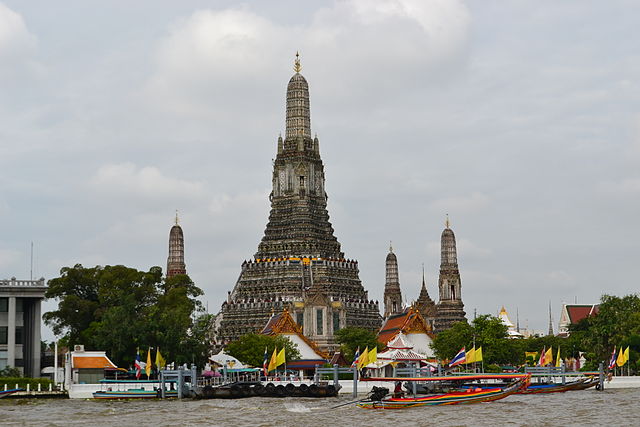

Wat Arun, the Temple of Dawn, stands on the Thonburi bank of the Chao Phraya opposite the Grand Palace, the temple King Taksin adopted when he made Thonburi his capital after the fall of Ayutthaya in 1767, and where the Emerald Buddha was kept until it crossed the river in 1785.
The central prang of Wat Arun rises about 80 m, planned under Rama II and built under Rama III, finished in 1851, its steep stairs and terraces encrusted with pieces of coloured Chinese porcelain, much of it once ships’ ballast, and the classic sunset view is from the east bank across the river.
A restoration of Wat Arun between 2013 and 2017 replaced about 120,000 of its 300,000 or so pieces of porcelain, refinishing the plaster too, and when the scaffolding came down many Thais said it had turned too white, while the Fine Arts Department replied that the old dark colour was mostly moss and stains.
8 – Similan Islands
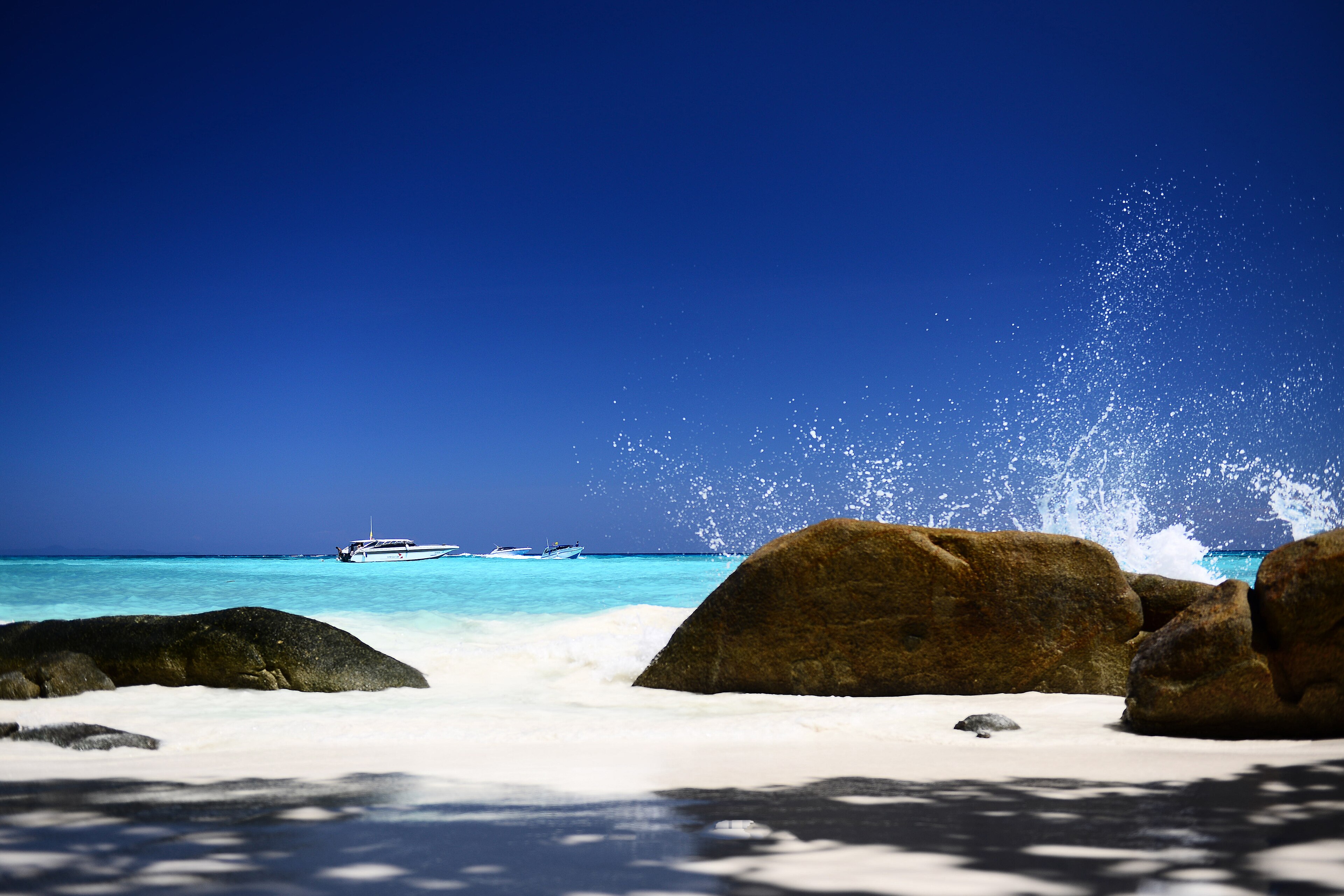

The Similan Islands lie in the Andaman Sea off Phang Nga province in southern Thailand, a chain of granite islands with white beaches and coral reefs, which became a national park in 1982 and are known for some of the best diving in the country.
The name of the Similan Islands comes from the Malay word sembilan, nine, after the nine islands of the original chain, though the park has eleven, since two more islands to the north, Ko Bon and Ko Tachai, were added to it in 1998.
The Similan Islands open only in the dry season, roughly mid-October to mid-May, for diving and snorkelling over granite boulders, and in 2016 the park closed Ko Tachai to all visitors to let its reef and turtle-nesting beaches recover from heavy tourist traffic.
9 – Doi Inthanon National Park
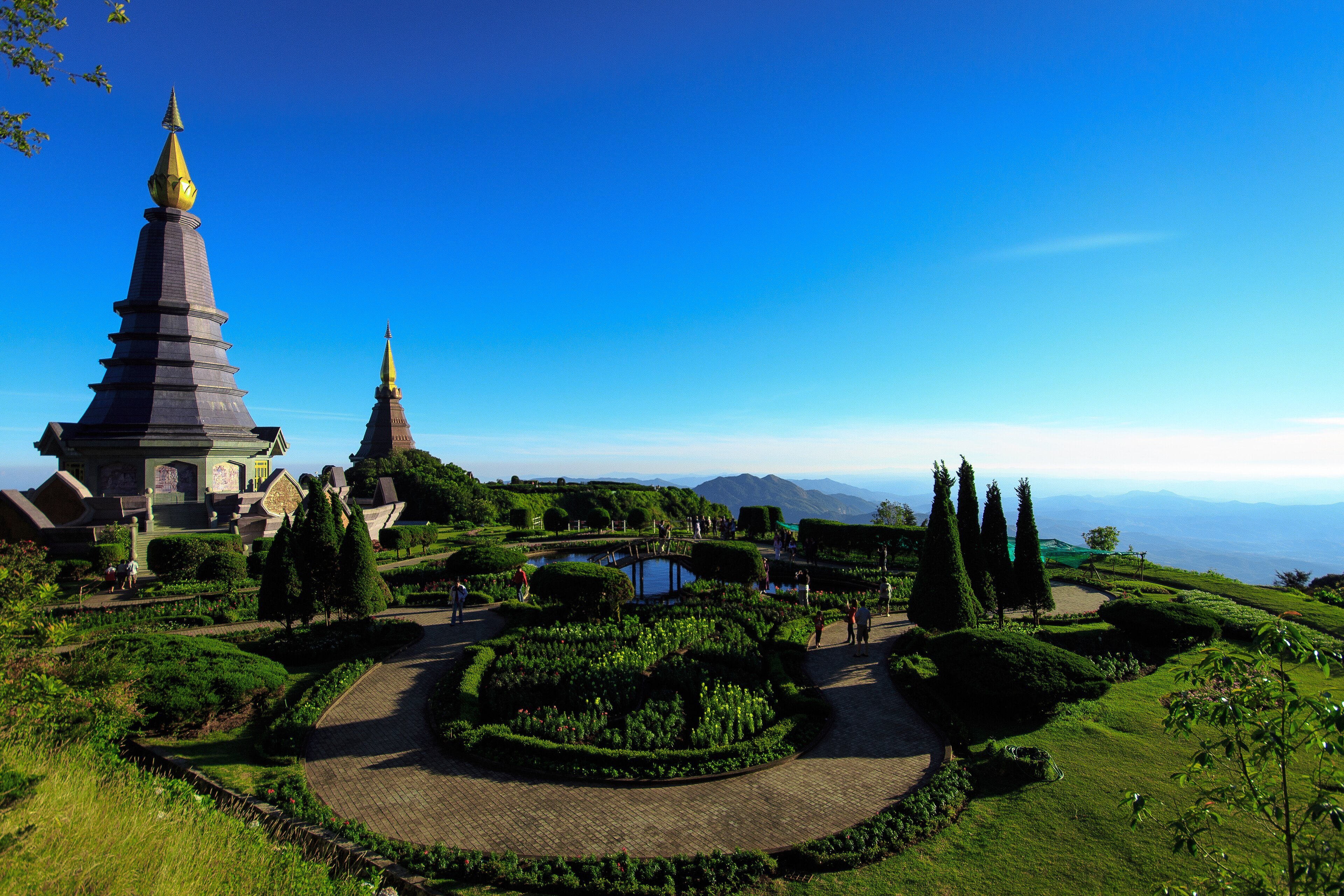

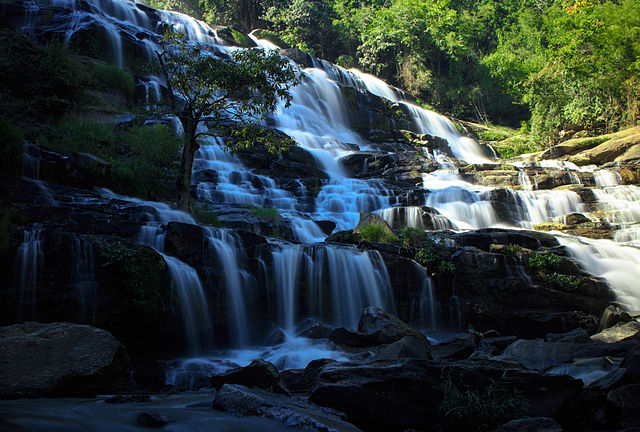

Doi Inthanon National Park holds the highest mountain in Thailand, 2,565 m, south-west of Chiang Mai, which takes its name from Inthawichayanon, a king of Chiang Mai in the 19th century, who asked for his remains to be kept on the summit, where his ashes lie in a small shrine.
A road runs almost to the top of Doi Inthanon past the Wachirathan waterfall, Karen and Hmong villages, terraced fields to a boardwalk through mossy cloud forest and a pair of chedis built for the 60th birthdays of King Bhumibol in 1987 and Queen Sirikit in 1992.
Doi Inthanon is often called the coldest place in Thailand, and in December 2017 a reading of −5°C was reported near the summit, though it was never confirmed as an official record by the Thai Meteorological Department.
10 – Khao Sok National Park
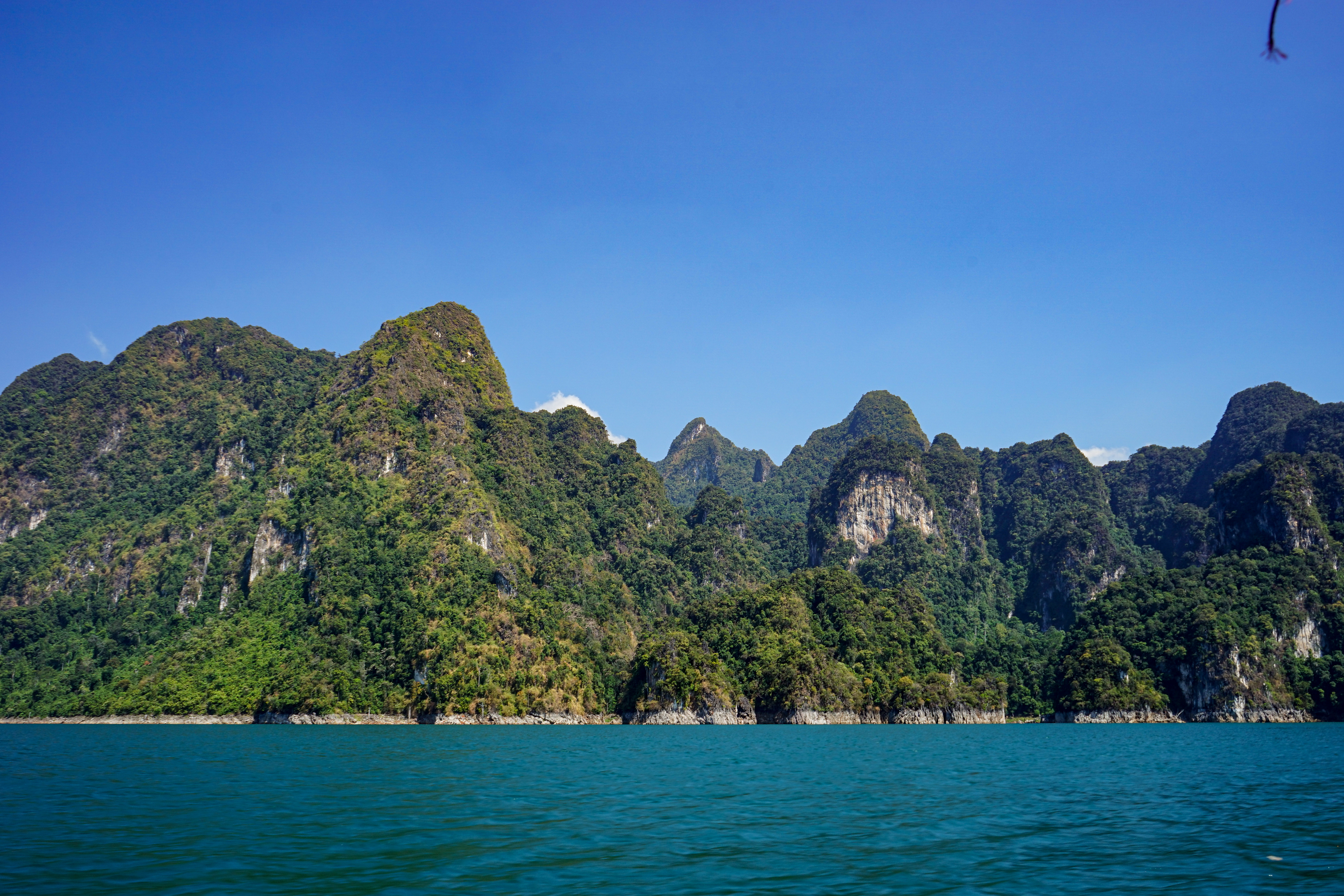

Khao Sok National Park covers 739 km² of limestone mountains and rainforest in Surat Thani province in southern Thailand, created in 1980, and it is often described as one of the oldest rainforests in the world, though the popular claim that it is older than the Amazon has never been proved.
At the heart of Khao Sok is Cheow Lan, a reservoir of limestone islands formed by the Ratchaprapha dam, finished in 1987, where visitors stay in floating raft houses, while in the forest, with luck and in season, you might see Rafflesia kerrii, whose flowers grow up to about 90 cm across and smell of rotting meat.
Cheow Lan lake at Khao Sok drowned a valley and its villages, whose people were moved out, and as the water rose from 1986 to 1987 a rescue team led by the conservationist Seub Nakhasathien saved 1,364 animals from the shrinking islands, from mammals and birds to reptiles.
11 – Ayutthaya
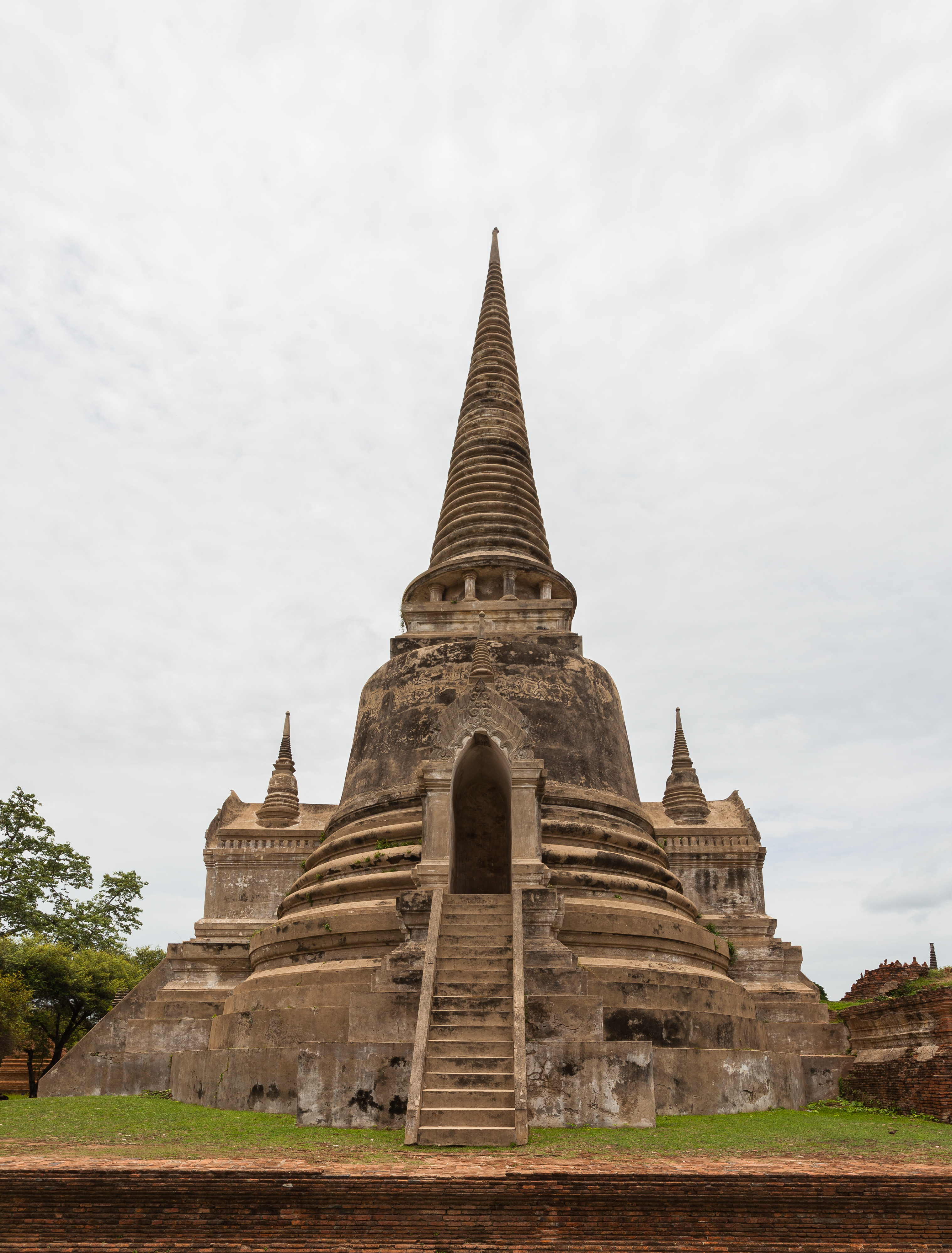

Ayutthaya, on an island where the Chao Phraya, Lopburi and Pa Sak rivers meet north of Bangkok, was founded in 1351 and was the capital of Siam for more than 400 years, one of the great trading cities of Asia, until a Burmese army took and burned it in April 1767 after a long siege, before UNESCO listed it in 1991.
The ruins of Ayutthaya are best seen by bicycle, from the three chedis of Wat Phra Si Sanphet, where a 16 m standing Buddha covered in gold was melted down by the Burmese, to the riverside towers of Wat Chaiwatthanaram and the stone head of a Buddha wrapped in the roots of a fig tree at Wat Mahathat.
Ayutthaya around 1700 is sometimes said to have held a million people, making it one of the largest cities in the world, but nobody counted, and historians dispute the figure, though European visitors of the time described a vast, crowded city of canals, palaces and foreign quarters.
12 – Wat Phra Kaew
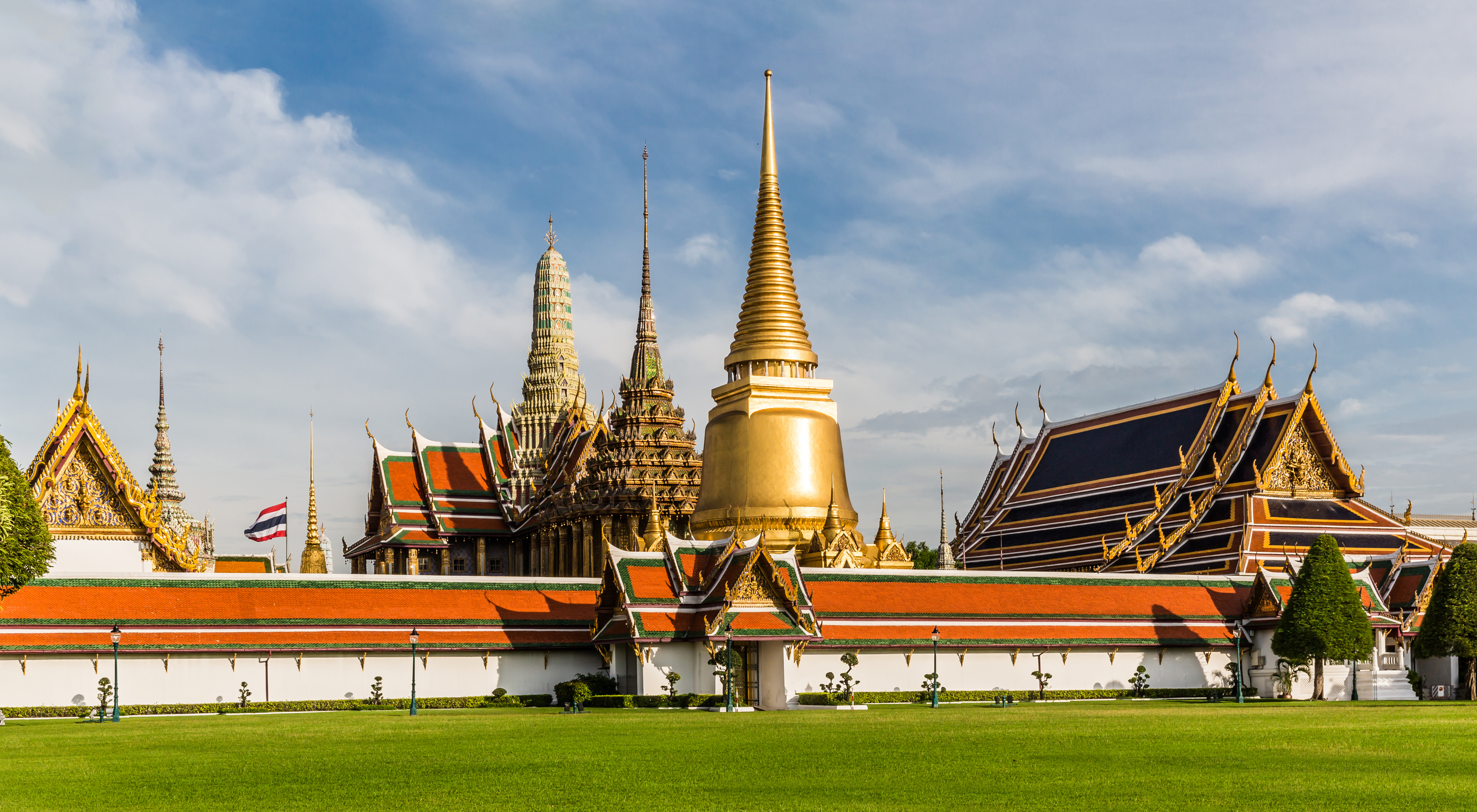

Wat Phra Kaew, the Temple of the Emerald Buddha, stands inside the Grand Palace in Bangkok and is the most sacred temple in Thailand, home to a meditating Buddha about 66 cm high carved from green jade or jasper rather than emerald, which has been here since 1785.
The Emerald Buddha of Wat Phra Kaew sits high on a gilded altar, and the galleries around the temple carry 178 painted scenes of the Ramakien, the Thai version of the Indian epic the Ramayana, though what you see has been restored several times since the murals were first painted.
The story of the Emerald Buddha at Wat Phra Kaew begins in 1434, when lightning struck a chedi in Chiang Rai to reveal the green stone, and it travelled through Lampang, Chiang Mai and Vientiane before General Chakri, the future Rama I, took it in 1779, with the King changing its robes three times a year for the seasons.
13 – Sukhothai
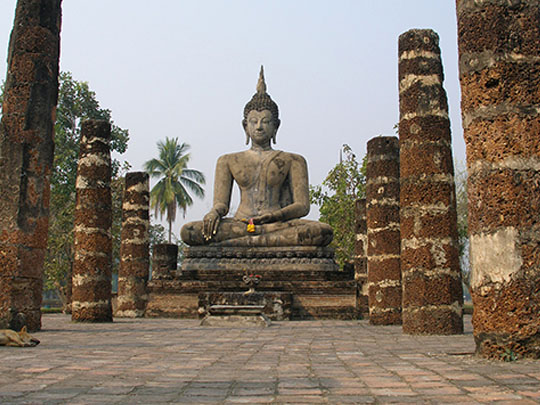

Sukhothai, in the plains of north-central Thailand, was the capital of the first great Thai kingdom, traditionally founded around 1238, its name usually translated as “dawn of happiness”, until it became a vassal of Ayutthaya and was absorbed in 1438, and UNESCO listed it in 1991 with Si Satchanalai and Kamphaeng Phet.
Sukhothai Historical Park is best seen by bicycle, with Wat Mahathat and its lotus-bud chedi, Wat Sa Si on an island in a lotus pond, and at Wat Si Chum a seated Buddha about 15 m high squeezed into a roofless hall, along with the walking Buddha, a pose the sculptors of Sukhothai made their own.
The most famous object from Sukhothai is the Ramkhamhaeng Inscription, said to date from 1292, which credits King Ramkhamhaeng with inventing the Thai alphabet, found in 1833 by the future King Mongkut, then a monk, and argued over for decades as his possible forgery, though most scholars accept it as at least partly genuine.
14 – The Death Railway and the Bridge at Kanchanaburi
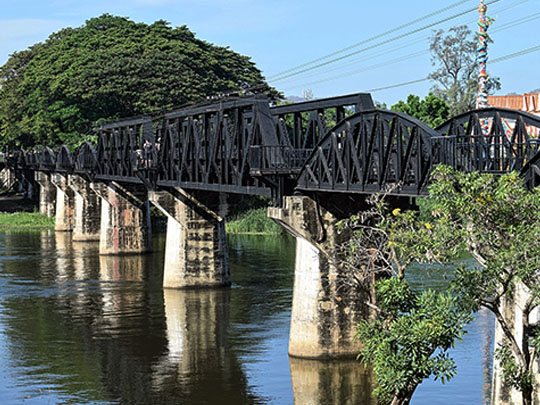

The Death Railway, the Thai–Burma Railway, ran some 415 km from Ban Pong in Thailand to Thanbyuzayat in Burma, built by Japan between 1942 and October 1943 with more than 60,000 Allied prisoners of war and at least 200,000 Asian labourers, of whom more than 12,000 prisoners and up to 90,000 labourers died.
At Kanchanaburi the steel bridge carries trains on curved spans brought from Java by the Japanese, with straight middle spans that replaced those bombed in 1945, and the War Cemetery holds 6,982 graves, including those of Fusilier Timothy Kenneally of Bishopstown, County Cork, and Private Patrick Fitzgerald of Kilmeadon, County Waterford, shot in 1943 after escaping.
The Bridge on the River Kwai of 1957 was filmed in Ceylon from a novel by Pierre Boulle, who never worked on the railway, and the river at Kanchanaburi was the Mae Klong until Thailand renamed this stretch the Khwae Yai in 1960, while up the line a museum at Hellfire Pass leads through a cutting dug largely by hand.