
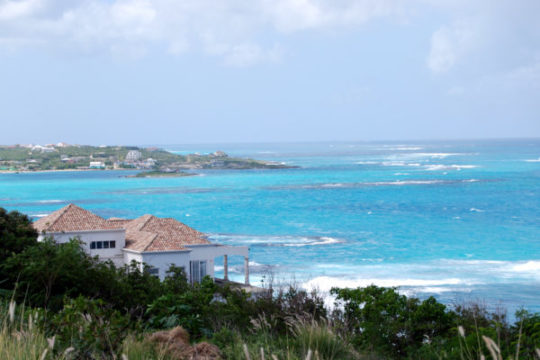
Wikimedia Commons / CC-BY-SA-3.0 / GFDL
Capital: The Valley
Population: 12,000+
Language: English/Anguillian Creole
1 – The Valley
Anguilla’s capital sits in the flat middle of the island and is more a scatter of offices, churches and houses than a town, but it’s where a crowd gathered on 30 May 1967 to order the St Kitts police off the island — the start of a revolt against rule from St Kitts that ended, unusually, with Anguilla choosing to stay a British colony.
The building to see is Wallblake House, a 1787 planter’s house that’s the oldest structure on the island, with its kitchen, stables and the quarters of the people enslaved on the estate still standing beside it.
When Britain sent in paratroopers and London policemen in March 1969 to end the breakaway, they met no resistance and fired no shots, and the press promptly christened it the “Bay of Piglets” — yet Anguilla got its way, and formally split from St Kitts in 1980.
2 – Sandy Ground

Sandy Ground is a thin strip of village between Road Bay and the Road Salt Pond on the north-west coast, and for roughly three centuries the salt raked from that pond, shipped as far as the US and Canada, was the island’s living until tourism replaced it in the 1980s.
Today it’s the island’s main harbour and liveliest beach, with bars along the sand, egrets and stilts wading in the pond behind, and boats out to Sandy Island, a speck of a cay just offshore.
Boat racing is Anguilla’s national sport, born from crews racing each other home into harbours like Road Bay after seasons working on other islands, and on August Monday the whole island turns out to watch locally built open sloops fight it out.
3 – Shoal Bay East
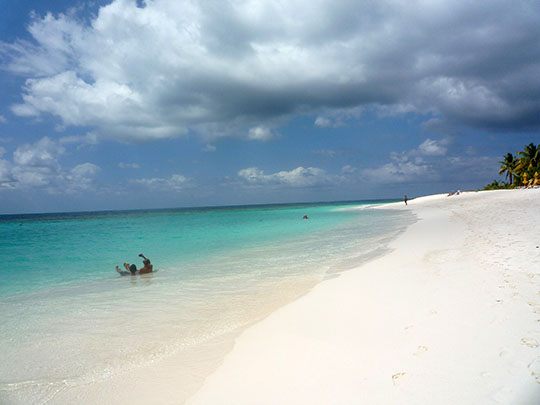
On the north-east coast, Shoal Bay East is a two-mile sweep of powdery white sand that travel writers routinely rank among the best beaches in the world — which matters on an island of flat limestone and dry scrub, where tourism was built almost entirely on the sand.
Come for snorkelling on the reef just offshore and a cold beer at Uncle Ernie’s, the long-running beach shack where the road runs out.
Every one of Anguilla’s thirty-odd beaches is public, so even the sand in front of the island’s most expensive resorts is yours to lie on.