
Wikimedia Commons / CC-BY-SA-3.0 / GFDL
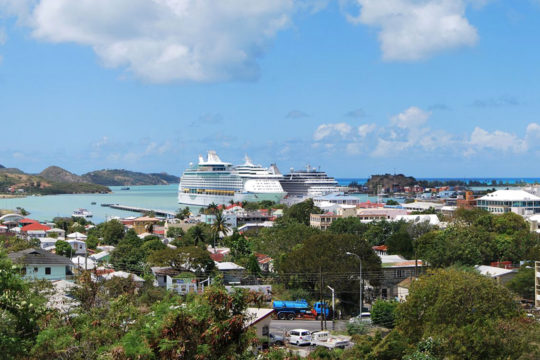
Capital: St. John’s
Population: 95,000+
Language: English/Antiguan Creole
1 – St John’s (also above)
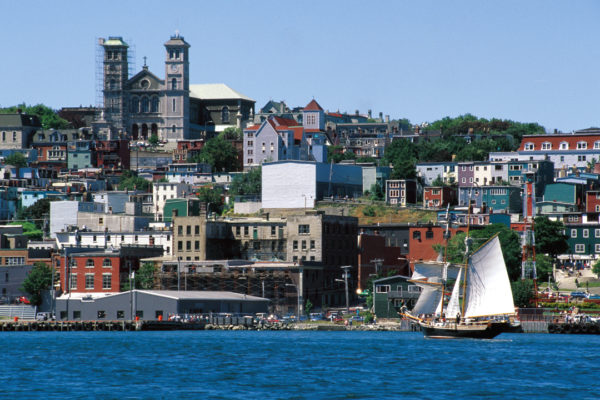
Antigua’s capital wraps around a deep harbour on the north-west coast, and it’s where the island celebrated 1 August 1834, when Antigua became the only British Caribbean colony to free its enslaved people outright, with no forced “apprenticeship” — the reason Carnival still lands at the start of August.
Climb to St John’s Cathedral, a twin-towered stone church lined inside with pitch pine so it can flex in an earthquake, then walk down to Redcliffe Quay, once the waterfront where enslaved Africans were traded and now a lane of shops and galleries in the old warehouses.
The old Recreation Ground in town is where Brian Lara twice set the record for the highest Test innings — 375 in 1994 and 400 not out in 2004, both against England — and where Antigua’s own Viv Richards hit a Test century off 56 balls in 1986.
2 – Turners Beach
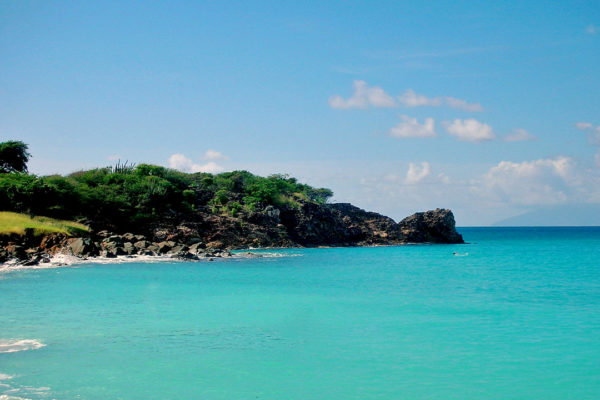
Turners Beach lies on the sheltered south-west coast near Johnson’s Point, under the Shekerley Mountains, the only real high ground on an otherwise low, flat island.
It’s a calm, clear-water beach for swimming and snorkelling, with a couple of places to eat on the sand, busy with locals on Sundays and quiet the rest of the week.
The highest of the hills behind it, Boggy Peak, was renamed Mount Obama on the president’s birthday in 2009, a change that was reportedly reversed in 2016 — and from the top you can see Montserrat.
3 – English Harbour
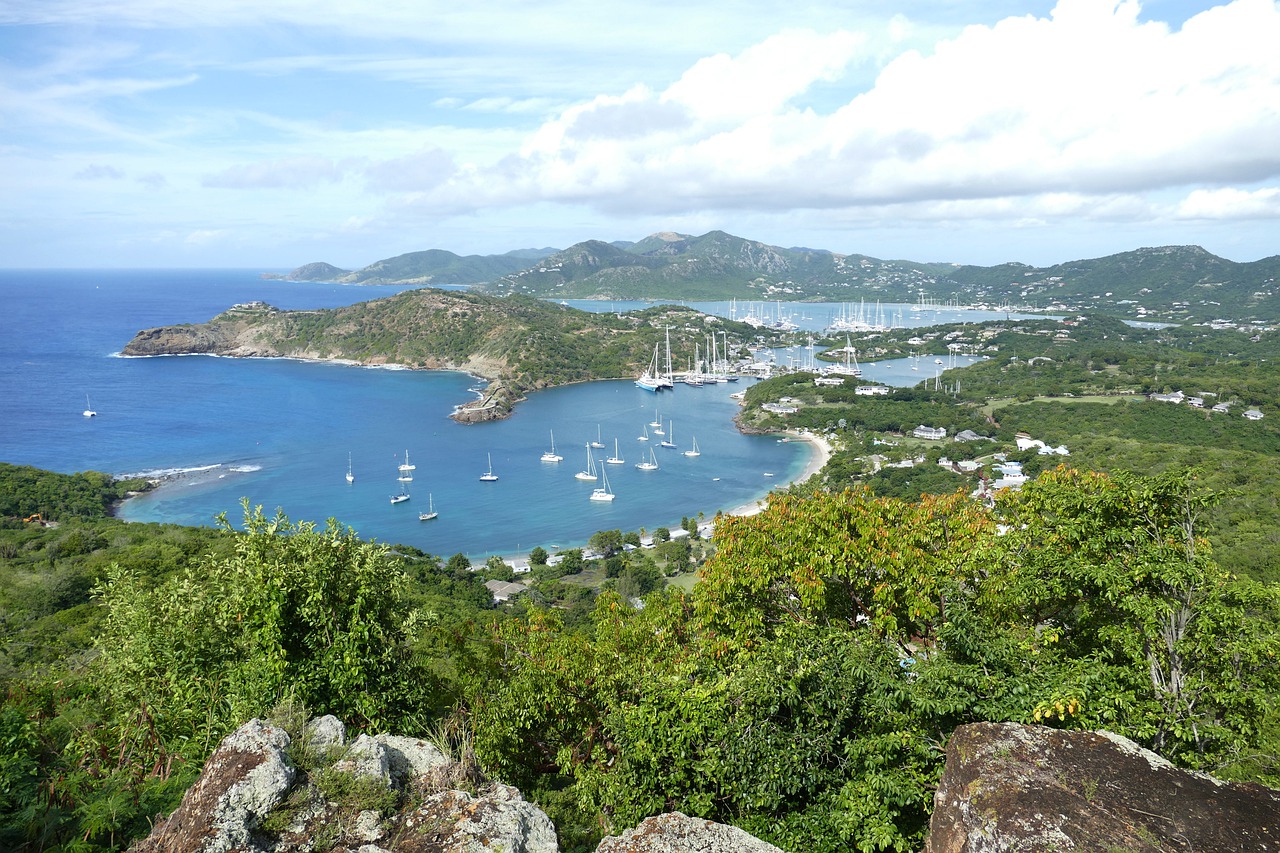
This deep, twisting harbour on the south coast is invisible from the open sea and sheltered from hurricanes, which is why the Royal Navy made it its Caribbean base in the 1720s — a dockyard that, as UNESCO puts it, couldn’t have been built without generations of enslaved Africans.
Nelson’s Dockyard is the only Georgian dockyard in the world still working, its restored buildings now full of yachts, bars, a museum and two old-stone hotels, and the Sunday-evening party at Shirley Heights, the gun battery on the cliffs above, has been running since the early 1980s.
Nelson, based here in the 1780s, loathed the place and called it an “infernal hole” — it only took his name when it was restored and reopened in 1961.
4 – Devil’s Bridge
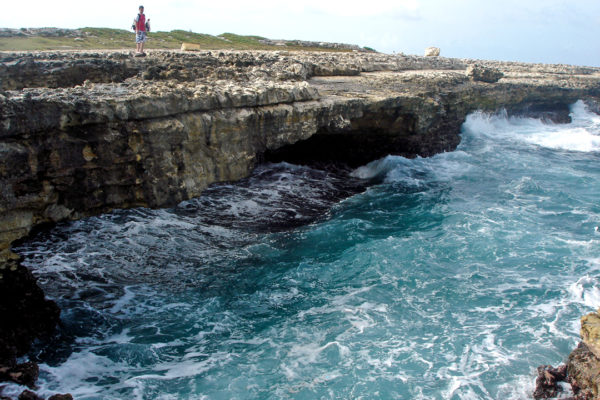
At Indian Town Point on the wild Atlantic east coast, this natural limestone arch takes its name, so the story goes, from enslaved people who took their own lives here.
The sea has cut a narrow bridge of rock with blowholes on either side that fire spray up through the ledges when the swell is running — look, but don’t try to walk across it.
Geologically Antigua is two islands in one: the flat north and east are old limestone like this, while the south-west hills are worn-down volcanic rock, which is why the two ends of the island look so different.
5 – Dickinson Bay
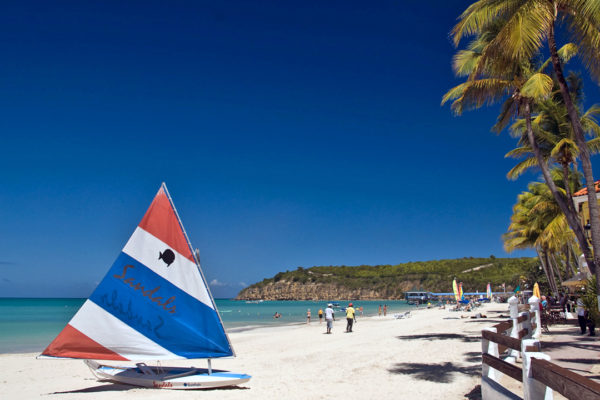
Just north of St John’s on the north-west coast, Dickinson Bay is the heart of the resort strip that took over the economy after Antigua shut down its sugar industry in 1972, after more than three centuries of cane.
Expect a long, calm curve of pale sand lined with hotels, beach bars and watersports stands, and the sun going down over the water in the evening.
Antigua sells itself as having 365 beaches, one for every day of the year, which makes a better slogan than it does a count.
6 – Green Island
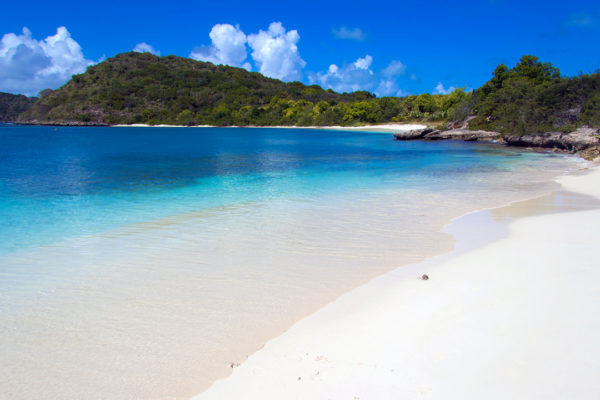
Green Island sits at the mouth of Nonsuch Bay off the east coast; it was granted as a small estate in the 1670s, and since 1947 it has belonged to the Mill Reef Club, a members-only enclave founded by an American architect.
Nobody lives on it, so you come by boat to anchor behind the reef, snorkel over the coral and swim off the parts of the island the club lets visitors use.
Paul Mellon, one of the club’s early members, named his racehorse Mill Reef after it, and the horse went on to win the Derby and the Arc in 1971.
7 – Jolly Harbour
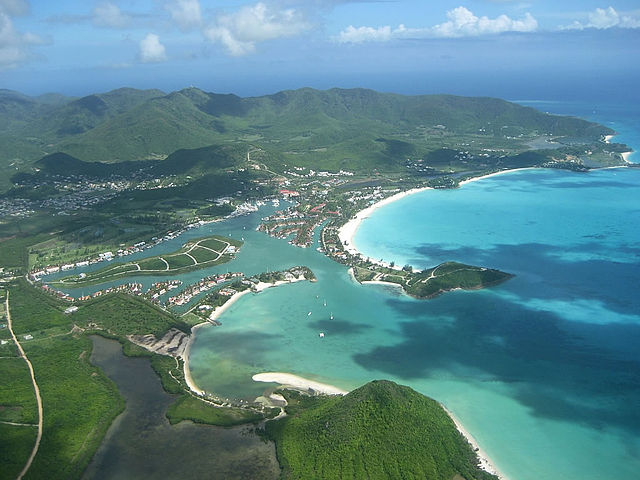
On the west coast south of St John’s, Jolly Harbour was swamp and mangrove until a Swiss developer dredged it into a marina village in the late 1980s and early ’90s, which makes it one of the newest places on the island.
It’s a self-contained resort town — a big marina full of yachts, waterfront restaurants, a golf course and, right next door, the mile-long sweep of Jolly Beach.
Yet that beach is also one of Antigua’s oldest known sites of human life, where hunter-gatherers were chipping flint tools around 1775 BC.
8 – Barbuda
Barbuda lies about 40 km north of Antigua, a flat, dry island that was never a sugar colony: from 1685 the Crown leased it to the Codrington family, reportedly for one fat sheep a year, and after emancipation its people came to hold the land in common, a custom written into law in 2007.
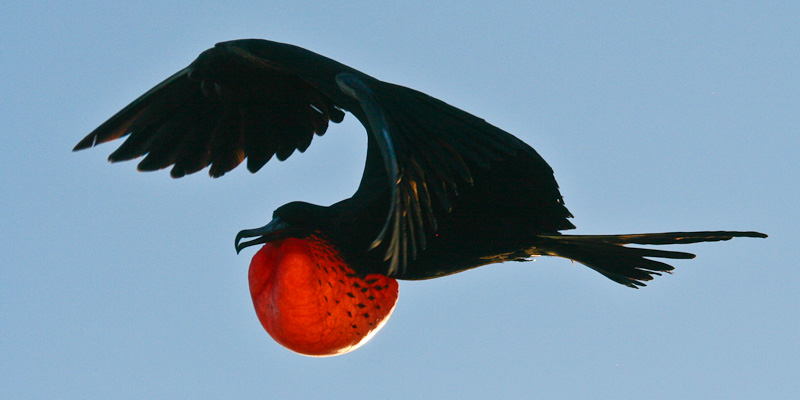
Boat trips from Codrington village run into the lagoon’s frigatebird sanctuary, usually described as the biggest colony in the Caribbean, where the males puff out scarlet throat pouches in the mating season, roughly September to April — and the long beaches on the far side of the lagoon run pale pink with crushed shell and coral.
When Hurricane Irma wrecked almost every building on the island in 2017, the entire population was evacuated to Antigua, leaving Barbuda empty of people for the first time in around 300 years.