
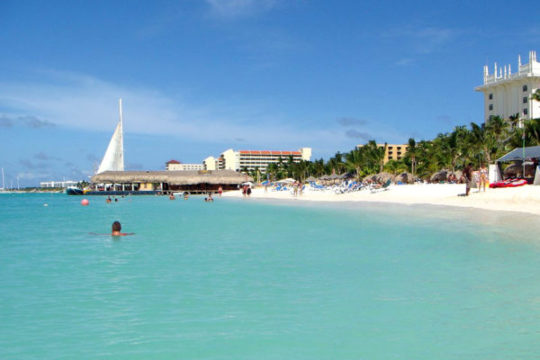
Wikimedia Commons / CC-BY-SA-3.0 / GFDL
Capital: Oranjestad
Population: 108,000+
Language: Papiamento/Dutch (also Spanish and English)
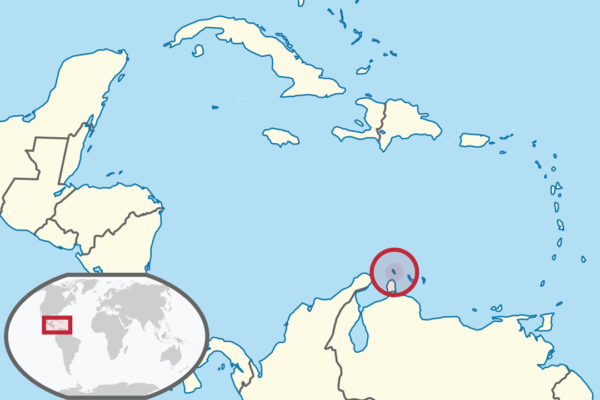
1 – Oranjestad (above)
Aruba’s capital grew up on the sheltered south-west coast as a trading harbour between Curaçao and Venezuela, but its big date is 1 January 1986, when Aruba left the Netherlands Antilles to become a country in its own right within the Dutch kingdom.
Ride the tram through the pastel Dutch-colonial streets, then find Fort Zoutman, the island’s oldest building, put up in 1798 against pirates and now the historical museum, with the 1868 Willem III Tower — a lighthouse for 95 years — standing beside it.
The man who won that separate status, Betico Croes, was badly injured in a car crash on New Year’s Eve 1985, the night before it took effect, and died eleven months later without ever waking from his coma — his birthday, 25 January, is now a national holiday.
2 – Arikok National Park
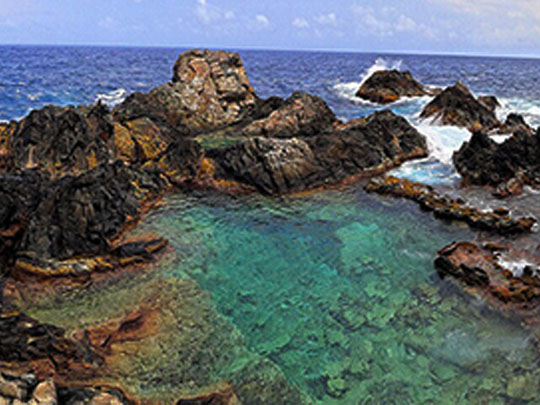
Nearly a fifth of Aruba — the wild north-east of cactus, volcanic hills and limestone cliffs — is protected as Arikok National Park, and it holds the clearest traces of the Caquetío, the Arawak people who crossed from Venezuela long before Europeans arrived.
Fontein Cave has reddish-brown Caquetío drawings on its walls and ceiling (plus some later European graffiti), Quadirikiri next door has chambers lit by holes in the roof, and the Natural Pool, or Conchi, is a rock-walled basin on the coast you can swim in when the sea allows.
The Spanish wrote off Aruba, Bonaire and Curaçao as the “islas inútiles” — the useless islands — because they had no gold, and in the 1510s shipped around 2,000 Caquetío to Hispaniola as slaves.
3 – San Nicolas
.jpg)
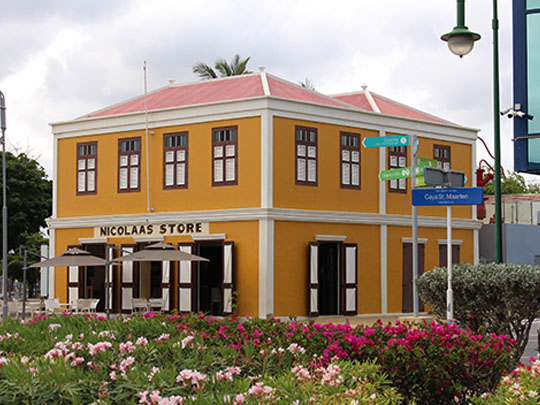
- At the island’s south-east tip, San Nicolas grew up around the Lago oil refinery, which opened in the late 1920s and became one of the biggest in the world, pulling in workers from all over the Caribbean — until it closed in 1985 and the town emptied out.
- Since 2016 an annual art fair has covered its walls in dozens of murals, and Charlie’s Bar, opened in the 1940s for refinery workers and seamen, still has every inch of wall and ceiling hung with divers’ finds and visitors’ junk — Baby Beach is just down the road.
- In February 1942 a German U-boat surfaced off the refinery to shell it, but the crew forgot to take the plug out of the deck gun’s barrel and it blew up in their faces — though the torpedoes it had already fired into the anchored tankers killed more than twenty sailors.
4 – Bushiribana
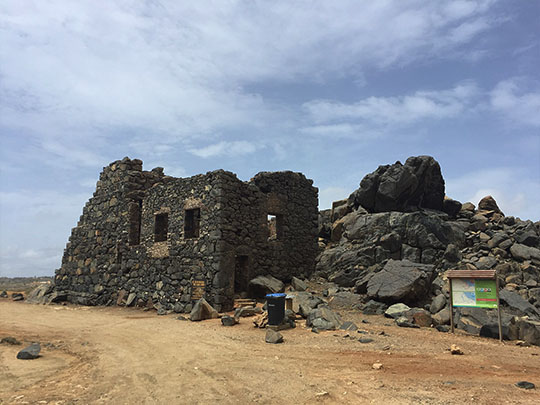
On the wild, empty north coast, the stone ruin at Bushiribana is a 19th-century gold smelter, left over from a gold rush that began, so the story goes, when a 12-year-old shepherd boy found a nugget in 1824.
Scramble over the walls, then carry on along the coast road between the California Lighthouse and the Ayo rock formation, whose giant boulders carry Amerindian petroglyphs, with Atlantic surf pounding the coves below.
A little further along stood Aruba’s Natural Bridge, a coral-rock arch that was one of the island’s best-known sights until it collapsed into the sea on 2 September 2005.