

budget travel accommodat / Wikimedia Commons / CC-BY-SA-3.0 / GFDL
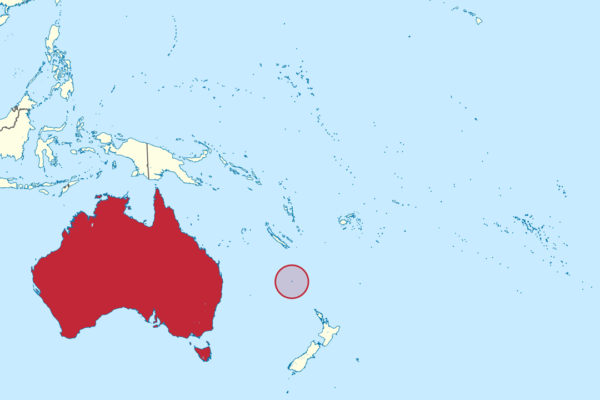
Capital: Canberra
Population: 28 million+
Language: English
1 – Sydney (also above)
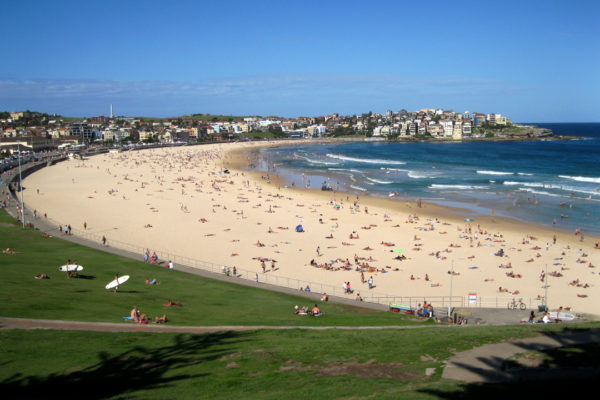
Australia’s oldest and largest city sits on Gadigal country around one of the world’s great natural harbours, where the First Fleet landed in January 1788 and started a convict colony that most of modern Australia grew out of.
The Opera House and the Harbour Bridge bracket the water, the sandstone lanes of The Rocks hold the oldest surviving corner of the colony, and the ferry to Manly or the walk from Bondi to Coogee is how locals actually see the place.
A young, largely unknown Danish architect named Jørn Utzon won the Opera House competition in 1957 — the story goes his drawings were fished out of the rejected pile by a late-arriving judge, though that account is disputed — and after years of political rows he resigned in 1966, left Australia and never came back to see the finished building.
2 – Adelaide
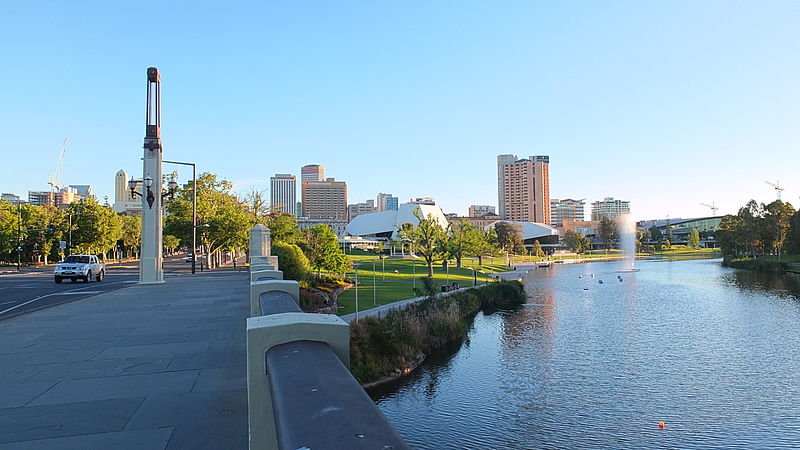
Laid out on Kaurna land in 1836 by Colonel William Light as a tight grid ringed entirely by parklands, Adelaide was planned as a free colony of paying settlers rather than a penal one, and it kept a reputation for doing things its own way.
The centre is walkable to a fault: North Terrace lines up the state library, art gallery and museum in a row, the Central Market has been trading since the 1860s, and the Adelaide Hills and Barossa vineyards start about half an hour out.
In 1894 South Australia gave women the vote and, in the same act, the right to stand for parliament — the first place in the world to do both, and the clause allowing women to stand was reportedly slipped in by an opponent who assumed it would sink the bill; it passed anyway.
3 – Alice Springs
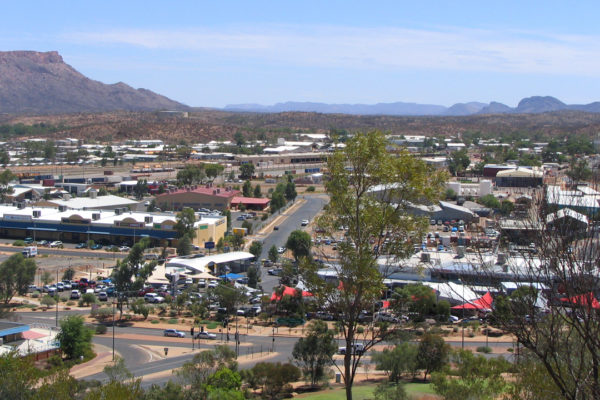
Alice Springs sits close to the geographic centre of the continent on Arrernte country, known as Mparntwe, and exists in its European form because the Overland Telegraph Line needed a repeater station here in 1872, roughly halfway between Adelaide and Darwin.
The restored Telegraph Station is a short drive from town, the Royal Flying Doctor and School of the Air bases explain how the outback actually functions, and the MacDonnell Ranges run east and west with gorges and waterholes at intervals.
The Todd River that runs through town is almost always a bed of dry sand, which is why Alice holds an annual regatta in it — bottomless boats carried at a run — and the whole thing is said to have been called off once, in the 1990s, on account of there being water in the river.
4 – Uluru (Ayers Rock)

The great sandstone inselberg in the middle of the Northern Territory is Anangu country, and far more of it lies buried beneath the desert than stands above it; the park was handed back to its traditional owners in 1985 and is now jointly managed.
The 10 km base walk is the way to see it properly, taking in Mutitjulu waterhole and rock art in the shelters at the foot of the cliffs, with the domes of Kata Tjuta half an hour west; climbing was closed for good in 2019 at the owners’ request.
Park staff regularly receive parcels of rock and sand posted back by visitors who took a souvenir and thought better of it — the so-called sorry rocks, some sent from the other side of the world with letters of apology, occasionally blaming years of bad luck on the theft.
5 – Bare Island
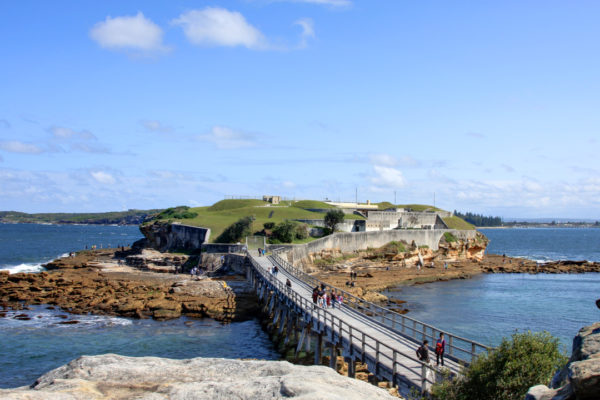
A small rocky outcrop off La Perouse at the mouth of Botany Bay, joined to the shore by a wooden footbridge, it was noted by Cook in 1770 as “a small bare island” and the name simply stuck.
The concrete fort that covers it went up in the 1880s to guard what was seen as Sydney’s back door against a feared Russian attack; guided tours take you through the tunnels and gun emplacements, and the reefs around it are among the best-known dive sites in New South Wales.
The fort turned out to be built with substandard concrete — a royal commission said so within a few years and it was out of service well before the First World War — after which it served as a home for war veterans, and eventually found lasting fame as the villain’s lair in Mission: Impossible 2.
6 – Brisbane
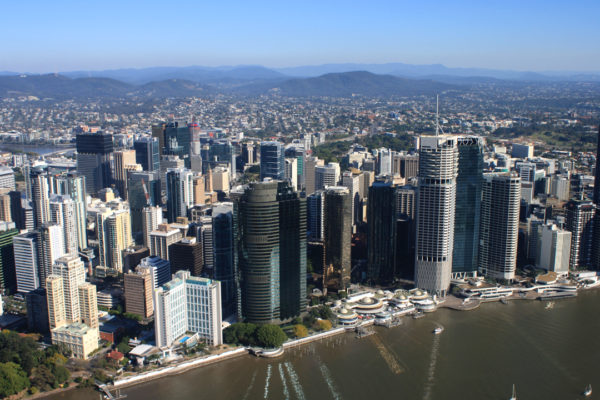
Queensland’s capital sprawls along a looping river on Turrbal and Yuggera country, and began in 1824 as a penal settlement for convicts who had reoffended — a deliberately harsh place, closed to free settlers until 1842.
South Bank on the far side of the river holds the parklands, galleries and museums, the Story Bridge can be climbed, the 1828 Old Windmill is the city’s oldest surviving building, and Mount Coot-tha gives you the whole thing from above.
Brisbane is not on the coast, so it built itself a beach: Streets Beach at South Bank is a chlorinated lagoon with white sand, lifeguards and a surf club, opened in the early 1990s on the old World Expo site, and topped up with tens of tonnes of trucked-in sand every year.
7 – Cairns
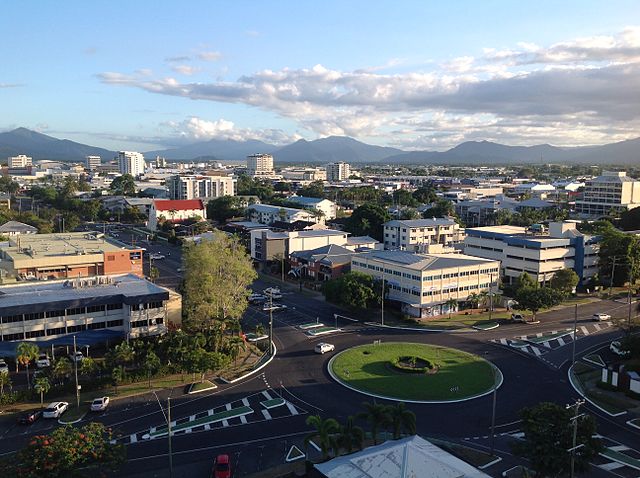
The tropical north’s main city was founded in 1876 as a port for the Hodgkinson goldfield, on a mangrove-fringed inlet on Yirrganydji and Yidinji country, and is now the jumping-off point for both the Great Barrier Reef and the Daintree.
Reef boats leave from the Esplanade daily, the Kuranda Scenic Railway climbs the Barron Gorge through fifteen hand-cut tunnels to a village on the tableland, and the Skyrail gondola comes back over the rainforest canopy.
Cairns almost didn’t make it: rival Port Douglas had the better road to the goldfields and was winning, until a brutal wet season in 1882 washed that road out, the government chose Cairns as the railhead instead, and one drenched summer decided which town would end up running the far north.
8 – Perth

The most isolated major city on earth sits on Whadjuk Noongar country on the Swan River, founded in 1829 as a free settlement that struggled so badly it asked for convicts twenty years later, and was rescued for good by gold in the 1890s.
Kings Park spreads over the escarpment above the river with the city laid out below, Fremantle at the river mouth keeps its port-town architecture and its 19th-century prison, and Rottnest Island is a ferry ride offshore.
When John Glenn orbited overhead in 1962, Perth turned on every light it had — house lights, street lights, car headlights — so he could see it from space; he radioed back his thanks, the city has been called the City of Light ever since, and it did the whole thing again when he flew on the shuttle decades later.
9 – Mitchell Falls
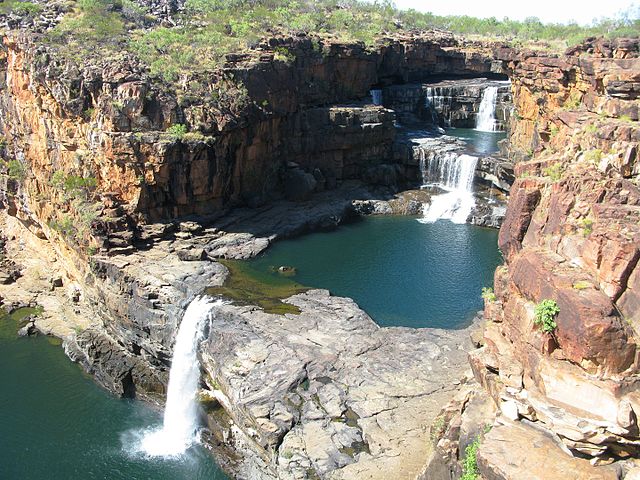
Deep in the Kimberley on Wunambal Gaambera country, Punamii-Uunpuu drops through four tiers and green pools cut into ancient sandstone, reached by one of the roughest 4WD tracks in the country or by helicopter.
The walk in from the campground passes Little Mertens Falls, the chasm of Big Mertens and rock-art shelters holding Wandjina and Gwion Gwion figures among the oldest known anywhere; visitors need a permit from the traditional owners before arriving.
The falls are the home of the Wunggurr, the creator snakes, who are seen in the rainbows thrown up by the spray — which is why swimming in the pools below is asked against, and why aircraft are kept out of the airspace directly over the falls.
10 – Great Ocean Road
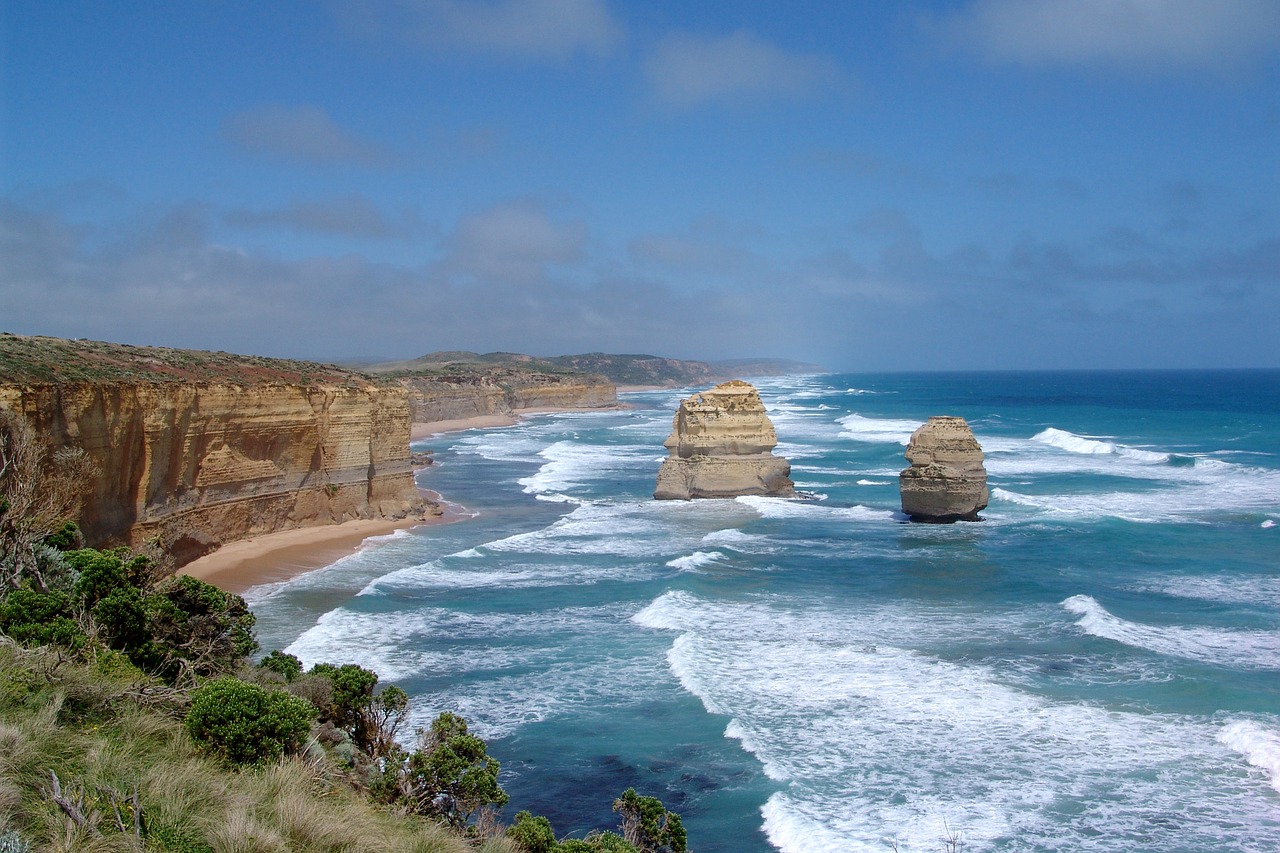
The 240-odd kilometres of coast road between Torquay and Allansford in Victoria was cut by hand, with picks and shovels, by soldiers returning from the First World War between 1919 and 1932, and was dedicated to the men who didn’t come back — the largest war memorial in the world.
The limestone stacks of the Twelve Apostles and the collapsed arch at Loch Ard Gorge are the set pieces, the Memorial Arch at Eastern View marks the start, and koalas are genuinely easy to spot in the trees around Kennett River.
The Apostles were originally charted as the Sow and Piglets and only picked up their biblical name in the 20th century, which was a marketing decision rather than a count — there were never twelve, and the sea has since taken a couple more.
11 – Hobart – Tasmania
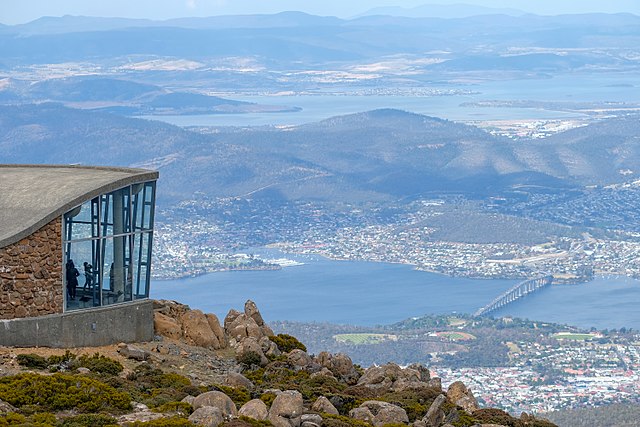
Australia’s second-oldest capital was founded in 1804 as a penal settlement on the Derwent, below the dolerite bulk of kunanyi/Mount Wellington, on the country of the muwinina people, whose community did not survive the colonial period.
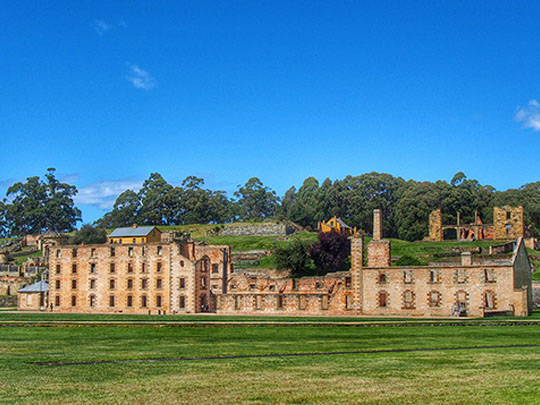
The Saturday market fills Salamanca Place in front of the old sandstone warehouses, Battery Point behind it is a maze of colonial cottages, the summit road up kunanyi takes about half an hour, and Port Arthur’s convict ruins are ninety minutes down the peninsula.
The gallery that put Hobart back on the map was built by a local professional gambler who spent his winnings digging three storeys into a sandstone cliff above the river — you arrive by ferry and work your way upwards, which is the reverse of how museums normally go.
12 – Darwin
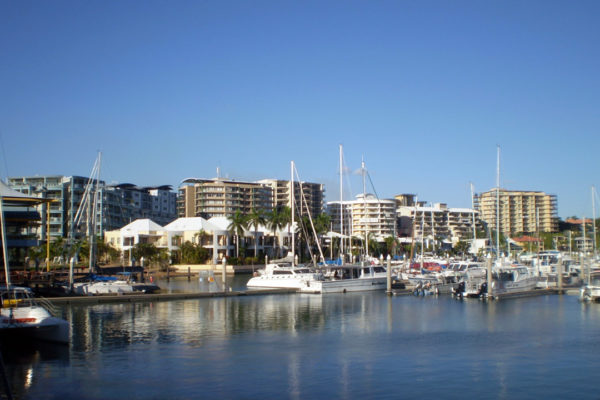
The tropical capital of the Northern Territory stands on Larrakia country and is closer to Indonesia than to Sydney; the harbour was named after Charles Darwin by shipmates from the Beagle who had sailed with him, and the settlement that followed in 1869 was called Palmerston before taking the name Darwin.
The waterfront precinct has swimming lagoons safe from crocodiles and stingers, Mindil Beach markets run through the dry season, the museum’s Cyclone Tracy room is worth the visit alone, and Litchfield and Kakadu are both within reach.
Darwin has been flattened twice: Japanese aircraft bombed it in February 1942, dropping more bombs than fell on Pearl Harbor and killing more than 230 people, and on Christmas Day 1974 Cyclone Tracy destroyed most of the town, after which over 30,000 of its 43,000 residents were flown out in the largest airlift in Australian history.
13 – Melbourne
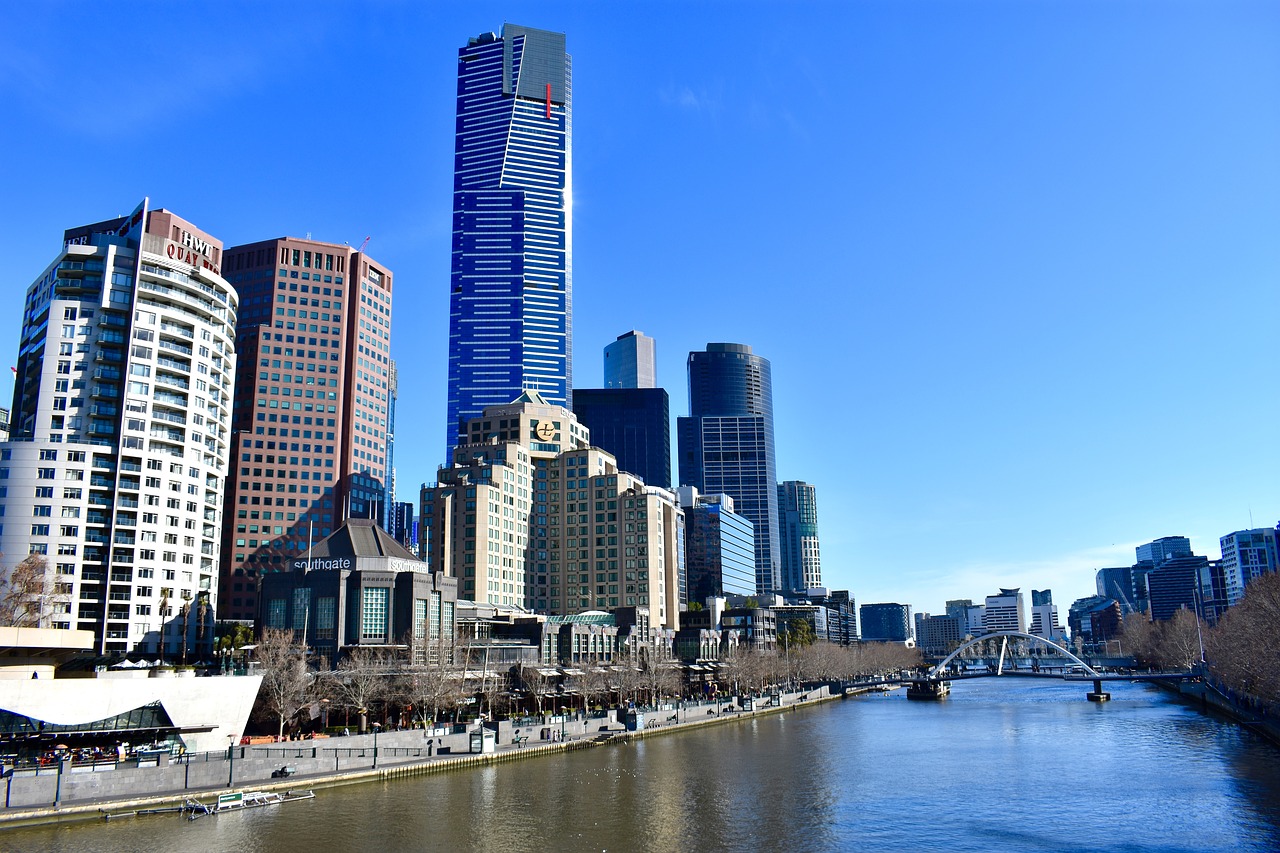
Founded in 1835 on Wurundjeri and Boonwurrung land, Melbourne was made colossally rich by the Victorian gold rush of the 1850s and spent the 1880s as the second city of the British Empire, a boom that left it the grand Victorian architecture it still trades on.
The laneways and their coffee are the point, along with the Royal Exhibition Building, the National Gallery of Victoria, the Queen Victoria Market, and the MCG, which is less a stadium than a civic religion.
Melbourne runs the largest tram network on earth, and it survives partly by accident: when other Australian cities tore their tramways out in the 1950s and 60s, Melbourne looked at the cost of ripping up the tracks, decided it was too expensive, and left them in.
14 – Great Barrier Reef
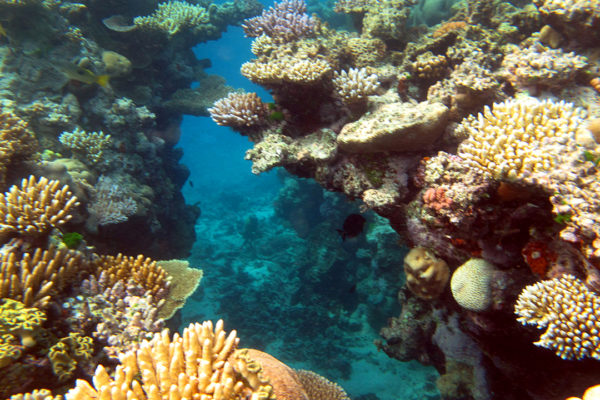
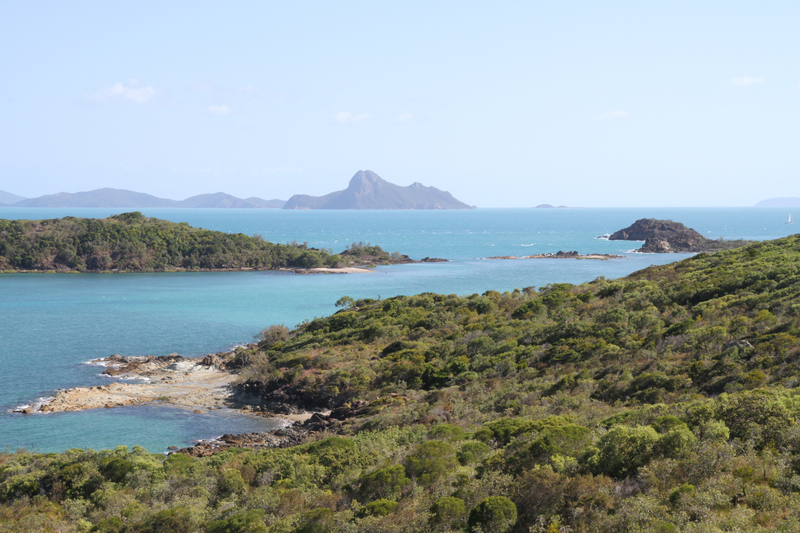
Stretching some 2,300 km along the Queensland coast, the reef is the largest living structure on the planet — thousands of individual reefs and hundreds of islands, built by coral polyps and visible from orbit.
Boats run out from Cairns, Port Douglas and Airlie Beach for diving and snorkelling, the Whitsundays and Whitehaven Beach sit inside the system, and Lady Elliot and Heron Islands at the southern end are good for turtles and manta rays.
Cook’s Endeavour struck the reef in June 1770 and nearly sank; the crew threw six cannon and tonnes of ballast overboard to float her off, Cook carefully charted the spot — and in 1969 a team followed his coordinates with a magnetometer and pulled all six cannon off the seabed, encased in two centuries of coral.
15 – Canberra
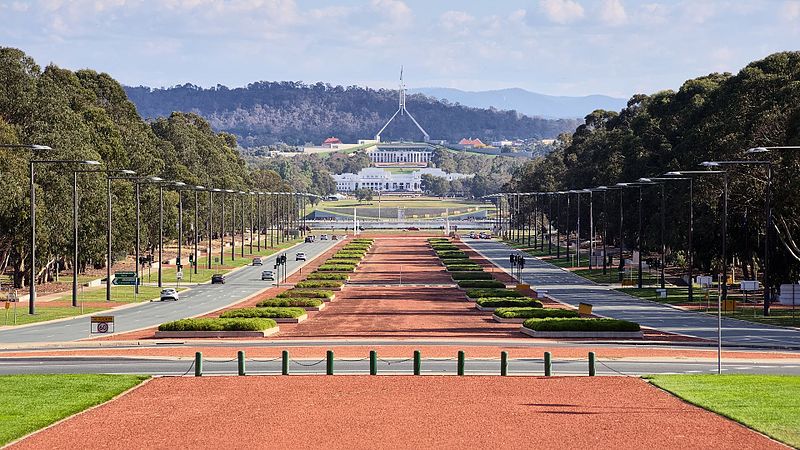
Australia’s capital exists because Sydney and Melbourne couldn’t agree which of them should have the job, so the constitution required a new city somewhere in between; the site was chosen in 1908 on Ngunnawal country, and Melbourne served as the seat of government until 1927.
The plan was won in a 1912 international competition by Chicago architect Walter Burley Griffin, but the drawings that sold it — luminous renderings on cotton cloth, in muted golds with a distinctly Japanese hand — were made by his wife and partner Marion Mahony Griffin, and now sit on Australia’s Memory of the World register.
ANZAC Parade runs from the lake straight to the Australian War Memorial, Parliament House is dug into Capital Hill and roofed with lawn, and the National Gallery, National Museum and Lake Burley Griffin fill in the middle.