
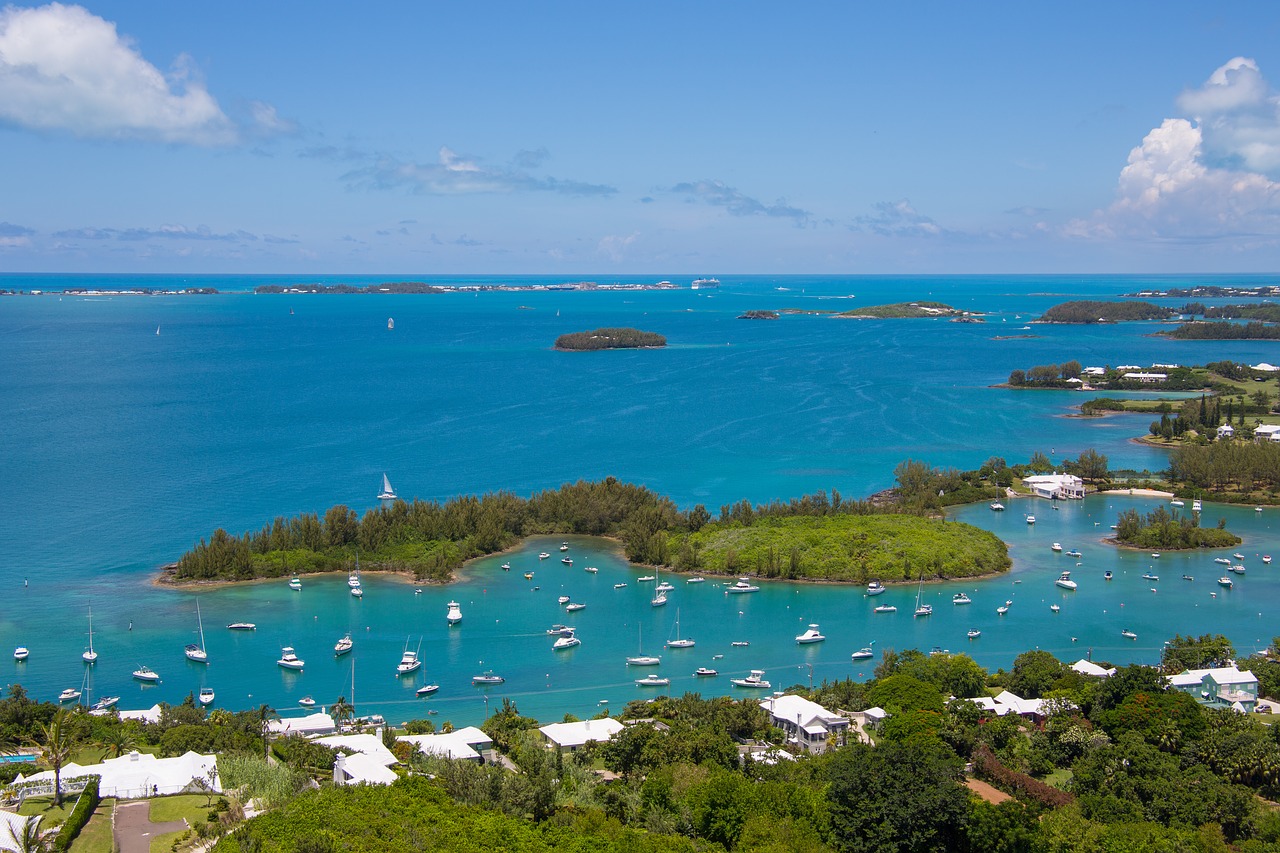
Wikimedia Commons / CC-BY-SA-3.0 / GFDL
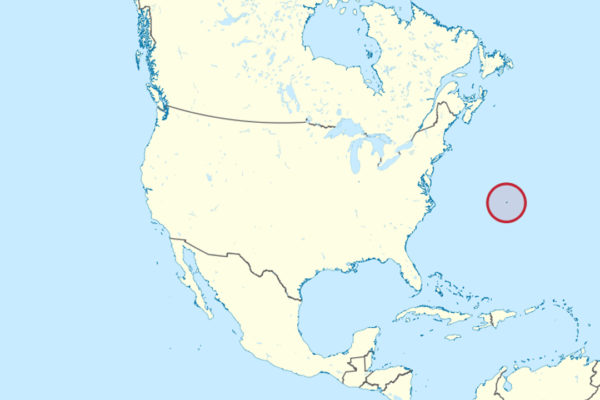
Capital: Hamilton
Population: 63,000+
Language: English, Portuguese.
1 – St George’s
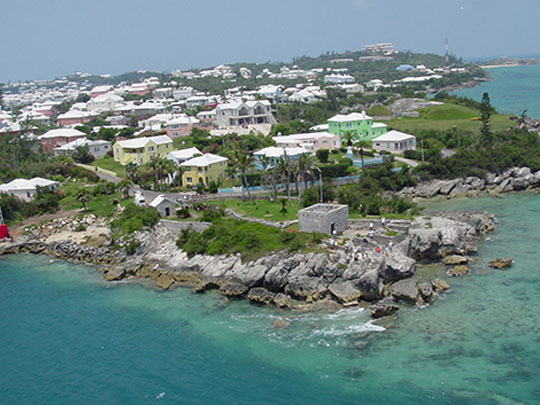
At the eastern tip of Bermuda, St George’s was founded in 1612 — three years after the Sea Venture, flagship of a fleet bound for Jamestown, was driven onto the reefs off this end of the island in a hurricane with 150 people aboard — and UNESCO, which inscribed the town and its forts in 2000, calls it the oldest English settlement in the New World.
Walk from King’s Square and its replica ducking stool to St Peter’s Church (oldest parts 1620, often called the oldest surviving Anglican church in continuous use outside the British Isles), the 1620 State House, the roofless Unfinished Church of 1874, and Fort St Catherine, a 1612 site with mostly Victorian walls.
The castaways built two new ships, Deliverance and Patience, from cedar and salvaged timber and reached Jamestown in May 1610, and William Strachey’s account of the wreck is widely accepted as a source for Shakespeare’s The Tempest, which mentions “the still-vexed Bermoothes” — and the State House in St George’s is still leased to the Freemasons for one peppercorn a year.
2 – Royal Naval Dockyard
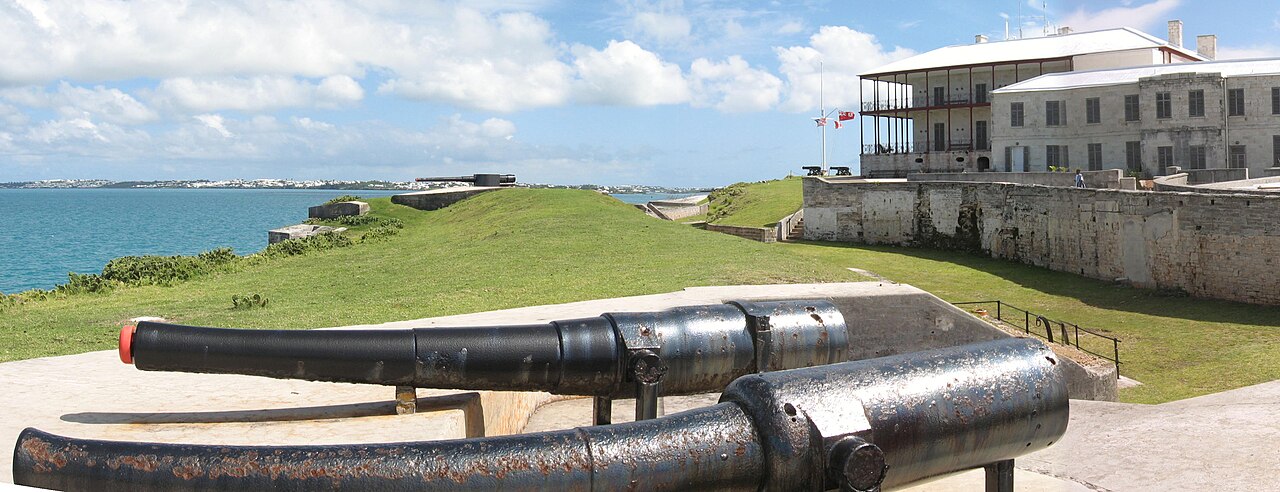
On Ireland Island at Bermuda’s western end, the Royal Naval Dockyard was begun in 1809 and served as the Royal Navy’s main base in the western Atlantic for well over a century, until it was run down in 1951.
The Keep, the Dockyard’s ten-acre citadel, now holds the National Museum of Bermuda, and above it stands Commissioner’s House, finished in 1828 and believed to be the first house anywhere built with a frame of prefabricated cast iron, shipped out from England in parts.
Much of the Royal Naval Dockyard was built by more than 9,000 British and Irish convicts between 1823 and 1863, held in prison hulks moored offshore — the Irish nationalist John Mitchel among them during the Famine years — and estimates of how many died here range from about 1,260 to over 2,000.
3 – Crystal Caves
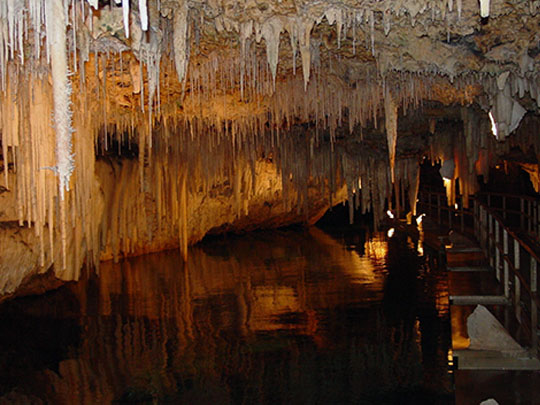
In Hamilton Parish, the Crystal Caves were found, so the story goes, when two boys lost a cricket ball down a hole, and in 1907 the landowner’s 14-year-old son Bernard Wilkinson was lowered in on a rope to explore what turned out to be a cavern carved by rainwater through limestone during the Ice Ages, when the sea stood far lower.
Steps lead down to Cahow Lake, about 55 ft deep and connected to the sea, which you cross on floating pontoons under thousands of stalactites, and a combined ticket adds Fantasy Cave next door, reopened in 2001 after seven decades shut — Mark Twain came down in 1908, weeks after the Crystal Caves opened to visitors.
Some of the formations hang below the waterline, and since stalactites only grow in air, they’re proof of how far sea level has risen — and the Crystal Caves helped inspire Fraggle Rock, through its co-creator Michael Frith.
4 – Horseshoe Bay
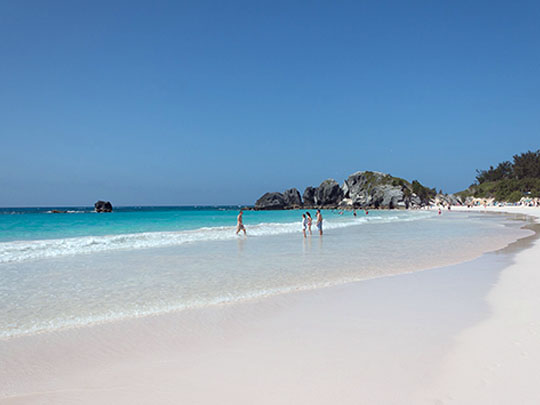
On the south shore of Southampton Parish, Horseshoe Bay is the best-known beach on an island that is really a limestone cap on an extinct volcano, active roughly 45 to 30 million years ago and rising more than 4,000 metres from the seabed some 1,040 km off North Carolina — nowhere near the Caribbean.
Horseshoe Bay is the western end of South Shore Park, and a trail through the dunes and over the rocks links a string of smaller coves eastwards to Warwick Long Bay, so you can swap the crowds for a cove of your own in twenty minutes’ walk.
The pink in the sand at Horseshoe Bay comes from Homotrema rubrum, a single-celled red organism living on the reef whose shells the surf breaks up into the white coral sand — reefs that survive this far north, the most northerly in the Atlantic, only because the Gulf Stream keeps them warm — and since every public beach is a park, taking any home is not allowed.
5 – Gibbs Hill Lighthouse
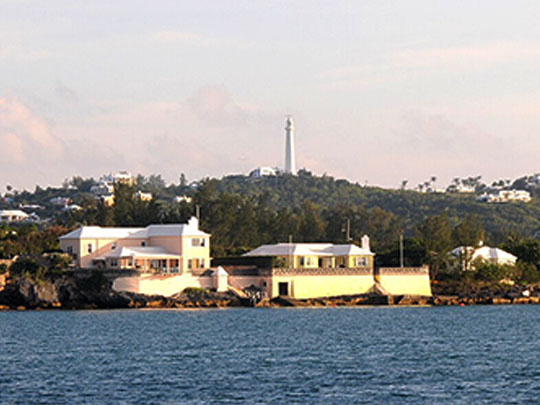
On Gibbs Hill in Southampton Parish, Gibbs Hill Lighthouse was cast in England in 1844 and first lit on 1 May 1846, to warn ships off the reefs that had been wrecking them around Bermuda since the 1500s.
The cast-iron tower stands about 117 ft high and puts the light 354 ft above the sea, reached by 185 steps in eight flights, and it is fairly called one of the first cast-iron lighthouses in the world — not, as you’ll often read, the oldest, since Jamaica’s Morant Point was cast in 1841.
The name “Bermuda Triangle” was coined by Vincent Gaddis in Argosy magazine in February 1964, and in 1975 Lloyd’s of London said its records showed no more losses there than anywhere else — the hundreds of wrecks around Bermuda are the reefs’ doing, which is exactly why Gibbs Hill Lighthouse was built.