
Wikimedia Commons / CC-BY-SA-3.0 / GFDL
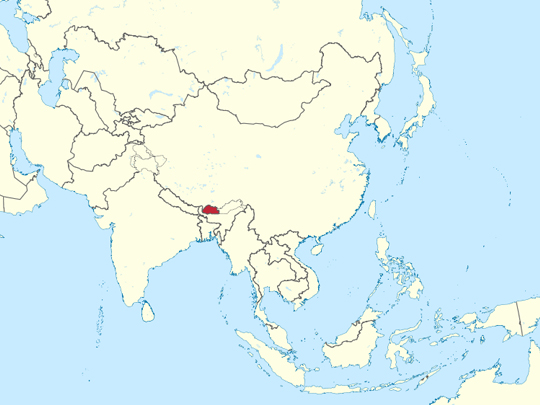
Capital: Thimphu
Population: 800,000+
Language: Dzongkha/English
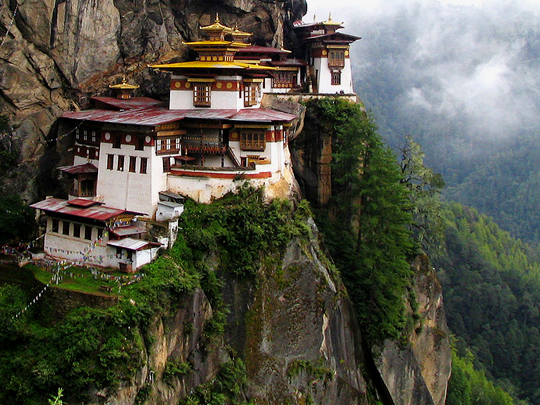
1 – Paro Taktsang (also above)
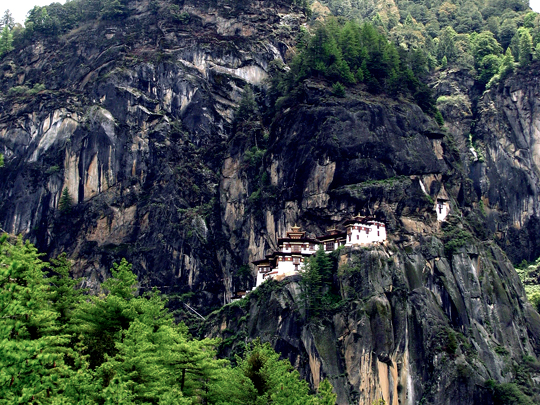
Paro Taktsang monastery hangs off a granite cliff some 900 metres above the floor of the Paro valley, at around 3,120 metres, and was built in 1692 by Gyalse Tenzin Rabgye around a cave where Guru Rinpoche — the eighth-century master credited with bringing Buddhism to Bhutan — is said to have meditated for three years, three months, three weeks and three days.
The walk up takes two or three hours through blue pine hung with prayer flags, with a cafeteria at the halfway viewpoint, then a descent and a climb of several hundred steps past a waterfall; inside are four temples linked by stairways and balconies cantilevered over the drop, and the cave itself is reached through a door in a temple floor.
He arrived, so the story goes, on the back of a flying tigress — his consort transformed for the journey — which is where the English name comes from; and what you see is a reconstruction, because a fire in 1998 destroyed the main temple and killed a monk, and every sack of material for the rebuild had to be carried up by hand and by horse.
2 – Rinpung Dzong
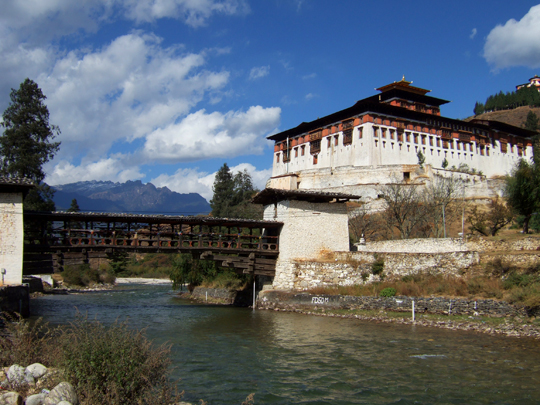
A dzong is a fortress-monastery that houses a district’s government offices and its monk body inside the same walls, built with sloping whitewashed ramparts, a central tower and almost no decoration except painted timber — and Rinpung, “fortress on a heap of jewels”, is the one most visitors meet first, raised in the 1640s above the Paro river to block Tibetan armies coming down the valley.
You reach it across Nyamai Zam, a covered cantilever bridge that used to be dismantled in wartime, and climb into courtyards of painted galleries and carved windows; the round watchtower on the hill above now holds the National Museum, and a British envoy reported finding stone-throwing catapults still stacked on the veranda in 1905.
The Paro Tsechu fills the courtyards each spring with masked dances, and on the final morning a thongdrel twenty metres across is unrolled down a wall before first light and taken in again before the sun can touch it — Bertolucci shot part of Little Buddha here in 1993.
3 – Trongsa Dzong
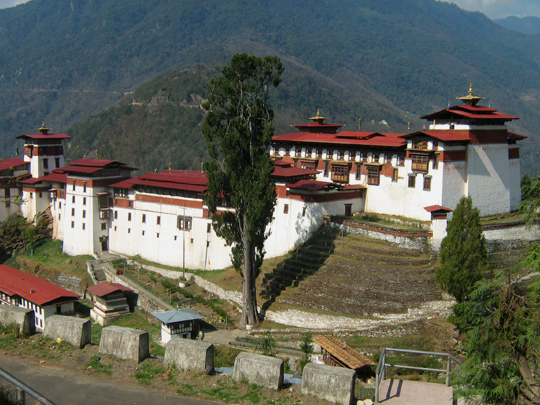
Trongsa stands on a spur above the Mangde Chhu gorge at roughly the geographical centre of the country, and whoever held it held the only road between eastern and western Bhutan — which is why the Zhabdrung had Chogyal Minjur Tempa build a full dzong here in 1644, and why its governor became the most powerful official in the kingdom.
The building sprawls down the ridge on a dozen levels in a maze of courtyards, corridors and some two dozen temples, with a monk body of a couple of hundred; above it the cylindrical Ta Dzong watchtower of 1652 was converted in 2008 into a museum of the royal dynasty.
The tenth Trongsa Penlop was Jigme Namgyal, and his son Ugyen Wangchuck used the same office to win the civil wars and was elected Bhutan’s first hereditary king in 1907 — every heir since has been invested as Trongsa Penlop before taking the throne, which keeps a pre-monarchy title alive as the last step before the crown.
4 – Punakha Dzong
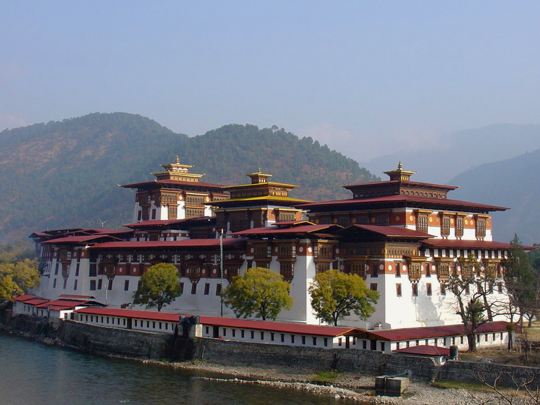
Built in 1637–38 on a spit of land where the Pho Chhu and Mo Chhu meet, on a hill Guru Rinpoche had prophesied would resemble an elephant’s trunk, Punakha was the seat of the Bhutanese state for more than three centuries until the capital moved up to Thimphu in the 1950s — and it is where Ugyen Wangchuck was crowned in 1907.
Three steep wooden staircases, built to be hauled up in wartime, climb into courtyards running 180 metres end to end; the assembly hall known as the hundred-pillar hall has fifty-four pillars and mid-eighteenth-century gold statues of the Buddha, Guru Rinpoche and the Zhabdrung, and the central monk body still winters here before moving to Thimphu for the summer.
Zhabdrung Ngawang Namgyal, the Tibetan lama who unified Bhutan, died inside this building, and his embalmed body lies in a sealed casket in the Machey Lhakhang — a room four people may enter: two guardian monks, the king, and the Je Khenpo, the last two going in only once, to be blessed before taking office.
5 – Tashichho Dzong
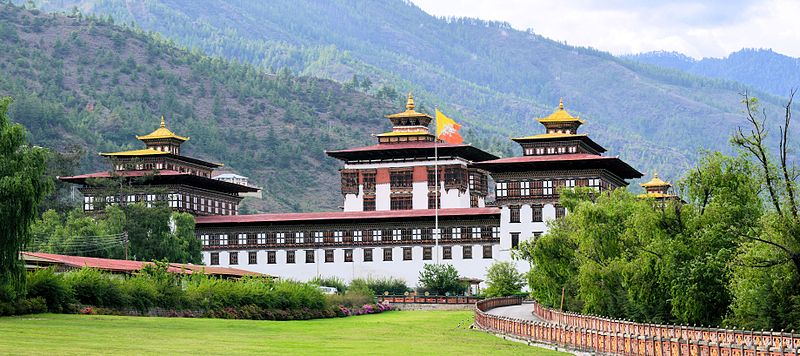
Tashichho Dzong, the “fortress of the glorious religion” stands on the Wang Chhu at the northern end of Thimphu, on a site first fortified in 1216 and taken over by the Zhabdrung in 1641 — and since the capital came up from Punakha in the 1950s it has been the working seat of the Bhutanese government.
Behind the whitewashed walls are the throne room and the king’s offices, the secretariat, two ministries, the chamber that held the original national assembly, and the summer quarters of the central monk body under the Je Khenpo; the public are let in once the government goes home for the day, and the floodlights come on after dark.
The third king rebuilt and enlarged almost all of it between 1962 and 1969 in the traditional manner — no nails, no written plans, the whole design carried in the head of the master builder — which means the building Bhutan’s ministries work in went up within living memory using methods that predate the drawing board.
6 – Gangteng Monastery
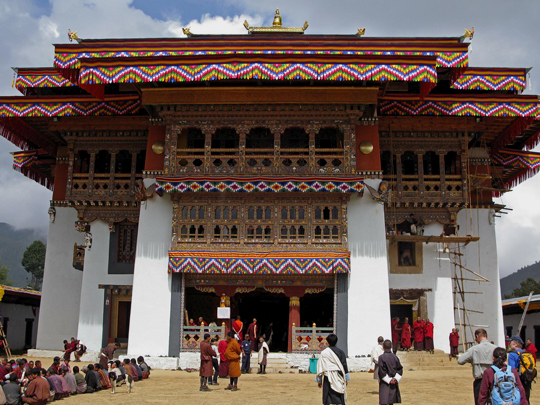
Gangtey Goenpa sits on a spur above the Phobjikha valley at around 3,000 metres in the Black Mountains, founded in 1613 by a grandson of Pema Lingpa — the fifteenth-century treasure-revealer whose revelations underpin an entire strand of Bhutanese Buddhism — and it is the largest Nyingma monastery in western Bhutan.
Gangteng Monastery was taken apart and rebuilt between 2002 and 2008 after earthquake damage, with more than a hundred new pillars cut to the old pattern; below it the valley floor is a broad glacial marsh with a nature trail running across it, and a crane festival is held in the monastery courtyard every 11 November.
Black-necked cranes fly down from the Tibetan plateau in late October and circle the monastery three times before they land, then do it again before leaving in spring — and when the valley was finally wired for electricity, the government paid to bury every cable underground rather than string up overhead lines the birds might fly into.
7 – Bumthang
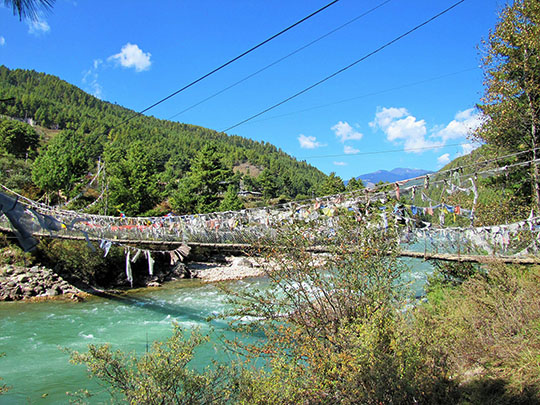
Four valleys in the middle of the country at around 2,600 metres, Bumthang is where Buddhism took hold in Bhutan earliest and deepest: Jambay Lhakhang here is said to be one of 108 temples the Tibetan king Songtsen Gampo raised across the Himalaya in a single day in the seventh century to pin down a demoness, and Guru Rinpoche was invited to the valley a century later to cure a local king.
Kurjey Lhakhang is built around the cave where he meditated and holds the imprint his body is said to have left in the rock; Tamshing Lhakhang, founded by Pema Lingpa in 1501, has some of the oldest surviving murals in Bhutan and a coat of iron chain mail that pilgrims carry round the building; Jakar Dzong stands above the town, and there is a brewery and a cheese factory.
At Mebar Tsho, the Burning Lake in the Tang valley, Pema Lingpa told a sceptical crowd that if he were a true treasure-revealer he would surface with his lamp still lit, and if a fraud he would drown — then dived in and came back up holding a chest, a statue and a lamp still burning.
8 – Haa Valley
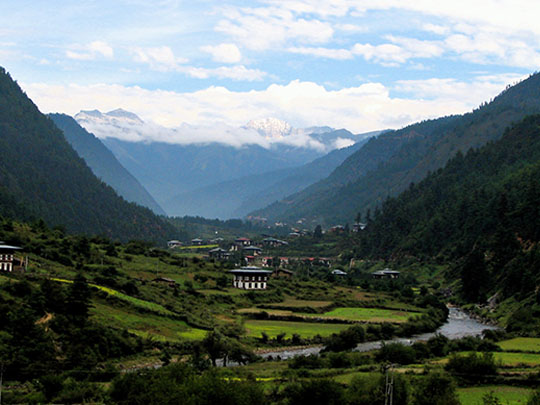
A narrow valley at about 2,700 metres in the far west, pressed up against the Tibetan border, Haa is the smallest district in Bhutan and one of the least visited — it stayed closed to foreign visitors until 2002, in part because a good deal of it is given over to the Indian Military Training Team, based here since the years after China took Tibet.
You come in over Chele La, at 3,988 metres the highest road pass in the country, a saddle buried in prayer flags with Jomolhari and Jichu Drake on the skyline; the valley below is farms, buckwheat and blue pine rather than hotels, with homestays instead, and the Haa Summer Festival in July brings out nomad culture and hoentay, the local buckwheat dumpling.
The twin temples guarding the mouth of the valley are Lhakhang Karpo and Lhakhang Nagpo, the White Temple and the Black Temple, and the story is that a white pigeon and a black one were released to decide where each should stand — the white one settling at the foot of the three peaks the valley still reveres as its guardians.