
Jacob Mojiwat / Wikimedia Commons / CC-BY-SA-3.0 / GFDL
Capital: Bandar Seri Begawan
Population: 460,000+
Language: Malay/English/Chinese
1 – Ulu Temburong National Park (also above)
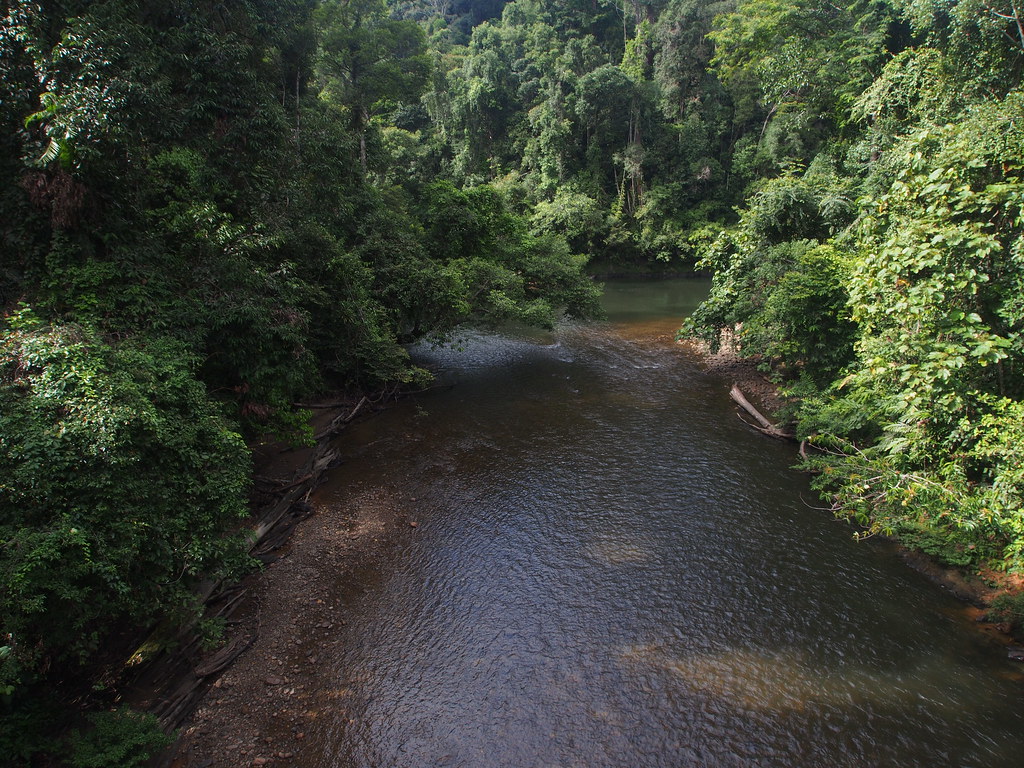
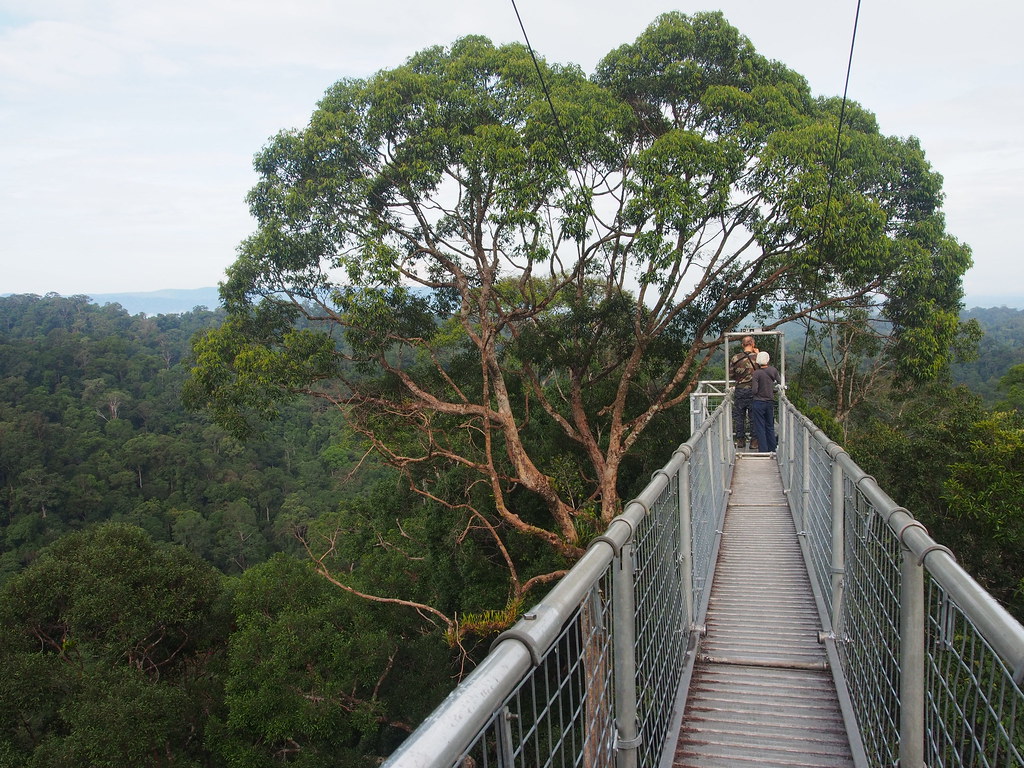
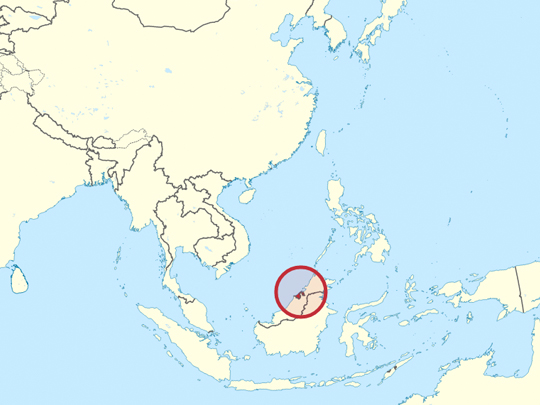
Ulu Temburong National Park, Brunei’s first national park, gazetted in 1991, protects around 550 square kilometres of unlogged lowland rainforest in Temburong — a district physically cut off from the rest of the country by a wedge of Malaysian Sarawak, which is a large part of why the forest here was never cleared and why the park exists at all.
You go in by longboat, a shallow wooden temuai worked up the Temburong river over sandbars and boulders by Iban boatmen, then follow plank boardwalks to the canopy walkway — a run of aluminium towers and bridges climbing several hundred steps to around forty metres, level with the crowns of the dipterocarps and well above where anything much grows on the forest floor.
The great majority of Brunei is still under forest, far more than either of its neighbours on Borneo, and the reason is oil: a country that has been living off hydrocarbons since the 1920s never needed the timber money, so the logging that stripped the rest of the island simply never happened here.
2 – Sultan Omar Ali Saifuddin Mosque
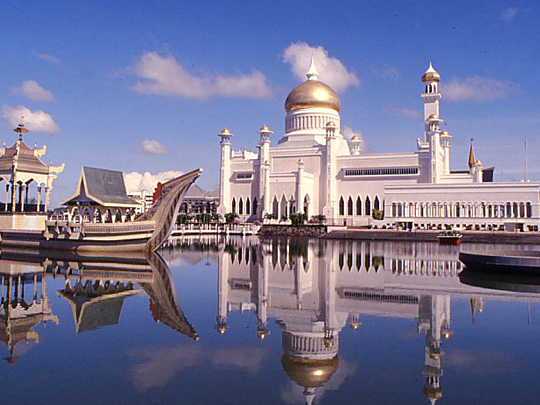
Sultan Omar Ali Saifuddin Mosque, finished in 1958 and named for the 28th sultan, the man generally credited with building the modern state, it stands in an artificial lagoon on the Brunei River in the middle of Bandar Seri Begawan — and it went up at precisely the moment oil revenue started arriving in serious quantity.
Mughal in outline with Italian Renaissance detailing: a gold-leafed dome over a hall for three thousand, Italian marble, Shanghai granite, English chandeliers and stained glass, and a 52-metre minaret with a lift inside it; out in the lagoon sits a full-size concrete replica of a sixteenth-century mahligai, or royal barge, added in 1967.
A bridge runs from the back of the mosque straight across to Kampong Ayer, the stilt village on the river, and that was the point — the sultan wanted the grandest building in the country to open directly onto the water houses where, a generation earlier, half the Malay population of Brunei had lived.
3 – Jame’ Asr Hassanil Bolkiah Mosque
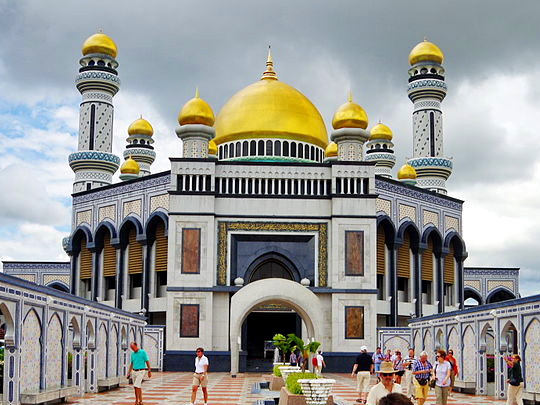
Three kilometres northwest of the centre at Kampong Kiarong, Jame’ Asr Hassanil Bolkiah Mosque is the larger of Brunei’s two state mosques, built between 1988 and 1994 and given to the country by the reigning sultan, Hassanal Bolkiah, to mark twenty-five years on the throne.
Twenty acres of gardens and fountains surround a prayer hall for five thousand, with four minarets of 58 metres, Philippine hardwood, Italian marble and a mihrab tiled in 24-carat gold; non-Muslims can go in outside prayer times, robes are handed out at the door, and photographing anyone at prayer is not allowed.
There are twenty-nine golden domes and twenty-nine marble steps, because Hassanal Bolkiah is the twenty-ninth sultan in a line running back more than six hundred years — the numbers are built into the fabric as a count of the dynasty, which tells you a good deal about how Brunei understands itself.
4 – Istana Nurul Iman
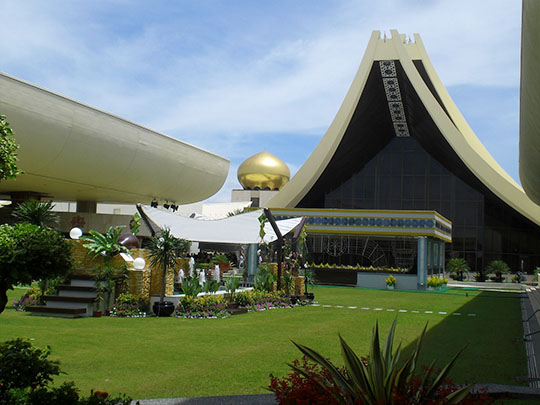
Istana Nurul Iman, the sultan’s official residence, stands on a ridge above the Brunei River a few kilometres upstream of the centre, finished in 1984 to coincide with independence from Britain and designed by the Filipino architect Leandro Locsin — its name means the palace of the light of faith, and it is also the seat of government, with the prime minister’s office inside it.
Guinness lists it as the largest residential palace in the world: 1,788 rooms including 257 bathrooms, a banquet hall that extends to seat five thousand, a mosque for fifteen hundred, five swimming pools and air-conditioned stables for the polo ponies, all under golden domes and vaulted Malay roofs across something like 200,000 square metres of floor.
It opens to the public for three days a year, at Hari Raya Aidilfitri, when anyone at all may queue, eat a meal provided by the palace and shake the sultan’s hand — children leave with a green envelope of money, and then the doors shut for another 362 days.
5 – Kampong Ayer
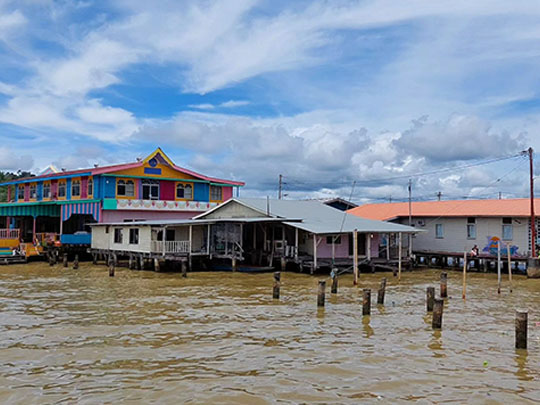
Forty-odd stilt villages stand on both banks of the Brunei River in the middle of the capital, linked by tens of kilometres of boardwalk — people have lived over this water for something like a thousand years, and for most of Brunei’s history the sultanate was governed from here rather than from dry land at all.
Around thirty thousand people still live in Kampong Ayer, with their own mosques, schools, clinics, shops, police posts and a fire station, every one of them up on piles; water taxis run over from the mainland jetties for about a dollar, and a cultural gallery near the far bank has a tower with a view back across the roofs.
Antonio Pigafetta, sailing with Magellan’s fleet in 1521, called it the Venice of the East, and half of Asia has borrowed the phrase since — and from these boardwalks you look straight over the water at Istana Nurul Iman, which is more or less the whole of Brunei in a single view.