
Bgabel / CC-BY-SA-3.0 / GFDL
Capital: Kralendijk
Population: 26,500+
Language: Papiamentu/Dutch
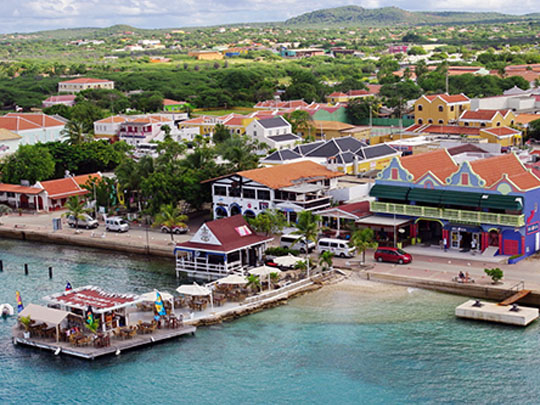
1 – Kralendijk (above)
Bonaire’s capital is a small, low-slung port on the sheltered west coast, and its name is a Dutch mangling of koralendijk, “coral dike” — though locals just call it Playa, the beach.
It’s a couple of streets of ochre and mustard Dutch colonial buildings along the water, with Fort Oranje and its lighthouse, dive shops on every corner, and water taxis out to Klein Bonaire, the uninhabited islet just offshore.
In May 1940, when the Netherlands fell, the Dutch shipped 461 German and Dutch internees here and put them in a camp south of the fort; after the war the camp was turned into a hotel, which is still operating.
2 – The Salt Pans
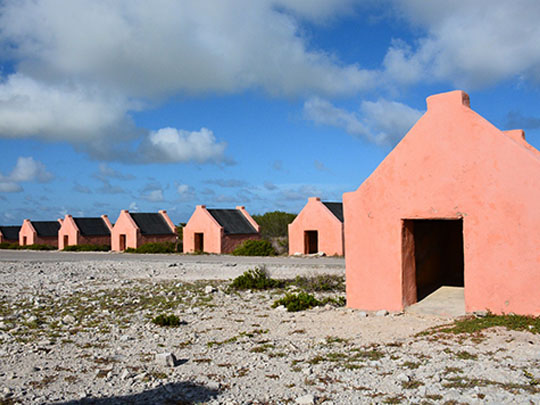
The flat southern tip of the island is one vast salt works covering roughly an eighth of Bonaire, worked since the 17th century by enslaved Africans brought in by the Dutch West India Company — and still producing salt today under an American food multinational.
Drive the coast road past the blindingly white salt pyramids and four coloured obelisks, once markers telling ships’ captains which pan to load from, and stop at the rows of tiny coral-stone huts.
Those huts, put up around 1850, are barely 2 metres by 1.5 and slept up to six people each; they were built because the alternative was a seven-hour walk each way from the workers’ homes in Rincon, and slavery here was not abolished until 1863.
3 – Washington Slagbaai National Park
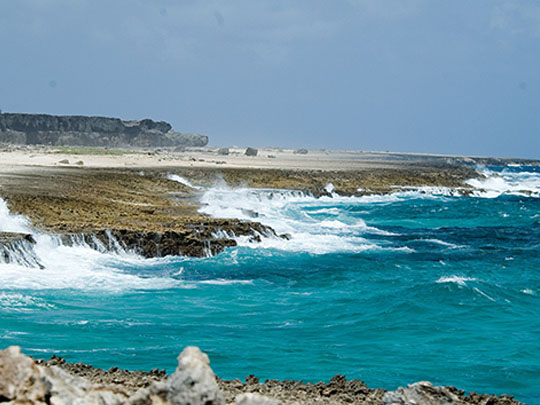
A fifth of Bonaire — the dry, hilly north-west — is national park, and it was the first nature reserve anywhere in the former Netherlands Antilles when it was set aside in 1969; before that it was two plantations worked by enslaved people, exporting salt, charcoal, aloe, divi-divi pods and goats to Curaçao.
Two driving routes loop through cactus scrub to empty bays — Boka Slagbaai with its ochre plantation buildings, Playa Funchi, the wild windward coast — and two hiking trails climb Brandaris, at 241 metres the island’s high point, with Venezuela visible on a clear day.
The name is blunt about what happened here: Slagbaai is generally read as “slaughter bay”, for the goats butchered, salted and shipped out — in a good year, over 3,000 of them went to Curaçao from Playa Funchi alone.