
Christine Rondeau / Wikimedia Commons / CC-BY-SA-3.0 / GFDL
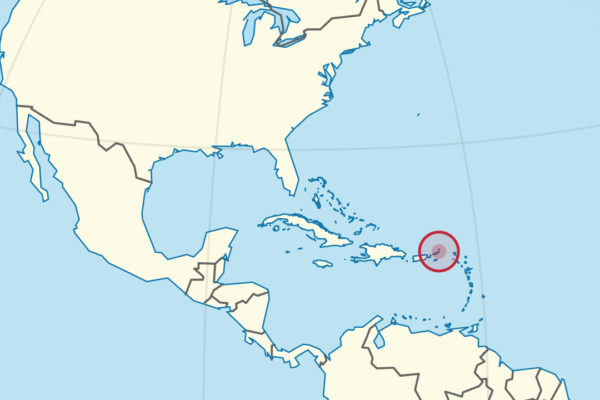
Capital: Road Town
Population: 35,000+
Language: English and Virgin Islands Creole
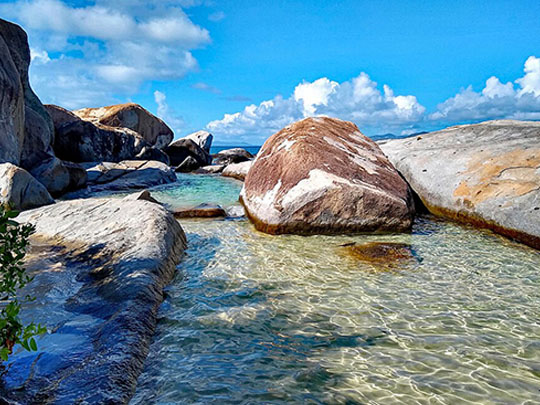
1 – The Baths (above)
At the southern tip of Virgin Gorda, the granite boulders of The Baths, some up to 12 m across, lie tumbled along a white-sand beach, rock that cooled slowly deep underground and was laid bare only when erosion stripped away everything above it.
A trail with wooden ladders and rope handholds threads beneath the boulders of The Baths, through seawater grottoes and tidal pools, to Devil’s Bay, and the area became a national park in 1990.
On Virgin Gorda’s south-eastern tip, the ruins of a copper mine worked by Cornish miners and local labourers from 1838 until it was abandoned in 1862, including its chimney and engine house, stand on the cliffs, though local legend credits the Spanish with working it first.
2 – Road Town
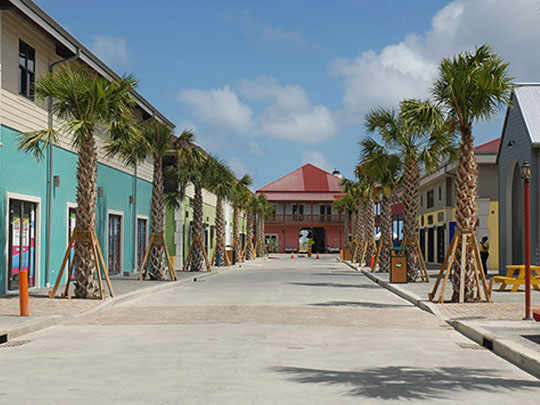
Road Town, the capital, wraps around Road Harbour on Tortola’s south coast, and its name is plain sailors’ English, from “the roads”, an anchorage where ships can lie offshore.
Road Town’s Main Street holds the 18th-century prison and the old post office, with Fort Burt, rebuilt by the British in 1776 and later Tortola’s first hotel, on the hill above, while the Sunday Morning Well is where emancipation is ceremonially read each August, though the 1834 news was most likely first read in churches.
On 24 November 1949, more than 1,500 people, led by Theodolph Faulkner with Isaac Fonseca and Carlton de Castro, marched through Road Town to the Commissioner’s Office, demanding a say in their own government, when the whole territory held about 6,500 people, and the Legislative Council was restored in 1950.
3 – Jost Van Dyke
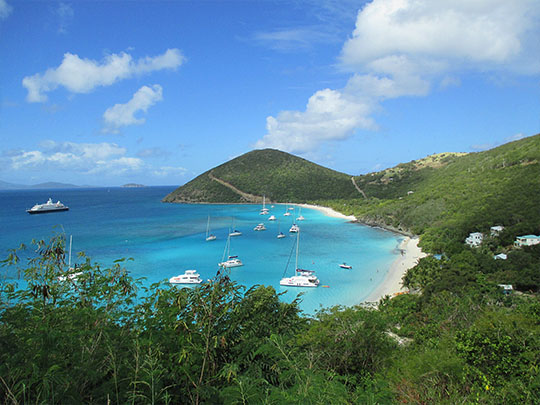
About 8 km north-west of Tortola, Jost Van Dyke is a small island of about 8 km², traditionally said to be named after the 17th-century Dutch privateer Joost van Dyk, and in the 18th century it was home to a small Quaker community that preached simplicity and equality, yet nearly all its members held enslaved people.
Jost Van Dyke has a single road, fewer than 300 residents, with Great Harbour’s sandy main street running along the beach and White Bay round the headland, and in February 1943 islanders fed, clothed and sheltered sailors whose lifeboat reached the island after U-217 torpedoed their ship, the Rhexenor, far out in the Atlantic.
Foxy’s, opened in 1968, became a legendary stop for visiting yachts and famed for its New Year’s Eve party, the Soggy Dollar Bar, named for sailors swimming ashore with wet cash, claims to have invented the Painkiller, and William Thornton, who designed the United States Capitol, was born on Jost Van Dyke in 1759.