
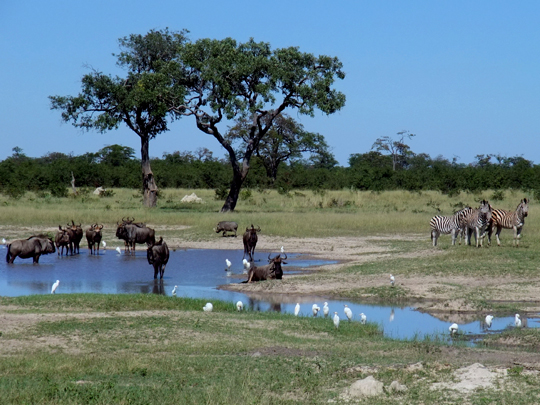
Wikimedia Commons / CC-BY-SA-3.0 / GFDL
Capital: Gaborone
Population: 2.4 million+
Language: English/Setswana
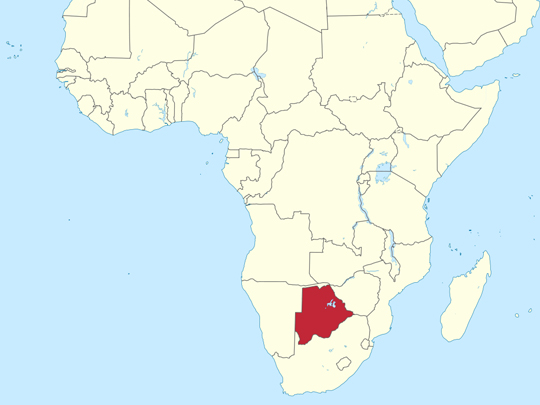
1 – Chobe National Park (also above)
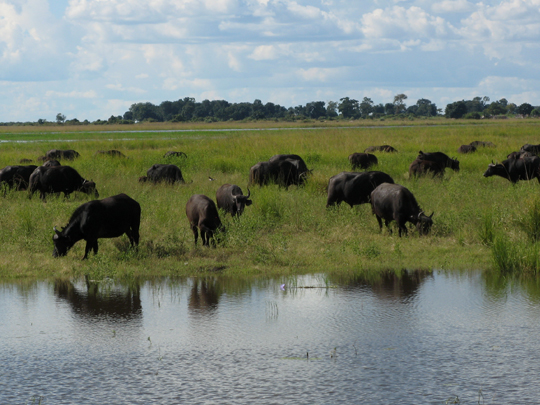
Botswana’s first national park, declared in 1967 in the country’s far north where Namibia, Zambia and Zimbabwe nearly meet, named for the Chobe River that flows on to Victoria Falls.
The star is the Chobe Riverfront near Kasane, where boat cruises drift past some of the largest elephant and buffalo herds on Earth; inland lie the predator-rich Savuti Marsh and Linyanti wetlands, plus more than 450 bird species.
Elizabeth Taylor and Richard Burton secretly remarried here in 1975, at Chobe Game Lodge on the riverbank, sealing it with a champagne toast just sixteen months after their divorce.
2 – Kgalagadi Transfrontier Park
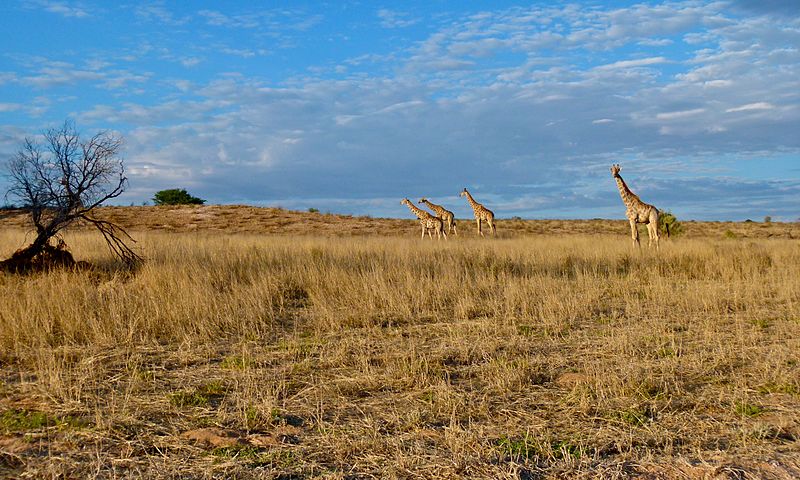
Straddling the Botswana–South Africa border deep in the southern Kalahari, this roughly 38,000 km² wilderness — nearly twice the size of Kruger — was formally created in 2000 by merging two adjoining national parks first proclaimed in the 1930s.
Drive the red dunes and the dry Nossob and Auob riverbeds by 4×4, working waterhole to waterhole for gemsbok, springbok and the Kalahari’s famous black-maned lions, along with cheetah and leopard, and stay out after dark for some of the clearest night skies in Africa.
It was Africa’s first “peace park” — a reserve run jointly by two governments and left entirely unfenced along the border, so the herds still move across an international boundary that exists only on the map.
3 – Okavango Delta
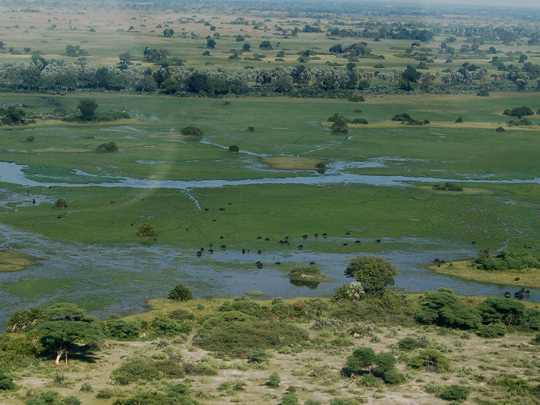
The world’s largest inland delta, where the Okavango River — flowing down from the Angolan highlands — fans out across the Kalahari in northwestern Botswana and simply vanishes into the sand, earning it the name “the river that never finds the sea.”
Glide the channels and lagoons by mokoro (dugout canoe) or bush plane around the Moremi Game Reserve at its heart, in search of elephants, lions, leopards, hippos and one of Africa’s densest populations of endangered wild dogs, amid 500-plus bird species.
In a strange twist, the delta floods in the middle of the dry season — the water takes months to arrive from rains that fell in Angola — and in 2014 this desert oasis was named UNESCO’s 1,000th World Heritage Site.
4 – Tsodilo Hills
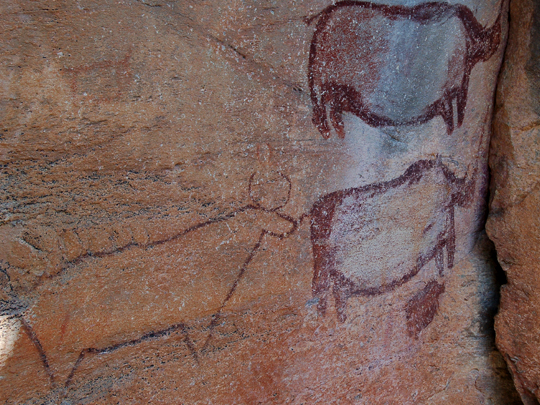
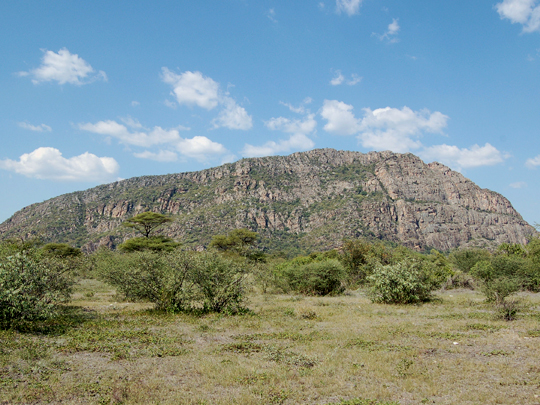
A cluster of quartzite hills rising abruptly from the flat Kalahari in Botswana’s remote northwest, sacred to the San for millennia and a UNESCO World Heritage Site since 2001.
Follow trails past more than 4,500 ancient rock paintings — elands, giraffes, rhinos and dancing figures — that have earned Tsodilo the nickname “the Louvre of the Desert”; the San know its main peaks as Male, Female and Child.
To the San, Tsodilo is holy ground — the “Mountains of the Gods,” alive with ancestral spirits — and guides traditionally ask the spirits’ permission before leading visitors up.
5 – Mokolodi Nature Reserve
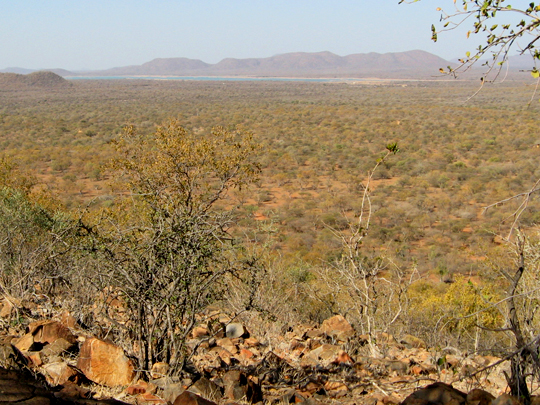
A 30 km² private, non-profit reserve just south of the capital Gaborone, created in 1994 on donated former farmland with wildlife conservation and children’s education at its heart.
An easy day out from the city for game drives, guided walks and horseback safaris among giraffe, zebra, kudu and white rhino, with rhino- and giraffe-tracking, a reptile park and rescued cheetahs; it’s also the base of Cheetah Conservation Botswana.
Small as it is, Mokolodi has punched above its weight — its breeding programme helped reintroduce the white rhino to the wilds of the Okavango Delta.
6 – The Kalahari Desert
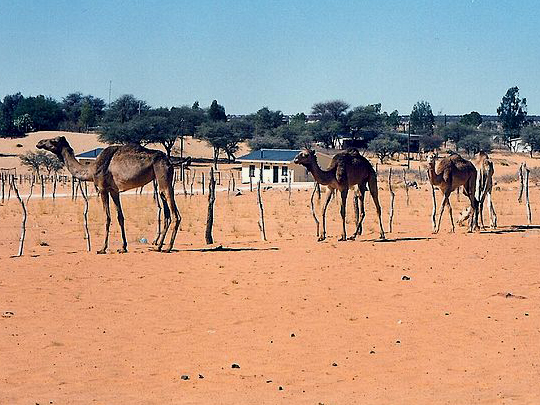
A vast basin of red sand, grass and thornscrub sprawling across most of Botswana and into Namibia and South Africa, its name taken from a Tswana word for the great thirst, and the ancestral home of the San for tens of thousands of years.
At its heart lies the Central Kalahari Game Reserve, usually ranked the second-largest game reserve on the planet, where fossil river valleys like Deception turn green with game after the rains; away to the northeast, the Makgadikgadi salt pans — the cracked floor of a vanished super-lake — draw zebra herds, flamingos, and the baobabs of Kubu Island.
For all the name suggests, this is not a true desert: most of it catches enough rain each wet season to sprout grass and trees, and it is usually described as the largest continuous stretch of sand anywhere on Earth.
7 – Serowe
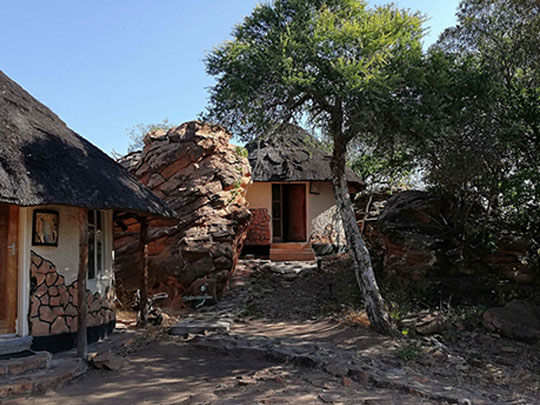
About 300km north of Gaborone in eastern Botswana, Serowe was founded in the early 1900s by Khama III as the new capital of the Bangwato, grew into one of the largest traditional villages in southern Africa, and is the birthplace of Sir Seretse Khama, the country’s first president.
The Khama III Memorial Museum fills the Red House, a family home of about 1910, with the dynasty’s story, Setswana life across village, lands and cattle post, and a room for the novelist Bessie Head, who lived and died here; above the village, the royal cemetery on Thathaganyana Hill holds Khama III’s grave under a bronze duiker, the Bangwato totem.
Seretse Khama married Ruth Williams, an English clerk, in London in 1948, and under pressure from apartheid South Africa the British government kept him out of his own country until 1956, allowing him back only once he gave up the chieftainship — he led Botswana to independence in 1966 anyway, and is buried on that hill.