
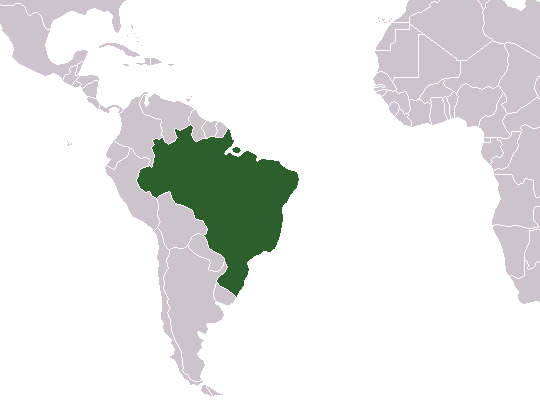
Wikimedia Commons / CC-BY-SA-3.0 / GFDL
Capital: Brasília
Population: 213 million+
Language: Portuguese (nearly 300 Indigenous languages)
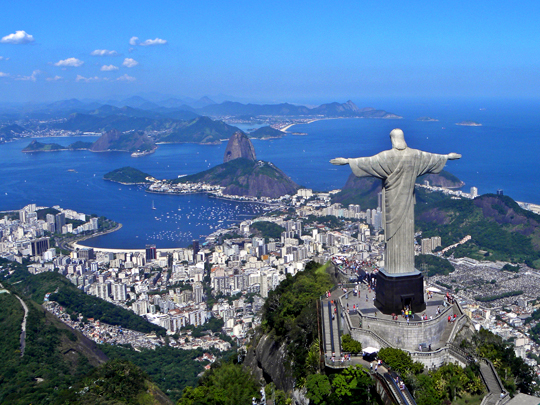
1 – Christ the Redeemer Statue, Rio (also above)
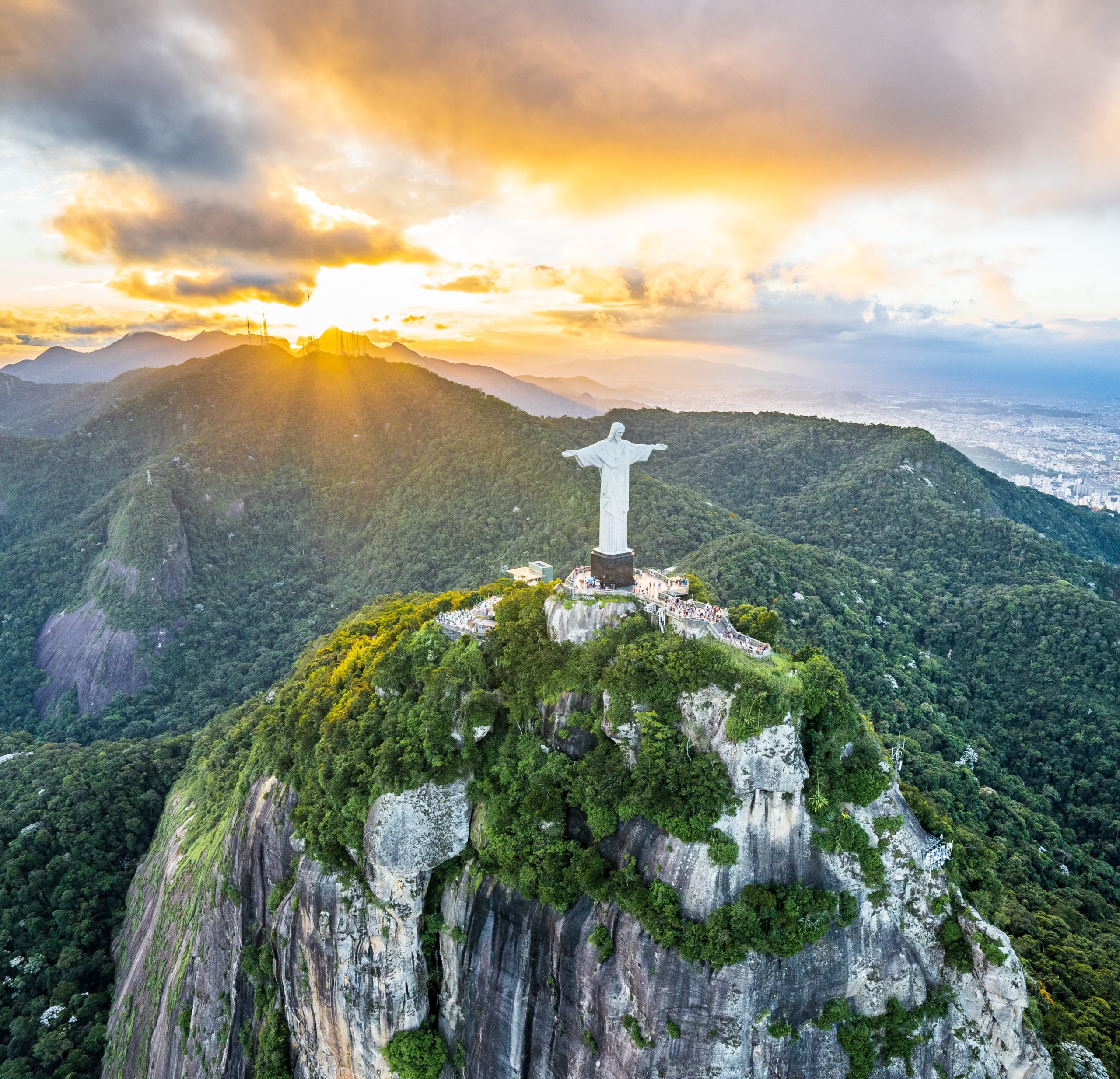
Arms outstretched over Rio de Janeiro from the summit of Corcovado, at about 700 m, the 30 m statue of Christ the Redeemer stands on an 8 m pedestal, often described as the largest Art Deco sculpture in the world and voted one of the New Seven Wonders of the World in 2007.
Christ the Redeemer was designed by the engineer Heitor da Silva Costa with the French sculptor Paul Landowski, clad in a mosaic of small triangular soapstone tiles and inaugurated on 12 October 1931, at the top of a rack railway first opened in 1884.
Christ the Redeemer is struck by lightning several times a year, and a strike in January 2014 chipped its right thumb, while in 1931, Guglielmo Marconi was meant to switch on its lights by radio from Rome, though accounts differ on whether his signal got through.
2 – Iguaçu Falls
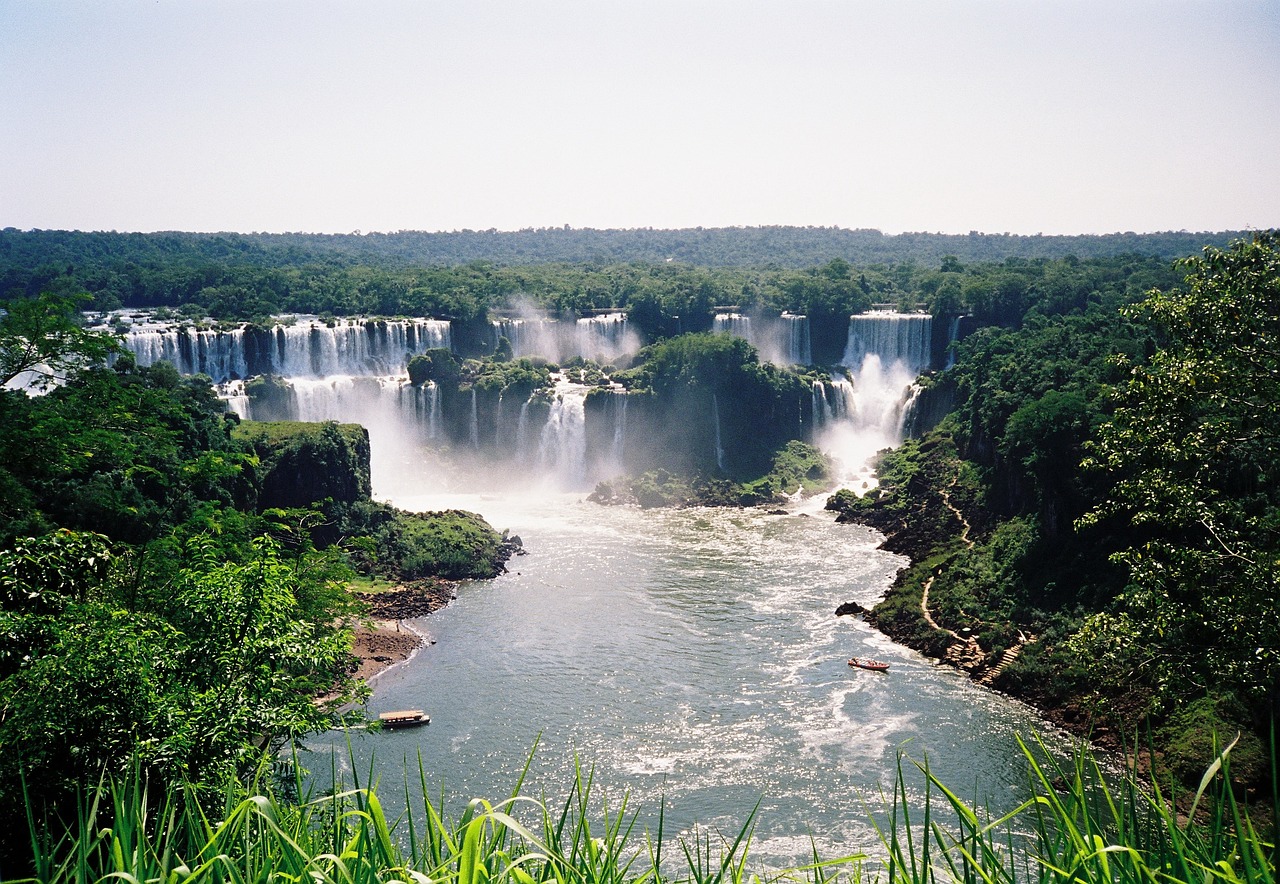

Iguaçu Falls, on Brazil’s border with Argentina, is a horseshoe of around 275 cascades almost 3 km wide, nearly three times the width of Niagara, and while most of the falls lie on the Argentine side, the Brazilian bank gives the grandest panorama of the whole spectacle.
A walkway in Brazil’s Iguaçu National Park, a UNESCO World Heritage Site, leads out towards the foot of the Devil’s Throat, a U-shaped chasm of 14 falls more than 80 m high, whose spray rises in a curtain of mist about 150 m tall.
Look closely at Iguaçu Falls and you may see great dusky swifts, which nest on the wet rock behind the water and fly straight through the cascades to reach their nests.
3 – Fernando de Noronha
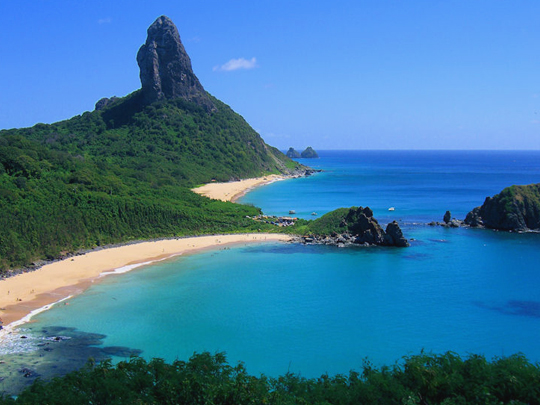
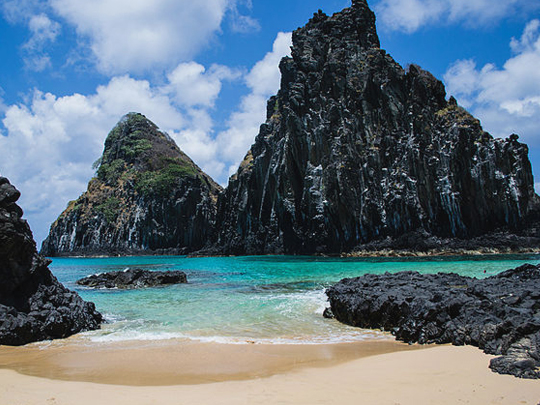
Fernando de Noronha is a cluster of volcanic islands about 350 km off Brazil’s north-east coast, listed with the Atol das Rocas as a UNESCO World Heritage Site, and was visited by Charles Darwin on the voyage of HMS Beagle in 1832.
The beaches of Fernando de Noronha include Baía do Sancho, repeatedly voted the world’s best beach by Tripadvisor users and reached by a ladder through a cleft in the cliff, while the clear water offers some of the finest diving in the South Atlantic, with turtles, rays and reef sharks.
Most mornings, spinner dolphins gather in Fernando de Noronha’s Baía dos Golfinhos to rest after a night of hunting offshore, one of the largest resident spinner-dolphin populations known, with up to about 2,000 counted in a single morning.
4 – Amazon River & Rainforest
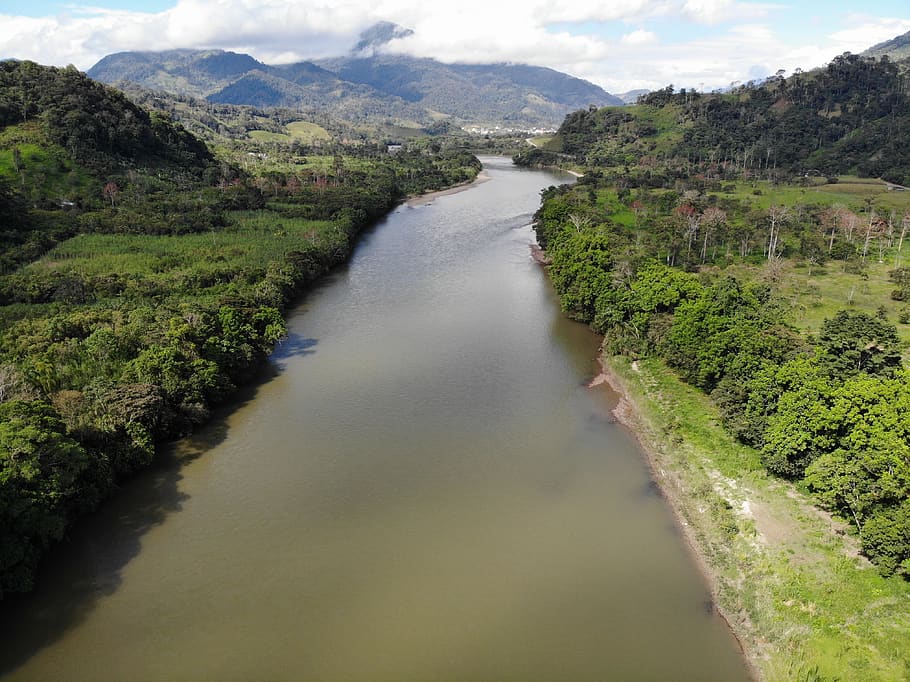
The Amazon is the largest rainforest on Earth, home to about one in ten known species and drained by the Amazon River, the largest river in the world by volume, which runs for roughly 6,400 km without a single bridge across its main stream.
From the river port of Manaus, boats set off into the Amazon’s flooded forest and oxbow lakes in search of pink river dolphins, and nearby, at the Meeting of the Waters, the dark Rio Negro and the sandy Solimões run side by side for several kilometres without mixing.
Irish settlers were farming tobacco near the mouth of the Amazon around 1612, among them the Purcell brothers and Bernardo O’Brien of County Clare, who built a fort on the river’s north bank, in a colony where Irish was the first language.
5 – Copacabana Beach, Rio de Janeiro
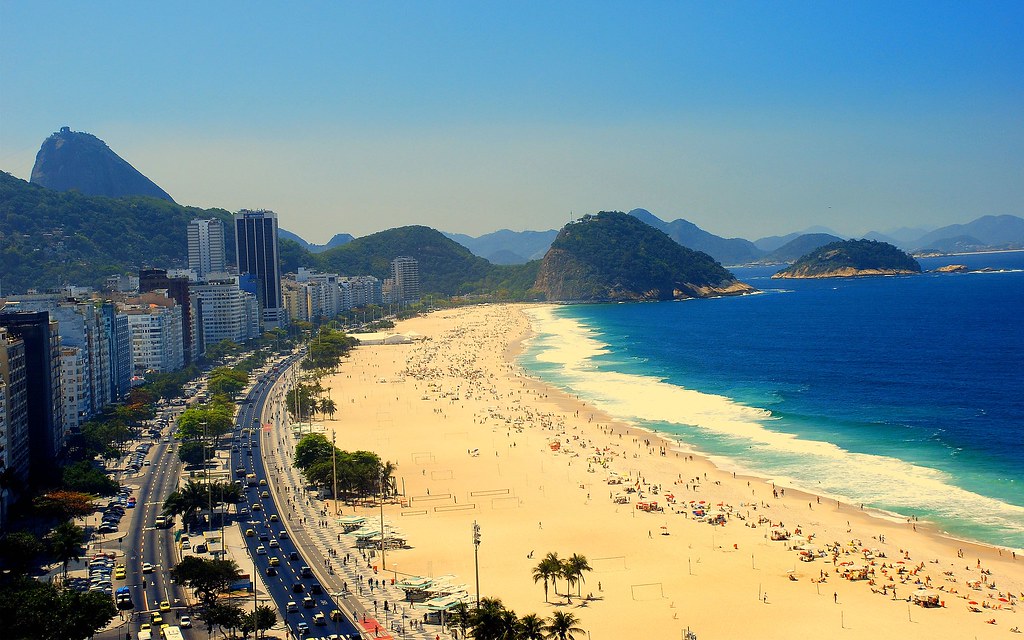
Copacabana is a 4 km crescent of sand backed by high-rises, one of the world’s most famous beaches, and its New Year’s Eve party, where crowds dressed in white cast flowers into the sea for the sea goddess Iemanjá, is recognised by Guinness as the largest hosted by any city.
The black-and-white wave mosaic of Copacabana’s promenade began as a Portuguese pattern copied from Lisbon’s Rossio square, and in 1970, the landscape architect Roberto Burle Marx reworked it, widening the waves and turning them to run parallel to the sea.
Copacabana owes its name to Bolivia, for an image of the Virgin of Copacabana, whose shrine stands on Lake Titicaca, reached Rio in the 18th century, and the district took her name in place of its old Tupi name, Sacopenapã.
6 – Ouro Preto
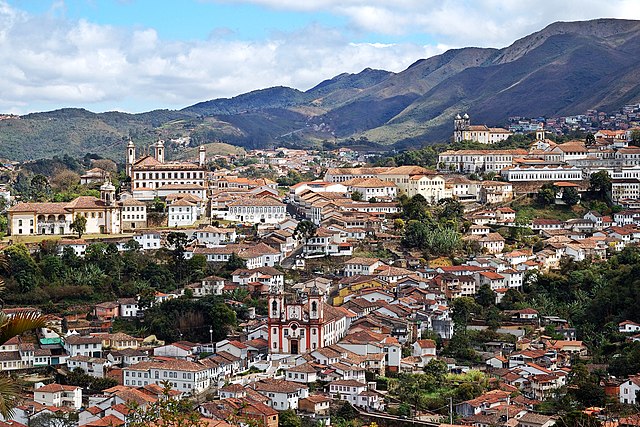
Ouro Preto, “Black Gold”, in the hills of Minas Gerais, was founded in 1698 at the heart of the greatest gold rush the Americas had seen up to then, and grew into one of the largest and wealthiest towns in the Americas.
The gold of Ouro Preto paid for gilded baroque churches along steep cobbled lanes, in Brazil’s first UNESCO World Heritage Site, and the town was the centre of the Inconfidência Mineira, the failed independence plot of 1789, whose leader, Tiradentes, was hanged and quartered.
Ouro Preto’s finest carvings are by Antônio Francisco Lisboa, known as Aleijadinho, “the little cripple”, colonial Brazil’s greatest sculptor, who kept working through a crippling illness and, according to tradition, had his tools tied to his hands.
7 – Pantanal
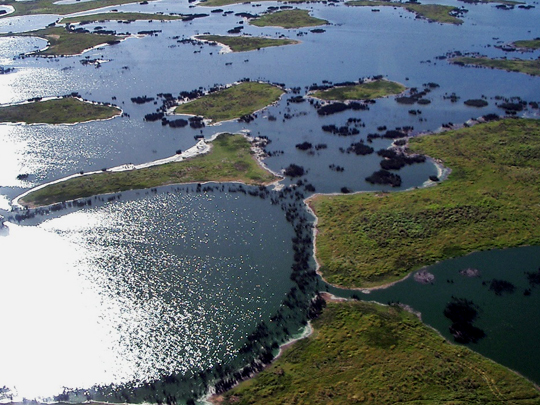
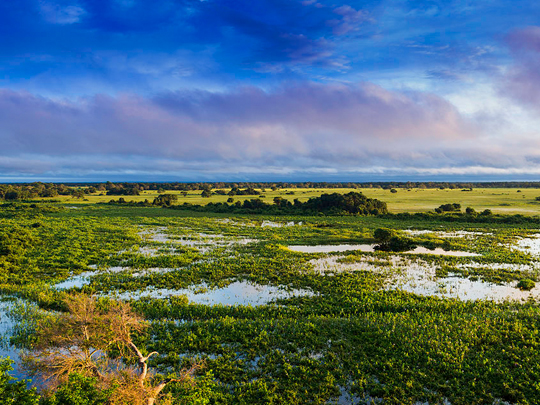
The Pantanal, in the heart of South America, is the world’s largest tropical wetland, covering roughly 170,000–180,000 km², an area bigger than Florida, where the retreating floods of each dry season concentrate wildlife out in the open.
The Pantanal teems with capybaras, the world’s largest rodent, giant otters, anteaters and tapirs, some 3,000 hyacinth macaws, the world’s longest parrots, and an estimated 10 million yacare caimans, probably the largest crocodilian population on Earth.
The Pantanal has one of the highest jaguar densities anywhere and some of the largest jaguars in the world, making it one of the best places on Earth to see the big cat in the wild.
8 – Teatro Amazonas, Manaus
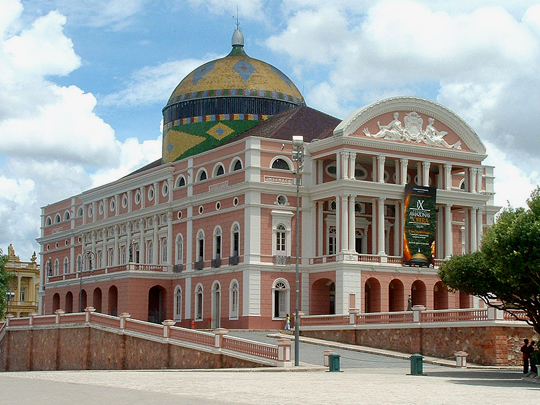
The Teatro Amazonas, in the river city of Manaus, deep in the Amazon, is a Belle Époque opera house opened on 31 December 1896 at the height of the rubber boom, which faded in the 1910s after Henry Wickham smuggled some 70,000 rubber seeds to Britain in 1876 for plantations in Asia.
The rubber barons filled the Teatro Amazonas with Italian marble, French furnishings and Murano-glass chandeliers under a dome of 36,000 ceramic tiles from Alsace in the colours of the Brazilian flag, and the opening scene of Werner Herzog’s Fitzcarraldo (1982) was filmed here.
The wealth behind the Teatro Amazonas had a brutal side, exposed by the Dublin-born Roger Casement, British consul in Belém, whose 1910 investigation of the Putumayo rubber region revealed atrocities against Indigenous workers.
9 – Olinda

Olinda, on a hill above the coast of Pernambuco, was founded in 1535 by the Portuguese nobleman Duarte Coelho and burned by the Dutch during their occupation of the region, and legend says it takes its name from an admiring cry of “Ó linda!”, “Oh, beautiful!”.
Olinda’s UNESCO-listed old town of pastel houses, cobbled lanes and baroque churches comes alive at Carnival, when the whole town becomes a free street party dancing to the fast rhythm of frevo.
The stars of Olinda’s Carnival are the bonecos gigantes, giant puppets carried through the streets, led by the Homem da Meia-Noite, the “Midnight Man”, about 4 m tall, which first paraded in 1932.
10 – Chapada Diamantina
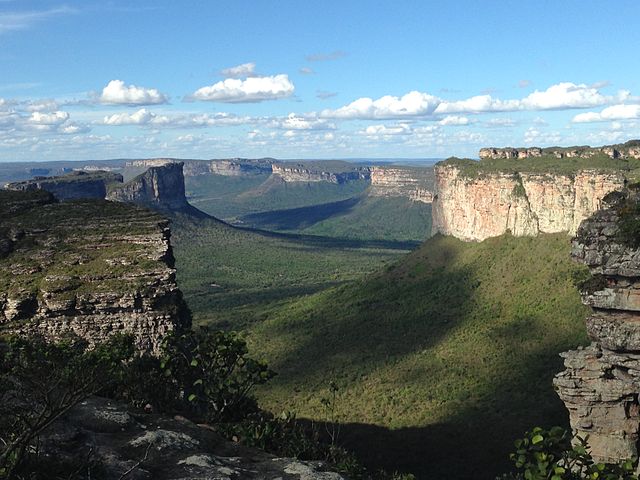
The Chapada Diamantina, the “Diamond Highlands” in the interior of Bahia, is a wild plateau of table mountains, canyons, caves and waterfalls, where a diamond rush from the 1840s made the region one of the world’s leading diamond sources until the South African finds from 1867.
Hikers in the Chapada Diamantina climb Morro do Pai Inácio for its sunsets, follow the multi-day Vale do Pati trail and reach the Cachoeira da Fumaça, among Brazil’s highest waterfalls, whose water dissolves into drifting “smoke” as it falls.
Hidden in a cave of the Chapada Diamantina is the Poço Encantado, the “Enchanted Well”, where for part of the year a shaft of sunlight pierces the darkness and turns the clear water a luminous blue.
11 – Chapada dos Veadeiros, Goiás
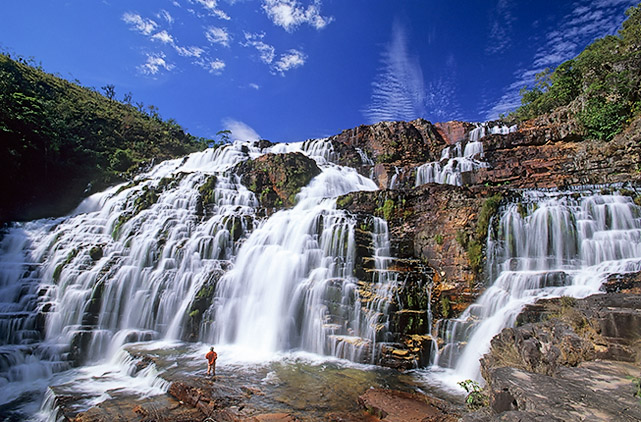
Chapada dos Veadeiros is a high plateau about 230 km north of Brasília, with rocks some 1.8 billion years old and crystal-clear rivers tumbling over countless waterfalls through the cerrado savanna, part of a UNESCO World Heritage Site.
Hikers in Chapada dos Veadeiros come for canyons, natural pools and the water-carved rock garden of the Vale da Lua, the “Valley of the Moon”, while the town of Alto Paraíso, at the plateau’s edge, draws mystics and seekers.
Quartz-rich Chapada dos Veadeiros has a cosmic reputation, for local legend says 1960s NASA images showed it glowing from space, a story that helped make it one of Brazil’s great New Age magnets.
12 – Pedra da Gávea, Rio de Janeiro
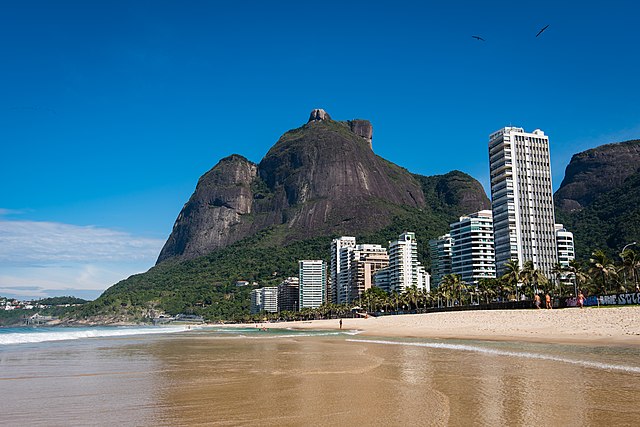
Pedra da Gávea rises about 840 m almost straight from the Atlantic on the western edge of Rio de Janeiro, a granite-and-gneiss mass often called one of the world’s largest coastal monoliths, with a 360° view from its flat summit.
The hike up Pedra da Gávea is one of Rio’s toughest, ending in the Carrasqueira, a rock scramble of about 35 m, while hang-gliders launch from neighbouring Pedra Bonita and glide past it down to São Conrado beach.
One face of Pedra da Gávea looks like a giant human head, the “Emperor’s Head”, and in the early 20th century the archaeologist Bernardo da Silva Ramos claimed marks nearby were Phoenician writing, but geologists who climbed up in 2000 found only grooves worn by rain.
13 – São Paulo

São Paulo, founded by Jesuit missionaries at Piratininga in 1554, is the largest city in Brazil and the Southern Hemisphere, and among its early missionaries was Thomas Field of Limerick, who spent about ten years there from the late 1570s, often travelling with José de Anchieta.
São Paulo is a city of energy rather than beaches, with the art of MASP on Avenida Paulista, the green escape of Ibirapuera Park, the Teatro Municipal and one of the continent’s great restaurant scenes, fed by huge Italian, Portuguese, Lebanese and Jewish communities.
In São Paulo’s Liberdade district, the historic Japanese quarter, red gateways and lanterns recall the immigrants who arrived aboard the Kasato Maru in 1908 to work on coffee plantations, the start of the largest Japanese-descended population outside Japan.
14 – Salvador da Bahia
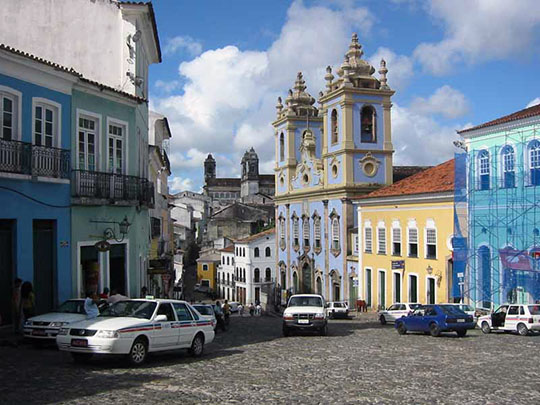
Salvador, on a bluff above the Bay of All Saints, was founded in 1549 by Tomé de Sousa as the first capital of Portuguese America, a role it held until 1763, and UNESCO describes it as the New World’s first slave market, with more than a million enslaved Africans landed in Bahia.
Salvador’s UNESCO-listed old town is a hillside of colourful colonial mansions linked to the lower city by the Elevador Lacerda, with the richly decorated baroque interior of São Francisco church, capoeira in the squares and a Carnival often billed as the world’s biggest street party.
Salvador’s Pelourinho quarter is named after the whipping post where enslaved people were flogged in public, and in these streets, candomblé survived persecution by pairing each African orixá with a Catholic saint, so that devotion to Saint Barbara could honour Iansã.
15 – Brasília


Brasília, Brazil’s purpose-built capital on the savanna at about 1,170 m, was planned by Lúcio Costa, who sketched two axes crossing “as one might mark the sign of the Cross”, though most people see an aeroplane, and was built in about 41 months before its inauguration on 21 April 1960.
Oscar Niemeyer designed most of Brasília’s major public buildings, from the National Congress with its twin towers and concrete bowls to the crown-shaped Metropolitan Cathedral and the Alvorada Palace, set around the Praça dos Três Poderes, with gardens by Roberto Burle Marx.
Brasília was added to the UNESCO list in 1987, among the first modern cities to be listed, yet the candangos, the workers who built it, had no place in its plan, and most of the region’s people came to live in satellite towns beyond it.
16 – Paraty

Paraty, a small port on the Costa Verde between Rio and São Paulo, grew rich after gold was found in Minas Gerais, when the Caminho do Ouro, the Gold Road, wound hundreds of kilometres over the mountains to end at its quay, sending gold to Lisbon and enslaved Africans inland to the mines.
Paraty’s whitewashed houses with brightly painted frames surround separate churches for different groups in colonial society, such as Santa Rita for freed people and Rosário, built by enslaved people, and in 2019, the town, with its forest, became Brazil’s first mixed cultural and natural UNESCO site.
Paraty’s streets were laid out so that spring tides around the full moon wash in, usually only 15–25 cm deep, and drain back out, and a 19th-century railway that took its trade, followed by decades of isolation, is why the old town survived intact.
17 – Recife
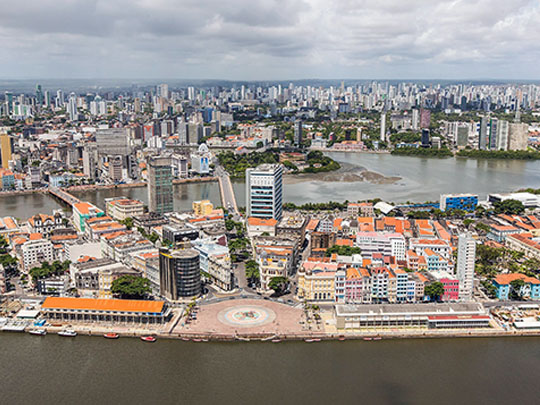
Recife, named after the reefs that shelter its harbour and nicknamed the “Venice of Brazil” for the Capibaribe and Beberibe rivers that wind through it, was seized by the Dutch in 1630 and became the capital of Dutch Brazil until the Portuguese retook it in 1654.
In Recife’s old quarter, Rua do Bom Jesus, once the Rua dos Judeus, holds the restored Kahal Zur Israel, founded in the 1630s and widely regarded as the first synagogue in the Americas, where excavations in 2000 uncovered its ritual bath beneath later floors.
The Dutch governor Johan Maurits of Nassau gave Recife a planned new town, Mauritsstad, with gardens, a zoo, an observatory and a bridge, and to draw paying crowds to its opening on 28 February 1644, he promised that an ox would fly, then hauled a stuffed one across on ropes.