
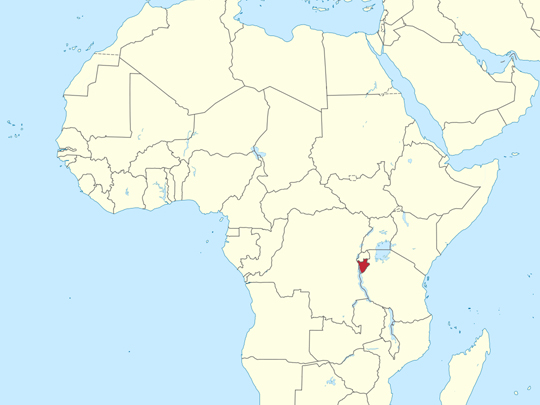
Capital: Gitega
Population: 12.5 million+
Language: Kirundi (official), French, English and Swahili.
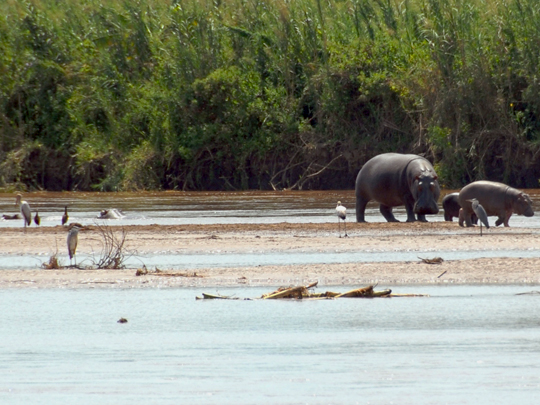
1 – Rusizi National Park (also above)
Burundi’s most accessible national park, set on the Rusizi River delta where it empties into Lake Tanganyika just north of Bujumbura; established in 1980 and now a protected Ramsar wetland.
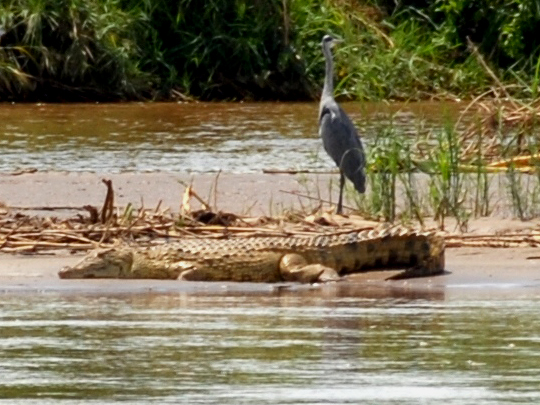
Cruise the reed-lined river by boat to see hundreds of hippos and basking Nile crocodiles, with elusive sitatunga antelope slipping through the papyrus and more than 200 bird species — from fish eagles to pelicans — overhead.
The river is the legendary lair of “Gustave,” a giant Nile crocodile of near-mythic size, rumoured to have taken as many as 300 people over the years and never caught, despite a famous expedition mounted to trap him.
2 – Lake Tanganyika
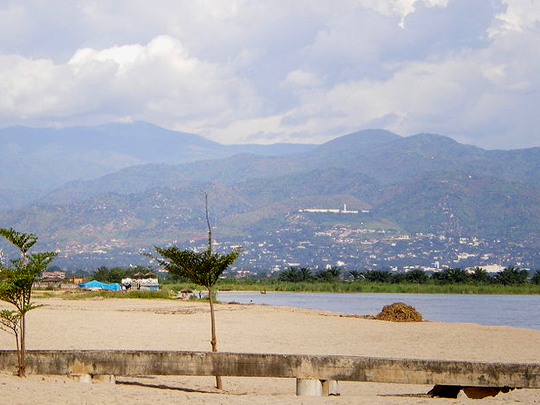
One of Africa’s Great Lakes, cradled in the Rift Valley along Burundi’s western edge and shared with the DR Congo, Tanzania and Zambia — the world’s longest freshwater lake, the second-deepest and among the oldest on Earth, holding almost a fifth of all the liquid freshwater on the planet’s surface.
From Bujumbura’s shore you can swim off sandy beaches, watch fishermen’s pirogues and blazing sunsets over the water, and snorkel among the lake’s jewel-coloured cichlid fish — hundreds of species found nowhere else, making it a living laboratory of evolution.
The lake was the stage for a bizarre First World War naval campaign — the British hauled two little gunboats overland through the Congo to take on a German warship — that helped inspire the classic film The African Queen; that very warship, later raised from the lakebed, still sails these waters as a ferry today.
3 – Bujumbura
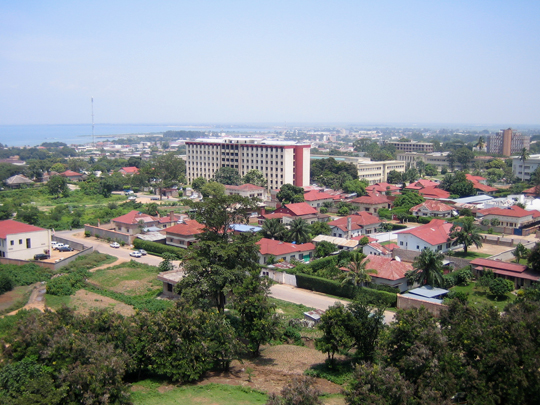
Burundi’s largest city and lakeside economic heart, strung along the northeastern shore of Lake Tanganyika where the highlands tumble down to the water; it grew from a German military post founded in the 1890s (as Usumbura) into the country’s main port.
Wander the colonial-era, Art Deco-tinged downtown and the bustling central market, cool off at the sandy lake beaches just outside town, and get a feel for Burundian culture at the open-air Musée Vivant.
Though everyone still thinks of it as Burundi’s great city, Bujumbura actually lost its status as national capital in 2019, when the government handed that title back to the inland town of Gitega — the old seat of Burundi’s kings.
4 – Livingstone–Stanley Monument
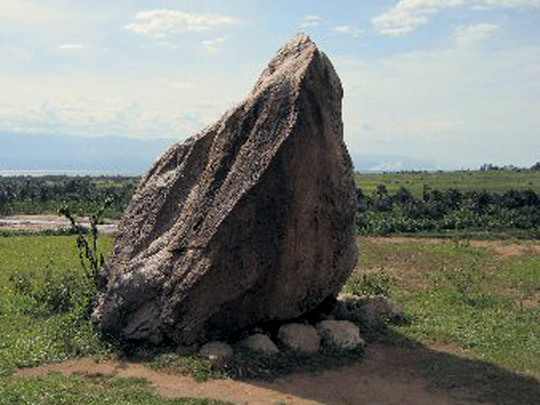
A large inscribed rock on a hilltop at Mugere, about 12km south of Bujumbura and overlooking Lake Tanganyika, marking where explorers David Livingstone and Henry Morton Stanley camped for two nights in November 1871; the Belgians set the stone here in 1956.
The boulder is carved with the date “25-XI-1871” and sits beside a small memorial museum on the East African slave trade, with mango trees said to descend from the one that shaded the pair — and sweeping lake views as the reward.
Despite local legend, this is not where Stanley greeted the long-lost missionary with “Dr Livingstone, I presume?” — that meeting had happened two weeks earlier across the lake at Ujiji; here the two were actually paddling the shoreline together to test whether the Rusizi River flowed out of Lake Tanganyika (it flows in).
5 – Gitega
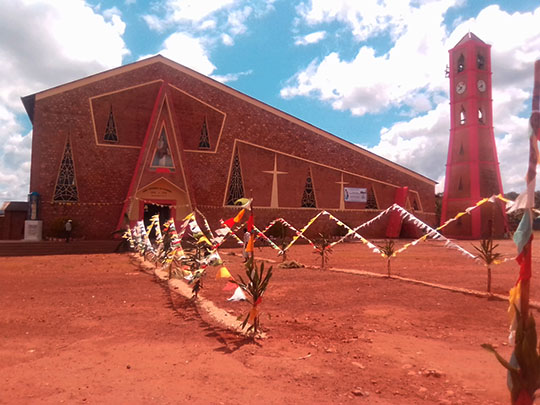
Up in the central highlands about 100km east of Bujumbura, Gitega was the seat of Burundi’s kings, whose monarchy lasted into the 1960s, and since 2019 it has been the country’s political capital again.
The National Museum holds the main collection of royal and ethnographic material, and 7km north at Gishora stands the drum sanctuary founded by Mwezi IV Gisabo — the last independent king — to mark a victory over a rebellious chief in the 19th century, where drummers still perform on the hilltop.
The karyenda drums were never really instruments: they carried royal authority itself, sounded at the enthronement of kings, at sowing festivals and at royal funerals, and played only by hereditary lineages — the Abatimbo who perform at Gishora today descend from those families, and Burundi’s ritual dance of the royal drum went onto UNESCO’s list of intangible cultural heritage in 2014.
6 – Gasumo
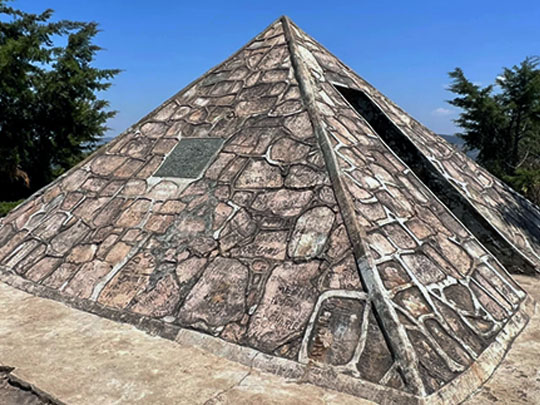
On the northern flank of Mount Gikizi at Rutovu, about 115km from Bujumbura, a thread of water leaves the ground and is generally taken to be the southernmost source of the Nile — from here it runs into the Ruvyironza, the Ruvubu and the Kagera, crosses Lake Victoria, leaves at Jinja as the White Nile and reaches the Mediterranean some 6,500km later.
There is a small stone pyramid on the ridge above, cut with the Latin words Caput Nili Meridianissimum — “the southernmost head of the Nile” — and below it the spring itself, a modest trickle in hill country that was held sacred locally long before anyone came looking.
It was found in the 1930s by Burkhart Waldecker, a German who had come to central Africa fleeing Nazi persecution and then spent years working his way up the river; he put up the pyramid in 1938, settling by accident a question that had defeated every famous explorer who went before him.