
Wikimedia Commons / CC-BY-SA-3.0 / GFDL
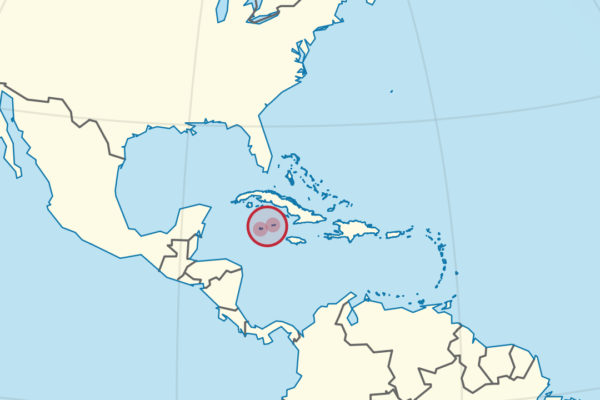
Capital: George Town
Population: 90,000+
Language: English
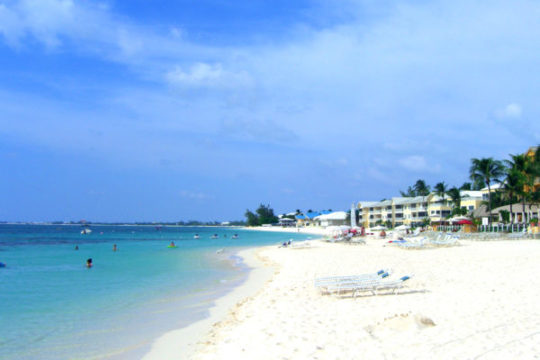
1 – Seven Mile Beach (above)
Running north from George Town along Grand Cayman’s west coast, this crescent of coral sand is where the modern territory was made: tourism arrived in the 1950s and ’60s and built almost all of it here.
It’s a long, calm, powdery stretch backed by resorts, restaurants and watersports outfits, public along its whole length, with reefs close enough in to snorkel off the sand.
It isn’t seven miles — it’s closer to five and a half — and the island behind it is so flat that its highest point, over on Cayman Brac, is only about 43 metres above the sea, which is why Hurricane Ivan washed clean over Grand Cayman in 2004.
2 – George Town
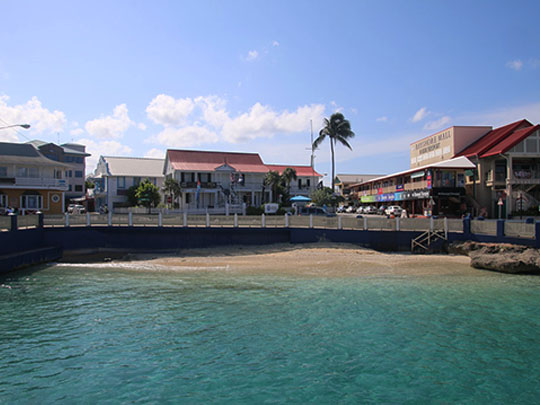
The capital sits on the sheltered west coast of Grand Cayman, on islands Columbus sighted in 1503 and named Las Tortugas for the sea turtles — there’s no evidence anyone lived here before Europeans arrived, which makes Cayman one of the few Caribbean territories with no indigenous past.
The waterfront is a short, walkable strip of pastel buildings, duty-free shops and cruise tenders, with the National Museum in the oldest building in town and the odd gravestone of a shipwrecked sailor nearby.
Behind that frontage sits one of the largest offshore financial centres on earth, with far more registered companies than residents — a business the islands’ famous tax-free status underpins, though the beloved local story that George III granted it as a reward for a shipwreck rescue in 1794 has been picked apart by historians and denied by the palace.
3 – Stingray City
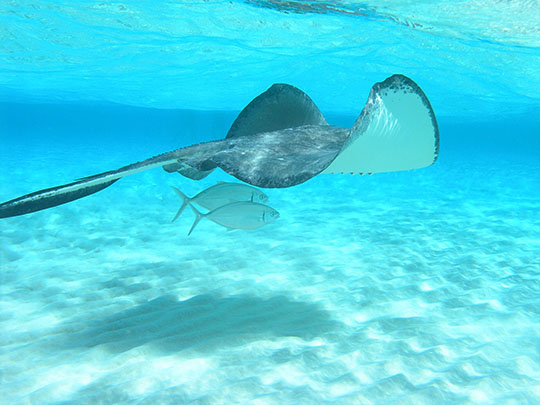
Out in the North Sound, a few miles off the north-west coast, a shallow sandbar inside a natural break in the barrier reef has become the most visited thing in the Cayman Islands.
Boats anchor in waist-deep, startlingly clear water and dozens of southern stingrays glide in around your legs to be fed and handled — there’s a deeper sandbar nearby for divers who’d rather not stand in a crowd.
It started by accident: fishermen coming in through the channel used to clean their catch in the calm water here, the rays learned to associate a boat engine with an easy meal, and by the late 1980s divers had worked out they could feed them squid by hand.