
Wikimedia Commons / CC-BY-SA-3.0 / GFDL
Capital: Santiago
Population: 18.5 million+
Language: Spanish (Mapudungun and Rapa Nui also spoken)
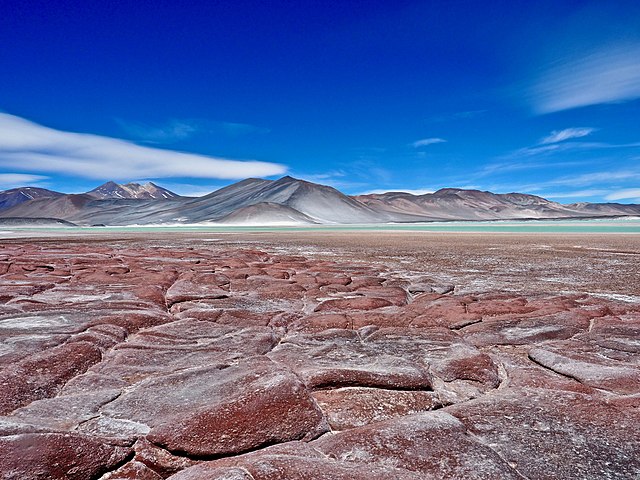
1 – Atacama Desert (also above)
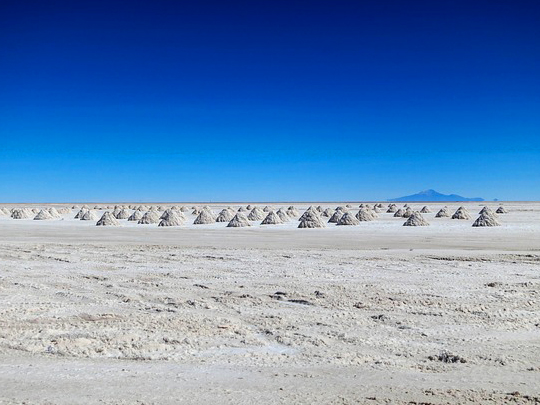
Stretching for 1,600km down the north of Chile between the Pacific and the high Andes, the Atacama is the driest place on Earth outside the poles — a surreal, Mars-like wilderness of salt flats, sand and stone where some spots have not seen rain in living memory, and NASA comes to test its Mars rovers.
From the oasis town of San Pedro, travellers explore a landscape of wonders: the eerie, wind-carved “Valley of the Moon,” turquoise salt lagoons dotted with flamingos, and — best of all at dawn — El Tatio, the largest field of geysers in the Southern Hemisphere, where scores of vents hiss and steam against the freezing morning air, high on the roof of the Andes.
Because the desert air is so bone-dry and clear, and the skies so free of cloud and light, the Atacama has some of the finest stargazing on the planet — which is why the world’s astronomers have built their greatest telescopes here, and Chile now keeps watch over a huge share of the entire universe on humanity’s behalf.
2 – Torres del Paine National Park
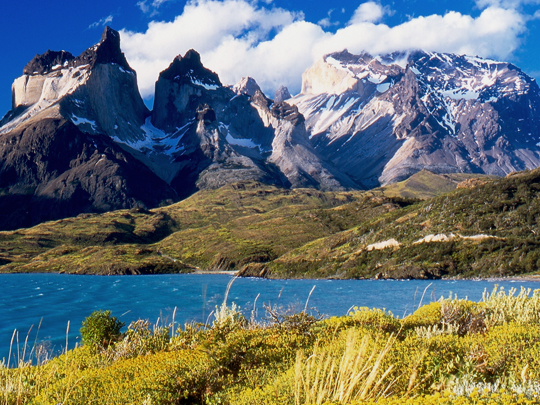
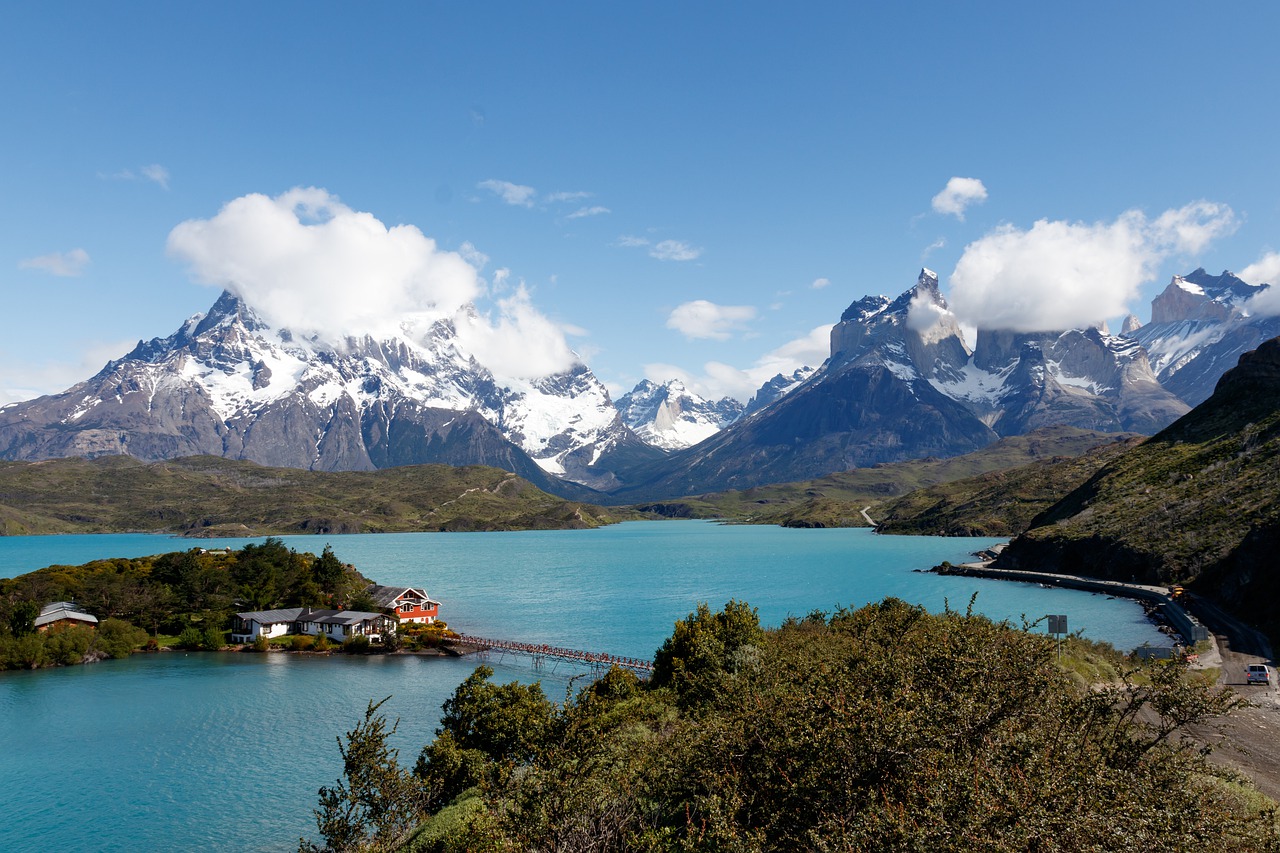
The crown jewel of Chilean Patagonia — and, for many, of the whole continent — Torres del Paine is a national park of jaw-dropping drama, where three sheer granite “Towers” and the jagged “Horns” of the Paine massif rear up above golden plains, turquoise lakes and calving glaciers.
It’s one of the world’s great trekking destinations, crossed by the famous multi-day “W” and “O” routes that string together its signature sights — the base of the Towers, the French Valley, and the vast wall of Grey Glacier flowing off the Southern Patagonian Ice Field — while herds of wild guanacos graze the steppe, watched over by soaring Andean condors.
Torres del Paine has quietly become one of the very best places in the world to see a big cat in the wild — for these windswept plains are prime hunting ground for the puma, and today wildlife-watchers come from across the globe on “puma safaris,” tracking the elusive cats much as one might track lions on the plains of Africa.
3 – Easter Island
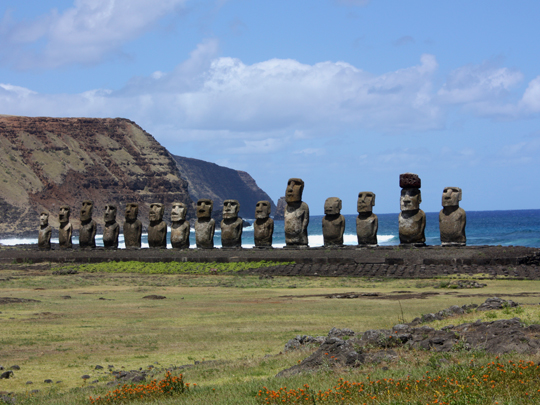
One of the most isolated inhabited places on Earth — a tiny volcanic speck marooned in the Pacific, some 3,700km from the coast of Chile — Easter Island, or Rapa Nui, is famous the world over for its brooding stone giants, the moai: nearly a thousand colossal carved figures raised by a Polynesian people over five centuries.
Standing on stone platforms with their backs to the sea, gazing inland to watch over the living, the moai each represented a deified ancestor; carved at the Rano Raraku quarry, some weigh over 80 tons, and exactly how the islanders moved them across the island was one of archaeology’s great puzzles, only recently solved by rocking replicas upright with ropes.
The most famous surprise of all is that the iconic Easter Island “heads” are not heads at all — many are complete statues, with torsos, arms and hands, that over the centuries were gradually buried up to their necks by drifting soil, their full bodies hidden underground until archaeologists dug them out.
4 – Lauca National Park
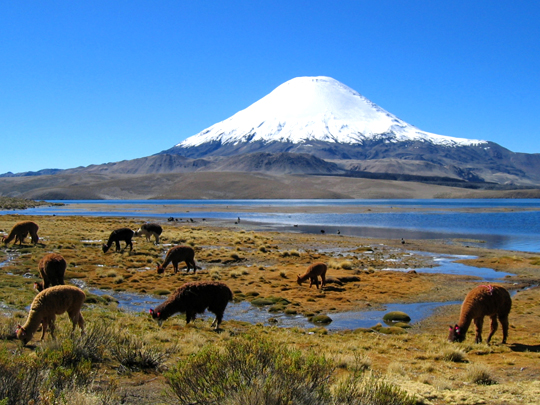
High on the altiplano of Chile’s far north, near the Bolivian border, Lauca National Park is a world of thin air and vast horizons — a windswept plateau at over 4,500m, crowned by the twin, perfectly conical Payachata volcanoes and the shimmering mirror of Lake Chungará, one of the highest lakes on the planet.
It’s a place of austere, silent beauty: snow-capped volcanoes reflected in still blue water, flamingos wading in high lagoons, condors wheeling overhead, and herds of graceful vicuña grazing the golden grass, while the Aymara people tend their llamas and worship in the whitewashed colonial church of the tiny village of Parinacota.
Those dainty wild vicuñas carry a treasure on their backs — their fleece is the finest, softest and most valuable natural wool in the world, so prized that in Inca times only royalty could wear it, and the animals were rounded up, gently sheared, and set free again, a tradition that still survives in these highlands today.
5 – Viña del Mar
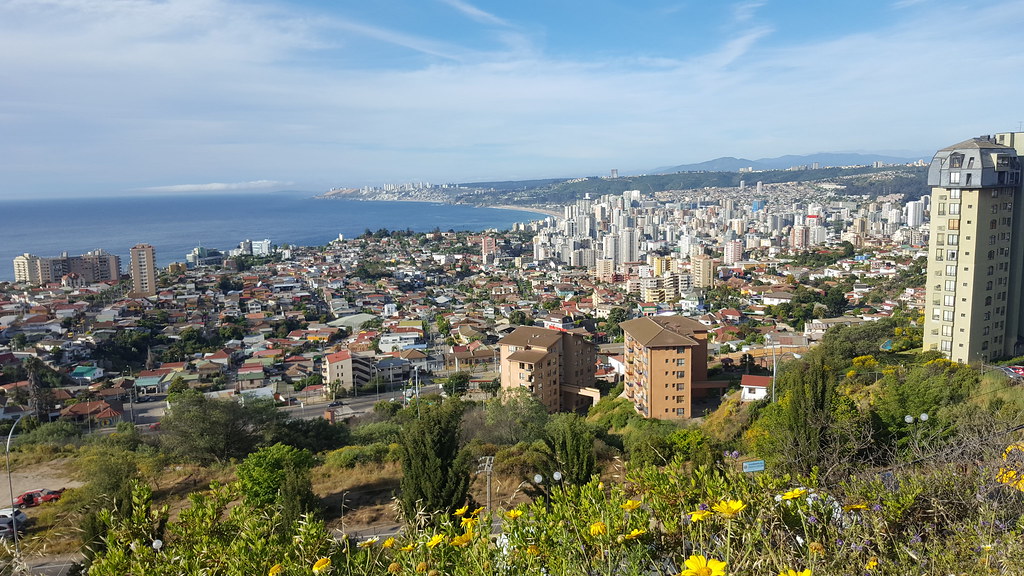
Just up the coast from the ramshackle, artsy port of Valparaíso lies its polished twin, Viña del Mar — “the Garden City” — Chile’s most elegant seaside resort, a place of golden beaches, palm-lined promenades, manicured parks, grand mansions and the country’s most famous casino.
Its symbol is the Reloj de Flores, a working clock with hands and numbers formed entirely of flowers, and its curiosities include a genuine moai, shipped from distant Easter Island, standing guard at the Fonck Museum; from here it’s an easy hop to Valparaíso’s tumbling, mural-splashed hills.
Each February, Viña hosts the biggest music festival in all of Latin America — the Viña del Mar International Song Festival, beamed to millions across the continent — famous not only for its stars but for its audience, a crowd so demanding and quick to boo that performers have nicknamed it, with a shudder, “El Monstruo”: the Monster.
6 – Pucón
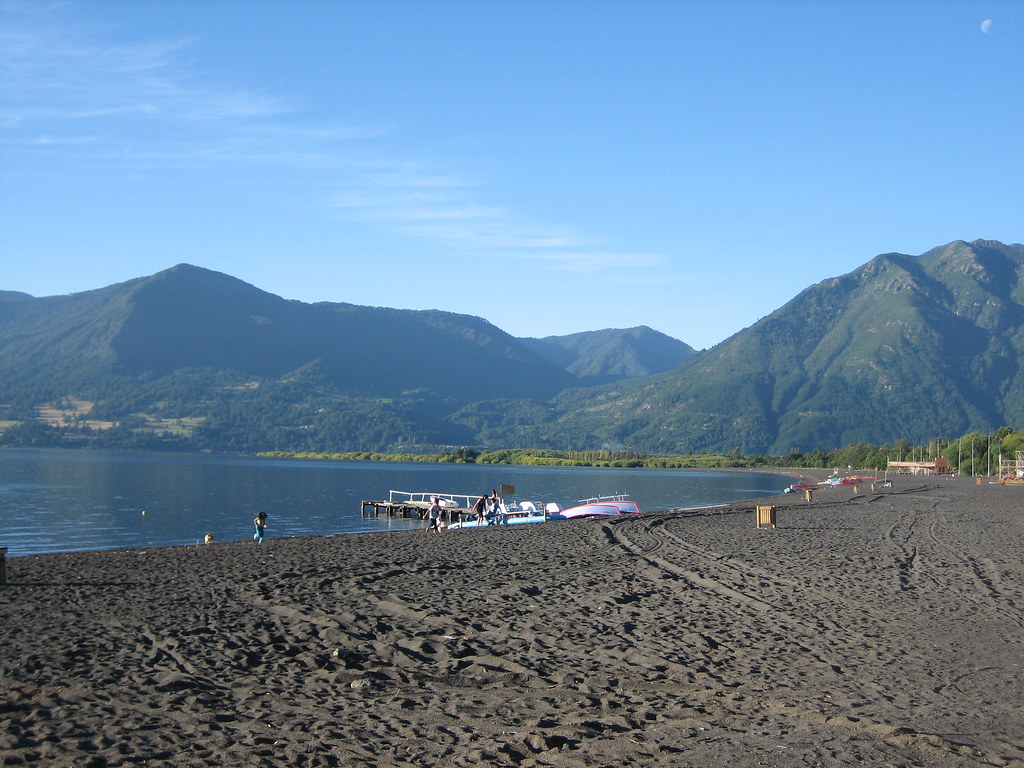
On the shore of a glittering lake in Chile’s green Lake District, at the foot of a perfect snow-capped cone, Pucón is the adventure capital of the country — a lively resort town from which to raft rivers, ride mountain trails, soak in forest hot springs and, above all, climb a live volcano.
That volcano is Villarrica — Rucapillán, the “house of the spirits,” to the Mapuche people whose land this is — one of the most active in South America; all around lie ancient forests of araucaria, the extraordinary “monkey puzzle” tree, some over 2,000 years old, and steaming natural thermal pools tucked into the woods.
Villarrica hides a rare and mesmerising secret at its summit: a permanent lake of molten lava, bubbling and glowing deep in its crater — one of only a handful of volcanoes on Earth with such a thing — and, when it’s quiet enough, climbers can haul themselves up its icy slopes to peer over the rim straight into the fire below.
7 – Chiloe
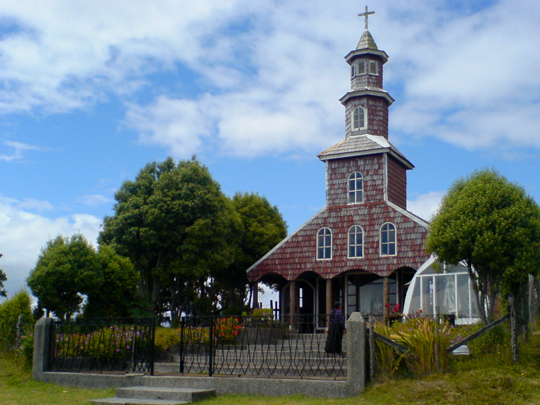
A misty, rain-soaked archipelago off the coast of southern Chile, Chiloé is a world unto itself — cut off for centuries, it grew its own distinct culture, most famously a set of extraordinary wooden churches, sixteen of which are a UNESCO World Heritage Site, built entirely of native timber and joined without a single nail so they could flex and survive earthquakes.
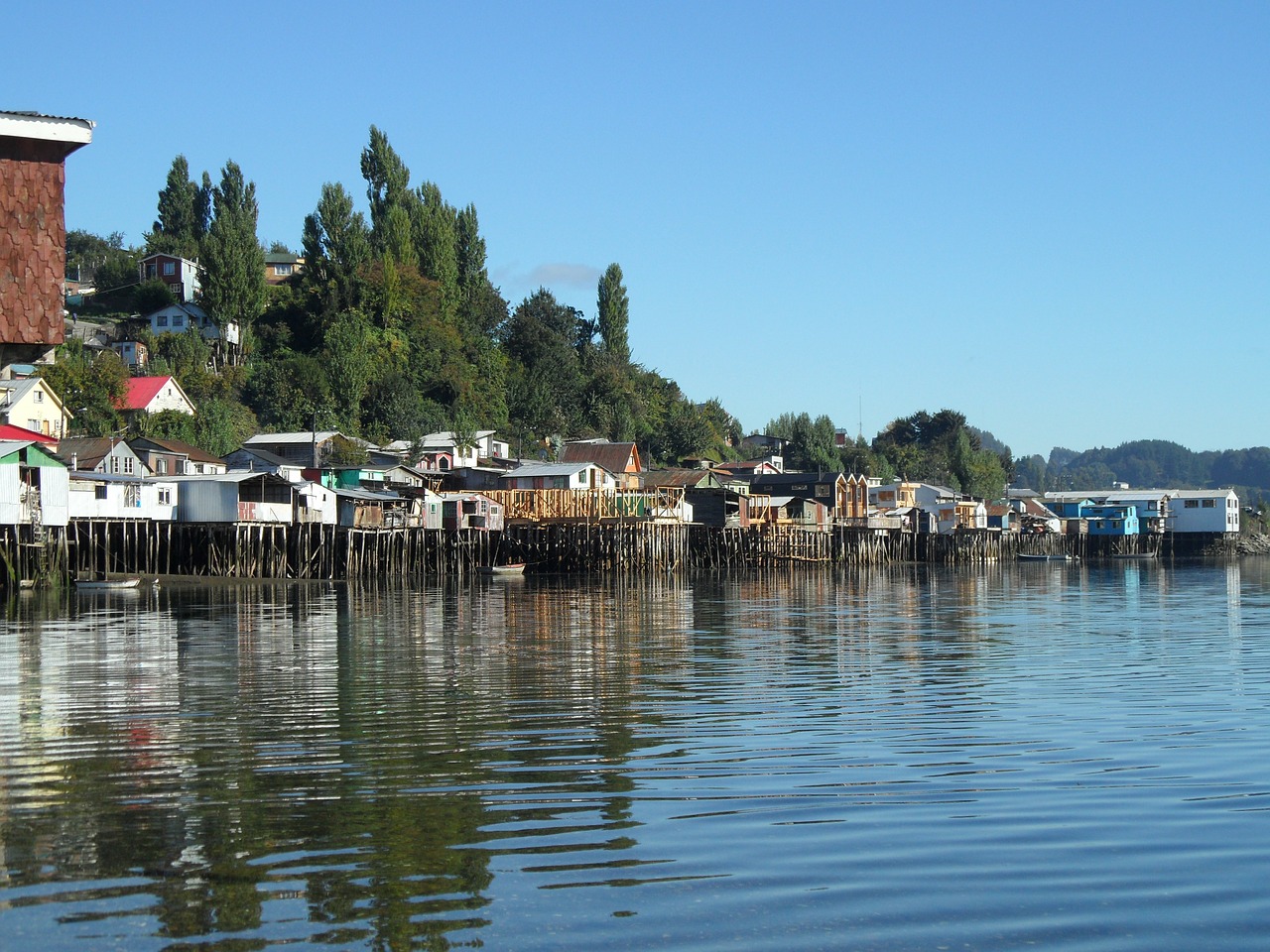
Its waterfronts are lined with palafitos — brightly painted houses perched on stilts out over the tide — and its tables groan with curanto, a feast of shellfish, meat and potatoes steamed for hours in a pit of hot stones buried in the earth; fog drifts over green hills grazed by sheep, and penguins gather on the wild outer shores.
Above all, Chiloé is an island of legends still half-believed today — of the Trauco, a goblin of the forest; the Pincoya, a mermaid who decides whether the fishing will be good; and the Caleuche, a ghostly ship crewed by the souls of the drowned, said to glide through the fog ablaze with light and music — a whole living mythology found nowhere else on Earth.
8 – Plaza de Armas – Santiago
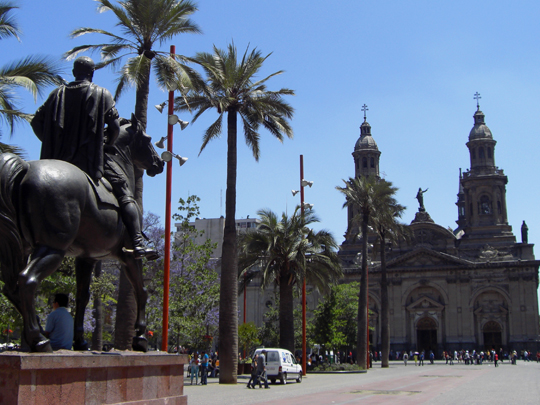
The Plaza de Armas is where Chile’s capital, and in a sense the nation itself, began — for it was on this very spot, in 1541, that the Spanish conquistador Pedro de Valdivia founded the city of Santiago, laying it out in a neat grid around this central square.
For nearly five centuries it has been the beating heart of the city, ringed by grand landmarks — the twin-towered Metropolitan Cathedral, the old Royal Governor’s palace (now the central post office) and the National History Museum — while beneath its palm trees, street performers, chess players, painters and preachers give the square its restless, everyday life.
Set into the ground here is a small bronze marker, “Kilometre Zero” — the exact point from which every distance in Chile is measured, so that in this one modest square lies the official centre of one of the longest, thinnest countries on Earth, a ribbon of land stretching more than 4,000km from the driest desert to the ice of Patagonia.
9 – Memorial for the Disappeared – Santiago
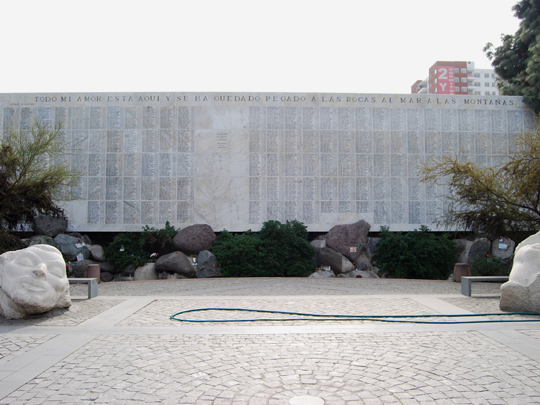
In Santiago’s vast old General Cemetery stands one of the most moving places in Chile — a long marble wall carved with some 3,000 names, a memorial to those detained, “disappeared” and executed during the brutal military dictatorship of General Augusto Pinochet, which seized power in the coup of 11 September 1973.
That coup overthrew the democratically elected president Salvador Allende, who died as the presidential palace was bombed. In the seventeen years that followed, thousands were tortured, killed or vanished without trace, and hundreds of thousands driven into exile — at the wall’s centre is carved a single name: “Salvador Allende Gossens, President of the Republic.”
For the many whose bodies were seized by the regime and never found, this wall is the only grave they will ever have — a place for their families, at last, to lay a flower and mourn; nearby, in the cemetery’s Patio 29, rows of anonymous crosses still mark where some of the disappeared were secretly buried, tagged only with the letters “NN” — “no name.”
10 – San Rafael Glacier
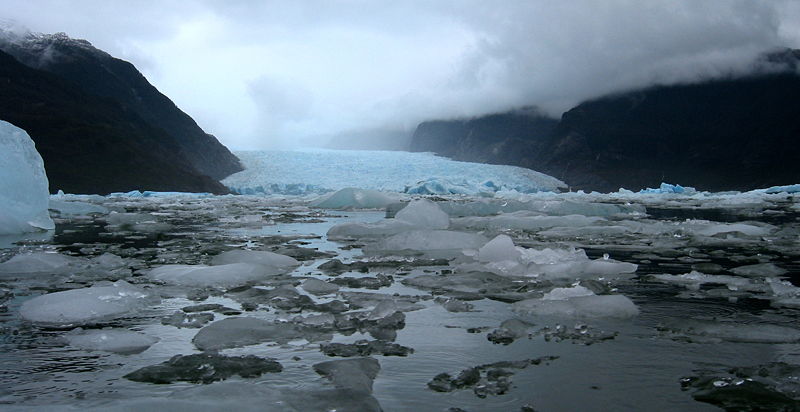
Deep in the remote fjords of Chilean Patagonia, in a national park so wild it can be reached only by boat or small plane, the San Rafael Glacier pours down off the Northern Patagonian Ice Field and crashes, in a wall of blue ice up to 70m high, straight into a lagoon dotted with drifting icebergs.
The journey there is half the wonder — a voyage threading through a labyrinth of fjords, channels and islands, past waterfalls, temperate rainforest and playful sea lions and dolphins — before small boats nose in among the ice floes to within a stone’s throw of the thundering, calving glacier front.
For all that it looks like the polar regions, San Rafael is the closest glacier to the equator anywhere on Earth that still tumbles all the way down to the sea — a river of ice calving into tidewater while surrounded by lush green rainforest; sadly, it is also retreating fast, and may be gone within a decade or two.
11 – Juan Fernandez Islands

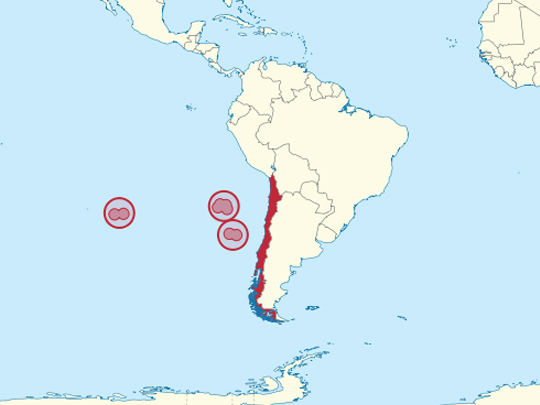
Scattered in the Pacific some 670km off the coast of Chile lies the remote Juan Fernández archipelago — a cluster of jagged, green volcanic islands, reached only by light plane onto a tiny airstrip, so isolated and full of unique life that it’s been called the “Galápagos of Chile.”
Nearly two-thirds of its plants grow nowhere else on Earth, and its forests and cliffs shelter creatures found only here — the jewel-like Juan Fernández firecrown, a hummingbird of dazzling red, and the Juan Fernández fur seal, once hunted almost to extinction and now, thankfully, recovering along the wild shores.
The main island bears a very famous name — Robinson Crusoe Island — for it was here, in 1704, that a hot-tempered Scottish sailor named Alexander Selkirk had himself put ashore and was left utterly alone for more than four years, surviving on wild goats until his rescue; his ordeal is thought to have inspired Daniel Defoe’s immortal tale of the castaway Robinson Crusoe.
12 – Valparaíso
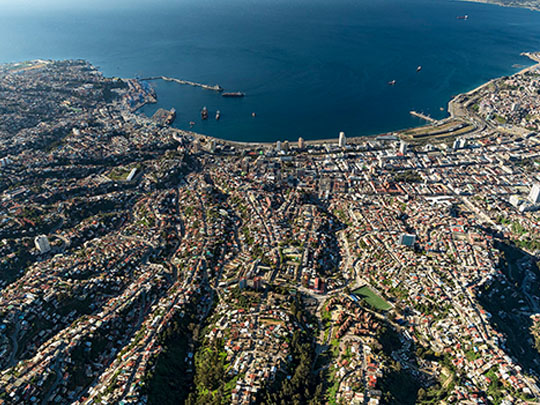

A steep amphitheatre of a port on Chile’s central coast, founded in 1536 and grown rich from the 1880s as the first and most important merchant harbour on the Pacific sea routes, the compulsory stop for every ship that had just fought its way round Cape Horn — which is why British and German merchant families ended up building their houses across more than forty hills above the docks.
The UNESCO-listed old quarter is best taken vertically, riding the surviving ascensores — creaking wooden funiculars, the first of them opened in 1883 — up from the flat port district into a maze of staircase-streets, murals and tin-clad houses, with Pablo Neruda’s house La Sebastiana near the top, its bed positioned for the best view of the bay.
The Panama Canal finished Valparaíso off in 1914, sending ships straight through Central America instead of round the Horn, and the money and the families drained away to Santiago — which is exactly why the city survives, its Victorian harbour and hillside fabric left too poor to be redeveloped and now protected as a record of the first age of globalisation.
13 – Chinchorro Mummies – Arica
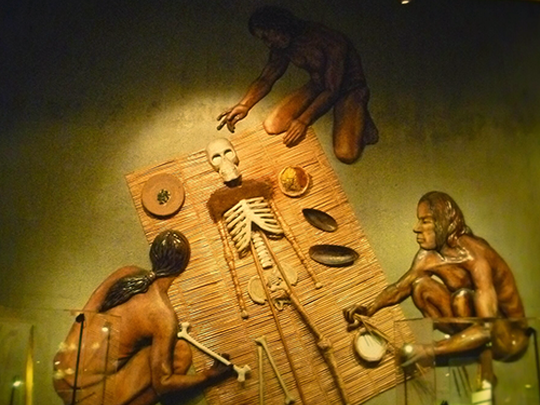

Along the desert coast around Arica in Chile’s far north, a people of fishers and gatherers known as the Chinchorro began deliberately preserving their dead somewhere around 5000 BC — a practice they kept up for roughly three thousand years, and the oldest artificial mummification known anywhere on earth, UNESCO-listed in 2021.
The remains and the cemeteries that produced them can be seen in Arica itself, at the Colón 10 site — a museum built over a burial ground with a glass floor so you look down on the bodies where they were found — and at the university’s excellent archaeological museum in the Azapa valley just outside town.
They were not embalming pharaohs: the Chinchorro took apart the body, rebuilt it around a frame of sticks and reeds, modelled a new face in clay, fitted a wig of human hair and painted the whole figure black or red — and they did it for everyone, including infants and the unborn, thousands of years before Egypt began mummifying its kings.