

MaxPixel / Wikimedia Commons / CC-BY-SA-3.0 / GFDL
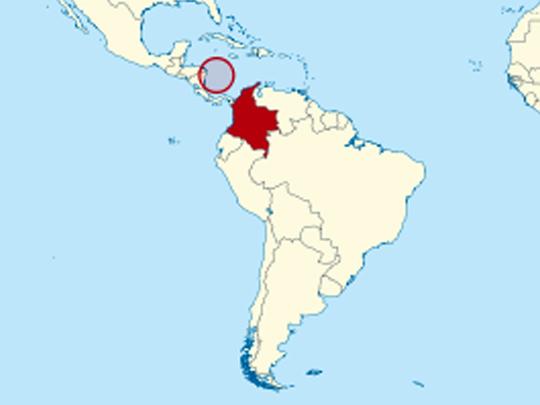
Capital: Bogotá
Population: 53 million+
Language: Spanish (65+ indigenous languages and 2 creoles)
1 – Cartagena (also above)
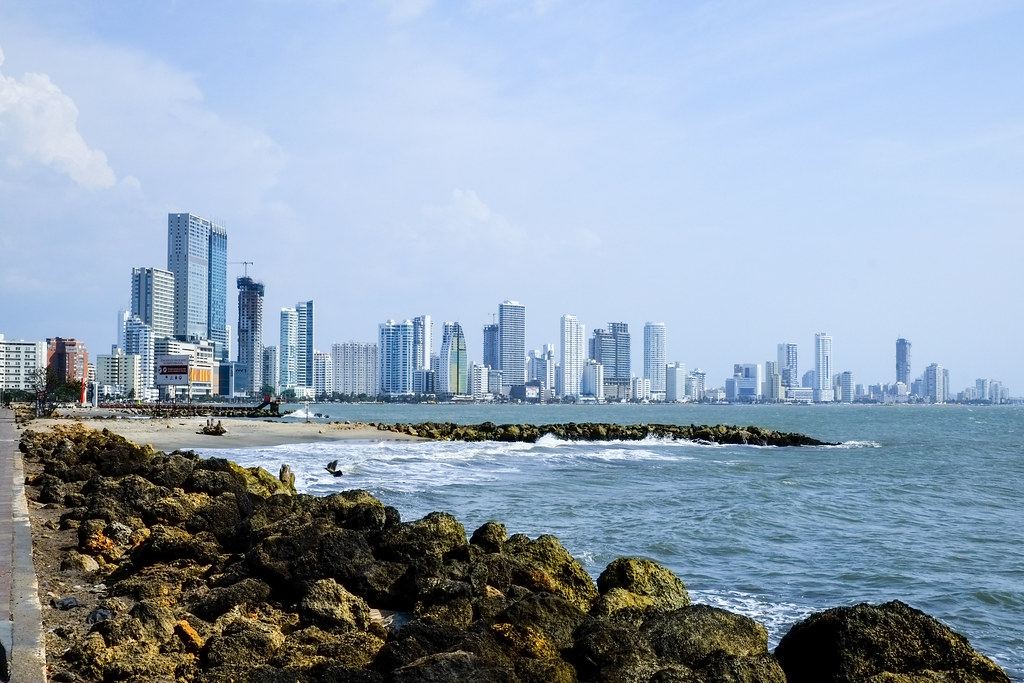
The jewel of Colombia’s Caribbean coast, Cartagena is the finest colonial city in South America — a sun-baked maze of cobbled lanes, flower-draped balconies and pastel churches, ringed by 11km of massive stone walls, and, since 1984, a UNESCO World Heritage Site.
Those walls, and the vast fortress of San Felipe that guards the city, were built to protect one of the richest ports in the Americas — the gateway through which Spain shipped New World gold and silver, and, in a darker trade, one of the main harbours through which enslaved Africans were brought to the continent, giving Cartagena the deep Afro-Caribbean soul that still pulses through its music and streets; it’s also the city of Gabriel García Márquez, whose magical-realist novels drip with its atmosphere.
All that treasure made Cartagena a magnet for pirates, and in 1741 a huge British fleet came to seize it — only to be beaten off by the Spanish commander Blas de Lezo, a battle-scarred veteran who fought with one eye, one arm and one leg; so sure had the British been of victory that they’d already struck commemorative medals, which they then had to quietly melt down.
2 – Tayrona National Natural Park
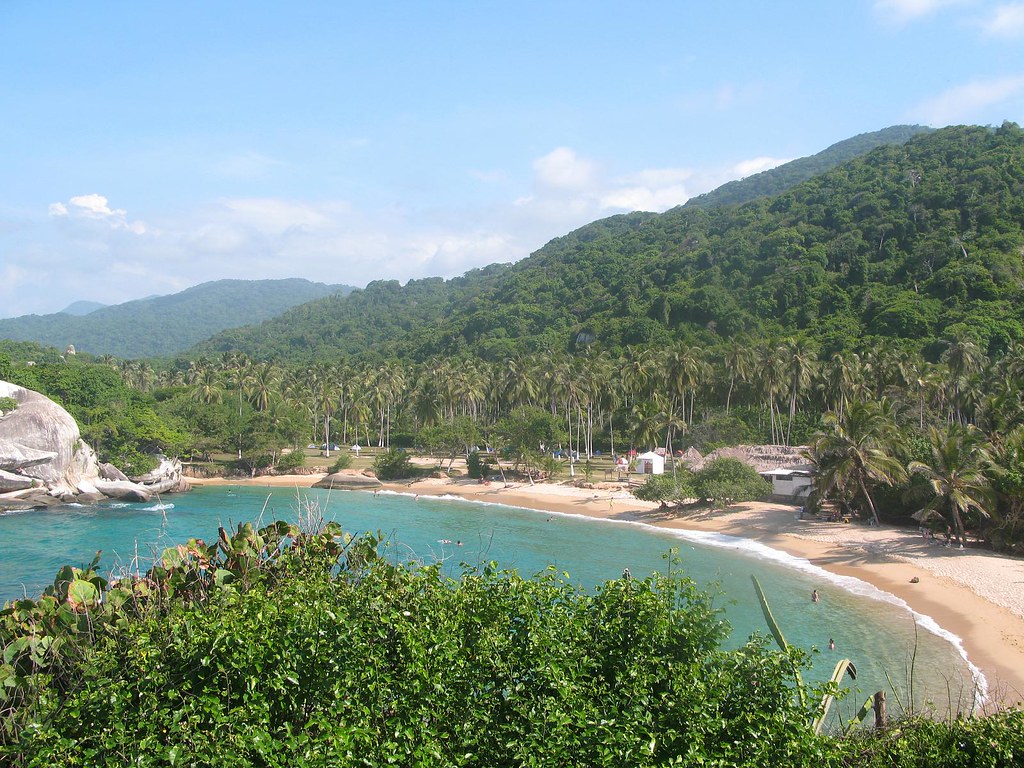
On Colombia’s Caribbean coast, Tayrona is where the jungle tumbles straight into the sea — a national park of palm-backed white-sand coves, turquoise water and huge tumbled boulders, wrapped in steamy rainforest alive with toucans, macaws and rare little cotton-top tamarin monkeys.
Its dreamy beaches, like Cabo San Juan, are among the most beautiful in South America; the land is the ancestral home of the Tayrona people, whose descendants — the Kogi and their neighbours — still live in the mountains above and guard the ruins of Ciudad Perdida, a “Lost City” of stone terraces hidden in the jungle, built centuries before Machu Picchu.
Behind the beaches rises something extraordinary — the Sierra Nevada de Santa Marta, the highest coastal mountain range on Earth, whose snow-capped peaks soar to nearly 5,800m just 42km from the shore, so that, on a clear day, you can stand on a hot tropical beach and gaze up at glittering glaciers far above.
3 – Villa de Leyva
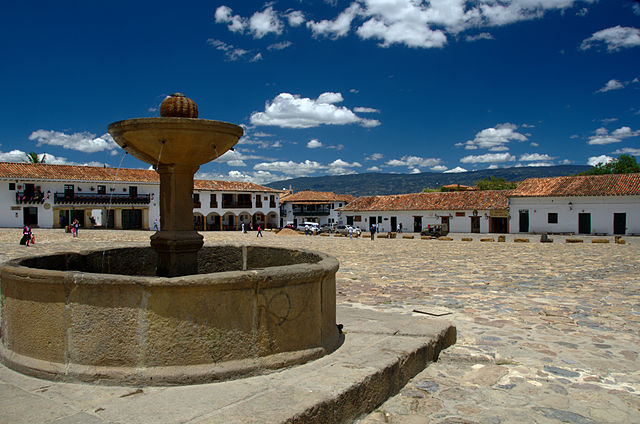
A jewel of colonial Colombia, Villa de Leyva has barely changed in four centuries — a National Monument where no modern building, cable or scrap of concrete is allowed, so its whitewashed houses and cobbled lanes look almost exactly as they did when the town was founded in 1572.
At its heart lies the Plaza Mayor, one of the largest cobblestone squares in all of the Americas — a vast, car-free expanse of rounded stones flanked by a colonial church — around which the town drowses in the cool, dry air of the Boyacá highlands, a favourite weekend escape from Bogotá.
Strangest of all, this Andean mountain town, over 2,000m above the sea, was itself once beneath the ocean — 120 million years ago it lay under a shallow tropical sea, and the surrounding fields are so thick with marine fossils that a whole museum has been built around a giant seven-metre kronosaurus, a monstrous prehistoric sea-reptile, lying just where a farmer dug it up.
4 – Medellín
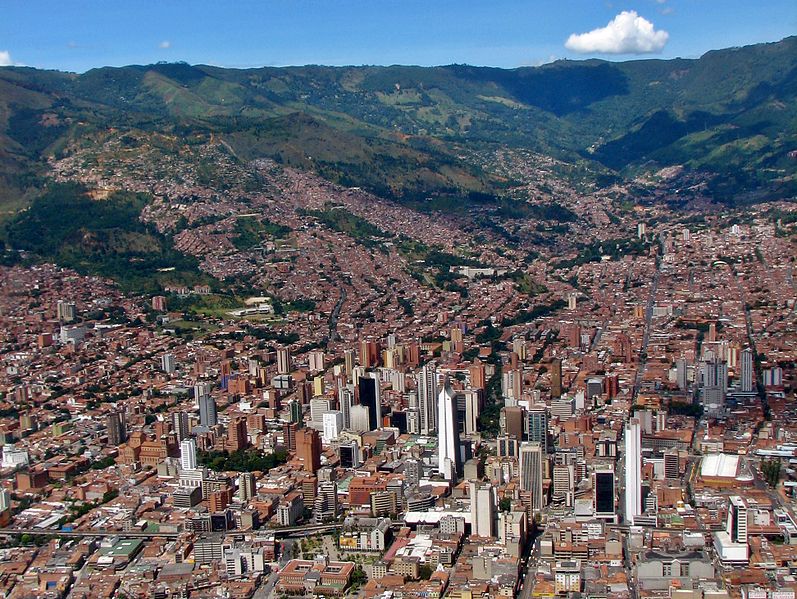
Cradled in a green Andean valley and blessed with such a perfect, temperate climate that it’s called the “City of Eternal Spring,” Medellín is Colombia’s vibrant second city — and the setting for one of the most remarkable turnarounds of any city on Earth.
In the 1990s, as the home of Pablo Escobar’s cocaine cartel, it was the most violent city in the world. Today it’s a byword for reinvention — a lively hub of art, music and innovation, where you can admire the bronze figures of the city’s beloved sculptor Fernando Botero in the plaza named after him, and where the once-notorious hillside barrio of Comuna 13 now bursts with murals, music and dancing.
Medellín turned itself around not just with police but with public transport and imagination — famously running cable cars up to its poorest hillside slums, once cut off by steep terrain and violence, and even installing a giant outdoor escalator up the hills of Comuna 13, reconnecting whole communities to the city and earning Medellín fame as one of the world’s most innovative cities.
5 – San Agustín
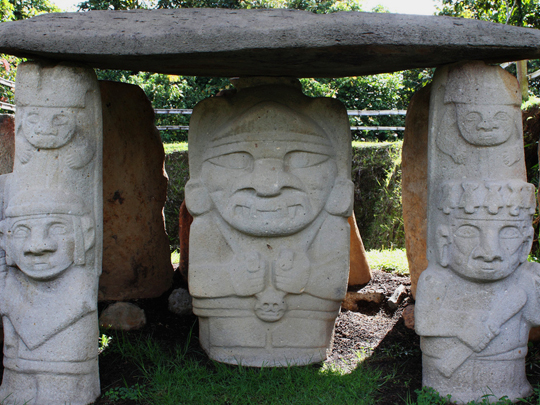
Scattered across misty green hills in the mountains of southern Colombia stand the strange stone statues of San Agustín — the largest collection of ancient religious monuments and megalithic sculptures in all of South America, and a UNESCO World Heritage Site.
More than 500 carved figures, some four metres tall, guard a vast landscape of ancient tombs and burial mounds — fanged gods, warriors and half-human, half-animal shamans wearing the skins of jaguars and eagles, hewn from volcanic rock and left standing among the hills for well over a thousand years.
The deepest mystery is the people who made them: the San Agustín culture flourished, carved these haunting giants, and then vanished entirely, centuries before the Spanish ever arrived — and because they left not a single written word, no one today truly knows who they were, or why their whole civilisation disappeared, earning the site the nickname “the Andean Easter Island.”
6 – Zona Cafetera
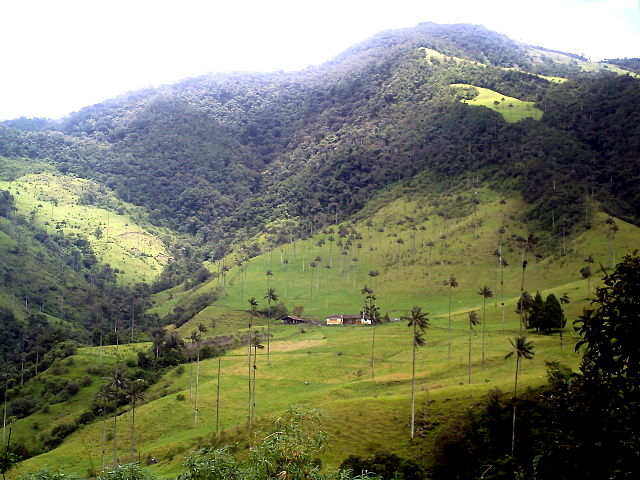
The heart of Colombia’s coffee country, the Zona Cafetera is a landscape so lovely and so shaped by the bean that UNESCO protects it as a “Coffee Cultural Landscape” — a region of misty, emerald hills terraced with coffee bushes, dotted with brightly painted villages and old plantation haciendas, where coffee has been a way of life for generations.
Based in a pretty town like Salento, you can tour a working finca to follow the bean from cherry to cup, taste some of the finest coffee on Earth, and rattle out into the hills aboard a vintage Willys jeep, past hummingbirds, orchids and small farms wrapped in cloud.
The region’s most jaw-dropping sight isn’t the coffee but a tree — in the green Cocora Valley grow the wax palms, Colombia’s national tree and the tallest palms in the world, slender silver trunks soaring up to 60m, twice the height of any ordinary palm, that seem to pierce the drifting clouds like something from a dream.
7 – Bogotá
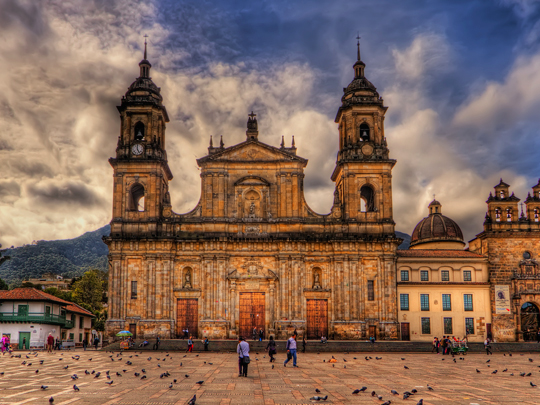
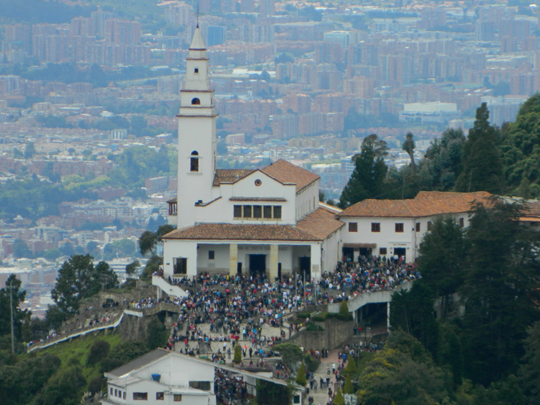
Sprawling across a high Andean plateau at 2,640m — the air noticeably thin — Bogotá is Colombia’s vast, buzzing capital, a city of contrasts where the colonial old town of La Candelaria, all cobbled lanes, colourful houses and street art, huddles beneath glassy modern towers.
Looming over it all is Monserrate, a mountaintop sanctuary at 3,152m reached by funicular or cable car, a place of pilgrimage for centuries with a dizzying view over the endless city below; down in the centre, the world-famous Gold Museum dazzles with the largest collection of pre-Columbian gold on Earth.
It’s in that museum that Colombia’s most famous legend takes shape — a little golden raft depicting the ceremony that gave the world El Dorado: a Muisca ritual in which a new chief, his body coated head to toe in gold dust, was floated out onto a sacred lake to cast gold and emeralds into the water, the seed of the myth of a lost golden city that lured Spanish conquistadors to their ruin.
8 – Guatapé

A short drive from Medellín lies Guatapé, widely considered the most colourful town in Colombia — a joyful little lakeside pueblo whose every house is painted in bright hues and decorated, along its base, with zócalos: hand-moulded panels depicting flowers, animals and scenes of local life, turning the whole town into an open-air gallery.
Guatapé sits on the shore of a beautiful emerald reservoir, a maze of blue water and green islands, and beside it rises its other great landmark — El Peñón, a colossal 200m granite monolith that you climb by a staircase of some 740 steps zigzagging up a giant crack in the rock, to a heart-stopping panorama over the whole watery landscape.
That gorgeous lake hides a melancholy secret: it isn’t natural at all, but a reservoir created in the 1970s to generate hydroelectric power — and when the waters rose, they drowned an entire town, the old village of El Peñol, whose 5,000 people had to be moved to a new town nearby, and the cross of whose submerged church still breaks the surface of the lake in the dry season.
9 – Ciudad Perdida
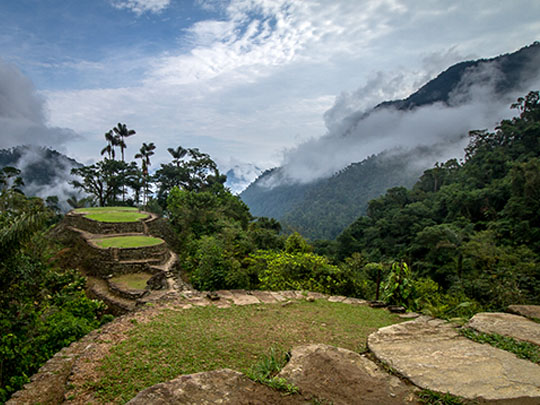
Teyuna, to give it the name its builders used, is a city of stone terraces, plazas and paved paths cut into a jungle ridge of the Sierra Nevada de Santa Marta, raised by the Tayrona from around 800 AD — roughly 650 years before Machu Picchu — and abandoned during the Spanish conquest, after which the forest closed over it for some four hundred years.
There is no road and no shortcut: reaching it means a four- or five-day trek from the village of Machete Pelao, sleeping in hammocks, wading rivers and grinding through humid forest, before a final 1,200 mossy stone steps bring you out onto the ringed terraces at the top.
Every account says the site was “discovered” in 1972, but what actually happened is that a family of treasure hunters shot a bird, found it lying on a buried staircase and stripped what they could carry — and it was never lost in the first place, because the Kogi, Wiwa, Arhuaco and Kankuamo stayed on the mountain and always knew it was there.
10 – San Basilio de Palenque
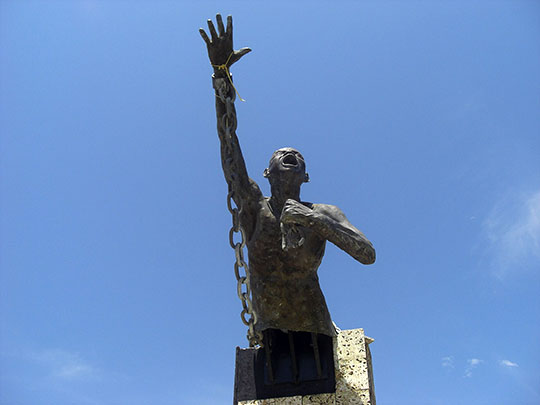
A village of a few thousand people in the hills about 50 km inland from Cartagena, founded around 1600 by Africans who escaped the slave ships and the port and gathered under Benkos Biohó, a Guinea-born leader whom the Spanish captured and hanged in 1621 — and after seventy more years of guerrilla war the crown gave up, recognising the settlement by royal decree in 1691 as the first free town in the Americas.
Tours run out from Cartagena to somewhere that feels closer to West Africa than to the Caribbean coast: the statue of Biohó in the square with his chains broken, the cultural centre and drumming schools, and the lumbalú, a nine-day funeral rite of song and dance kept up here for four centuries.
Around half the village still speaks Palenquero, a creole built from Spanish and the Bantu languages of Congo and Angola and the only Spanish-based creole language surviving anywhere in the Americas. Palenque’s most famous son is the boxer Antonio Cervantes, world champion in 1972, who reportedly told the president he wanted water, light and roads for his home town — and the village got electricity soon after.