
Wikimedia Commons / CC-BY-SA-3.0 / GFDL
Capital of the United States
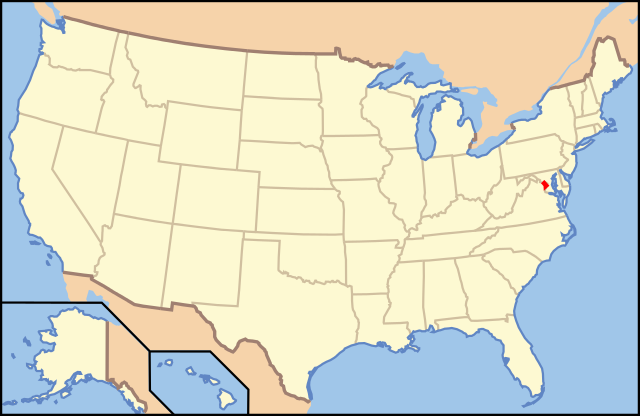
Population: 690,000+
Language: English (no official language).
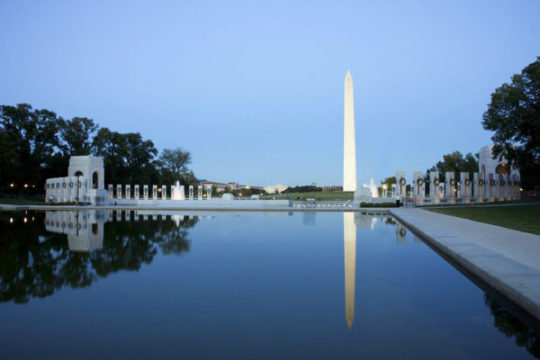
1 – Washington Monument (also above)
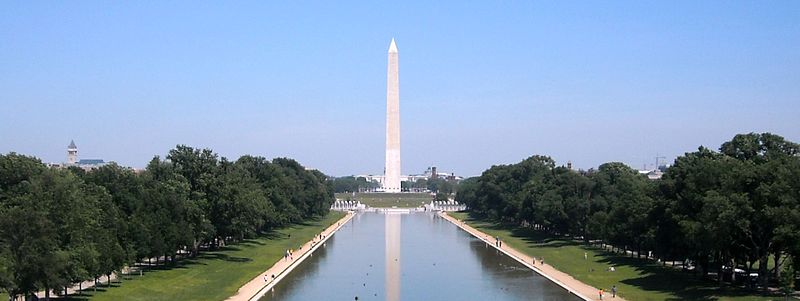
The Washington Monument rises 555 ft at the heart of the National Mall, begun in 1848 to Robert Mills’s design, but money ran out in 1854 and the change in the marble’s colour about a third of the way up marks where building resumed in 1879.
The Washington Monument’s elevator runs to an observation level near the top, the shaft is lined with 193 commemorative stones from states, organisations and foreign countries, and a plaque with the text of Ireland’s 1916 Proclamation, a gift from Ireland, was unveiled when the monument reopened in 2019.
The Washington Monument was the world’s tallest structure from 1884 until the Eiffel Tower in 1889, its tip is a small aluminium pyramid, when aluminium was as valuable as silver, and in 1854 anti-Catholic Know-Nothings stole a stone sent by Pope Pius IX, which is said to have been dumped in the Potomac.
2 – White House
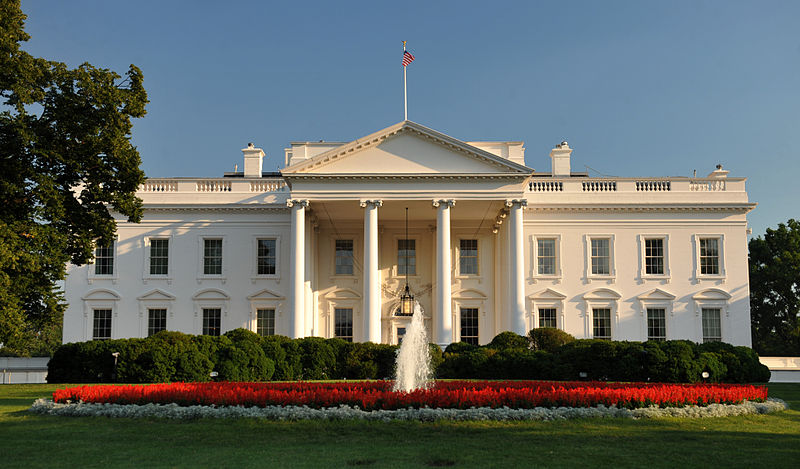
The White House was designed by James Hoban, from near Callan, Co. Kilkenny, who won the 1792 competition with a design believed to have been inspired by Leinster House in Dublin, and John Adams became its first resident on 1 November 1800.
The White House, with 132 rooms on six levels, was built by enslaved labourers, Scottish stonemasons and Irish immigrants, burned by the British in 1814, rebuilt by Hoban, and gutted and rebuilt inside on a steel frame under Harry Truman in 1949–52.
The White House wasn’t painted white to hide the scorch marks of 1814, as it was first whitewashed in 1798 to protect the stone and was already being called “the White House” before the fire, Theodore Roosevelt made the name official in 1901, and Ireland and the US issued a joint Hoban stamp in 1981.
3 – FDR Memorial
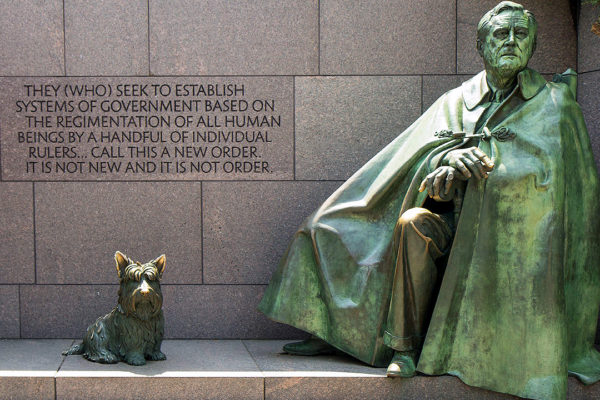
The Franklin Delano Roosevelt Memorial spreads over 7.5 acres beside the Tidal Basin in West Potomac Park, designed by landscape architect Lawrence Halprin and dedicated in 1997, more than half a century after Roosevelt’s death.
The FDR Memorial’s four outdoor “rooms”, one for each of his terms, are linked by waterfalls that grow more turbulent as his presidency goes on, past George Segal’s Depression breadline, Roosevelt seated with his Scottish terrier Fala, and Eleanor Roosevelt, the only First Lady depicted in a presidential memorial.
Roosevelt asked only for a block the size of his desk in front of the National Archives, which was put there in 1965, and after disability campaigners objected that the main statue hid his wheelchair under a cloak, a statue of him in his wheelchair was added at the FDR Memorial’s entrance in 2001.
4 – Jefferson Memorial
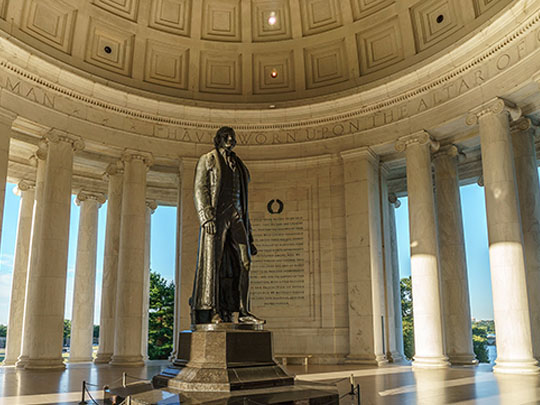

The Jefferson Memorial, on the south bank of the Tidal Basin, was designed by John Russell Pope after Rome’s Pantheon and dedicated by Franklin D. Roosevelt on 13 April 1943, Jefferson’s 200th birthday, with a painted plaster statue standing in until wartime metal shortages eased and the bronze arrived in 1947.
The Jefferson Memorial looks out over the Tidal Basin’s cherry trees, a gift of 3,020 trees from Tokyo’s mayor in 1912, after a first shipment in 1910 arrived infested with insects and had to be burned, and First Lady Helen Taft planted the first two on 27 March 1912.
The quotes on the Jefferson Memorial’s walls are heavily edited, with one panel stitching together five different sources, in 1938 women chained themselves to cherry trees to stop the site being cleared, and the builder, Philadelphia contractor John McShain, son of Irish immigrants, later handed his Killarney estate to the Irish state, which became part of Killarney National Park.
5 – Ford’s Theatre
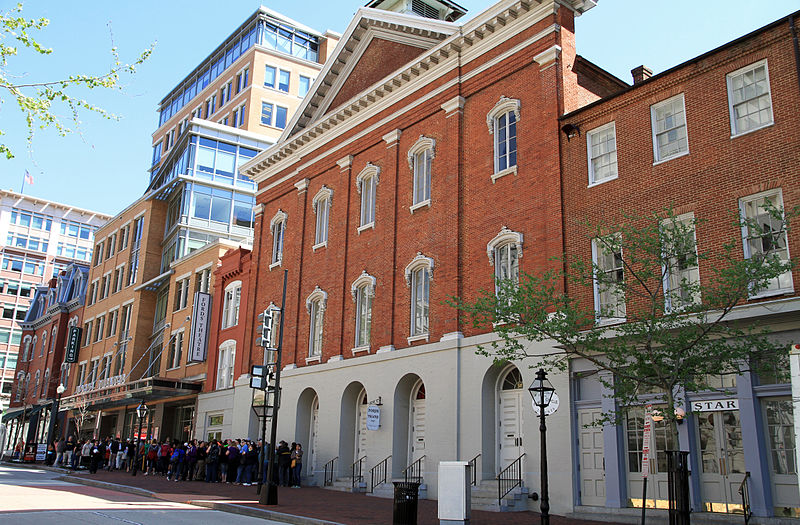
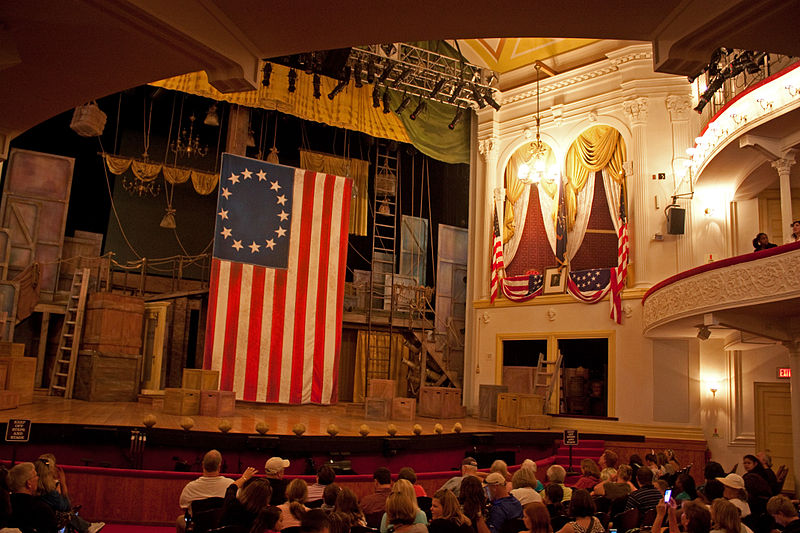
Ford’s Theatre on 10th Street began as a Baptist church, bought and converted by John T. Ford in 1861, and on 14 April 1865 John Wilkes Booth shot Abraham Lincoln here during the comedy Our American Cousin, and Lincoln died the next morning in the Petersen House across the street.
Ford’s Theatre reopened as a working theatre in 1968, with the presidential box restored and Booth’s derringer in the museum below, and across the street rises a 34-ft tower of almost 7,000 books about Lincoln, all of them aluminium replicas.
Booth’s own diary says he broke his leg leaping to Ford’s Theatre’s stage, though some historians think his horse fell on him during the escape, and he was cornered in a Virginia tobacco barn 12 days later by cavalry led by Lt Edward Doherty, the son of immigrants from Co. Sligo.
6 – Capitol Hill
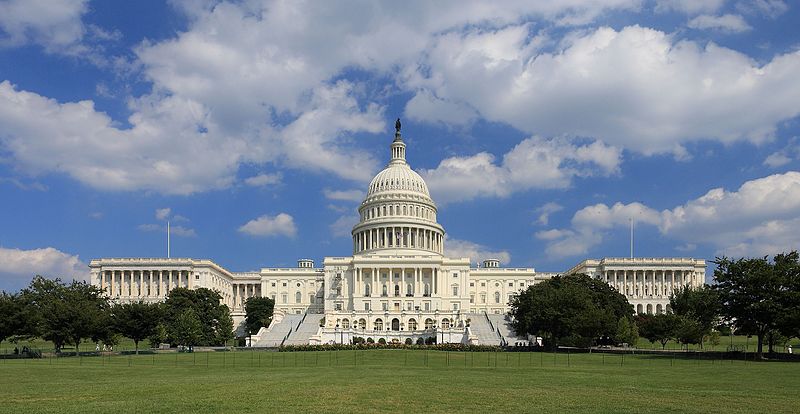
Capitol Hill is crowned by the US Capitol, whose cornerstone George Washington laid in a Masonic ceremony on 18 September 1793, on the rise city planner Pierre L’Enfant called “a pedestal waiting for a monument”, and the British burned it in 1814.
The Capitol’s cast-iron dome, designed by Thomas U. Walter, went up during the Civil War and was topped in 1863 by the Statue of Freedom, whose plaster model was separated for casting by Philip Reid, enslaved at the foundry until 1862, while Constantino Brumidi’s fresco The Apotheosis of Washington fills the eye of the dome, 180 ft above the floor.
Capitol Hill’s famous rule that no building in D.C. can be taller than the Capitol is a myth, as the 1910 Height Act ties heights to street widths, and among the statues in the Capitol’s collection is Tyrone-born James Shields, the only senator to represent three states, who once challenged Abraham Lincoln to a duel.
7 – Lincoln Memorial

The Lincoln Memorial, at the west end of the National Mall, was dedicated on 30 May 1922, a Greek temple by architect Henry Bacon with 36 columns for the states in the Union when Lincoln died, though its Black guests were roped off in a segregated section at the dedication.
The Lincoln Memorial’s 19-ft marble Lincoln, designed by Daniel Chester French and carved by the Piccirilli brothers, looks out over the Reflecting Pool, the Gettysburg Address and Second Inaugural are carved on the walls, and Martin Luther King Jr. gave his “I Have a Dream” speech on its steps on 28 August 1963.
The Lincoln Memorial has no Robert E. Lee face hidden in Lincoln’s hair, and his hands don’t spell “A” and “L” in sign language, but one myth is true, as the carvers cut “EUTURE” for “FUTURE” in the Second Inaugural, and the filled-in mistake can be seen on the wall.
8 – Smithsonian
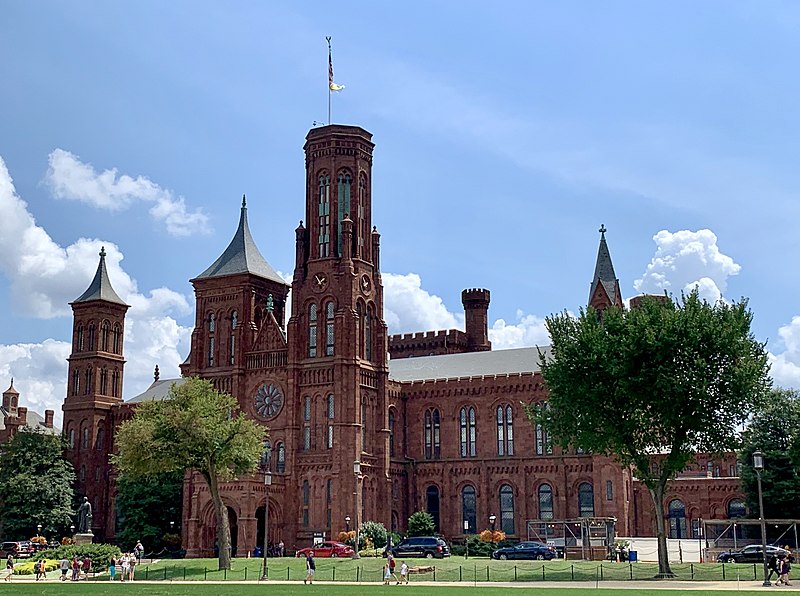
The Smithsonian Institution was founded in 1846 with the bequest of English scientist James Smithson, the illegitimate son of the Duke of Northumberland, who never set foot in the US, and its red sandstone Castle was finished in 1855.
The Smithsonian runs some 20 museums and the National Zoo, almost all free, with the Wright Flyer and Apollo 11’s command module at Air and Space, the Hope Diamond at Natural History and the Star-Spangled Banner at American History, while Smithson himself lies in the Castle, brought from Genoa by Alexander Graham Bell in 1904.
The Smithsonian’s Hope Diamond arrived in 1958 by registered mail from jeweller Harry Winston, its famous curse was largely a sales story spun by Pierre Cartier, and its last private owner, Evalyn Walsh McLean, was the daughter of Tipperary-born gold millionaire Thomas Walsh.
9 – Vietnam Memorial
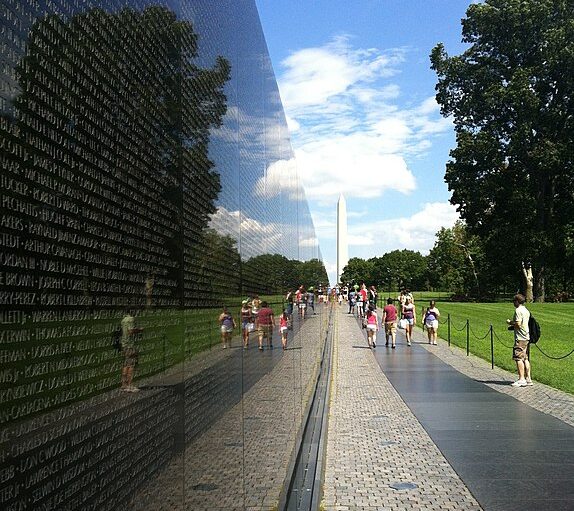
The Vietnam Veterans Memorial, on the National Mall, was the idea of wounded veteran Jan Scruggs and was designed by Maya Lin, a 21-year-old Yale student whose entry beat 1,421 others, and it was dedicated in November 1982.
The Vietnam Memorial’s two black granite walls carry more than 58,000 names in order of death, starting and ending at the apex so the first and last meet in the middle, and nearby stand Frederick Hart’s Three Servicemen statue and the Vietnam Women’s Memorial.
Maya Lin’s design got a B in her class and drew such fierce criticism that the statue was added as a compromise, and more than 20 of the Vietnam Memorial’s names are Irish-born, among them Navy Cross winner Cpl Patrick Gallagher of Ballyhaunis, Co. Mayo.
10 – National Archives
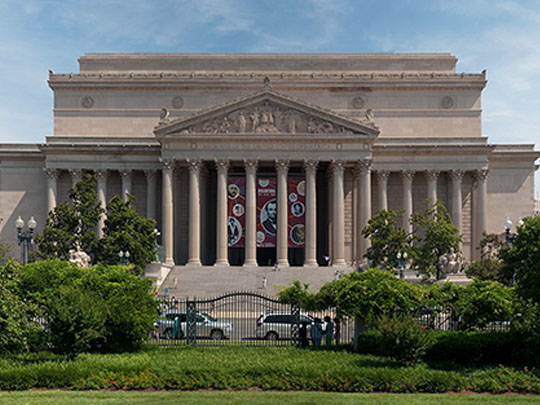

The National Archives building on Constitution Avenue, designed by John Russell Pope, opened in 1935, and the nation’s founding documents were moved from it to Fort Knox for safekeeping from December 1941 to 1944.
The National Archives’ Rotunda for the Charters of Freedom displays the Declaration of Independence, the Constitution and the Bill of Rights in argon-filled cases, alongside a 1297 copy of Magna Carta, bought by philanthropist David Rubenstein for $21.3 million in 2007.
There’s no treasure map on the back of the Declaration, as in National Treasure, but there is a real upside-down note reading “Original Declaration of Independence dated 4th July 1776”, and the first printed copies were run off by Strabane-born printer John Dunlap, carrying just two names, John Hancock’s and that of Maghera-born Charles Thomson, Secretary of Congress.
11 – Library of Congress
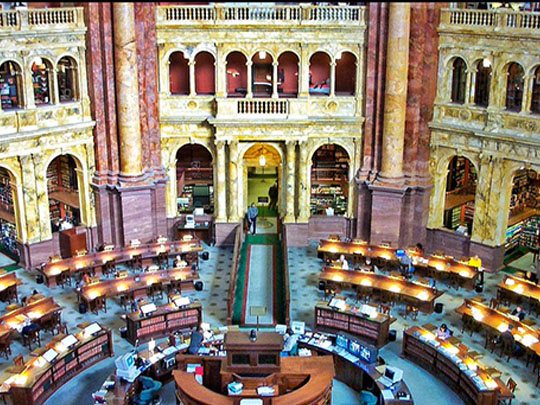
The Library of Congress was founded in 1800 inside the Capitol and burned with it in 1814 by British troops under Major General Robert Ross of Rostrevor, Co. Down, then restocked when Congress bought Thomas Jefferson’s 6,487 books for $23,950.
The Library of Congress’s Thomas Jefferson Building, opened in 1897, centres on the Great Hall and the domed Main Reading Room, and its treasures include a Gutenberg Bible, one of three perfect copies printed on vellum.
The Library of Congress holds Martin Waldseemüller’s 1507 world map, the first document to use the name “America”, bought for $10 million, it bills itself as the largest library in the world, a title the British Library could also claim, and a Christmas Eve fire in 1851 destroyed about two-thirds of Jefferson’s books.
12 – MLK Memorial

The Martin Luther King Jr. Memorial stands on the Tidal Basin at 1964 Independence Avenue, an address chosen for the Civil Rights Act of 1964, and it was dedicated by Barack Obama in October 2011, after Hurricane Irene postponed the August ceremony.
Visitors to the MLK Memorial walk through the split Mountain of Despair to the 30-ft figure of King carved into the Stone of Hope, from his line “Out of the mountain of despair, a stone of hope”, with 14 of his quotations on the Inscription Wall.
The MLK Memorial’s shortened quote “I was a drum major for justice, peace and righteousness” made King sound, in Maya Angelou’s words, like “an arrogant twit”, so it was carved away in 2013, and the memorial was the first on the Mall to honour an African American, though not the first to honour someone who wasn’t president.
13 – Washington National Cathedral


Washington National Cathedral, the Episcopal Cathedral of St Peter and St Paul on the highest natural point in D.C., had its foundation stone laid in 1907 with Theodore Roosevelt present and was finished in 1990, 83 years later, built of Indiana limestone with no structural steel.
Washington National Cathedral’s sights include the Space Window, set with a moon rock brought back by Apollo 11, the Canterbury Pulpit, where Martin Luther King Jr. preached his last Sunday sermon on 31 March 1968, the tomb of Woodrow Wilson, the only president buried in D.C., and the ashes of Helen Keller.
High on Washington National Cathedral’s northwest tower lurks Darth Vader, carved after a children’s design contest in the 1980s, and he’s a grotesque rather than a gargoyle, as he has no water spout, on what’s often called the second-largest church in the US.
14 – St Patrick’s Church
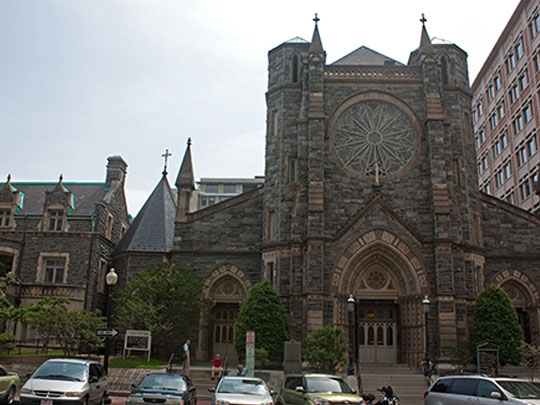
St Patrick’s Church on 10th Street NW is the oldest Catholic parish in D.C., founded in 1794 under Irish Dominican Fr Anthony Caffry to serve the Irish stonemasons and labourers building the White House and the Capitol.
St Patrick’s present granite Gothic Revival church was dedicated in 1884, it hosted the first National Eucharistic Congress in 1895, and Pope Francis visited in 2015.
St Patrick’s parishioner Mary Surratt was hanged as a conspirator in Lincoln’s assassination, which happened a short walk away, and her pastor, Fr Jacob Walter, defended her publicly and stood beside her at the gallows.
15 – WWII and Korean War Memorials
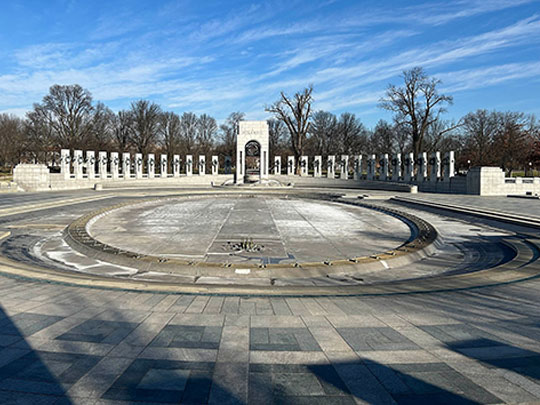
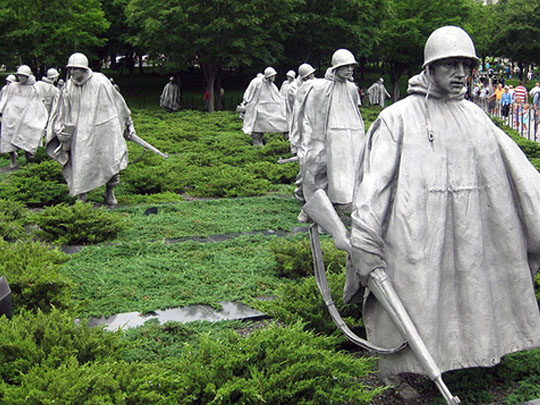
The National World War II Memorial, at the east end of the Reflecting Pool on the site of the old Rainbow Pool, was dedicated in 2004, and the Korean War Veterans Memorial was dedicated on 27 July 1995, the anniversary of the armistice.
The WWII Memorial’s 56 granite pillars stand for the states and territories of 1945, and its Freedom Wall holds 4,048 gold stars, each for 100 American dead, while at the Korean War Veterans Memorial 19 stainless-steel soldiers in ponchos are reflected in a polished wall to make 38, for the 38th parallel.
Two “Kilroy was here” engravings are hidden at the WWII Memorial, the Korean War Veterans Memorial’s Wall of Remembrance, added in 2022, lists 36,634 Americans and 7,174 Korean soldiers who served with them, and 28 Irish-born men who died serving in US forces in Korea were made US citizens after their deaths.
16 – Robert Emmet Statue on Embassy Row
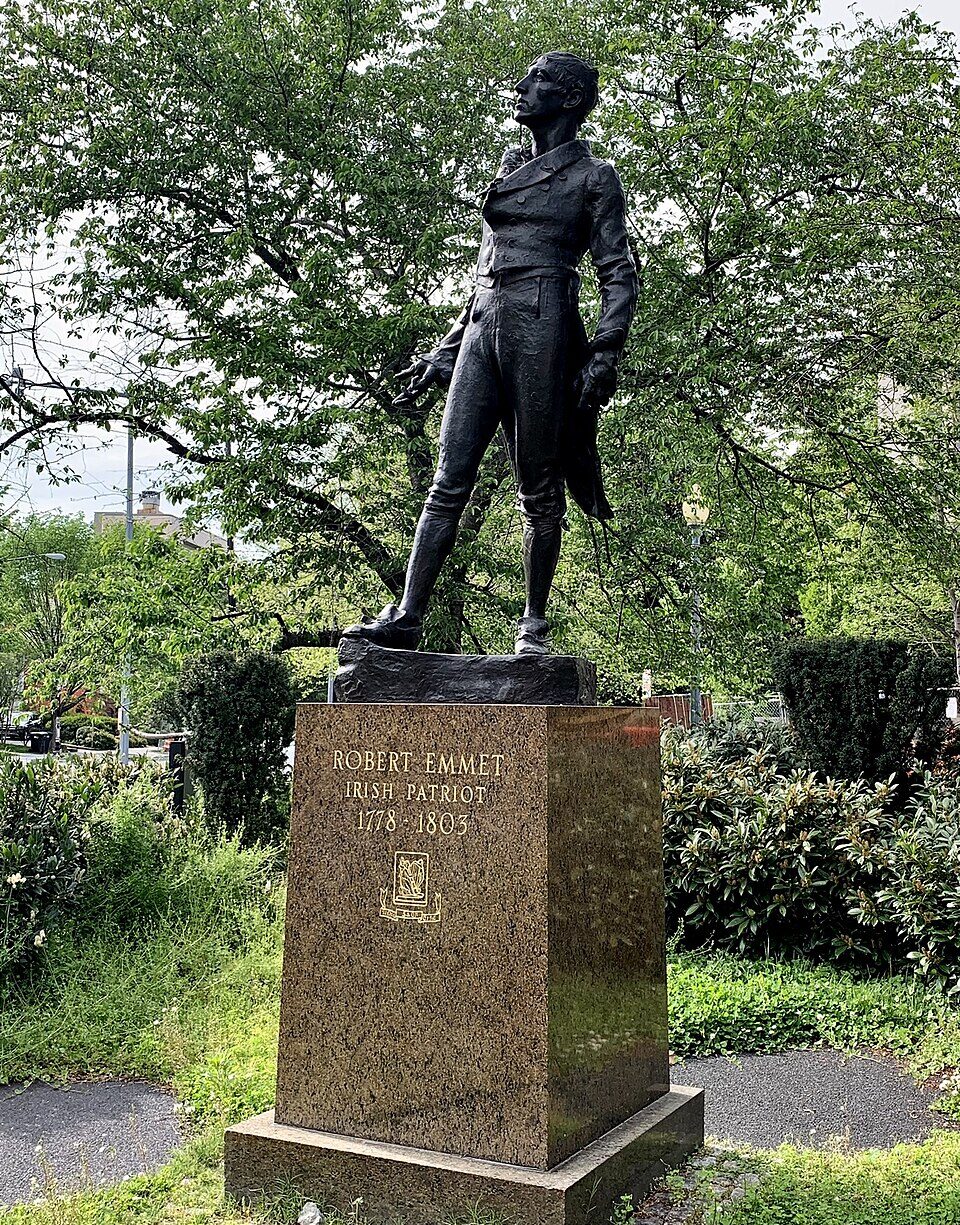
The Robert Emmet statue stands in Robert Emmet Park on Massachusetts Avenue at 24th Street NW, on Embassy Row, a 7-ft bronze of the Irish rebel executed in Dublin in 1803, by sculptor Jerome Connor from Annascaul, Co. Kerry.
The Robert Emmet statue was unveiled at the Smithsonian in 1917 with President Woodrow Wilson present, rededicated here on 22 April 1966 for the 50th anniversary of the Easter Rising, and carries Emmet’s words from the dock, “When my country takes her place among the nations of the earth, then, and not till then, let my epitaph be written”.
Connor cast four identical Robert Emmet statues, with a twin on St Stephen’s Green in Dublin and another in San Francisco’s Golden Gate Park, unveiled by Éamon de Valera in 1919, and the D.C. statue also quotes Emmet’s wish to win for Ireland “the guarantee which Washington procured for America”.