

Wikimedia Commons / CC-BY-SA-3.0 / GFDL
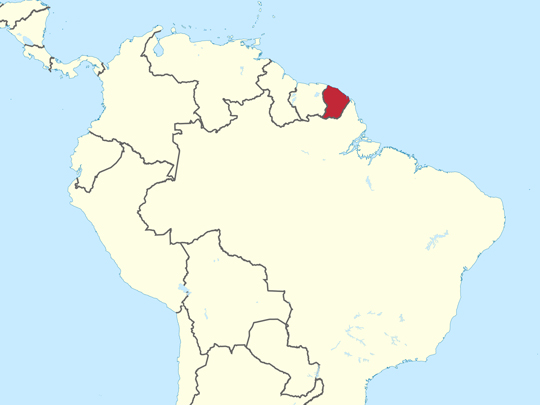
Capital: Cayenne
Population: 295,000+
Language: French (Guianese Creole, plus Amerindian, Maroon and Hmong)
1 – Devil’s Island Penal Colony (also above)
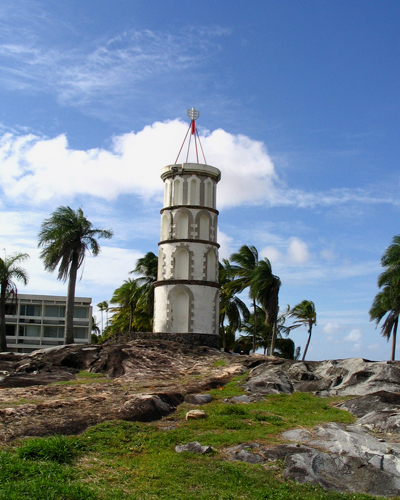
Three small islands about 13 km off Kourou — Île Royale, Île Saint-Joseph and Île du Diable — known as the Îles du Salut because they were free of the fevers that killed people on the mainland, and used from 1852 to 1953 as the offshore heart of a penal system to which France shipped roughly 70,000 convicts, thousands of whom died of disease and exhaustion and only a fraction of whom ever went home.
Boats run from Kourou to Île Royale, where the old hospital, chapel and guards’ quarters stand among coconut palms with agoutis and macaques wandering the paths, and a short hop reaches Saint-Joseph’s silent solitary-confinement blocks and its cemetery; Devil’s Island itself, where Captain Alfred Dreyfus spent four years in a stone hut after being framed for treason in the scandal that split France apart, is closed to visitors and seen only from the water.
The islands now belong to France’s space agency, because they sit directly under the flight path of rockets leaving Kourou — they carry tracking equipment, have to be cleared before every launch, and it is the space programme that has paid to stop the ruins falling down. Henri Charrière’s 1969 book, Papillon, and the Steve McQueen film are what put Devil’s Island in the popular imagination.
2 – Space Centre
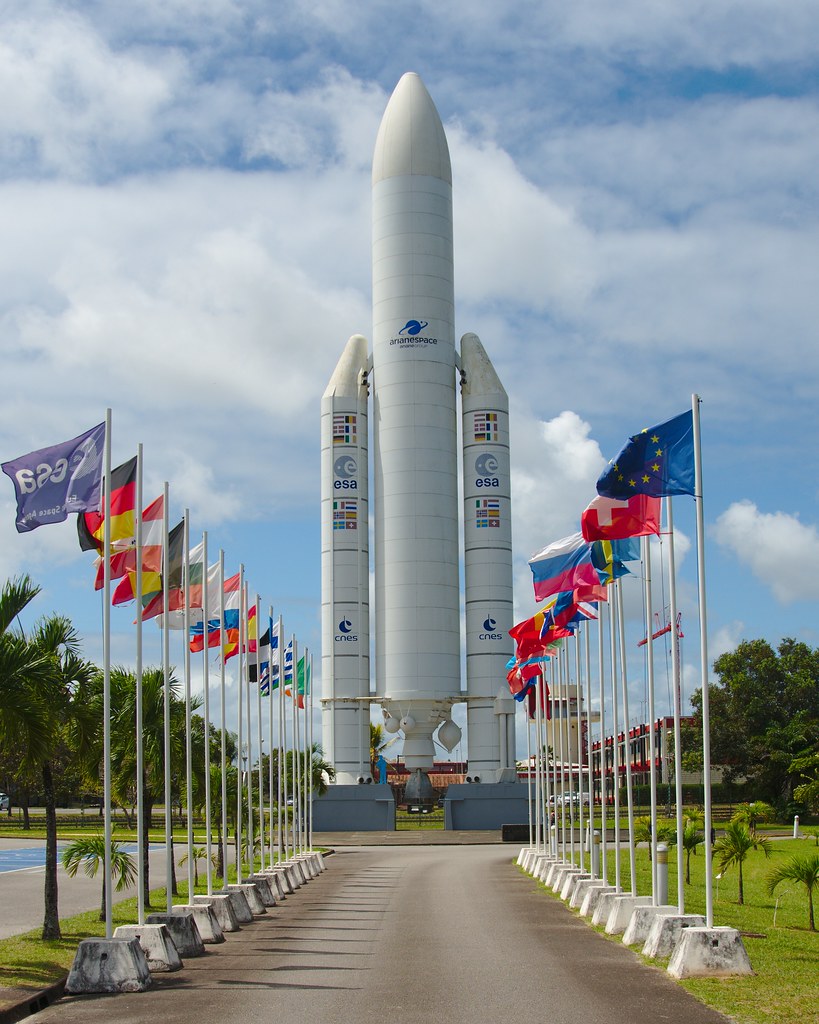
Europe’s spaceport spreads across roughly 700 square kilometres of coast between Kourou and Sinnamary, chosen by France in 1964 after Algerian independence cost it its old launch site in the Sahara, and picked because at 5° north it sits closer to the equator than any other major launch site — near enough that the Earth’s spin hands an eastbound rocket about 460 metres per second of free speed.
Guided tours of the launch complexes, the Jupiter control room and the Space Museum are free but need booking and ID in advance, and if your visit coincides with a launch there are public viewing points along the coast; Ariane 6 and Vega-C are the rockets flying from here now.
On Christmas Day 2021 an Ariane 5 lifted the James Webb Space Telescope off this coast so precisely that Webb needed far less fuel than planned to correct its course, and the propellant saved roughly doubled the telescope’s expected working life.
3 – Cacao
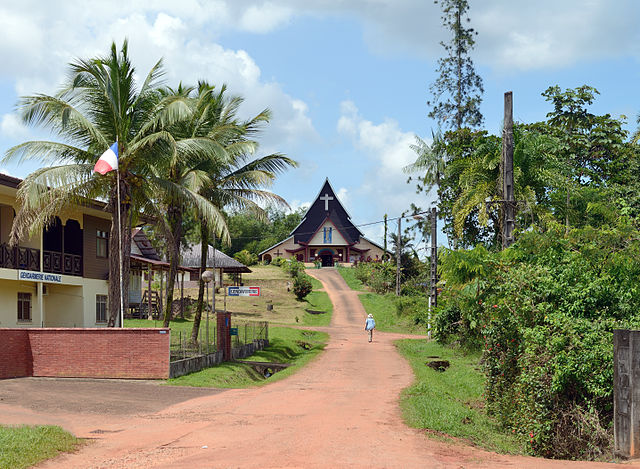
A village of a few thousand people on the Comté River about 70 km south of Cayenne, deep in rainforest, settled in 1977 when France resettled several hundred Hmong refugees here — a people who had fought alongside the French in Indochina and the Americans in Vietnam, then fled Laos after the communist takeover — on the reasoning that the hills, rivers and climate resembled the country they had lost.
The reason to come is Sunday morning, when the market fills with embroidery, bolts of dyed cloth, unfamiliar fruit and bowls of noodle soup and spring rolls eaten at plastic tables, and the rest of the day can go on the Planeur Bleu insect museum, a walk into the forest on the Molokoï trail, or a swim at the Saut Bief falls just outside the village.
Within a single generation the new arrivals turned a clearing in the Amazon into the market garden of the whole department — a large share of the fruit and vegetables sold in Cayenne is grown here, which is why French Guiana does much of its shopping in a village that speaks Hmong.
4 – Saint-Laurent-du-Maroni
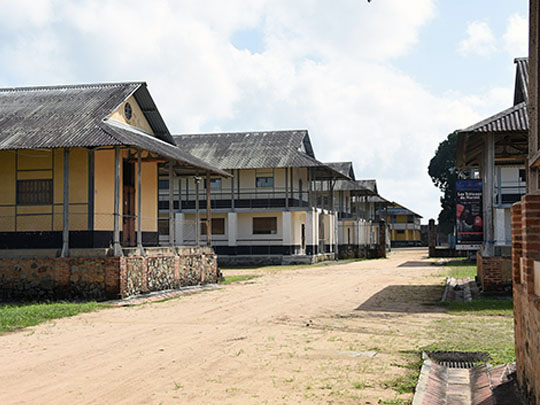

A river town on the Maroni three hours west of Cayenne, facing Suriname across the water, built from 1858 around the Camp de la Transportation — the reception prison where every convict shipped out from France was landed, catalogued and sorted before being sent on to the islands or the forest camps.
The camp is the best-preserved penal site in the territory and is seen with a guide: cell blocks with the iron hammock bars still in place, the solitary units, and the bricks stamped AP for administration pénitentiaire that convicts made and that turn up in walls all over the colony — while from the same waterfront pirogues run upriver past the villages of the Ndyuka, Aluku and Paramaka, Maroon peoples descended from Africans who escaped the Dutch plantations of Suriname and fought their way to treaties recognising their freedom.
The strangest thing about Saint-Laurent is that the town was itself part of the prison — constituted in 1880 as a penitentiary commune whose residents were almost entirely warders and released convicts, with the prison commandant installed as its mayor and freed men barred from the officers’ quarter.
5 – Cayenne
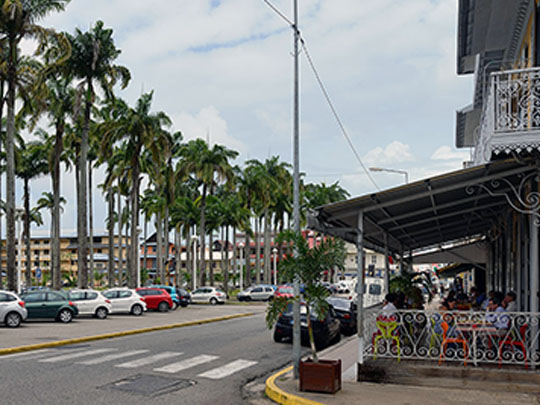
The capital sits on a low headland where the Cayenne River meets the Atlantic, founded in 1643 when a French company bought the hill from the Kali’na chief Cépérou and put a fort on top of it, after which the colony changed hands between the French, Dutch, English and Portuguese more times than anyone can comfortably summarise.
The old town is pastel Creole shutters and iron balconies around the Place des Palmistes, three hectares of royal palms laid out in the 1820s, with a market selling chillies, ginger and Hmong vegetables from Cacao, the Musée des Cultures Guyanaises, the ruins of Fort Cépérou above the port, and a Carnival that runs for weeks rather than days.
A monument on the Place des Palmistes honours Félix Éboué, born here in 1884 into a family descended from enslaved people, who as governor of Chad brought it over to de Gaulle in August 1940 — the first African territory to declare for Free France, handing the movement actual ground to stand on — and who now lies in the Panthéon.