
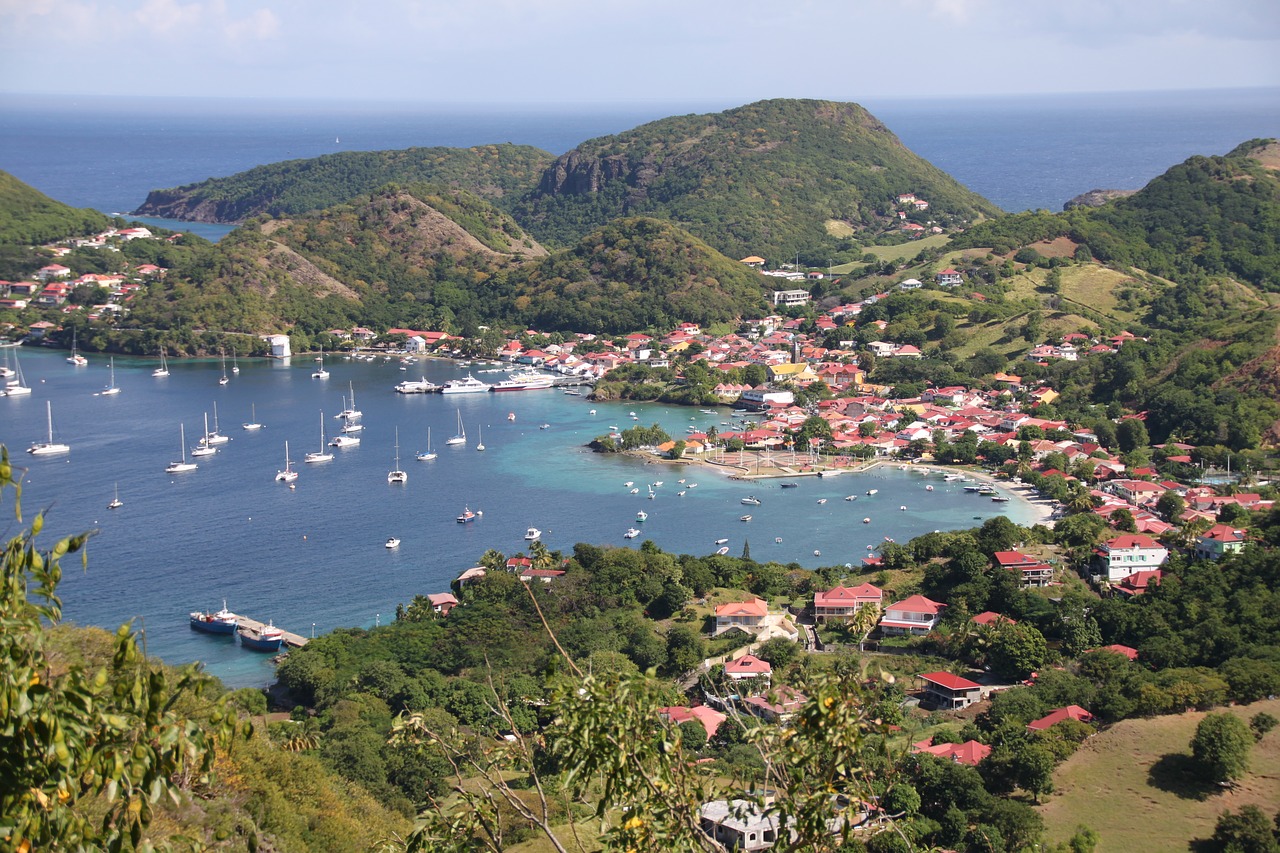
Wikimedia Commons / CC-BY-SA-3.0 / GFDL
Capital: Basse-terre
Population: 375,000+
Language: French/Guadeloupean Creole
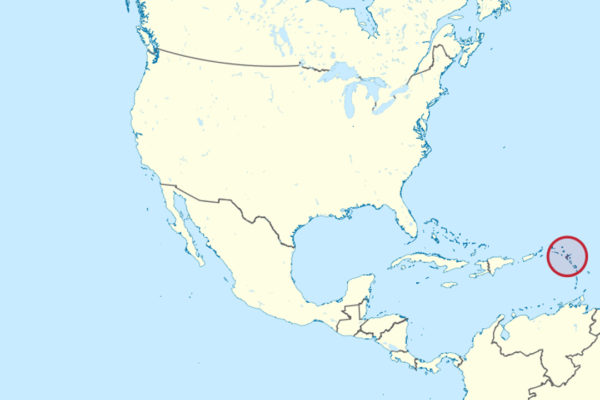
1 – Les Saintes (also above)
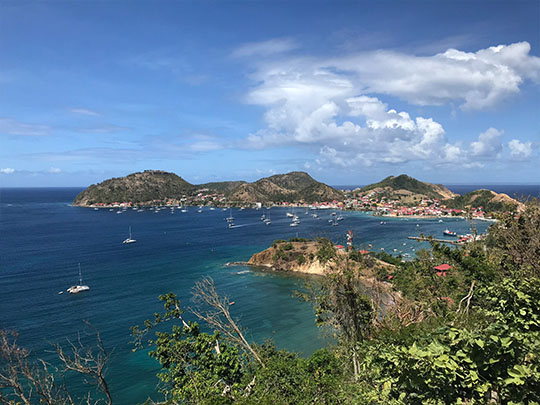

A cluster of small volcanic islands off the south coast, sighted by Columbus in November 1493 on All Saints’ Day and settled in the 17th century by Breton and Norman fishermen rather than by plantations — which is why the islands’ history and population differ sharply from the rest of Guadeloupe.
Terre-de-Haut is the one to visit: a village of red-roofed houses around a crescent bay, narrow lanes with almost no cars, and a walk up to Fort Napoléon, now a museum with a cactus garden and a view over the whole archipelago.
The bay is routinely listed among the most beautiful in the world — and it was out here on 12 April 1782 that Admiral Rodney broke the French line in the Battle of the Saintes, stopping a French fleet on its way to take Jamaica.
2 – Fort Delgrès
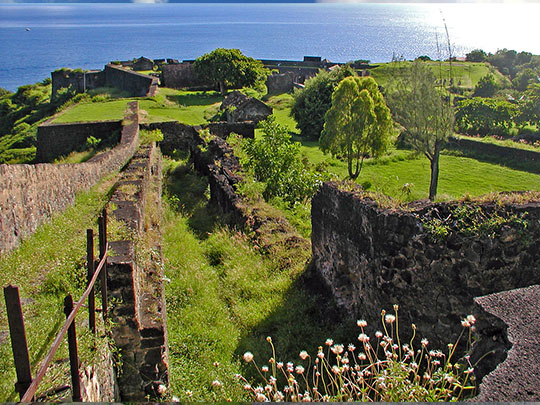
Above the small hillside capital, Basse-Terre, stands a five-hectare fort begun around 1650 by the colony’s first governor to hold off the English — known over the centuries as Fort Saint-Charles, Fort Royal and Fort Richepanse, and since 1989 as Fort Delgrès.
You can walk the ramparts, casemates and bastions for a view over the town, the sea and the volcano behind, with exhibitions on the fight against slavery and a military cemetery at the top of the site.
In May 1802 Napoleon sent General Richepanse to restore slavery in Guadeloupe, eight years after it was abolished; Louis Delgrès, a free man of colour and a French officer, held this fort against him, issued a proclamation addressed “to the entire universe”, then withdrew to a plantation on the volcano’s slopes with some four hundred followers and blew up their powder store rather than be enslaved.
3 – Pointe-à-Pitre
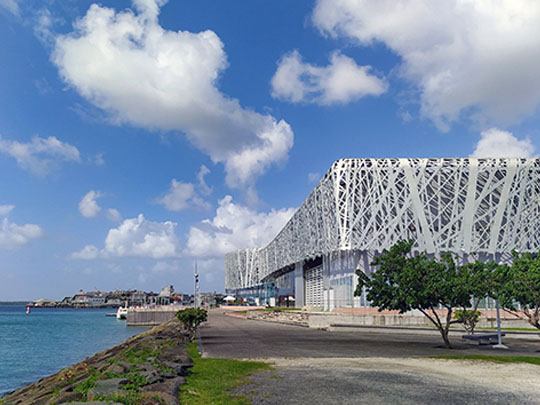
Guadeloupe’s largest city and economic centre sits on the flat limestone wing of the island, Grande-Terre, around a deep bay that made it the sugar port of the French Antilles — the administrative capital is Basse-Terre, over on the volcanic side.
The old town is a grid of shuttered colonial buildings, wrought-iron balconies and covered markets full of spices and rum, with the waterfront now dominated by a building of silver latticework over a black box.
That’s the Mémorial ACTe, opened in 2015 on the site of the Darboussier sugar factory — one of the largest museums of slavery and the slave trade anywhere, with the black facade standing for the millions who died and the silver roots above it for the living; it was named European Museum of the Year in 2017.
4 – La Soufrière


The other wing of the butterfly, Basse-Terre, is a volcanic ridge, and at its southern end stands La Soufrière — at 1,467 metres the highest point in the Lesser Antilles, still steaming, and known to everyone here as la Vieille Dame, the Old Lady.
The climb to the summit takes a couple of hours through rainforest and sulphurous vents inside the national park, and the mountain’s flanks hold the Carbet Falls, hot springs and some of the most fertile farmland in the Caribbean.
In 1976 the volcano began a long series of steam explosions and the authorities evacuated the whole south of the island — more than 60,000 people, out of their homes for months — but the eruption never turned magmatic, and the scientific row over whether it was necessary rumbled on for years.