
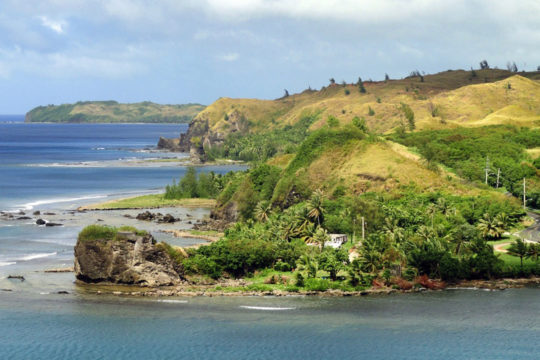
Wikimedia Commons / CC-BY-SA-3.0 / GFDL
Capital: Hagåtña
Population: 150,000+
Language: English, Chamorro
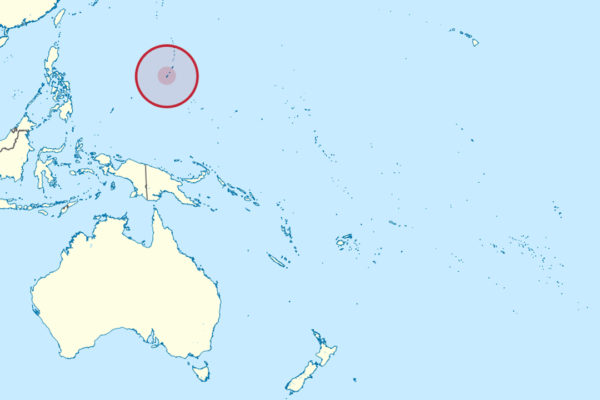
1 – Ritidian Point (Litekyan)
Ritidian Point, or Litekyan, is the limestone northern tip of Guam inside the Guam National Wildlife Refuge, and one of the island’s most important archaeological sites, with a CHamoru village predating the Spanish arrival by more than 600 years and a fishing camp dated to about 3,300 years ago.
Trails at Ritidian Point lead through limestone forest to caves painted with red, white and black figures, past pottery fragments and old wells, while on a clear day Rota, in the Northern Marianas, is visible about 75 km away.
The forest at Ritidian Point holds latte stones, stone pillars topped with hemispherical capstones that raised CHamoru houses off the ground, found only in the Mariana Islands and a lasting symbol of CHamoru identity.
2 – Umatac (Humåtak)
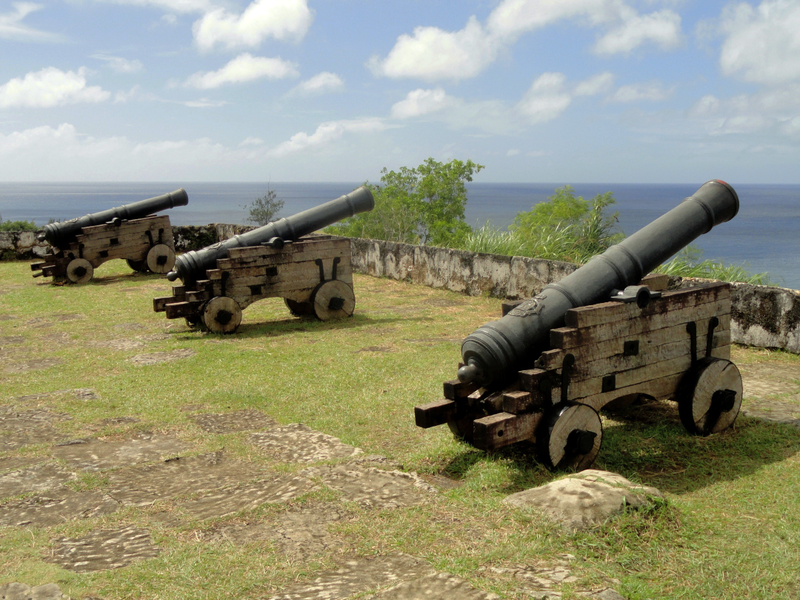
Umatac is a small village around a bay on Guam’s south-west coast, long held by tradition to be where Magellan’s ships made landfall in March 1521, the first European contact with the Marianas, though historians debate this and the tradition may echo Legazpi’s undisputed landing here in 1565.
Fort Nuestra Señora de la Soledad, completed around 1810, stands on the bluff above Umatac, the last of four Spanish forts built to defend the bay used by the Manila galleons, with a stone sentry post looking down on the San Dionisio church and the Magellan monument.
After islanders took a skiff from Magellan’s ships off Guam, his crew burned houses and killed seven CHamorus, then sailed off calling the archipelago the Islas de los Ladrones, the Islands of Thieves, a name that lasted until 1668, when the Jesuit San Vitores renamed them the Marianas.
3 – Hagåtña
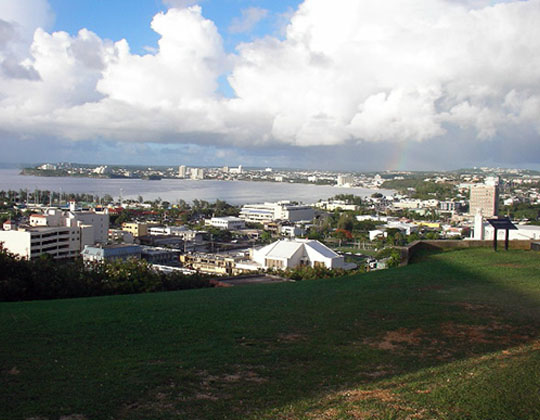
Hagåtña, Guam’s capital at the mouth of the Hagåtña River on the west coast, has been the seat of government since the Jesuits founded the first Spanish mission here in 1668, through Spanish rule, the American takeover of 1898 and the Japanese occupation, when it was renamed Akashi.
Hagåtña’s Plaza de España holds what survived of the Spanish governor’s palace, including the arched Azotea and the little Chocolate House, with the Dulce Nombre de María Cathedral-Basilica beside it and Latte Stone Park nearby.
About 10,000 people, close to half of Guam’s population, lived in Hagåtña in 1940, but American shelling in 1944 flattened the town, former residents were barred from returning, and the Navy’s new street grid cut across the old plots, leaving what is often counted among the smallest capitals anywhere.
4 – Asan Beach
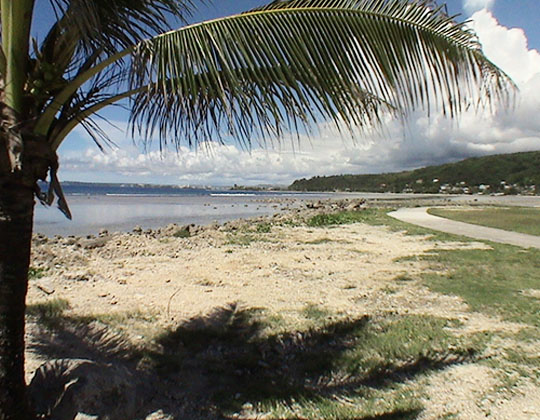
Asan Beach, just west of Hagåtña between Adelup and Asan points, the headlands the Marines nicknamed the Devil’s Horns, was one of two landing beaches when American forces came ashore on 21 July 1944 to retake Guam after 31 months of Japanese occupation.
The Asan Beach unit of War in the Pacific National Historical Park keeps Japanese pillboxes, caves and gun emplacements along the shore and ridge, while the Asan Bay Overlook above has a memorial wall naming 1,170 people of Guam who died in the occupation and 1,880 American servicemen killed.
The occupation of Guam brought forced labour as well as killings, including the massacres at Tinta and Faha in July 1944, when nearly 50 people died, and in its final weeks some 18,000 CHamorus were marched to Manenggon and other camps, which is why Liberation Day on 21 July is one of Guam’s biggest celebrations.
5 – Apra Harbor
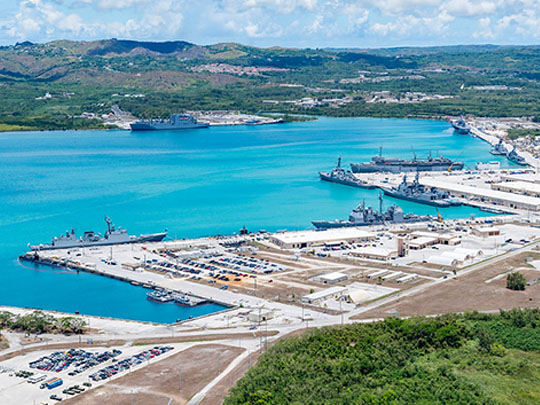
Apra Harbor, the deep-water harbour on Guam’s west coast, is where Captain Henry Glass brought USS Charleston on 20 June 1898 and fired about ten shots at the old Fort Santa Cruz, which the Spanish garrison, unaware of the war, is said to have taken for a salute, before Governor Juan Marina surrendered Guam the next day.
In Apra Harbor, divers can explore wrecks from two world wars on a single dive, the German cruiser Cormoran and the Japanese transport Tokai Maru, sunk by the US submarine Snapper in August 1943, which settled beside her at about 36 m with one small section touching.
Interned in Apra Harbor since 1914, the Cormoran was scuttled by her crew on 7 April 1917 as US forces moved to seize her when America entered the First World War, killing seven men, and a warning shot fired that day is often described as the first American shot of the war.
Also of note: in January 1972 the Japanese sergeant Shoichi Yokoi was found near the Talofofo River after almost 28 years hiding in Guam’s jungle, and some of his belongings are shown at the Guam Museum.