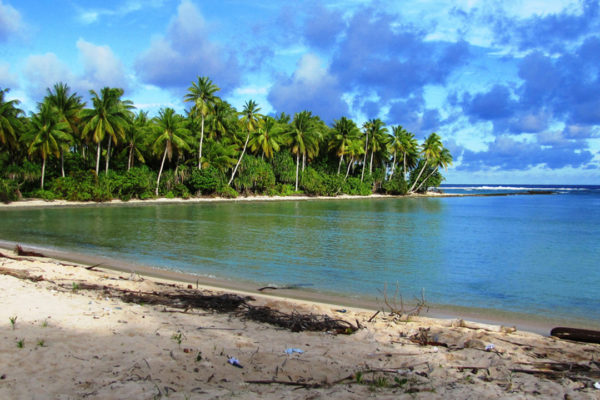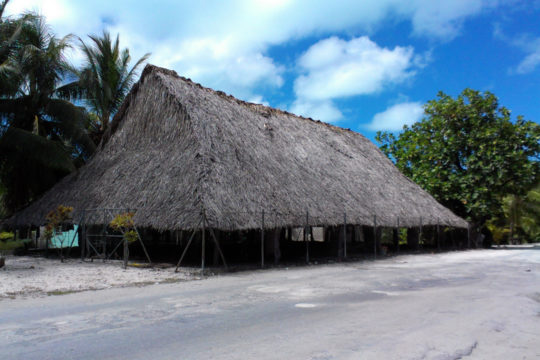
Wikimedia Commons / CC-BY-SA-3.0 / GFDL
Capital: Tarawa
Population: 130,000+
Language: English/Gilbertese
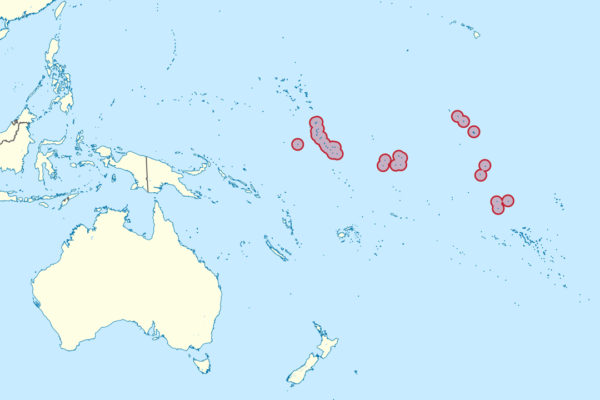
1 – Betio, Tarawa
The westernmost islet of Tarawa atoll, four kilometres long and barely 800 metres across at its widest, was fortified by Japanese forces around an airfield after 1942 and became the objective of the first large-scale opposed amphibious landing of the Pacific war, fought over four days in November 1943.
The relics are everywhere and mostly unfenced: huge coastal guns still on their mountings, concrete bunkers and pillboxes, a Sherman tank capsized in the shallows off Red Beach, and the command post where the Japanese commander was killed — along with memorials to the dead of both sides and to coastwatchers executed during the occupation.
Two of the enormous guns are British-made Vickers eight-inch pieces, and the story long told about them was that the Japanese captured them at Singapore — in fact Japan had bought them from Britain years before either war, so British guns ended up firing on Allied troops from a British colony.
2 – Banaba (Ocean Island)
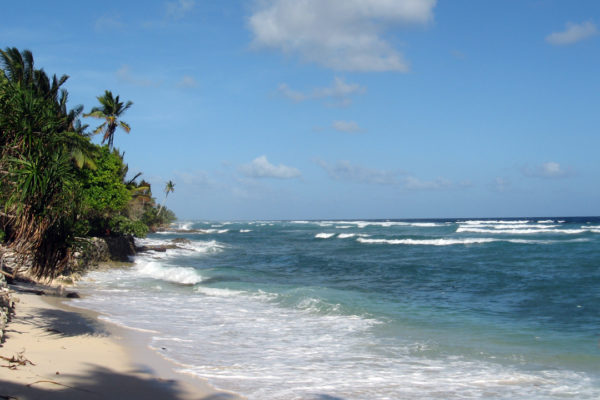
Alone among Kiribati’s thirty-odd islands, Banaba is not a low coral atoll but a raised limestone island, and that geology made it one of the richest phosphate deposits on earth — mined from 1900 until 1979, first by a British company and then by a British, Australian and New Zealand commission.
Little of the island is left intact: the interior is a field of coral pinnacles where the ground between them was dug out and shipped away, and what remains alongside is the mining infrastructure, the old settlements and the war cemetery from the Japanese occupation of 1942 to 1945.
The island was quite literally carried off and spread on farms in Australia and New Zealand, and in December 1945 the surviving Banabans were resettled 2,000 km away on Rabi in Fiji, where their descendants still live — holding Fijian citizenship, and still electing a representative to the parliament of Kiribati.
3 – Kiritimati (Christmas Island)
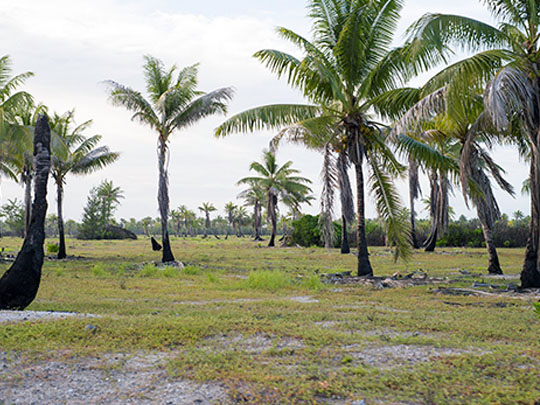
Cook sighted this atoll on Christmas Eve 1777 and named it accordingly, and the Gilbertese spelling is simply how the word Christmas sounds in the local language; it has the largest land area of any coral atoll in the world, more than half of Kiribati’s total dry land.
Britain tested nine nuclear weapons here in 1957 and 1958, with an American series following in 1962 — most islanders were never evacuated, and the health and environmental consequences remain disputed. Its settlements are called London, Poland, Banana and Tabwakea, the last two named during the test years, and the atoll is one of the great seabird colonies on the planet with millions of birds nesting, plus some of the best bonefishing anywhere.
Kiribati straddles the date line, and until the mid-1990s the country ran on two different calendar days at once, so the government simply moved the line east around its whole territory — which put these islands on UTC+14 and made them the first inhabited places on earth to reach each new day.
4 – Nikumaroro
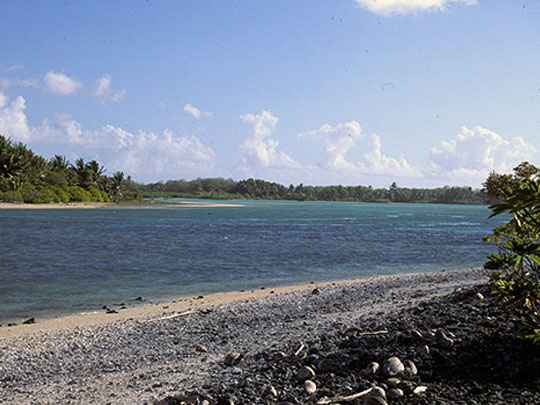

An uninhabited coral atoll in the remote Phoenix group, once called Gardner Island, it was chosen in the late 1930s for the Phoenix Islands Settlement Scheme, a British attempt to move families out of the badly overcrowded Gilberts, which struggled with drought and was given up by 1963.
Nobody lives there now and there is no airstrip, so almost the only visitors arrive by expedition boat; the rusting hulk of the freighter Norwich City, wrecked on the reef in 1929, is still visible, and the coconut and pandanus growing across the island are what the settlers left behind.
In 1940 a colonial officer found part of a skeleton and a few objects here, and one long-running theory holds they were Amelia Earhart’s, lost three years earlier — but the bones themselves went missing decades ago, the measurements taken at the time are argued over, and other researchers think they belonged to a missing crewman from the wreck.