
Wikimedia Commons / CC-BY-SA-3.0 / GFDL
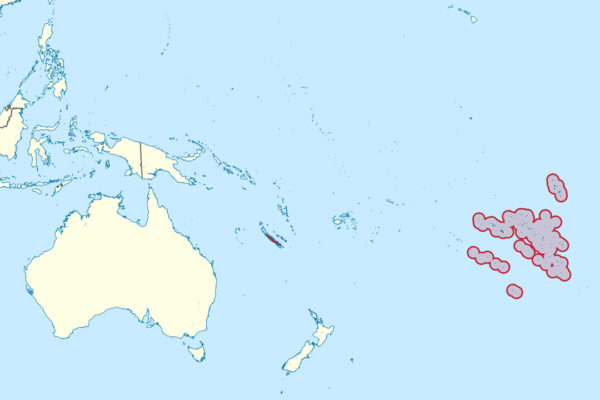
Capital: Pape’ete
Population: 282,000+
Language: French & Tahitian
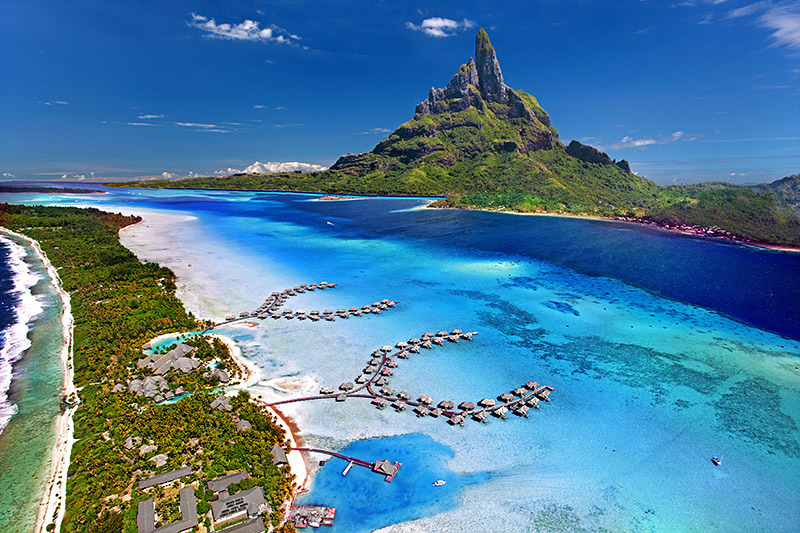
1 – Bora Bora (also above)
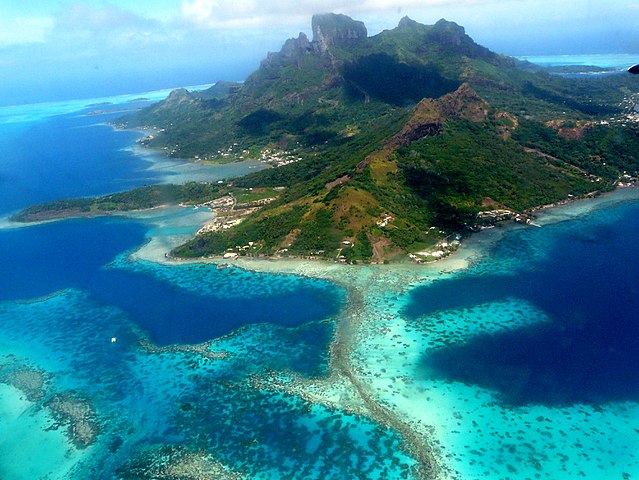
A drowned volcanic caldera in the Leeward Society Islands about 250 km northwest of Tahiti, ringed by a barrier reef and a chain of low motu; in 1942 the US Navy picked it as a fuelling and supply base, landing thousands of troops on an island of barely a thousand people and building the airstrip that served as French Polynesia’s only international airport for the next twenty years.
Mount Otemanu and Mount Pahia are the eroded remains of the crater rim, Matira Beach at the southern tip is the main public stretch of sand, lagoon boats run out to the coral gardens and the motu, and the coast road passes American wartime guns still sitting on their headlands.
There is no letter B in Tahitian: the island is properly Pora Pora, understood as “firstborn”, the first island the gods are said to have raised from the sea after Raiatea — European ears heard a B, and the misspelling is now one of the most famous place names on earth.
2 – Tahiti
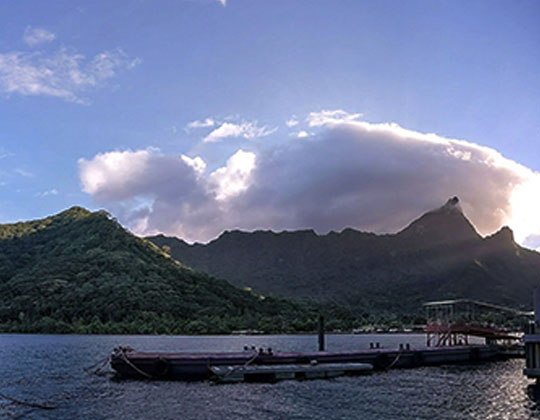
The largest island in the group, two volcanic cones joined by a narrow isthmus, holds roughly two-thirds of French Polynesia’s people and the capital, Papeete; European ships began arriving in the late 1760s, and by 1842 the island was the centre of a French protectorate.
Papeete has the covered municipal market and a waterfront lined with roulottes, the food trucks that serve as the city’s evening restaurants, while the north coast has the black-sand beaches and lighthouse at Point Venus, and the Museum of Tahiti and Her Islands sits on the west coast.
Cook’s first voyage happened because astronomers needed the 1769 transit of Venus observed from the South Pacific: he built a fortified camp on a sandspit at Matavai Bay, watched the planet cross the sun on 3 June, and only then opened sealed orders sending him south — so an astronomy assignment on Tahiti is what led to the charting of New Zealand and eastern Australia.
3 – Raiatea
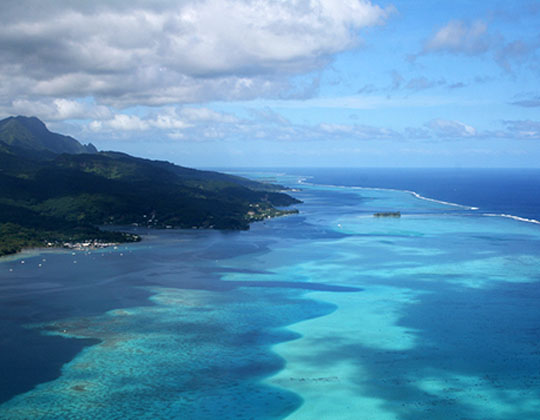
The second largest of the Society Islands, an hour’s sail from Bora Bora, was known traditionally as Havai’i — the name that survives in Hawai’i and in the Hawaiki of Māori tradition — and is widely held to be the place the great voyages to Hawai’i, Aotearoa and beyond set out from.
The marae complex at Taputapuātea on the east coast, World Heritage listed in 2017, is a paved basalt courtyard roughly 44 by 60 metres set beside the lagoon with a ceremonial platform at one end and a reef pass directly in front of it; inland, the Faaroa is the only navigable river in French Polynesia.
Taputapuātea was the central temple of eastern Polynesia, and when chiefs and priests from other islands founded a new marae they sailed here and carried a stone home from this one — meaning temples scattered across a third of the planet’s surface each held a physical piece of this single site.
4 – Rangiroa
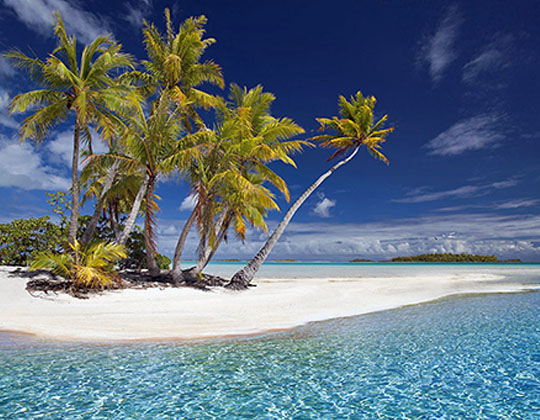
A ring of coral in the Tuamotu archipelago 350 km northeast of Tahiti, made up of hundreds of motu strung around the second largest lagoon in the world — big enough to hold the entire island of Tahiti inside it — and the name is usually read as something like “vast sky”.
Almost everything happens at the two passes: drift snorkelling and diving through Tiputa, where sharks, rays and a resident pod of spinner dolphins ride the incoming tide, plus boat trips across the lagoon to the Blue Lagoon, the pink-sand beaches and the weathered coral formations of Reef Island.
The atoll is crushed coral and rainwater with no soil and no streams, and yet a vineyard planted out on one of the motu produces the only wine made in French Polynesia — reckoned to be the only wine anywhere grown on a coral atoll, which is not a sentence you expect to write about a place with no earth in it.
Also of note, France tested nuclear weapons at Moruroa and Fangataufa in the Tuamotus from 1966 until 1996, with close to two hundred detonations.