
By Deror_avi / Wikimedia Commons / CC BY-SA 3.0

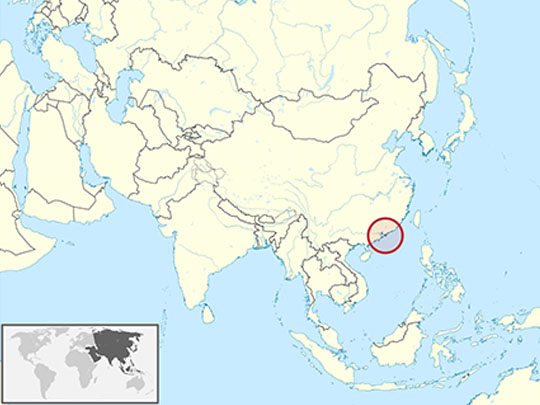
Capital: none (a Special Administrative Region of China)
Population: 7.5 million+
Language: Chinese (Cantonese) and English

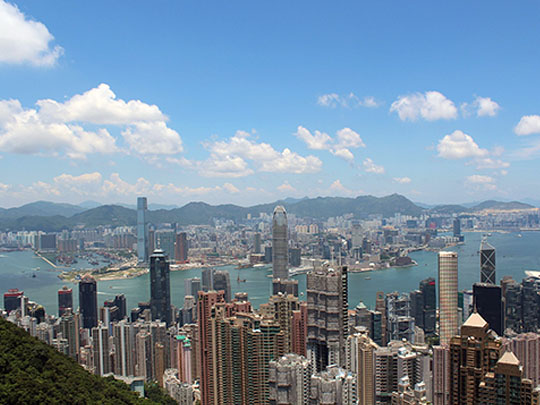
1 – Victoria Harbour (above)
Victoria Harbour, between Hong Kong Island and Kowloon, came under British rule in stages, with the island ceded in 1842, Kowloon in 1860 and the New Territories leased for 99 years in 1898, until the handover to China at midnight on 30 June 1997.
Victoria Harbour’s sights include the Star Ferry, founded as the Kowloon Ferry Company in 1888 and renamed in 1898, the Tsim Sha Tsui Clock Tower of 1915, all that remains of the old Kowloon railway terminus, and the Peninsula hotel of 1928.
Victoria Harbour has been more than halved in width by reclamation since the 1840s, by one estimate, and the 1842 treaty that ceded the island was negotiated by Sir Henry Pottinger, born at Mount Pottinger in County Down, who became Hong Kong’s first governor.
2 – Victoria Peak
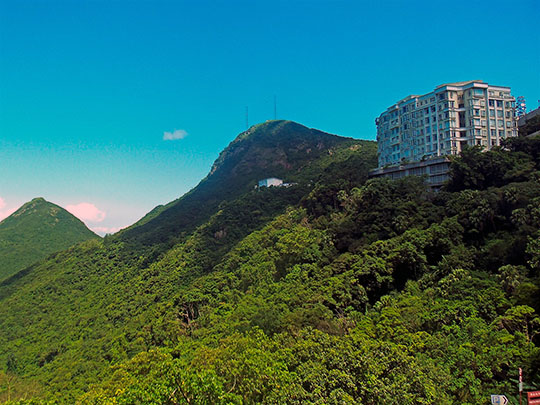

Victoria Peak, the highest hill on Hong Kong Island at more than 550 m, became the colony’s most exclusive address, and a law of 1904 barred anyone but non-Chinese from living there without the governor’s permission until its repeal in 1930.
Victoria Peak’s sights include the Peak Tram, which opened on 30 May 1888, the shaded Lugard Road loop, the Lions View Point Pavilion and Victoria Peak Garden on the site of the governor’s summer residence.
Victoria Peak’s tram, billed as Asia’s first funicular, kept its two front seats reserved for the governor from 1908 to 1949, and Japanese shelling in December 1941 put it out of action until Christmas Day 1945.
3 – Central, Sheung Wan
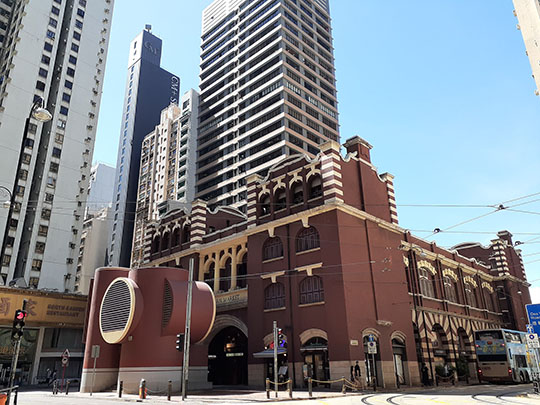

Central and neighbouring Sheung Wan, where a British landing party raised the flag at Possession Point on 26 January 1841, grew into the colony’s seat of government, with Government House completed in 1855 and the Japanese surrender signed there on 16 September 1945.
Central’s sights include Man Mo Temple, built from 1847, Tai Kwun, the former Central Police Station and Victoria Prison, St John’s Cathedral of 1849, the former Legislative Council Building of 1912, and the towers of HSBC by Norman Foster and the Bank of China by the Chinese-American architect Ieoh Ming Pei.
Central’s Victoria Prison held Ho Chi Minh in 1931 under the name Sung Man Cho, while the reforming governor Sir John Pope Hennessy of Cork appointed Ng Choy as the first Chinese member of the Legislative Council.
4 – Stanley
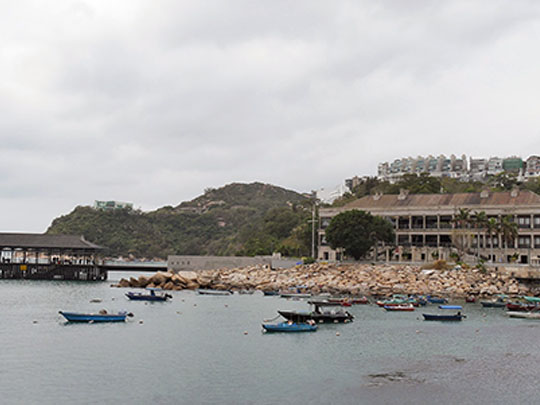

Stanley, on the south side of Hong Kong Island, saw the last stand of the Battle of Hong Kong, as its defenders held out until the early hours of 26 December 1941, hours after the colony’s surrender on the day that became known as Black Christmas.
Stanley’s sights include the Military Cemetery, opened in 1841, the Old Stanley Police Station of 1859, the Tin Hau Temple of 1767 and Murray House, built in Central in 1846 and rebuilt at Stanley stone by stone after it was taken down in 1982 to clear the site for the Bank of China Tower.
Stanley’s St Stephen’s College, used as a military hospital, was the scene of a massacre of wounded men and nurses on Christmas morning 1941, and from 1942 to 1945 its grounds held about 2,800 civilian internees, 121 of whom died.
5 – Tian Tan Buddha
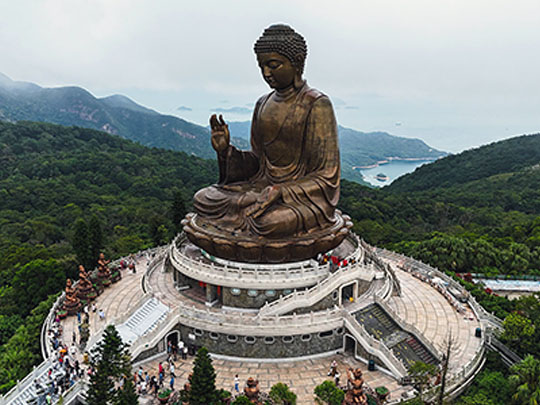

Tian Tan Buddha, at Ngong Ping on Lantau, is a bronze figure of about 250 tonnes, 34 m tall with its base, completed in 1993 beside Po Lin Monastery, which three monks founded in 1906 as a simple thatched hut.
Tian Tan Buddha’s sights include the 268 steps up to the statue, the main shrine hall of Po Lin Monastery, the Wisdom Path of timber columns carved with the Heart Sutra and the Ngong Ping 360 cable car.
Tian Tan Buddha was consecrated on 29 December 1993, the day Chinese Buddhists mark as the Buddha’s enlightenment, and was billed on completion as the world’s largest seated outdoor bronze Buddha.