
Wikimedia Commons / CC-BY-SA-3.0 / GFDL
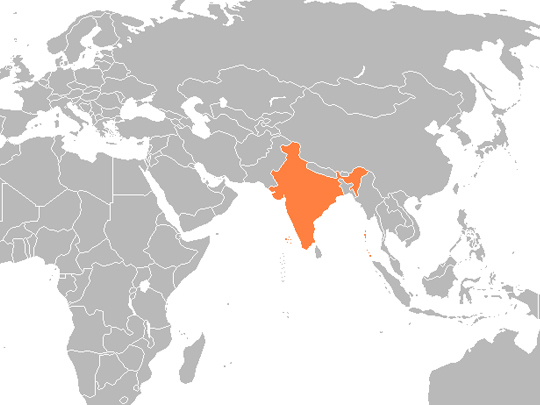
Capital: New Delhi
Population: 1.45 billion+
Language: English/Hindi
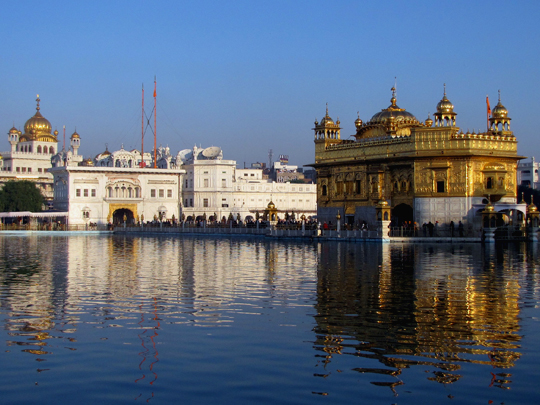
1 – Golden Temple – Amritsar (also above)
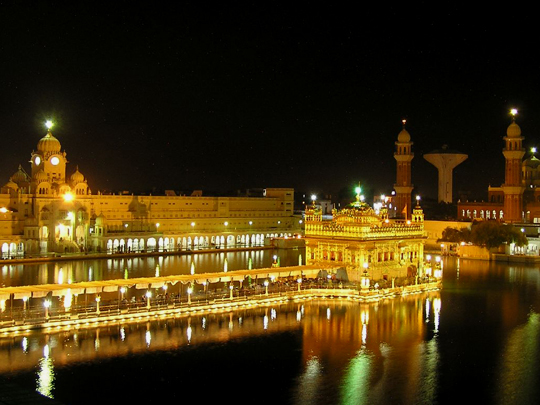
The Golden Temple, the holiest shrine in Sikhism, stands on an island in a man-made pool in the middle of Amritsar — the fourth Guru, Ram Das, had the tank dug in the 1570s, the fifth, Guru Arjan, completed the temple and installed the first compilation of Sikh scripture in it in 1604, and Maharaja Ranjit Singh had the upper storeys covered in gold leaf in the 1830s.
You go in barefoot with your head covered, cross the marble causeway to the sanctum where musicians sing the scripture almost round the clock, and walk the parikrama around the water; the Akal Takht faces the temple across the pool, and the complex has been damaged and rebuilt more than once — by Afghan armies in the 1760s, and again after the Indian Army’s assault on it in 1984.
It has four doors, one on each side, because Guru Arjan wanted it open to anyone arriving from any direction and any caste — and the kitchen behind it feeds somewhere between fifty and a hundred thousand people a day, free, to anyone who sits down on the floor, which makes it the largest free kitchen on earth.
2 – Aru Valley
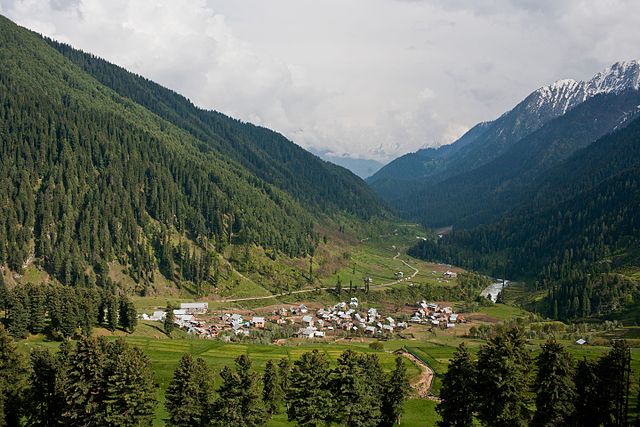
A meadow village at around 2,400 metres on the Lidder river, twelve kilometres upstream of Pahalgam in the Anantnag district of Kashmir — summer grazing ground for Gujjar and Bakarwal herders long before it was anything else, and the last road-head before the mountains close in behind it.
Aru Valley works mainly as a base: the walk in to the Kolahoi glacier starts here, so does the Tarsar–Marsar lakes trek, and there are shorter days out onto Aru’s own meadows. Horses and guides are hired in the village, the season runs roughly May to October, and in winter the whole valley is under snow.
Kashmir is Himalayan in a particular sense — not Nepalese summits but alpine pasture with deodar and birch — and the economy that goes with that is transhumance: families walking flocks up in spring and back down in autumn, along routes considerably older than any border in the region.
3 – Humayun’s Tomb
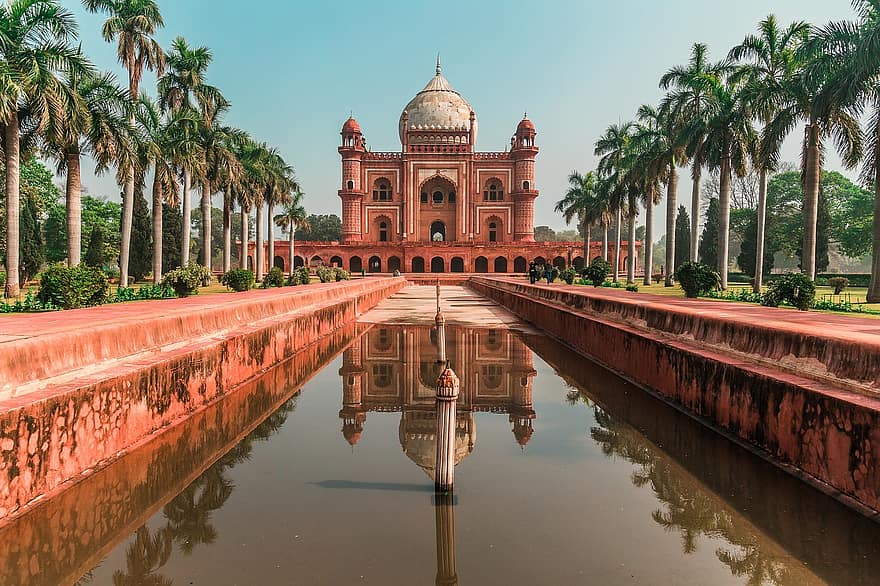
Humayun’s Tomb was built in Delhi between about 1565 and 1572 for the second Mughal emperor, commissioned by his widow Hamida Banu Begum and designed by a Persian architect, Mirak Mirza Ghiyas — the first great garden-tomb in India, and the building that set the form every Mughal mausoleum afterwards would follow, the Taj included.
Red sandstone with white marble inlay, a double dome, and a charbagh garden of about thirty acres cut into quarters by causeways and water channels; the complex holds well over a hundred other graves, which is why it gets called the dormitory of the Mughals, and it was restored across the 2000s by the Aga Khan Trust after long neglect.
In September 1857 the last Mughal emperor, Bahadur Shah Zafar, took refuge in this tomb as the British retook Delhi, and it was here that he surrendered — the dynasty that invented the building ended inside it, and he died in exile in Rangoon five years later.
4 – Taj Mahal
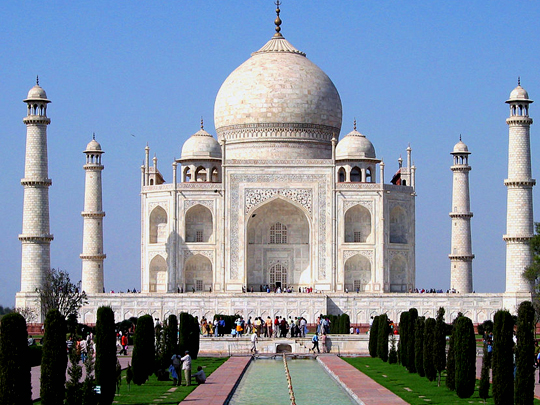
The Taj Mahal is a white marble tomb on the Yamuna at Agra, built by Shah Jahan for his wife Mumtaz Mahal, who died in 1631 giving birth to their fourteenth child — the work ran from 1632 to around 1653, employed something like twenty thousand people, and the chief architect is generally identified as Ustad Ahmad Lahauri.
The whole thing is an argument about symmetry: a charbagh garden quartered by water channels, a mosque on one side and an identical building on the other that exists only to balance it, four minarets tilted very slightly outward so they would fall away from the dome in an earthquake, and pietra dura inlay of semi-precious stone worked into the marble.
Shah Jahan did not get long with it: his son Aurangzeb deposed him in 1658 and held him in Agra Fort for the rest of his life, two kilometres upriver in sight of the tomb. When he died in 1666 he was buried beside his wife, his cenotaph set off-centre — the single asymmetrical thing in the building.
5 – The Red Fort
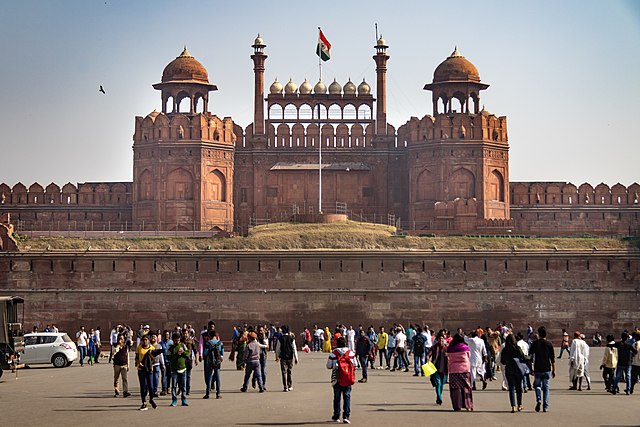
The Red Fort, Shah Jahan’s fortified palace at the centre of Shahjahanabad, the new Delhi he laid out when he moved the capital from Agra — built between 1639 and 1648, with two and a half kilometres of red sandstone wall, and the seat of Mughal power for the next two hundred years.
Inside are the Diwan-i-Am, the hall of public audience, and the Diwan-i-Khas for private audience, carrying the inscription about paradise on earth; the marble Rang Mahal and the royal baths; and Lahori Gate, which is the way in. A large part of the fort was pulled down by the British after 1857 and replaced with barracks.
The Peacock Throne stood in the Diwan-i-Khas until the Persian ruler Nadir Shah sacked Delhi in 1739 and carried it off, along with the Koh-i-Noor — and since 15 August 1947 every Indian prime minister has addressed the nation from the ramparts above Lahori Gate each Independence Day, which is why this is the fort that appears behind the flag.
6 – Akshardham Temple
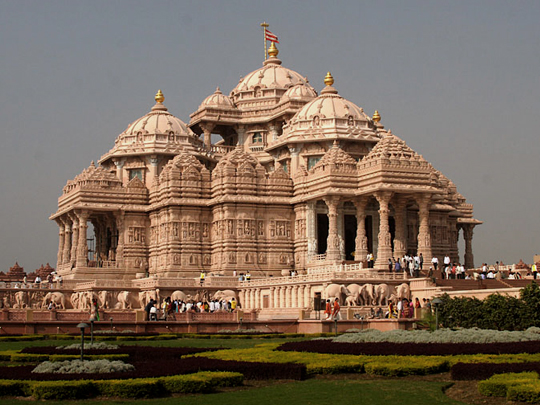
Akshardham Temple, a Hindu temple complex on the Yamuna in east Delhi, built by the BAPS Swaminarayan organisation and opened in 2005 — around seven thousand craftsmen and several thousand volunteers put it up in roughly five years, and Guinness lists it as the largest comprehensive Hindu temple in the world.
The central monument contains no steel and no concrete: it is carved Rajasthani pink sandstone and Italian marble, 234 pillars, some twenty thousand carved figures, with a colonnade of elephants running round the base and a stepwell courtyard outside.
Phones, cameras and bags are not allowed past security, which takes a while. It is the odd one out on this page and worth seeing for exactly that reason — a building finished within living memory using a stone-carving trade most countries have let die out. It isn’t a replica of an old temple; it is an old temple that happens to be new.
7 – Mehrangarh Fort
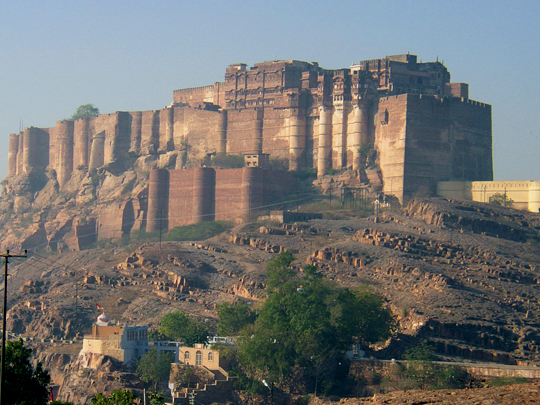
Mehrangarh Fort, a fort on a sandstone bluff 120 metres above Jodhpur, begun in 1459 when Rao Jodha moved his capital here from Mandore, and held by the same Rathore family ever since — the walls reach 36 metres in places, and the rock they stand on was quarried to build them.
Seven gates climb the ramp, one of them still marked by cannonball strikes from a Jaipur siege; inside are courtyards screened with carved jali, the Moti Mahal and Phool Mahal, and one of the best-run museums in India, holding palanquins, howdahs and a serious arms collection.
The view down over the city is why most people come. Jodhpur below is painted blue in great swathes and nobody entirely agrees why: the explanations offered are that blue marked out Brahmin houses, that the pigment was copper sulphate mixed into limewash to keep termites out, or simply that it keeps interiors cooler. You will often hear all three from the same guide.
8 – Kosi River Valley – Almora
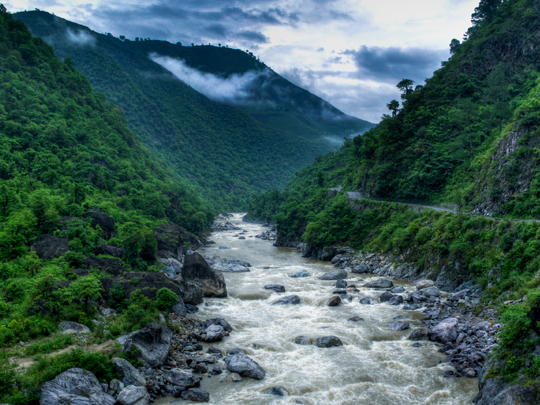
Almora stands on a horseshoe ridge in the Kumaon hills of Uttarakhand at about 1,600 metres, founded in 1568 as the capital of the Chand rajas, with the Kosi river running below it and, on a clear day, a wall of Himalaya several hundred kilometres wide along the northern horizon.
The old town has a flagstoned bazaar and carved wooden shopfronts; Kasar Devi temple is seven kilometres out along the ridge, the cluster of more than a hundred stone temples at Jageshwar is about an hour away, and the forest sanctuary at Binsar gives you the mountain view without the walk.
The ridge below Kasar Devi is called Crank’s Ridge, and the list of people who have sat on it is remarkable — Vivekananda meditated here in the 1890s, D. H. Lawrence spent two summers, Lama Govinda settled, and in the 1960s Allen Ginsberg, Timothy Leary, Cat Stevens and George Harrison all turned up. Leary wrote much of Psychedelic Prayers up there, and the ridge got its name after he streaked along it.
9 – Dal Lake
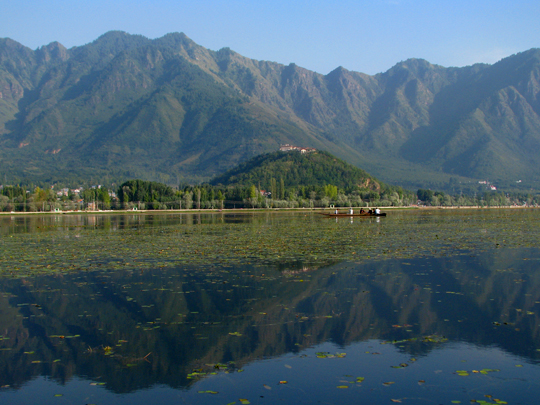
Dal Lake, around eighteen square kilometres of water on the edge of Srinagar, ringed by the Zabarwan hills, with the Mughal gardens of Shalimar and Nishat terraced down the eastern shore — Jahangir laid those out in the seventeenth century, and the line about Kashmir being paradise on earth is usually put in his mouth.
Shikaras, the long cushioned paddle boats, take you out through channels between floating vegetable gardens grown on rafts of matted weed, to a market that trades on the water before dawn; there is a post office on a boat, and there are the houseboats, though many fewer than there once were. Those houseboats exist because of a property law.
The Dogra maharajas forbade outsiders from buying land in the valley, so British visitors who wanted to summer in Kashmir built themselves elaborate cedar-panelled houses on the water instead — no land, no restriction — and from the 1880s an entire industry grew out of the loophole.
10 – Goa
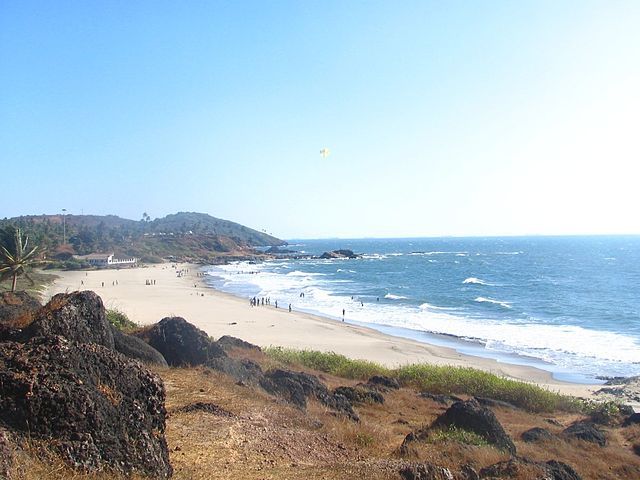
Portuguese from 1510 until the Indian army took Goa in December 1961 — four hundred and fifty-one years, far longer than the British held anywhere in India, and it shows: in the churches, the surnames, the bread, the feni, and the fact that Goa still runs on a Portuguese-derived civil code.
The coast divides: the north around Calangute, Baga and Anjuna is where the crowds and the flea market are, Vagator and Arambol shift between loud and quiet with the season, and the southern beaches from Colva down to Palolem are calmer. Inland, Old Goa has the Basilica of Bom Jesus and the Sé Cathedral, both UNESCO-listed.
The Basilica holds the body of St Francis Xavier, who died off the Chinese coast in 1552 and was brought back here — it is put on public display roughly once a decade, and parts of it have gone elsewhere over the centuries, including a forearm sent to Rome and a toe that a pilgrim is recorded as having bitten off in 1554.
11 – Udaipur
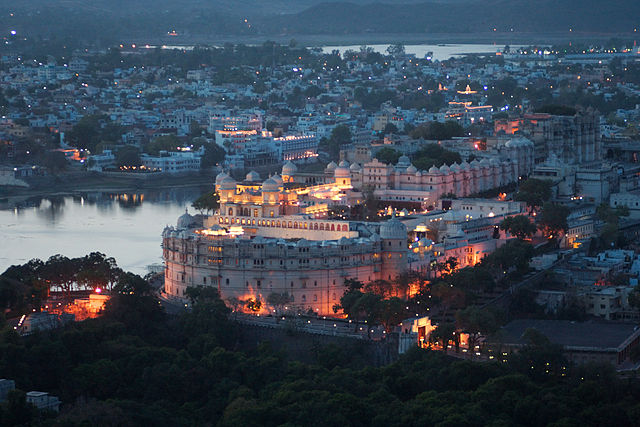
Founded in 1559 by Maharana Udai Singh II of Mewar, who moved his capital here after the Mughals took Chittorgarh — Udaipur was built around a chain of artificial lakes in the Aravalli hills, and the family still occupies part of the City Palace, which makes them one of the longest-continuing ruling houses anywhere.
Udaipur City Palace runs along the shore of Lake Pichola as a chain of linked palaces built over four centuries; the island palace of Jag Niwas, put up in 1746, is now a hotel; and the Jagdish Temple, the Saheliyon ki Bari garden and the Bagore ki Haveli museum are all within walking distance, with the sunset boat as the standard evening.
Octopussy was filmed here in 1983, using the lake palace and the Monsoon Palace on the ridge above, and Udaipur has never let it go — the film still screens nightly in rooftop restaurants across the old city, more than forty years on, to rooms of travellers who were not born when it came out.
12 – Gurudongmar Lake – Sikkim
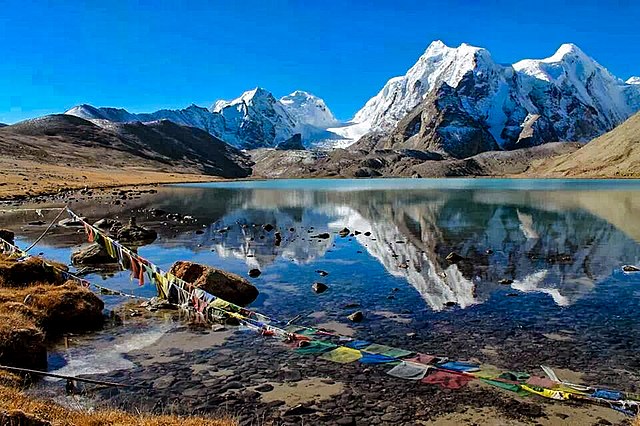
Gurudongmar Lake sits at around 5,430 metres in North Sikkim, five kilometres from the Tibetan border and 190 from Gangtok, up on the plateau where the Himalaya gives way to Tibet — one of the highest lakes in the world, and held sacred by Buddhists, Sikhs and Hindus alike.
The road runs up through Lachen and Thangu and is closed regularly by weather and landslides; permits are needed, and foreign nationals are generally not admitted, so this is a domestic pilgrimage far more than a tourist route. Kangchenjunga and Siniolchu stand on the skyline on a clear morning.
The lake freezes for much of the year, but one patch of it does not, and every tradition here has an explanation for that: Guru Padmasambhava passing through in the eighth century, or Guru Nanak in the fifteenth, laying a hand on the ice so the herders would have water through the winter. Nobody has managed to explain it any other way either.
13 – Varanasi
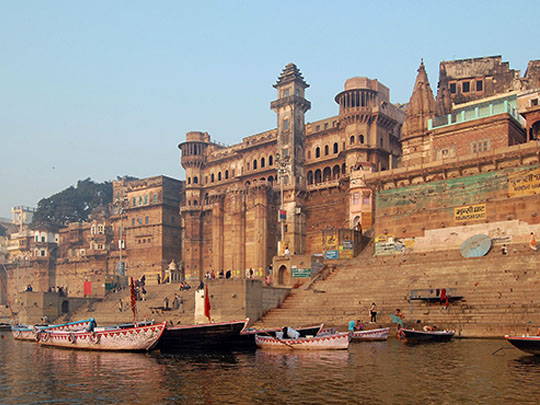
Varanasi — a city on the west bank of the Ganges in Uttar Pradesh, lived in continuously for something over three thousand years, and the holiest of the seven sacred cities of Hinduism. The belief that gives the place its character is that to die here is to be released from the cycle of rebirth altogether.
Eighty-eight ghats run along about five kilometres of riverfront, stone steps going down into the water where people bathe at dawn, do laundry, practise yoga and are cremated; the fires at Manikarnika burn without pause, the Ganga Aarti is performed every evening at Dashashwamedh, and the way to take it all in is from a rowing boat at first light.
Ten kilometres out at Sarnath, the Buddha preached his first sermon after his enlightenment — and it was there that Ashoka raised the pillar whose four-lion capital, carved in the third century BC, independent India adopted as its state emblem. It is on every Indian banknote, passport and coin.
14 – Ajanta and Ellora
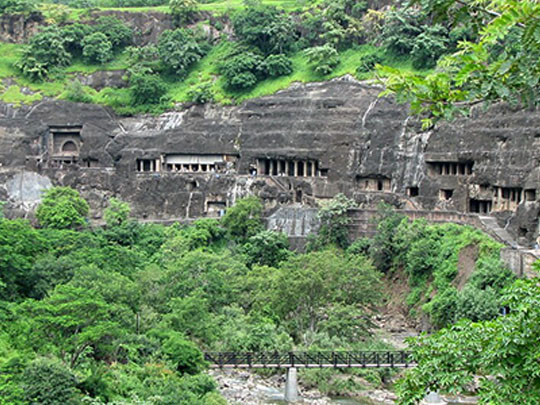
Two sets of rock-cut caves in Maharashtra about a hundred kilometres apart, both UNESCO-listed, cut into basalt over roughly a thousand years — Ajanta from the second century BC to around 480 AD and entirely Buddhist; Ellora from about 600 to 1000 AD and Buddhist, Hindu and Jain, in that order along the cliff.
Ajanta is thirty caves in a horseshoe bend above the Waghora river and the reason to go is the painting: murals of the Buddha’s previous lives and the Jataka tales, the best-preserved ancient painting anywhere in India. Ellora is thirty-four caves and the reason to go there is carving.
Kailasa, Ellora’s cave 16, was not built but subtracted: masons began at the top of a basalt hillside and cut downwards, removing on some estimates a couple of hundred thousand tonnes of rock to leave a multi-storey temple with courtyards, elephants and free-standing towers — all of it one continuous piece of stone, with no possibility of correcting a mistake.
15 – Mumbai
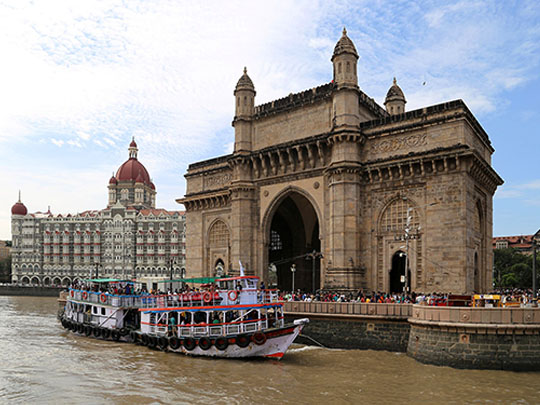
Seven islands on the Konkan coast, handed to Charles II in 1661 as part of a Portuguese dowry and leased almost at once to the East India Company, then joined into one landmass by two centuries of reclamation — Mumbai is now a city of more than twenty million, India’s financial centre and the home of its film industry.
The Gateway of India on the waterfront at Apollo Bunder; Chhatrapati Shivaji Terminus, a Victorian Gothic railway station ornate enough to be UNESCO-listed; the rock-cut Elephanta caves an hour out by boat; Marine Drive curving round Back Bay; and the dabbawalas, who move something like two hundred thousand home-cooked lunches across the city every working day.
The Gateway was begun in 1911 to mark the arrival of George V, the only reigning British monarch ever to visit India, and finished in 1924 — and in February 1948, months after independence, the last British troops in the country marched out through it to their ships. It was built to welcome an empire and used to see it off, also changing its name from Bombay to Mumbai in 1995.
16 – Kerala
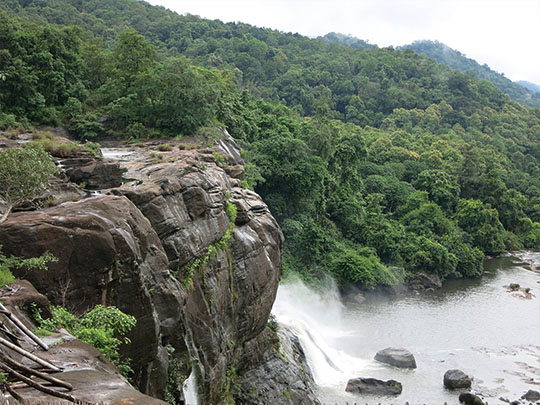

Kerala, a strip of coast and hill country between the Western Ghats and the Arabian Sea which for two thousand years was where the world came for pepper and cardamom — Roman ships first, then Arab, Chinese and finally Portuguese traders, and the layers of that trade are still legible in who lives there and what they believe.
The backwaters are the headline: some nine hundred kilometres of linked lagoons, canals and rivers running behind the coast and centred on Vembanad, worked by converted rice barges you can sleep aboard. Inland are the tea hills around Munnar and the elephants at Periyar; on the coast, Fort Kochi and its cantilevered Chinese fishing nets.
Kerala had established Jewish, Christian and Muslim communities centuries before much of Europe had settled its own religious arrangements — the St Thomas Christians trace their church to the first century, the Paradesi Synagogue at Kochi dates from 1568 with a congregation far older than the building, and Vasco da Gama was buried at Kochi in 1524 before his remains were shipped home to Lisbon.
17 – Meenakshi Amman Temple – Madurai
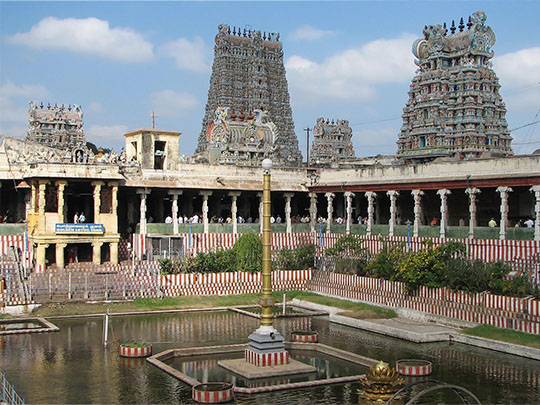
Meenakshi Amman Temple is a fifteen-acre temple complex at the centre of Madurai in Tamil Nadu, a city inhabited for more than two thousand years and laid out in concentric squares around this building — the present structure is mostly sixteenth and seventeenth century, rebuilt and vastly enlarged by the Nayak rulers after an earlier temple was destroyed in the fourteenth.
Fourteen gopurams, gateway towers stacked from base to summit with brightly painted stucco figures, the tallest around 52 metres; some 33,000 sculptures in total; the Hall of a Thousand Pillars, which actually has 985; a golden lotus tank at the centre; and roughly fifteen thousand visitors a day, rising to twenty-five thousand on Fridays.
The temple is named for the goddess rather than the god, and that is the unusual part — Meenakshi, a form of Parvati, takes precedence here over her consort Shiva, whose shrine is the secondary one. Every night his image is carried in procession to her chamber, and every morning carried back again.