

Wikimedia Commons / CC-BY-SA-3.0 / GFDL
Capital: Topeka
Population: 2.9 million+
Language: English

1 – Dodge City (also above)

Dodge City, on the Arkansas River in southwest Kansas, was staked out on the Santa Fe Trail in 1872 beside Fort Dodge, as the railway arrived, and after a few years shipping buffalo hides it became the “Queen of the Cowtowns”, sending more than 75,000 Texas cattle east a year until a Texas-fever quarantine ended the drives in 1885.
Dodge City’s Boot Hill Museum has a rebuilt Front Street of 1958, with its Long Branch Saloon, the old jail from Fort Dodge and the Kansas Cowboy Hall of Fame, though the bodies on Boot Hill itself were moved away in 1879.
Dodge City sells itself as “the wickedest little city in America”, but the historian Robert Dykstra counted just 15 killings in its ten cattle seasons, while “get out of Dodge” was popularised by the TV series Gunsmoke, and the sheriff who turned back Texas drovers on the governor’s orders was Pat Sughrue, born in County Kerry.
2 – Topeka

Topeka, on the Kansas River in northeast Kansas, was laid out in 1854 by anti-slavery settlers, among them Cyrus Holliday, later the first president of the Atchison, Topeka and Santa Fe Railway, and it became the capital when Kansas joined the Union as a free state in 1861, while Charles Curtis, born here in 1860, became the first vice president of Native American descent.
Topeka’s State Capitol, built from 1866 to 1903, has 296 steps up to its dome and rises 93 m to the top of its statue, about 5 m taller than the US Capitol, and the city has Monroe School, the heart of the Brown v Board of Education National Historical Park.
Inside the Capitol, John Steuart Curry’s mural Tragic Prelude shows the abolitionist John Brown with a Bible and a rifle, but Curry quit in 1942 and never signed it after the legislature refused to remove some marble for him, and the painting became the cover of the rock band Kansas’s first album in 1974.
3 – Wichita

Wichita, in south-central Kansas where the Arkansas and Little Arkansas rivers meet, grew from a trading post on the route marked by the Scots-Cherokee trader Jesse Chisholm, whose name went to the Chisholm Trail, and in 1875 a young Wyatt Earp joined its police under the Irish-born marshal Mike Meagher, until he was dropped from the force a year later.
Wichita has the Exploration Place science centre, designed by Moshe Safdie and opened in 2000, the original Pizza Hut building of 1958, moved to Wichita State University as a museum, and riverside paths at the heart of the city.
Wichita calls itself the “Air Capital of the World”, as Cessna, Beechcraft and Learjet all grew up here and Boeing built 1,644 B-29 bombers in Wichita in the Second World War, while White Castle, often called the first fast-food chain, was founded here in 1921.
4 – Monument Rocks

Monument Rocks rise up to 21 m from the grassland of Gove County in western Kansas, chalk pillars and arches made from the floor of the Western Interior Seaway, which covered the middle of North America about 80 million years ago, and in 1968 they became Kansas’s first National Natural Landmark.
Monument Rocks stand on private land, free to visit, down dirt roads south of Oakley, with no climbing or fossil hunting, and nearby Little Jerusalem Badlands State Park, opened in 2019, has chalk spires about 30 m tall.
In 1952 a team led by George Sternberg dug out of the Gove County chalk the “fish within a fish”, a 4.3 m Xiphactinus with a 1.8 m fish in its stomach, which is in the Sternberg Museum in Hays, and from 1865 the Butterfield Overland Despatch stagecoaches ran past Monument Rocks, guarded by a short-lived army post nearby.
5 – The Keeper of the Plains, Wichita

The Keeper of the Plains is a 13 m steel figure of a Native American man raising his arms to the sky, standing where the Arkansas and Little Arkansas rivers meet in Wichita, made by the Kiowa-Comanche artist Blackbear Bosin and dedicated on 18 May 1974.
The Keeper of the Plains has stood since 2007 on a 9 m rock promontory reached by two cable-stayed footbridges, and on most evenings the “Ring of Fire” pots around its base are lit for 15 minutes, while the Mid-America All-Indian Museum is next door.
Blackbear Bosin was best known as a painter, and his Prairie Fire (1953) was reproduced in National Geographic in May 1955, while the Keeper of the Plains weighs about 4.5 tonnes.
6 – Coronado Heights

Coronado Heights is a sandstone bluff about 90 m high near Lindsborg, in central Kansas, named after the Spanish explorer Francisco Vázquez de Coronado, whose expedition reached Kansas in 1541 looking for the golden cities of Quivira and found instead the grass-house villages of the Wichita people along the Arkansas River.
Coronado Heights has a stone “castle” built by the Works Progress Administration in 1935–36 for the view over the Smoky Valley, below which lies Lindsborg, settled by Swedes in 1869 and known as “Little Sweden”.
There is no evidence Coronado ever climbed the hill, but a piece of Spanish chain mail was found a few miles away in 1915, and the friar Juan de Padilla, who went back to Quivira and was killed in 1542, is traditionally called the first Christian martyr in the US.
7 – Amelia Earhart Birthplace

The Amelia Earhart Birthplace Museum is the Gothic Revival house of 1861 above the Missouri River in Atchison, northeast Kansas, her grandfather’s home, where Earhart was born on 24 July 1897.
The Amelia Earhart Birthplace, owned by the Ninety-Nines, the women pilots’ association she helped found, is joined in Atchison by the Amelia Earhart Hangar Museum, opened in 2023 around Muriel, a 1935 Lockheed Electra 10-E, the last surviving plane of the model she disappeared in.
In May 1932 Amelia Earhart became the first woman to fly solo across the Atlantic, landing after about 15 hours in Robert Gallagher’s field at Culmore, near Derry, which became the 6th hole, “Amelia’s Landing”, of Foyle Golf Club, before she vanished over the Pacific in 1937.
8 – Lawrence
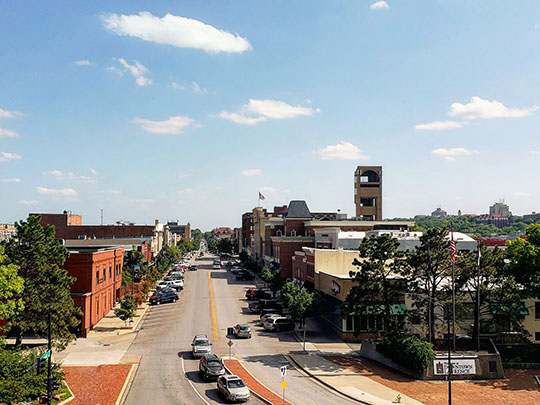
Lawrence, on the Kansas River in northeast Kansas, was founded in 1854 by anti-slavery settlers from New England and named after the Boston abolitionist Amos Lawrence, becoming the heart of “Bleeding Kansas”, while in the Civil War, on 21 August 1863, Quantrill’s Confederate guerrillas, Frank James and Cole Younger among them, killed about 150 to 200 men and boys here.
Lawrence has the Eldridge Hotel, on the site of the Free State Hotel burned by a pro-slavery posse in 1856, and the University of Kansas, where the DeBruce Center shows James Naismith’s original 1891 rules of basketball, bought for $4.3 million in 2010, while Naismith, who coached here, is the only Kansas coach with a losing record.
In Lawrence’s Natural History Museum stands Comanche, the horse of Captain Myles Keogh, from Leighlinbridge, County Carlow, who had fought in the Pope’s army before he was killed with Custer at the Little Bighorn in 1876, and Comanche, wounded, was the battle’s best-known survivor, though not its only one.
9 – Abilene
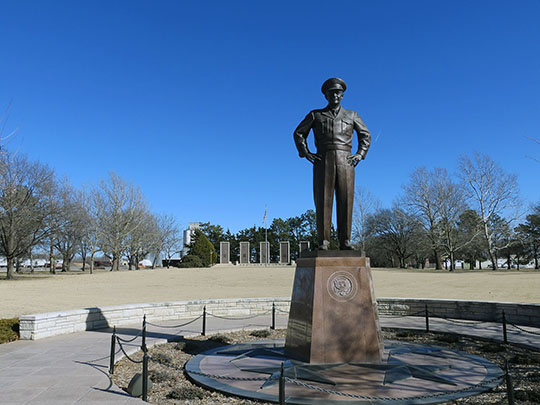
Abilene, on the Kansas Pacific Railway in the middle of Kansas, became the first great cowtown in 1867, when Joseph McCoy built stockyards at the end of the Chisholm Trail, shipping 35,000 Texas cattle that year and hundreds of thousands a year by 1871, until the town banned longhorns in 1872.
Abilene has the Eisenhower Presidential Library, Museum and Boyhood Home, where Dwight Eisenhower, his wife, Mamie, and their son Doud are buried, the C. W. Parker carousel of around 1900, a National Historic Landmark, and the Greyhound Hall of Fame.
Wild Bill Hickok was Abilene’s marshal in 1871, killing Phil Coe and accidentally his friend Mike Williams in his last gunfight here, while Eisenhower said in 1945 that “the proudest thing I can claim is that I am from Abilene”, and in 1962 he spent four days in Ireland, visiting the former president Seán T. O’Kelly at Roundwood, County Wicklow.
10 – Nicodemus
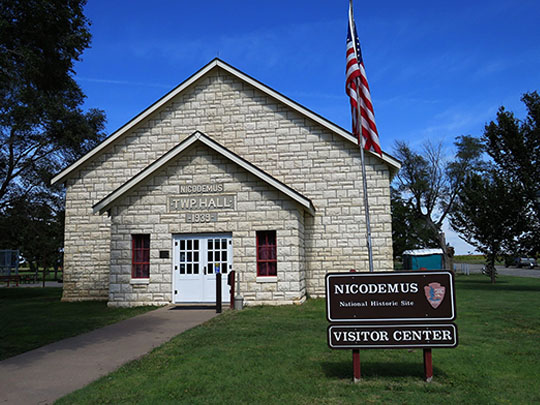

Nicodemus, on the high plains of Graham County in northwest Kansas, was founded in 1877 by African Americans, about 350 of whom arrived from around Lexington, Kentucky, that September, spending their first winter in dugouts, and the National Park Service calls it the only remaining western town founded by African Americans at the end of Reconstruction.
Nicodemus National Historic Site, set up in 1996, includes five buildings, the township hall, the African Methodist Episcopal and First Baptist churches, the St Francis Hotel and the schoolhouse, and every July descendants come home for the Emancipation Celebration, held since 1878.
One early settler, Willina Hickman, remembered that “the scenery was not at all inviting, and I began to cry”, and the town shrank after the railways passed it by in the late 1880s, with only 14 people living here in 2020, while the Emancipation Celebration began on 1 August 1878 by marking the end of slavery in the British West Indies.
11 – Hutchinson
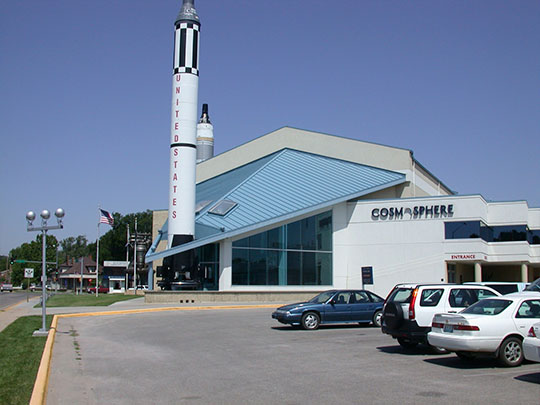
Hutchinson, on the Arkansas River in central Kansas, was founded in 1871, and in 1887 Ben Blanchard, drilling for oil or gas, struck a vast bed of salt 275 million years old, which made the town’s fortune, while it has hosted the Kansas State Fair since 1913.
Hutchinson has Strataca, a salt mine museum 200 m underground, opened in 2007, and the Cosmosphere, with the Apollo 13 command module Odyssey, the Mercury capsule Liberty Bell 7, raised from the Atlantic in 1999 and restored here, and what the museum calls the largest collection of Russian space artefacts outside Moscow.
In the salt mine, Underground Vaults & Storage keeps original film of Gone with the Wind, Ben-Hur and The Wizard of Oz, the company says, while the Cosmosphere’s founding director, Max Ary, was convicted in 2005 of selling museum artefacts, and a lunar sample bag seized in his case was sold by the government for $995, before it turned out to be from Apollo 11.