
Wikimedia Commons / CC-BY-SA-3.0 / GFDL
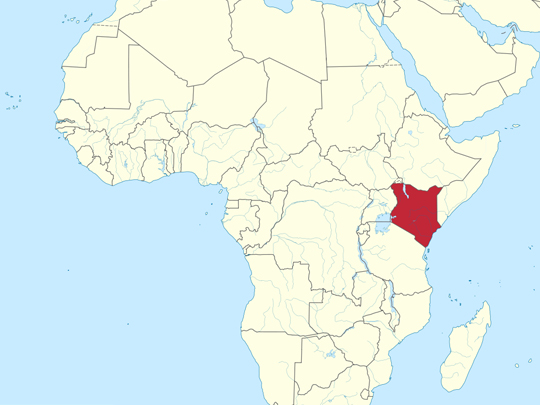
Capital: Nairobi
Population: 34.7 million+
Language: English/Kiswahili (plus over 60 other languages)
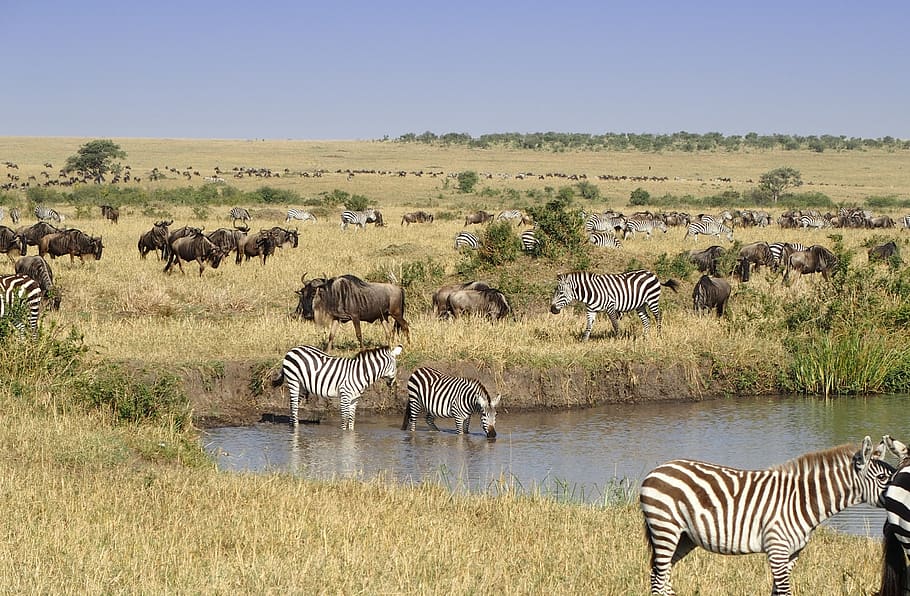
1 – Maasai Mara (also above)
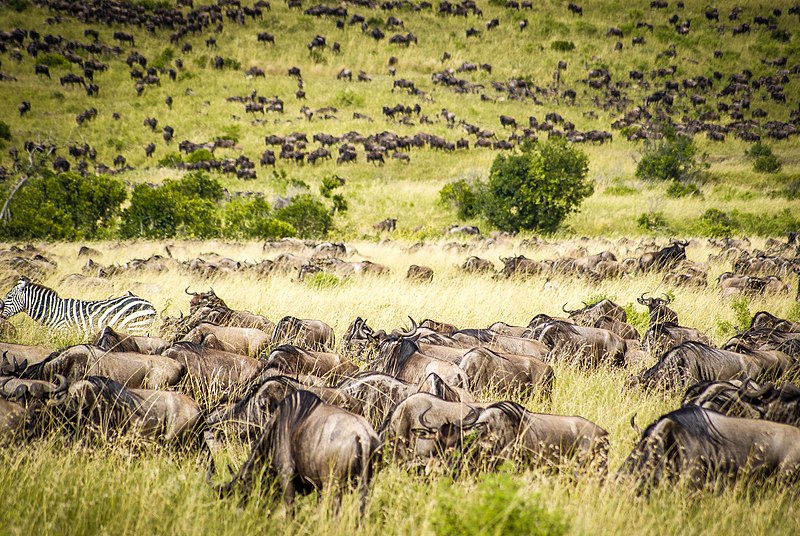
Kenya’s most famous safari destination, the Maasai Mara is a vast expanse of golden savanna in the southwest — the northern tip of the great Serengeti ecosystem — named after the Maasai people who have herded cattle across these plains for centuries.
Every year it hosts the climax of the Great Migration, when over a million wildebeest and hundreds of thousands of zebra pour north from the Serengeti and fling themselves across the crocodile-filled Mara River — one of the most jaw-dropping wildlife spectacles on Earth, watched from jeeps and dawn balloon flights.
The Mara has one of the densest lion populations anywhere in Africa — so reliably dramatic that its resident “Marsh Pride” became global television stars, followed for years by the BBC’s Big Cat Diary.
2 – Lake Nakuru
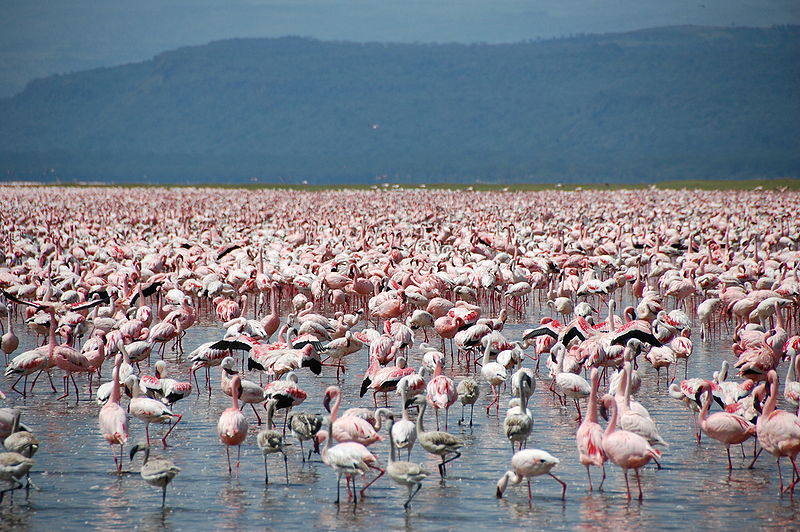
A shallow soda lake shimmering on the floor of the Great Rift Valley, Lake Nakuru is one of Kenya’s best-loved parks — long celebrated for the vast flocks of flamingos that could turn its entire shoreline into a living wall of pink.
It’s also one of Kenya’s first and most successful rhino sanctuaries, a fenced refuge where both black and white rhino roam among yellow-barked acacias, alongside the endangered Rothschild’s giraffe, lions, buffalo and hundreds of bird species.
Those flamingos are pink because of what they eat — the blue-green algae that blooms in the caustic soda water — and because they follow the algae, they drift between the Rift Valley’s soda lakes, so the famous pink spectacle comes and goes with the lake’s moods.
3 – Samburu National Reserve
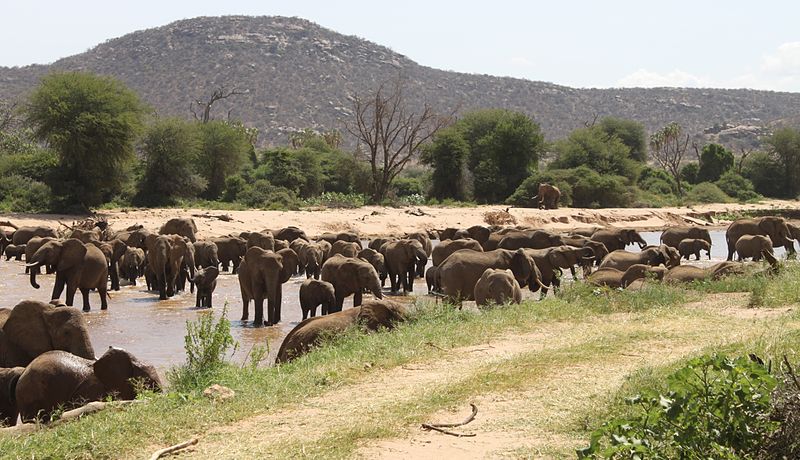
In Kenya’s rugged, semi-desert north, Samburu is a rust-red wilderness of thorn scrub and rocky hills threaded by the Ewaso Ng’iro River — the only permanent water for miles, and a green lifeline that draws elephants, crocodiles and big cats to its banks in the land of the proud Samburu people.
Its great draw is a cast of dry-country creatures you’ll struggle to find in Kenya’s southern parks — the “Samburu Special Five”: the endangered Grevy’s zebra, the net-patterned reticulated giraffe, the blue-legged Somali ostrich, the fringe-eared beisa oryx and the gerenuk — plus some of the country’s finest leopard-watching.
Strangest of the five is the gerenuk, a long-necked “giraffe gazelle” that rears up on its hind legs to browse leaves no other antelope can reach — and can go virtually its whole life without drinking, drawing all the water it needs from the plants it eats.
4 – Hell’s Gate National Park
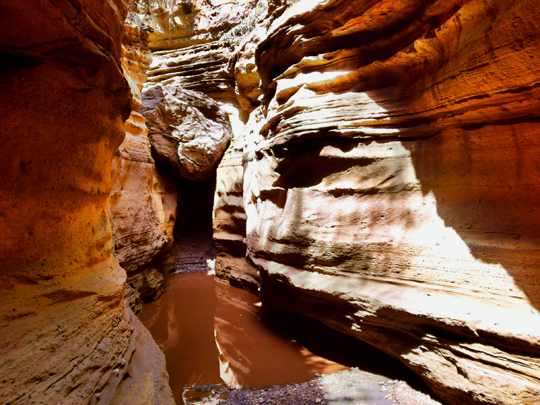
A dramatic gash of red cliffs, gorges and steaming volcanic vents in the Rift Valley near Lake Naivasha, Hell’s Gate is like no other Kenyan park — and one of the very few where there are no big predators to fear, so you can explore it on foot or by bicycle.
Cycle across the plains right alongside zebra, giraffe and buffalo, scramble up the volcanic pinnacle of Fischer’s Tower, or hike down into the hot-spring-lined Ol Njorowa Gorge; steam hisses from the earth here too, feeding the Olkaria plant — the first geothermal power station in Africa.
The park’s towering ochre cliffs and gorge are famous as a real-world inspiration for the landscapes of Disney’s The Lion King, whose animators drew on this very scenery — and the gorge later starred in Lara Croft: Tomb Raider.
5 – Great Rift Valley
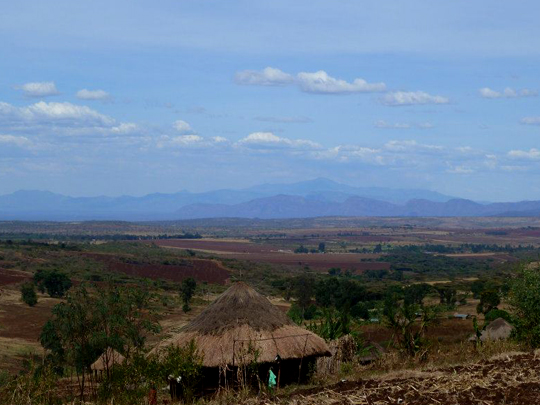
One of the few landforms on Earth visible from space, the Great Rift Valley slices north to south through Kenya — a colossal scar where the continent is slowly tearing itself in two, its floor strewn with volcanoes and a glittering chain of soda lakes, walled in by dramatic escarpments.
The classic view comes from the cliff-edge lookouts on the old road out of Nairobi, where the land simply drops away to a vast, hazy plain far below; scattered across it lie many of Kenya’s greatest parks and lakes, from Naivasha and Nakuru to the volcano of Mount Longonot.
This is the “Cradle of Humankind” — the valley’s ancient lakebeds have yielded more early-human fossils than anywhere on Earth, among them “Turkana Boy,” the astonishingly complete 1.6-million-year-old skeleton of a boy who lived here long before our own species existed.
6 – Lewa Wildlife Park
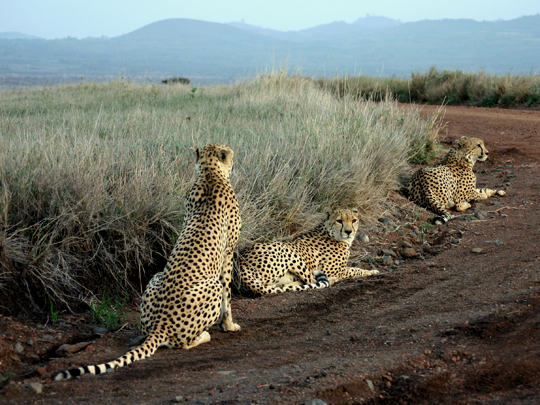
On the rolling plains below the snow-capped peaks of Mount Kenya, Lewa is a former cattle ranch turned into one of the world’s great conservation success stories — a private wildlife conservancy, now UNESCO-listed, that helped pull Kenya’s black rhino back from the brink of extinction.
Its grasslands teem with black and white rhino, elephant, lion and cheetah, and it guards the largest population of endangered Grevy’s zebra on Earth; guests explore by jeep, on foot or on horseback, and every June runners tackle the Lewa Safari Marathon — billed as the wildest marathon in the world — across the plains among the animals.
Lewa has a royal connection too — it was during a stay here, in a simple cabin on the slopes of Mount Kenya, that Prince William proposed to Kate Middleton in 2010, sealing one of the most famous engagements of the century.
7 – Ruins of Gedi
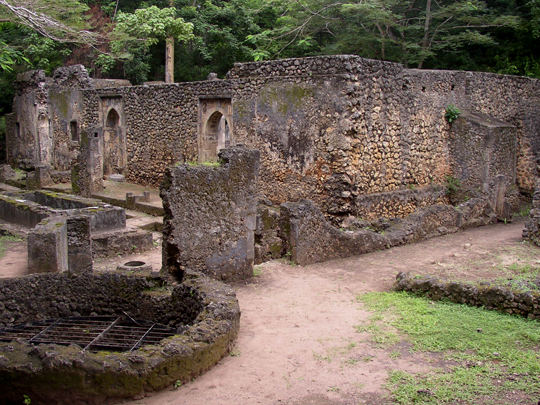
Hidden deep in a coastal forest near Watamu, the Ruins of Gedi are the haunting remains of a once-wealthy Swahili town — a stone city of merchants that thrived on Indian Ocean trade from the 13th to the 17th centuries, then was mysteriously abandoned and swallowed by the jungle.
Wander its overgrown coral-stone lanes past a palace, a great mosque, grand houses and pillar tombs, shaded by vast baobabs and alive with monkeys and butterflies; excavations here turned up Ming porcelain, Venetian glass and Indian beads — and the town was advanced enough to have wells, drains and even indoor flushing toilets.
Gedi’s greatest mystery is its silence — despite its size and riches, not a single written record of the town survives in any Portuguese, Arabic or Swahili source, so no one truly knows who built it, why it was deserted, or even what its people called it.
8 – Diani Beach
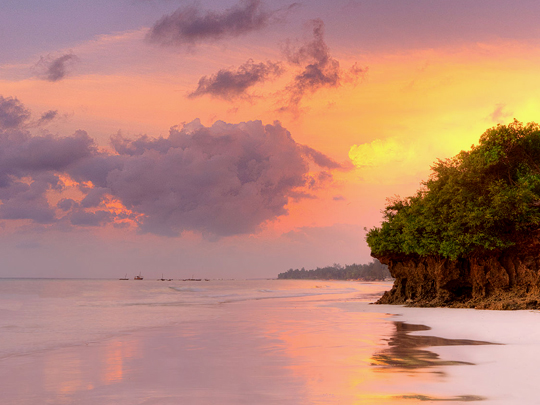
On Kenya’s palm-fringed south coast, a short way south of Mombasa, Diani is the country’s most celebrated beach — a long ribbon of dazzling white coral sand and warm, turquoise water, repeatedly voted among the finest beaches in Africa.
A reef just offshore keeps the lagoon calm for swimming and snorkelling, while steady trade winds make it one of the continent’s great kitesurfing spots; behind the sand, coastal forest shelters troops of rare black-and-white colobus monkeys, which cross the main road on their own rope “colobridges.”
One of Diani’s most memorable experiences isn’t on the beach at all but beneath it — dinner at Ali Barbour’s, a restaurant set inside a natural coral cave more than 120,000 years old, its roof partly open to the stars.
9 – Lamu
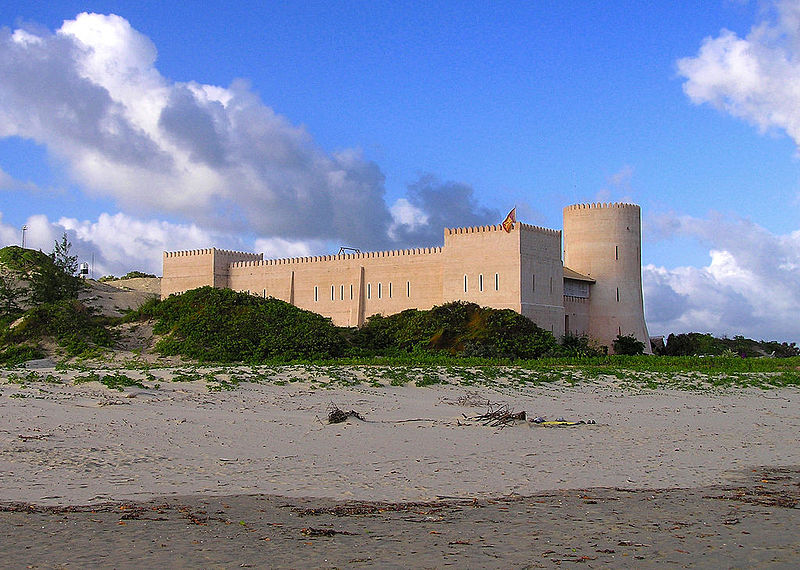
On an island off Kenya’s far north coast, Lamu Old Town is the oldest living town in the country and the best-preserved Swahili settlement in East Africa — continuously inhabited for more than 700 years, and a UNESCO World Heritage Site.
Lose yourself in a labyrinth of narrow coral-stone lanes lined with tall merchant houses, hidden courtyards and some of the finest carved wooden doors in Africa; a stately old fort anchors the waterfront, dhows drift on the channel, and each year the Maulidi festival fills the streets with song, processions and donkey and dhow races.
There’s barely a car on the whole island — the alleys are far too narrow — so for centuries the way to get around Lamu has been exactly as it is today: on foot, by wooden sailing dhow, or on the back of one of the town’s thousands of donkeys.
10 – Nairobi

Kenya’s capital exists because a railway stopped here: in 1899 the British halted their Mombasa-to-Uganda line at a Maasai watering place called Enkare Nyirobi, “the place of cool waters”, and threw up a depot in the swamp — which became the colonial capital, the nerve centre of the Mau Mau emergency, and in 1963 the capital of an independent country.
The Nairobi National Museum sets out the whole story; out in the suburbs stands the farmhouse where Karen Blixen wrote Out of Africa; the Kenyatta International Conference Centre still defines the skyline; and a quiet memorial garden marks the site of the 1998 embassy bombing.
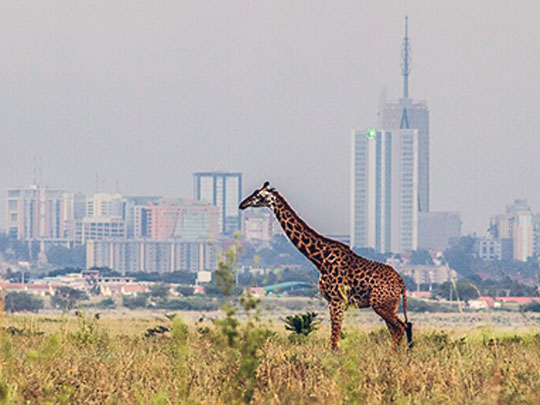
On the city’s southern edge lies Nairobi National Park, opened in 1946 — the only national park on Earth inside a capital city, where lions, rhino and giraffe move across open savanna with office towers on the horizon; it was here, in 2016, that Kenya burned 105 tonnes of confiscated ivory, the largest destruction of the stuff ever staged.
11 – Mount Kenya
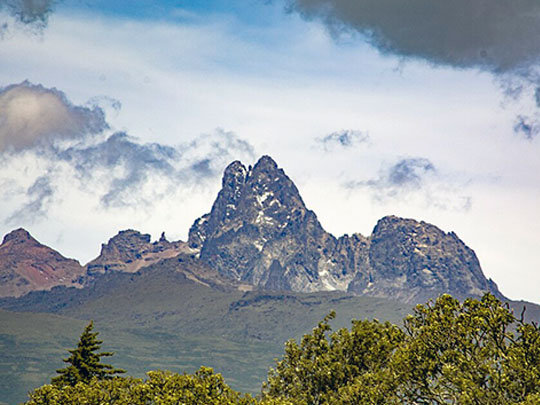

Rising alone out of the central highlands, Mount Kenya is an extinct volcano of 5,199m — the second-highest mountain in Africa and a UNESCO World Heritage Site — and it was sacred long before it was climbed: the Kikuyu hold it as the dwelling of Ngai, and built their homesteads facing the peak.
Three summits crown it, and only the trekkers’ peak, Point Lenana, can be walked; Batian and Nelion need ropes. The climb passes through forest full of elephant and buffalo, then bamboo, then an eerie alpine zone of giant lobelias and groundsels, tarns and glaciers — glaciers sitting almost exactly on the equator, and shrinking every year.
The country is named after this mountain, and named after it by mistake: a missionary in 1849 wrote down the local Kikuyu and Kamba names as something like “Kenia”, the spelling stuck to the mountain, passed to the colony and then to the nation — so Kenya took its name from a version of a word Kenyans never used.
12 – Fort Jesus
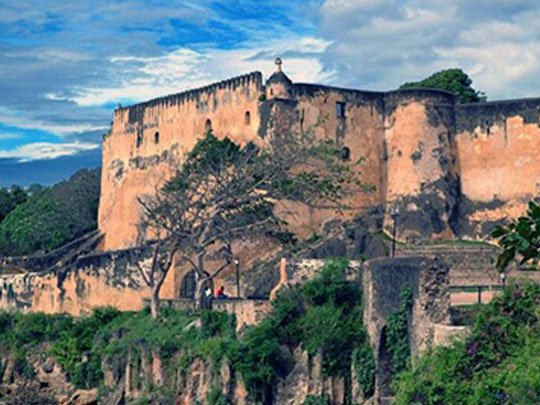

Standing on a coral ridge at the mouth of Mombasa’s old harbour, Fort Jesus was raised between 1593 and 1596 to hold the Indian Ocean trade for the Portuguese crown — the only fort they ever kept on the Swahili coast, and UNESCO-listed in 2011.
The Italian engineer Giovanni Battista Cairati gave it walls of coral rag and four angled bastions, so that anyone scaling one wall came under fire from another; seen from above, the outline is a man lying on his back facing the sea, a Renaissance conceit about the human form. Inside is a museum of Chinese porcelain, Swahili pottery and finds raised from a Portuguese frigate sunk offshore during the fighting.
No fort in Africa changed hands more often — at least nine times between 1631 and 1895 — and the worst of it began in March 1696, when an Omani fleet laid siege for two years and nine months, until the last few defenders were overwhelmed and Portuguese power on this coast ended with them.