
Francisco Anzola / Wikimedia Commons / CC-BY-SA-3.0 / GFDL
Capital: Kuwait City
Population: 5 million+
Language: Arabic/English
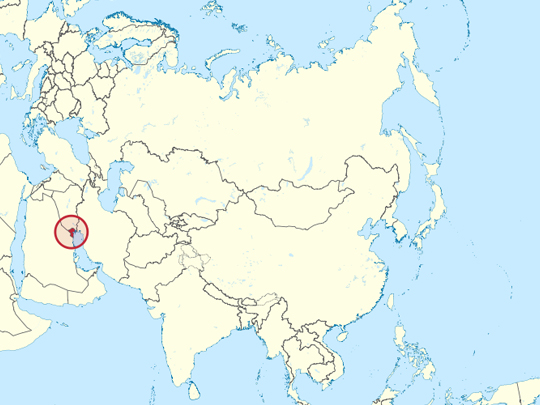
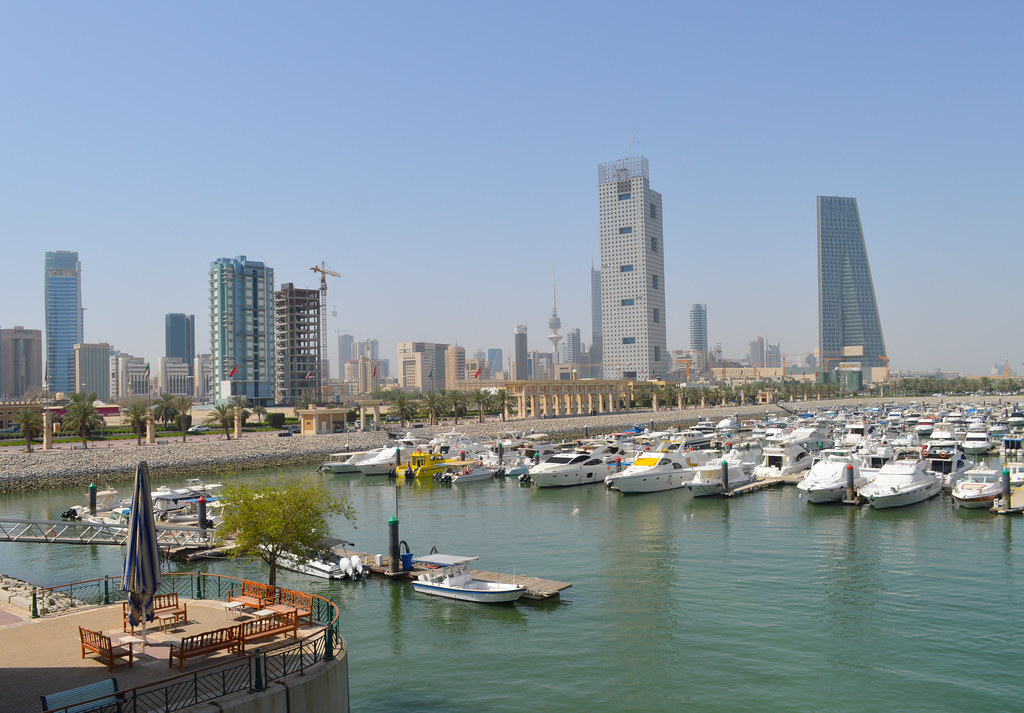
1 – Kuwait City (above)
Kuwait City is the capital and very nearly the whole country — the great majority of Kuwait’s population lives in the built-up area spreading back from the bay. It began in the early eighteenth century as a pearling and boat-building port, the Al Sabah family have led it since 1752, and oil was struck at Burgan in 1938.
The parts of Kuwait City worth the time are mostly at street level: Souq Al-Mubarakiya, the covered market at the heart of the old town; the National Museum and the Sadu House beside it; the Grand Mosque; Al Shaheed Park; and the corniche along the bay. Above all of it the 414-metre Al Hamra Tower twists through its own height.
Kuwait City was walled until 1957. The last of its walls went up in 1920 in a matter of months when a raid was expected — six kilometres of mud and gypsum with five gates — and came down as the city outgrew it, the gates left standing where they were. It still matters: under the 1959 nationality law, families living inside that wall in 1920 became first-category citizens.
2 – Antiquities of Failaka Island
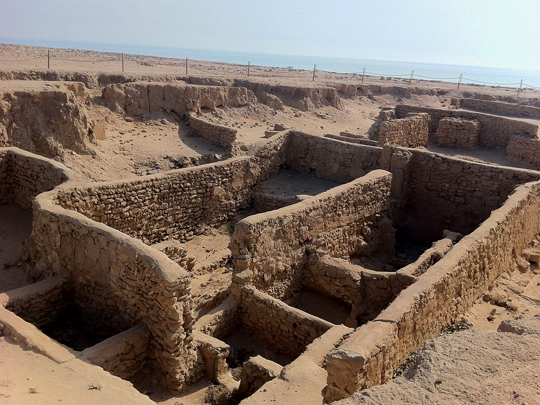
Failaka is a low island about twenty kilometres off Kuwait City at the mouth of the bay, and it carries more than forty archaeological sites in an area smaller than a English parish. Traders from Dilmun settled Failaka around 2000 BC, and Alexander’s fleet arrived in the fourth century BC and named it Ikaros, after the Aegean island it resembled.
The Hellenistic fortress on Failaka is a compound of mudbrick walls about sixty metres square with a temple to Artemis inside it — and the Greek column standing there is the one printed on the Kuwaiti one-dinar note. Two hundred metres away is an H-shaped Bronze Age Dilmun temple in limestone, with the building long called the governor’s palace beside it.
Failaka had been lived on continuously for four thousand years, and then it stopped. Around two thousand people were there in 1990; they fled or were deported when Iraq invaded, the beaches were mined and the town was used for target practice. Almost nobody went back. The village still stands, roofless and shot through, with wrecked armour rusting outside it.
3 – Kuwait Towers
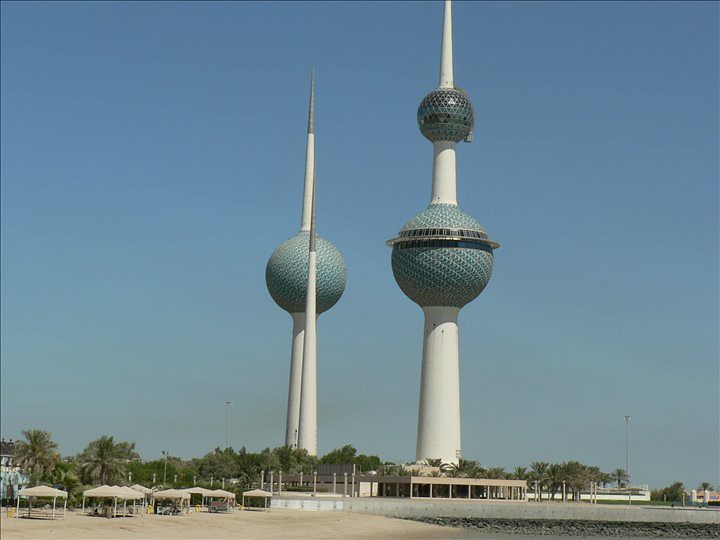
The Kuwait Towers stand on a promontory east of the centre of Kuwait City and opened in 1979 — three concrete spires engineered by the Swede Sune Lindström with the spheres designed by the Danish architect Malene Bjørn, the tallest of them 187 metres. They were damaged during the Iraqi occupation and reopened in December 1992.
The main tower of the Kuwait Towers carries two spheres: the lower one holds a restaurant and a reservoir, and the upper one, at around 120 metres, is a viewing platform that turns a full circle every half hour. The third and plainest tower has no public space in it at all — it holds equipment and floodlights the other two.
The Kuwait Towers are water towers. Kuwait has no rivers, no lakes and almost no usable groundwater, and has desalinated nearly all its drinking water since the 1950s; Lindström’s commission was for a network of storage towers across the city, and these were its showpiece. The most photographed structure in the country is, underneath the design, a reservoir.
4 – Souq Al-Mubarakiya and the National Museum
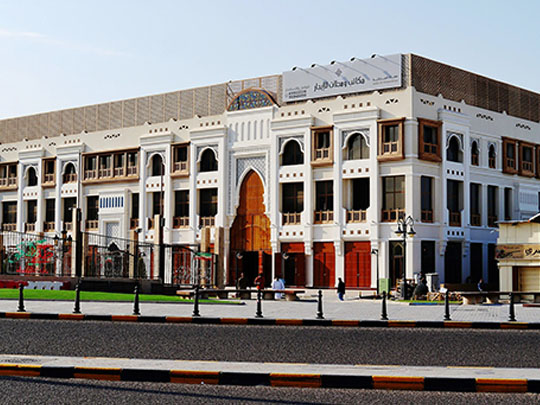
Souq Al-Mubarakiya is the covered market at the centre of Kuwait City and the oldest thing in it: trading has gone on here for more than two hundred years, back to when Kuwait lived on pearls, dates and boat-building. It is named for Sheikh Mubarak Al-Sabah, who ruled from 1896, and it survived the master plan of the 1950s that flattened most of the old town around it.
Souq Al-Mubarakiya runs in lanes by trade — spice, gold, dates, fish, perfume, cloth — with coffee houses in among them. A few minutes away on the seafront stands the Kuwait National Museum, four blocks and a planetarium designed by the French architect Michel Écochard and opened in 1983, with the Sadu House of Bedouin weaving next door. The Ikaros Stone from Failaka is inside it.
In August 1990 Iraqi forces emptied the Kuwait National Museum, drove its collections to Baghdad and burned the buildings on the way out. Most of it came back in 1991 under UN supervision — and the conservator who retrieved it found the worst damage was not from handling but from heat: the crates had travelled by open truck to Baghdad, then Mosul, then back, in September temperatures near fifty degrees.