
Wikimedia Commons / CC-BY-SA-3.0 / GFDL
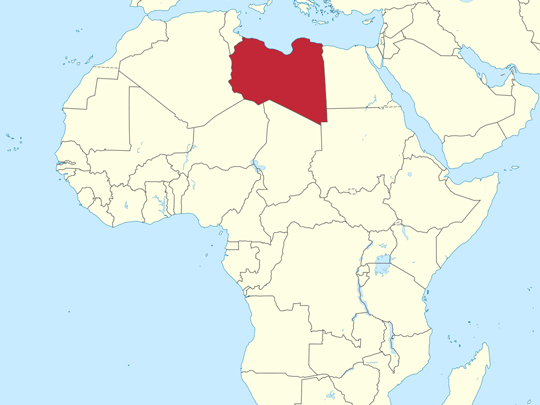
Capital: Tripoli
Population: 7.4 million+
Language: Arabic (also Amazigh – Berber)
1 – Leptis Magna (also above)
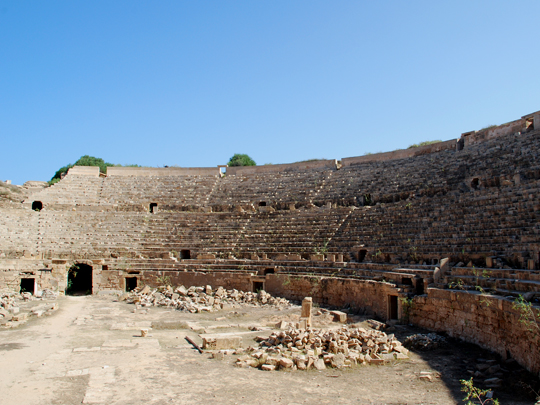
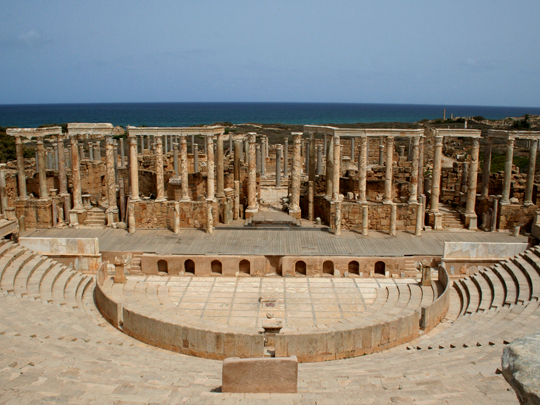
On the Libyan coast east of Tripoli lie the ruins of Leptis Magna, founded by the Phoenicians and grown into one of the most magnificent cities of the entire Roman Empire — above all under Septimius Severus, the local boy who became Rome’s first African-born emperor and lavished a fortune on his home town.
The scale still astonishes: a soaring four-way triumphal arch, the vast Severan Basilica carved with the labours of Hercules, one of the grandest bath complexes in the Roman world, a market, a theatre and an amphitheatre that once roared with 15,000 spectators.
For over a thousand years the whole city lay buried under desert sand, which preserved it so perfectly that today it ranks among the finest Roman ruins anywhere on Earth.
2 – Cyrene
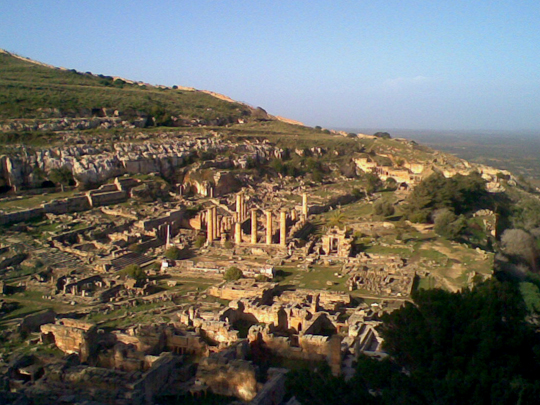
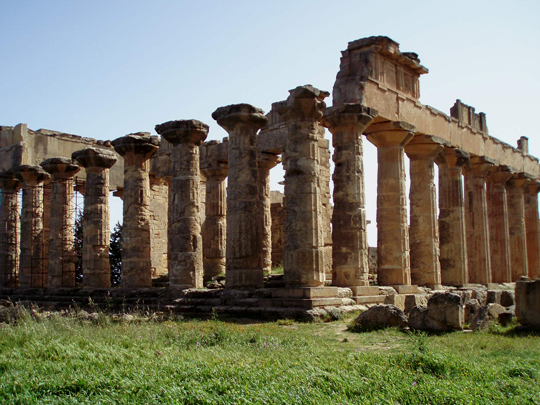
High in the green hills of eastern Libya stand the ruins of Cyrene, founded around 631 BC by Greek settlers from the island of Thera — the greatest Greek city in Africa, a dazzling centre of philosophy, science and medicine sometimes called the “Athens of Africa.”
Its tumbled marble spreads across a hillside above the sea: the Sanctuary of Apollo around its sacred spring, a Temple of Zeus even larger than the Parthenon, a Greek theatre, and a vast necropolis of tombs honeycombing the slopes.
Cyrene grew fabulously rich on silphium, a wonder-herb used across the ancient world as medicine, seasoning and contraceptive and worth its weight in silver — but it grew nowhere else and was harvested into extinction some 2,000 years ago; some even think its heart-shaped seed gave us the ❤ we still use for love.
3 – Tadrart Acacus
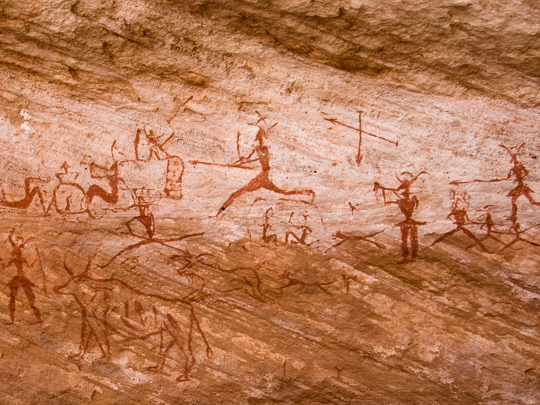
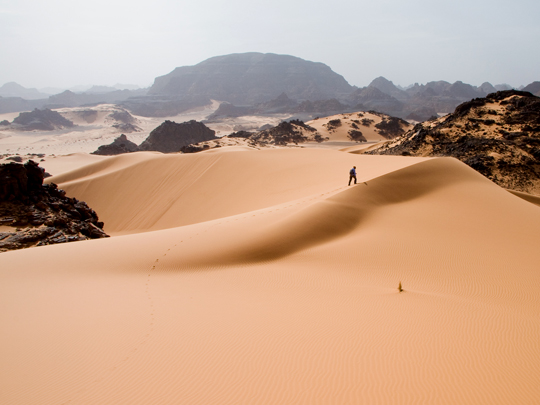
Deep in the Sahara of southwestern Libya, near the oasis town of Ghat and the Algerian border, the Tadrart Acacus is a wilderness of jagged sandstone peaks, natural arches and golden dunes — and one of the greatest open-air galleries of prehistoric art on the planet, a UNESCO World Heritage Site.
Its cliffs and hidden rock shelters hold many thousands of paintings and engravings spanning some 12,000 years, scattered through canyons and wadis amid a dreamlike desert of towering rock towers and mushroom-shaped stones.
The art is a painted time-lapse of a vanished world — the oldest images show elephants, giraffes and even swimmers in a green, well-watered land, and as the centuries pass the wildlife gives way to herds of cattle, then horses, then camels: a record, drawn on stone, of the Sahara slowly drying into desert.
4 – Tolmeitha

On the coast of eastern Libya lie the ruins of Ptolemais — modern Tolmeitha — one of the five great cities of the Cyrenaican Pentapolis, named after Ptolemy III of Egypt, who once ruled this coast, and for a time the Roman capital of the whole region.
Spread across a grid of old streets you’ll find a Greek theatre, temples, churches and the grand “Palace of Columns,” a colonnaded Hellenistic mansion that hints at the wealth of its merchant elite, all set between the sea and the green hills.
The city sat on a waterless stretch of coast, so its builders hid its lifeline underground — a vast network of rock-cut cisterns big enough to store water for the entire population, letting Ptolemais hold out even through a long siege.
5 – Ubari
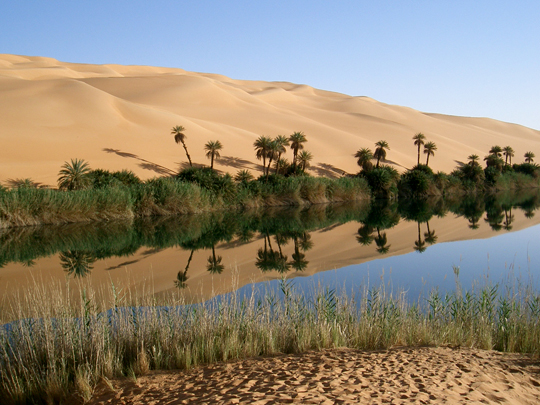
In the far southwest of Libya, in the Fezzan, the Ubari Sand Sea rolls away in an ocean of towering golden dunes — and hidden among them lies one of the Sahara’s most magical sights: the Ubari Lakes, a string of palm-fringed turquoise pools scattered like jewels across the sand.
The most beautiful — Gaberoun, with its abandoned village, and slender Umm al-Maa, the “Mother of Water” — are ringed by date palms and backed by soaring dunes, unforgettable at sunset; their water is so salty, several times saltier than the sea, that bathers float effortlessly on the surface.
These lakes once sustained the Dawada, the “worm-eaters” — a desert people who fished tiny red brine shrimp from the salty water, dried them in the sun and ground them into protein-rich cakes, living beside the pools until they were resettled in the 1980s.
6 – Tripoli
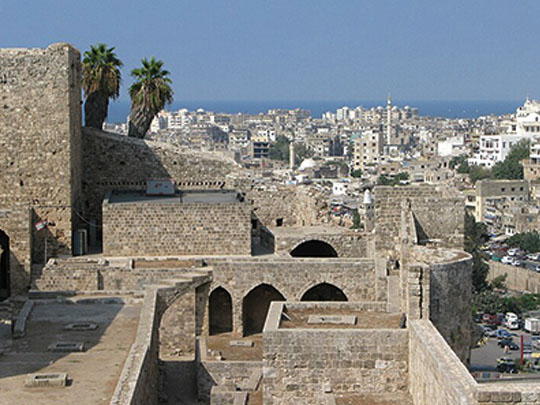
Libya’s capital began as Phoenician Oea, the third of the three cities that gave Tripolitania its name — and the only one of them still lived in, its ancient stones built over rather than abandoned; from the 16th century it was an Ottoman city and a base of the Barbary corsairs, ruled for a long stretch by the local Karamanli dynasty.
The walled Old City is the draw: the four-faced Arch of Marcus Aurelius of the AD 160s standing marooned among the lanes, the Red Castle above the harbour with the national museum inside it, Ottoman mosques and hammams, and covered souks selling copper and gold.
Tripoli’s demands for tribute dragged the young United States into its first foreign war: the frigate USS Philadelphia ran aground in this harbour in 1803 and Stephen Decatur slipped in the next year to burn her where she lay — which is why the Marines’ Hymn still sings of the shores of Tripoli.
7 – Sabratha
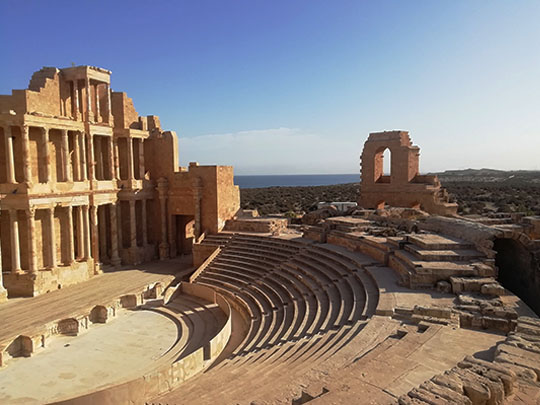
Seventy kilometres west of Tripoli, Sabratha was the westernmost of the three cities, founded by Phoenician traders as the coastal end of a caravan road running down into the Sahara — a town that grew rich funnelling ivory, gold and wild animals for the arenas up from the interior, and was rebuilt in stone by Rome.
Its theatre is the finest in Africa: three storeys of columns standing above the stage with the Mediterranean directly behind them, re-erected by Italian archaeologists in the 1930s from the fallen pieces. Around it lie a temple of Isis on the shore, sea-front baths with their mosaics intact, and a tapering Punic mausoleum older than any of it.
In about AD 158 a court convened here to try the writer Apuleius on a charge of using magic to make a wealthy widow marry him; he conducted his own defence, was acquitted, and published the speech — and it survives, as does his novel The Golden Ass, the only Latin novel to come down to us complete.
8 – Ghadames
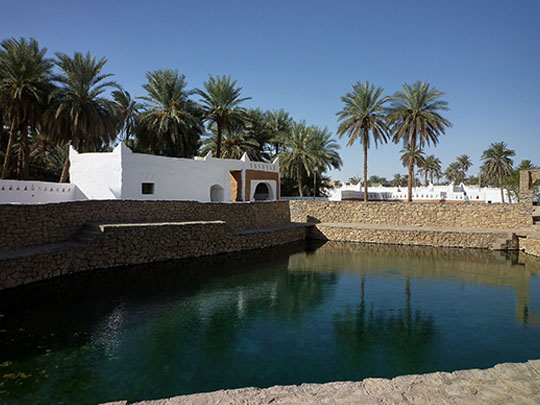
Five hundred and fifty kilometres southwest of Tripoli, where Libya meets Algeria and Tunisia, Ghadames stands in an oasis that has been settled since antiquity — a Roman garrison town called Cydamus, and later one of the great resting places of the trans-Saharan caravan trade; UNESCO listed the old town in 1986.
It is a honeycomb of whitewashed mud-brick houses four storeys high, packed so tightly that their upper floors overhang the lanes and roof them over, so the streets run as cool, half-dark tunnels beneath the town — supplies stored at ground level, families living above.
The roofs were a second city, and they belonged to the women: an unbroken network of open terraces where they moved from house to house, visited, worked and watched the desert for incoming caravans, entirely out of sight of the men in the passages below — and it all stands empty today, the townspeople having moved to a new town alongside in the 1980s, returning each year for the festival.