
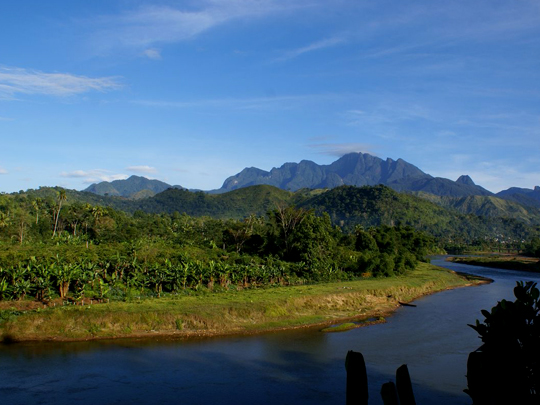
Wikimedia Commons / CC-BY-SA-3.0 / GFDL
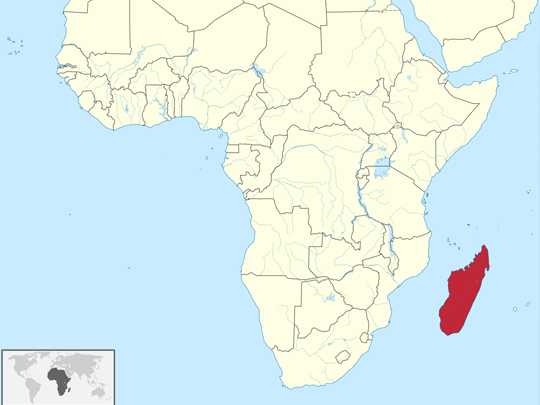
Capital: Antananarivo
Population: 32.5 million+
Language: French, Malagasy – Malagasy is an Austronesian language — its nearest relatives are spoken in Borneo, 7,500km away, a legacy of the seafarers who reached this island from Southeast Asia around 1,500 years ago.
1 – Marojejy National Park (also above)
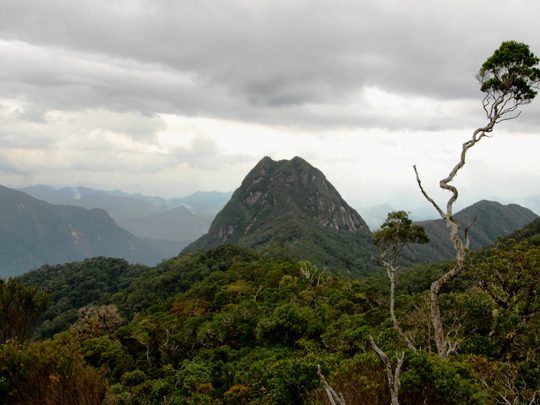
Marojejy National Park, in the remote, misty mountains of north-eastern Madagascar, protects a rainforest-clad massif rising to 2,132 m and forms part of the Rainforests of the Atsinanana, a UNESCO World Heritage Site since 2007.
A steep trail climbs Marojejy through changing worlds, from lowland rainforest to cloud forest and summit scrub, past orchids, tree ferns, chameleons and at least 11 kinds of lemur, with simple camps along the way and no access except on foot.
Marojejy is the main stronghold of the silky sifaka, a snow-white lemur that is one of the rarest primates on Earth, with perhaps only a few hundred left, and the botanist Henri Humbert, who explored the massif in the 1940s, titled his book about it A Marvel of Nature.
2 – Avenue of the Baobabs
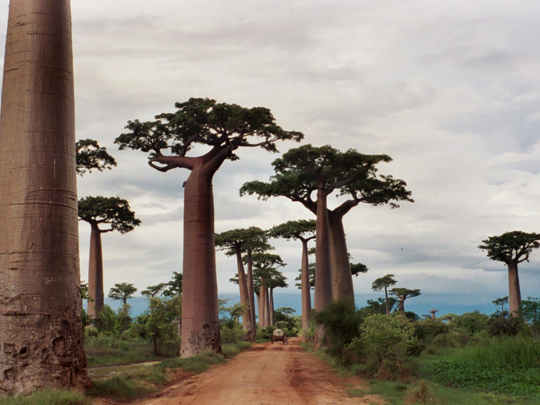
The Avenue of the Baobabs, beside a red dirt road near Morondava in western Madagascar, is a line of 20 to 25 Grandidier’s baobabs, a species found only in Madagascar, rising to about 30 m above the surrounding plain.
With bare branches like roots reaching for the sky, the trees of the Avenue of the Baobabs store water in their swollen trunks to survive the long dry season, and the Malagasy call them renala, “mother of the forest”.
The Avenue of the Baobabs is the remnant of a dense forest that was cleared for farming, in which locals spared the baobabs for their fruit and bark, and in 2015 it became Madagascar’s first natural monument.
3 – Isalo National Park
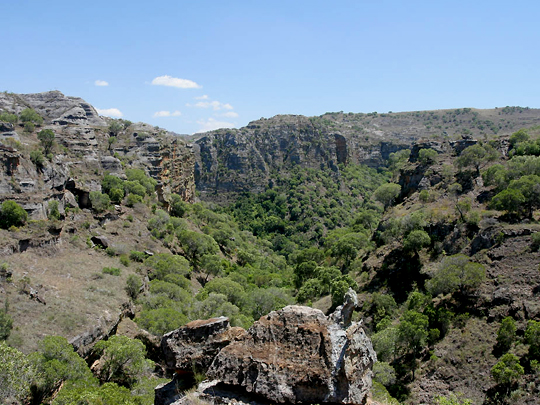
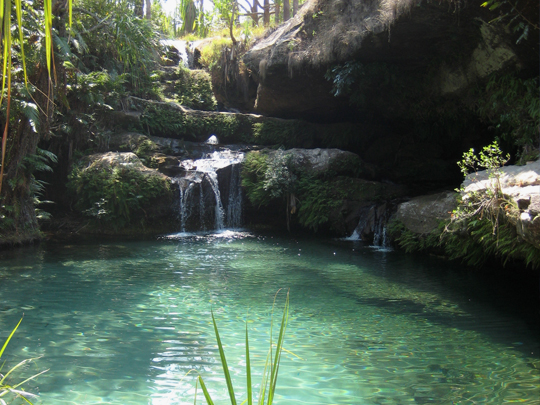
Isalo National Park, rising from the dry grasslands of southern Madagascar, protects a sandstone massif laid down in the age of the dinosaurs and carved by wind and water into a maze of cliffs, pinnacles and canyons up to 200 m deep.
Isalo is one of Madagascar’s most visited parks, with trails across sun-baked plateaus to palm-fringed oases and natural pools beneath waterfalls, while ring-tailed lemurs are often seen around the canyons.
The canyons of Isalo are sacred to the Bara, the cattle-herding people of the south, who for centuries have buried their dead in caves high in the canyon walls, and older Sakalava burial sites also lie within the park.
4 – Ranomafana National Park
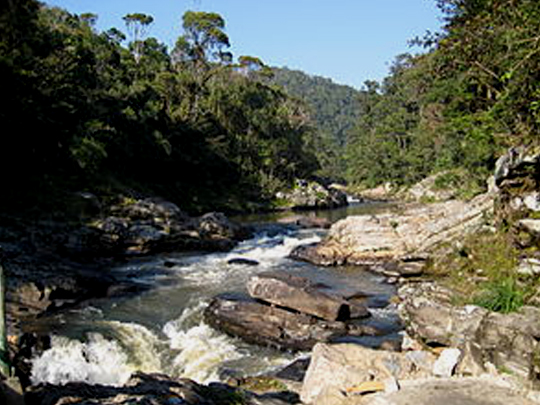
Ranomafana National Park, a steamy rainforest on the hills of south-eastern Madagascar, owes its existence to a lemur, after the primatologist Patricia Wright came in the mid-1980s looking for the greater bamboo lemur, unseen for decades, and found a new species besides, which led to the park’s creation in 1991.
Ranomafana, meaning “hot water” after its hot springs, shelters more than a dozen kinds of lemur along with chameleons, frogs and rare birds, best sought on day hikes and night walks, and it forms part of the UNESCO-listed Rainforests of the Atsinanana.
The new species found at Ranomafana, the golden bamboo lemur, eats about 500 g of bamboo a day containing roughly 12 times the lethal dose of cyanide for an animal its size, and how it survives is unknown.
5 – Amber Mountain National Park
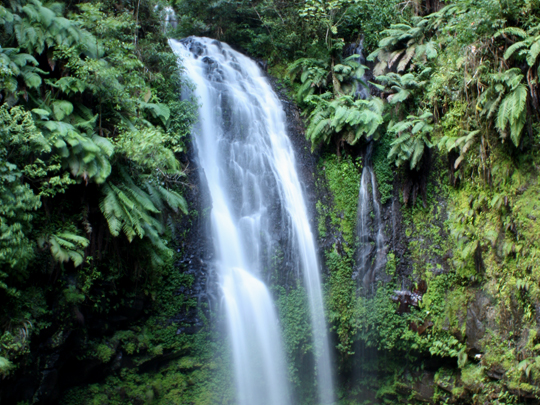
Amber Mountain National Park, a cool, misty rainforest on a volcanic massif in the far north of Madagascar, was created in 1958 as one of the island’s oldest national parks, above Antsiranana, the former Diego Suarez, where British forces landed in May 1942 to take the bay from Vichy France.
Trails through Amber Mountain lead to waterfalls and volcanic crater lakes, past crowned lemurs, Sanford’s brown lemurs and leaf-tailed geckos camouflaged so well that they seem to vanish against the bark.
The leaf litter of Amber Mountain hides the Amber Mountain leaf chameleon, Brookesia tuberculata, one of the smallest chameleons in the world at barely three centimetres long, which is found nowhere else.
6 – Lake Ravelobe
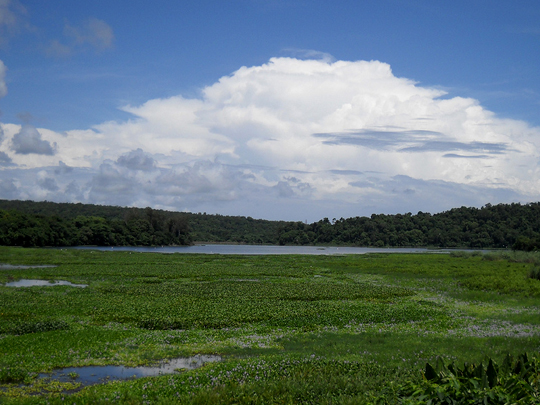
Lake Ravelobe, in Ankarafantsika National Park in north-western Madagascar, about 115 km south-east of Mahajanga, is named, local legend says, after Ravelobe, an outlaw who met his end in its waters, and it is held sacred by the local Sakalava people.
The shores of Lake Ravelobe draw waterbirds, among them the Madagascar fish eagle, a critically endangered bird of prey numbering only a few hundred, while the surrounding dry forest shelters Coquerel’s sifaka, the park’s emblem, and other lemurs.
The Nile crocodiles of Lake Ravelobe are protected by local taboos, legend links them to Ravelobe himself, and zebu cattle are offered at the lake each year.
7 – Ambohimanga
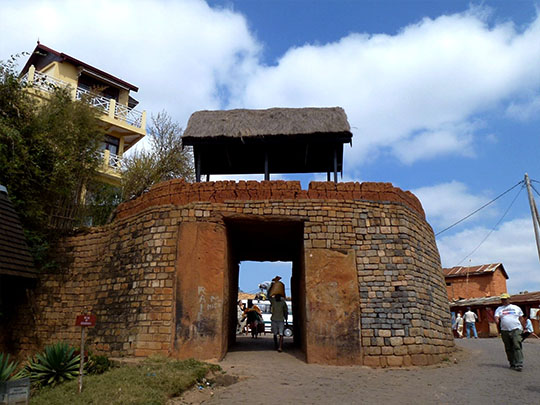
Ambohimanga, about 24 km north-east of Antananarivo, is one of the twelve sacred hills of Imerina, the fortified royal city from which King Andrianampoinimerina began uniting the Merina before taking Antananarivo around 1793, and a UNESCO World Heritage Site since 2001.
Stone gateways pierce the walls of Ambohimanga, the main one once sealed each night by a stone disc of about 12 tonnes, and inside stand the king’s solid-rosewood house, Mahandrihono, the royal tombs, a sacred bathing pool, the sacred stone from which royal judgments were given and ancient sacred trees.
Closed to foreigners for much of the 19th century, Ambohimanga lost its royal remains in 1897 when the French moved them to Antananarivo and demolished the tombs to break the hill’s spiritual hold, but the tombs have since been rebuilt, and pilgrims bring offerings to the hill.
8 – Antananarivo
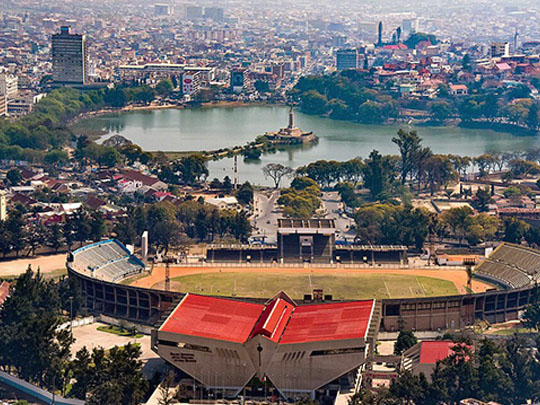
Antananarivo, Madagascar’s capital, spreads across hilltops and ridges at about 1,280 m and grew from the hill of Analamanga, seized by the Merina king Andrianjaka in the early 17th century and later named, by tradition, the “City of the Thousand” after the soldiers who held it.
The Rova, the palace compound of the Merina monarchs, crowns the highest ridge of Antananarivo, and below it the city tumbles downhill in brick houses with wooden verandas, linked by flights of steps, to the market district of Analakely and the Avenue of Independence.
In the highlands around Antananarivo, Merina and Betsileo families practise famadihana, the turning of the bones, in which every five to seven years the ancestors are lifted from the family tomb, wrapped in fresh silk shrouds and carried to music and dancing before being returned.
9 – Île Sainte-Marie
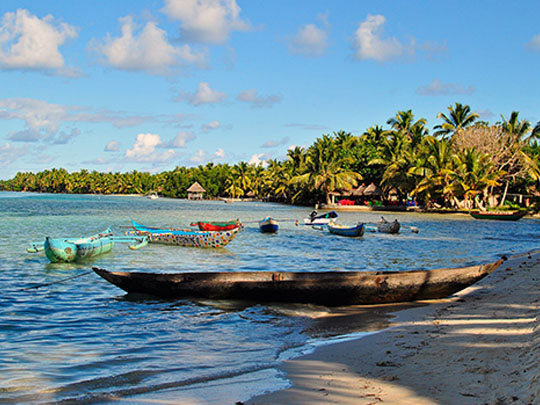
Île Sainte-Marie, or Nosy Boraha, a long, narrow island off Madagascar’s east coast, was one of the great havens of the golden age of piracy from the early 1690s, and as many as a thousand pirates are said to have lived here at its peak.
A wooded pirate cemetery overlooks the Baie des Forbans on Île Sainte-Marie, the palm-covered islet of Île aux Nattes lies just offshore, and from July to September humpback whales gather in the channel off the island to breed and calve.
Captain Kidd called at Île Sainte-Marie in 1698 and left his leaky ship, the Adventure Galley, in the harbour, but when an explorer claimed in 2015 to have found a silver bar from Kidd’s treasure here, UNESCO experts found it was about 95% lead.