
By Michal Osmenda / Wikimedia Commons / CC BY 2.0

Capital: none (a Special Administrative Region of China)
Population: 680,000+
Language: Chinese (Cantonese) and Portuguese

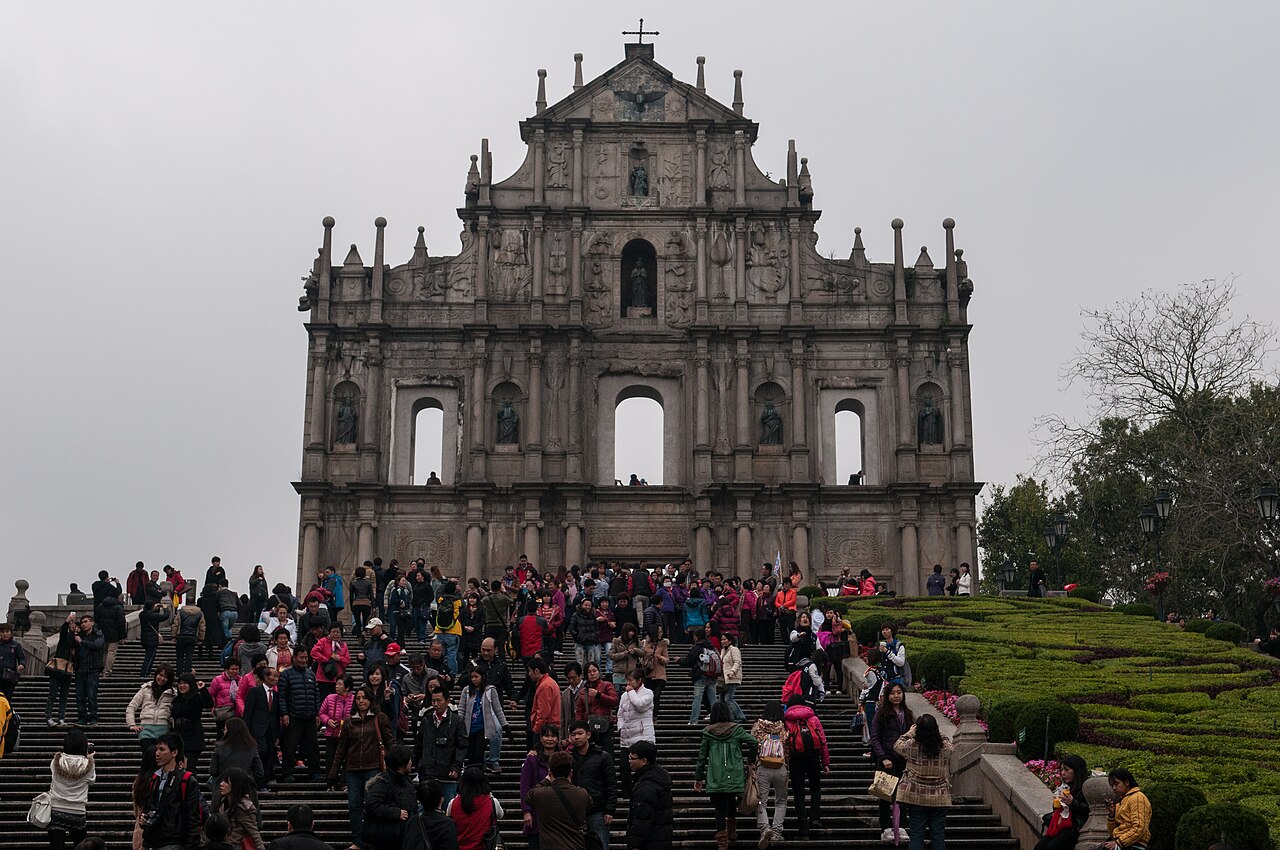
1 – Ruins of St Paul’s (above)
The Ruins of St Paul’s are the granite façade of the Church of Mater Dei, built in 1602–40 beside the Jesuit College of St Paul, often called the first Western-style university in the Far East, and left standing alone after a fire on 26 January 1835.
The sights at the Ruins of St Paul’s include the 68 granite steps, the carved façade, the crypt with relics of Japanese and Vietnamese martyrs, and a stretch of the old city walls beside Na Tcha Temple.
The Ruins of St Paul’s façade, carved by Japanese Christian exiles and Chinese artisans, mixes a Portuguese ship, a seven-headed hydra captioned in Chinese, peonies and chrysanthemums, and its design is attributed to the Jesuit Carlo Spinola, who was burned alive in Nagasaki in 1622.
2 – Senado Square
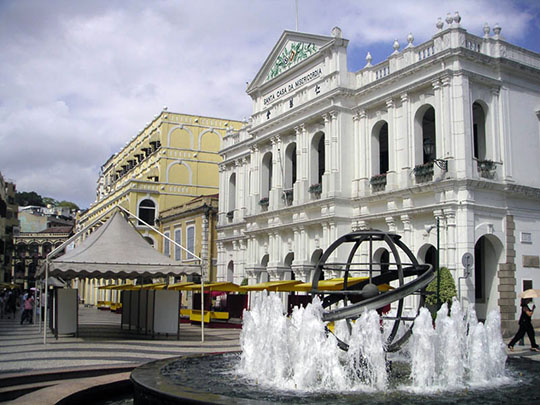

Senado Square, at the heart of the Historic Centre of Macao inscribed by UNESCO in 2005, is named after the Leal Senado, whose building of 1784 recalls the title granted by King João IV for Macao’s loyalty during Portugal’s 60 years under the Spanish crown.
Senado Square’s sights include the Leal Senado building with its library modelled on that of Mafra, the Holy House of Mercy, founded in 1569 by Bishop Belchior Carneiro, and St Dominic’s Church, founded in 1587 by Spanish Dominicans who had sailed from Acapulco.
Senado Square’s black-and-white wave pavement, laid in the Portuguese calçada style, dates only from the early 1990s, while the Leal Senado’s motto reads “City of the Name of God, there is none more loyal.”
3 – A-Ma Temple
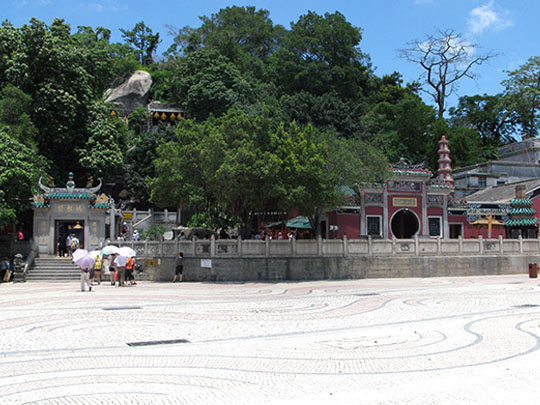

A-Ma Temple, on the slopes of Barra Hill, is said to date from the 15th century, though its oldest dated inscriptions are from the early 1600s, and it honours the sea goddess A-Ma, or Mazu, protector of fishermen and sailors.
A-Ma Temple’s sights include the granite Gate Pavilion guarded by stone lions, the Prayer Hall of 1605, the Hall of Benevolence, the Hall of Guanyin, a rock carving of a junk and, across Barra Square, the Maritime Museum.
A-Ma Temple is believed to have given Macao its name, from A-Ma-Gau, “Bay of A-Ma”, which Portuguese sailors are said to have been told when they asked what the place was called, before they were allowed to settle in 1557.
4 – Monte Fort
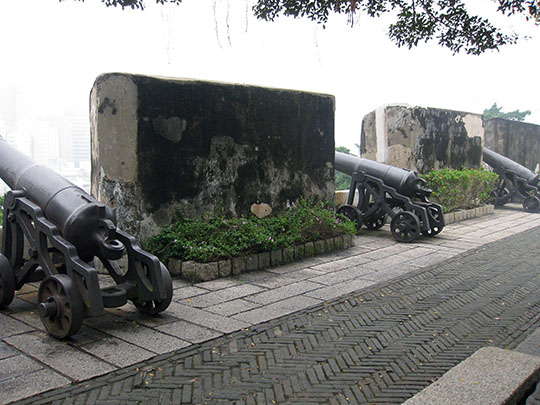

Monte Fort, built by the Jesuits on the hill beside St Paul’s and finished in 1626, was unfinished when its guns helped drive off a Dutch attack on 24 June 1622, the feast of St John the Baptist, who became Macao’s patron saint.
Monte Fort’s sights include its cannon-lined ramparts and corner watchtowers, the views over the peninsula and the Macao Museum, opened inside the fort in 1998.
Monte Fort’s victory is credited in Jesuit accounts to the Italian priest Giacomo Rho, whose shot is said to have hit a Dutch powder barrel, and 24 June was celebrated as Macao’s City Day until 1999.
5 – Guia Fortress
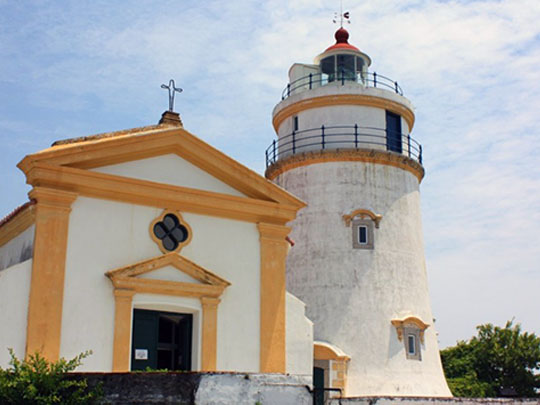

Guia Fortress, on the highest point of the Macao peninsula, was built in 1622–38, and its chapel, founded by Poor Clare nuns around 1622, stands beside a lighthouse lit in 1865 and often described as the first Western-style lighthouse on the China coast.
Guia Fortress’s sights include the chapel, the 13.5 m lighthouse designed by the Macanese Carlos Vicente da Rocha, the mast where typhoon signals are hoisted and military tunnels dug in the 1930s.
Guia Fortress’s chapel hid frescoes mixing Christian images with Chinese motifs beneath its whitewash until they were uncovered during restoration in the late 1990s, while the lighthouse stayed dark from a typhoon in 1874 until 1910.