
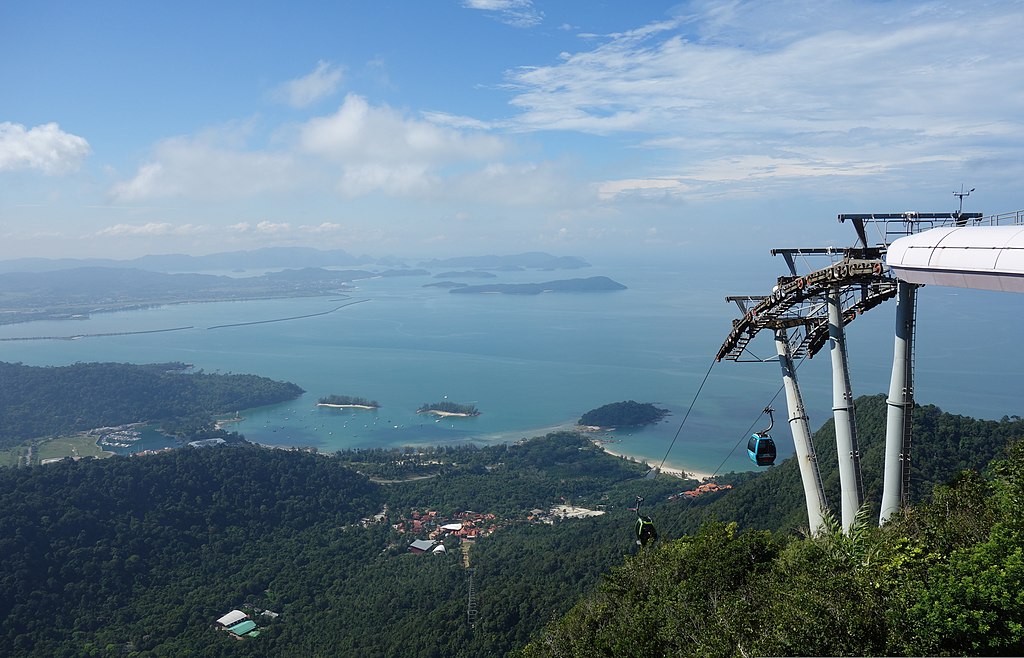
Wikimedia Commons / CC-BY-SA-3.0 / GFDL
Capital: Kuala Lumpur
Population: 34 million+
Language: Malay and English
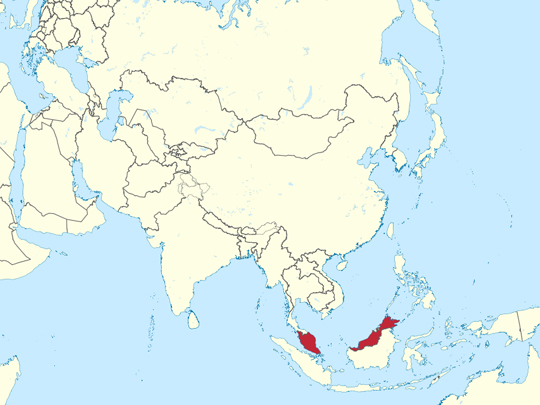
1 – Langkawi (also above)
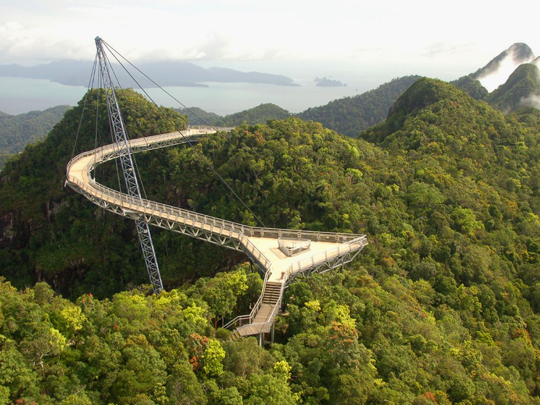
Langkawi is an archipelago of 99 islands off the north-west coast of Malaysia near the Thai border, and in 2007 it became the first UNESCO Global Geopark in Southeast Asia.
The Langkawi cable car climbs Gunung Machinchang to a top station about 700 m above sea level, where the curving 125 m SkyBridge hangs from a single pylon more than 80 m tall, while the main island has beaches, mangroves and the tomb of Mahsuri, a woman who, legend says, cursed the island for seven generations.
The rock beneath the Langkawi cable car is Cambrian sandstone more than 500 million years old, among the oldest rock in Malaysia, and the country’s oldest known fossil, a trilobite, comes from the Machinchang sandstone.
2 – Batu Caves
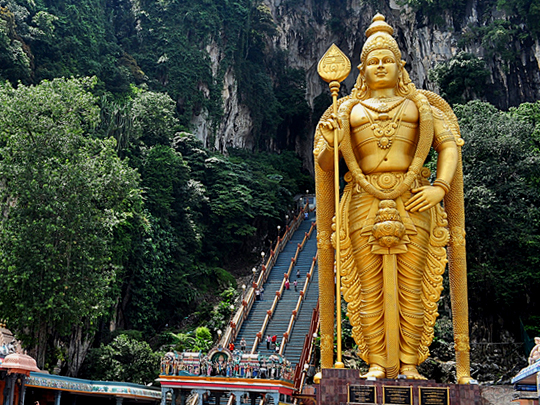
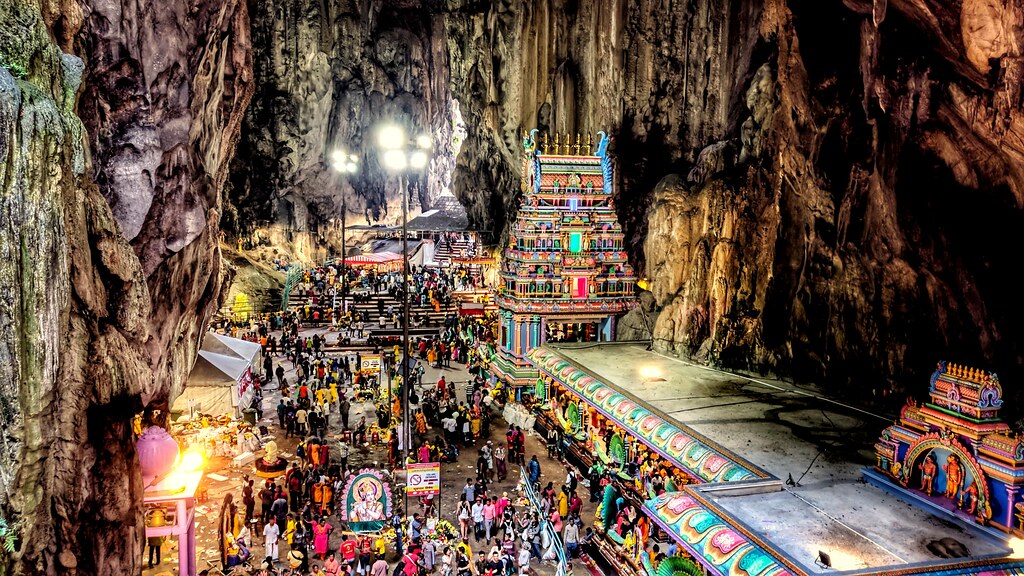
Batu Caves is a limestone outcrop on the northern edge of Kuala Lumpur, its caverns once sheltering the Temuan people and later mined for guano, and in 1891 the Tamil trader Thamboosamy Pillai consecrated a shrine to the Hindu god Murugan in the largest cave.
Visitors to Batu Caves climb 272 steps, repainted in bright colours in 2018 without heritage approval, past a gilded statue of Murugan 42.7 m tall, the tallest statue in Malaysia, with macaques waiting along the staircase.
At Thaipusam, in January or February, Batu Caves draws more than a million devotees and visitors, one of the largest Thaipusam festivals outside India, and many devotees carry kavadi, decorated frames, some fixed by hooks and skewers through the skin, up all 272 steps.
3 – Petronas Towers

The Petronas Towers in Kuala Lumpur, designed by César Pelli as the headquarters of Malaysia’s state oil company, were completed in 1998 and at 451.9 m were the tallest buildings in the world until 2004.
The floor plan of the Petronas Towers is the eight-pointed Rub el Hizb star of Islamic art, two overlapping squares with semicircles filling the angles, each tower has 88 storeys, and the observation deck stands on level 86.
The double-deck skybridge between the Petronas Towers, 170 m up at levels 41 and 42 and 58.4 m long, is not rigidly fixed to either tower, so it can slide as the buildings sway in the wind.
4 – Taman Negara National Park
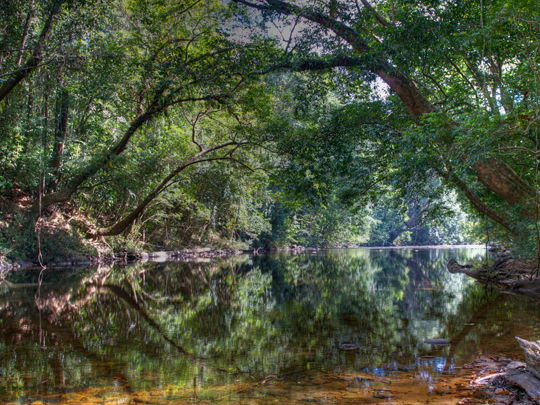
Taman Negara National Park covers 4,343 km² of rainforest across Pahang, Kelantan and Terengganu, founded in 1938–39 as the King George V National Park and renamed after independence, its new name simply meaning “national park”.
Visitors reach Taman Negara by boat up the Tembeling river to Kuala Tahan, for canopy walks, night walks and the climb of Gunung Tahan, at 2,187 m the highest peak in Peninsular Malaysia, while Batek communities live around the park’s edges.
Taman Negara is often described as among the oldest rainforests on Earth, and its tigers, Asian elephants and gaur, the largest wild cattle in the world, are rarely seen in the dense forest.
5 – Gunung Mulu National Park
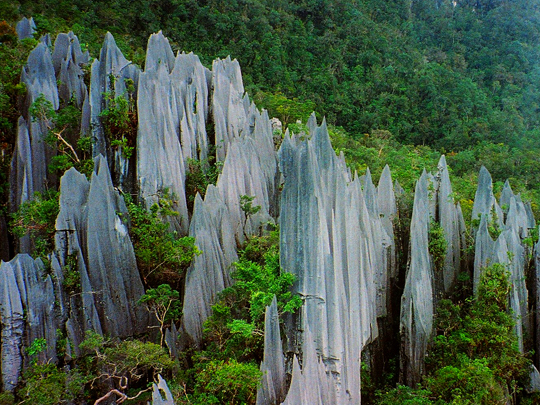
Gunung Mulu National Park lies in Sarawak on Borneo, listed by UNESCO in 2000, and beneath it runs the Clearwater Cave system, with more than 260 km of mapped passages, one of the longest cave systems in the world.
Deer Cave at Gunung Mulu has one of the largest cave passages known, with an entrance nearly 150 m high, and at dusk millions of bats stream out of it in long ribbons, while the Pinnacles, blades of limestone, rise out of the forest on Gunung Api.
The Sarawak Chamber at Gunung Mulu, found by British cavers in 1981, is roughly 600 m long and more than 400 m wide, one of the largest known cave chambers in the world.
6 – Mount Kinabalu
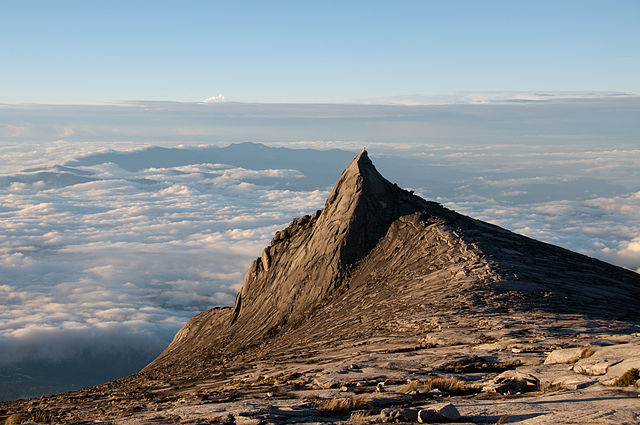
Mount Kinabalu rises to 4,095 m in Sabah, on Borneo, the highest mountain between the Himalaya and New Guinea, and Kinabalu Park was one of Malaysia’s first two UNESCO World Heritage Sites, both listed in 2000.
Kinabalu Park holds between 5,000 and 6,000 plant species, among them around 1,000 orchids and Nepenthes rajah, whose pitchers, the largest of any pitcher plant, can hold up to 3.5 litres and have been found with drowned rats inside.
Mount Kinabalu is a granite intrusion formed about 15 million years ago and pushed up within the last million years, the Englishman Hugh Low made the first recorded ascent in 1851, and its name may come from Aki Nabalu, the revered place of the dead.
7 – National Monument, Kuala Lumpur
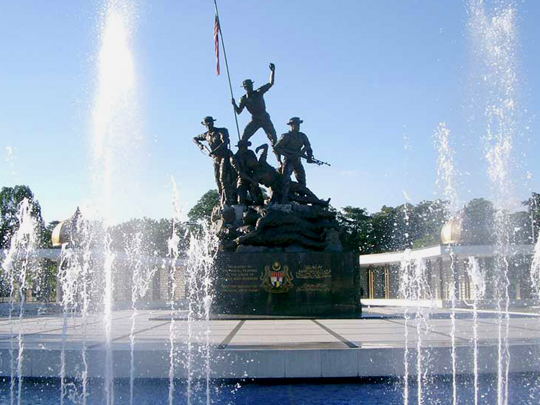
The National Monument, Tugu Negara, stands above the Lake Gardens in Kuala Lumpur, seven bronze figures 15 m tall unveiled on 8 February 1966 in memory of those who died in the Second World War and the Malayan Emergency of 1948–1960.
The National Monument shows a soldier raising the flag above fallen comrades, its seven figures said to stand for leadership, suffering, unity, vigilance, strength, courage and sacrifice, with the colonial-era cenotaph to the dead of the First World War moved nearby in 1964.
Tunku Abdul Rahman, Malaysia’s first prime minister, saw the Marine Corps War Memorial on a visit to the United States in 1960 and engaged its sculptor, Felix de Weldon, who designed the National Monument and had it cast in Rome.
8 – Melaka and George Town
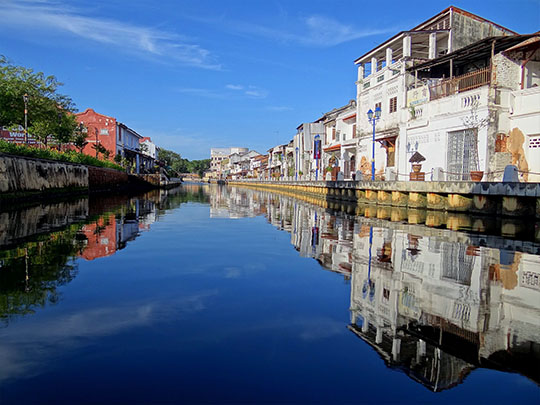
Melaka and George Town were listed together by UNESCO in 2008 as Historic Cities of the Straits of Malacca, Melaka the great trading port taken by the Portuguese in 1511 and the Dutch in 1641 before passing to Britain, and George Town founded in 1786 as the first British settlement in the Malay Peninsula.
Melaka has the Dutch Stadthuys, the roofless St Paul’s Church and a street where a mosque, a Chinese temple and a Hindu temple stand side by side, while George Town has the clan jetties, the Khoo Kongsi clan house and Fort Cornwallis, named after Charles Cornwallis, later Lord Lieutenant of Ireland at the time of the 1798 Rebellion.
The British demolished Melaka’s Portuguese fortress, A Famosa, in 1807, and although Stamford Raffles, who later founded Singapore, argued against the destruction in 1808, only the gatehouse, the Porta de Santiago, survives.
9 – Sepilok
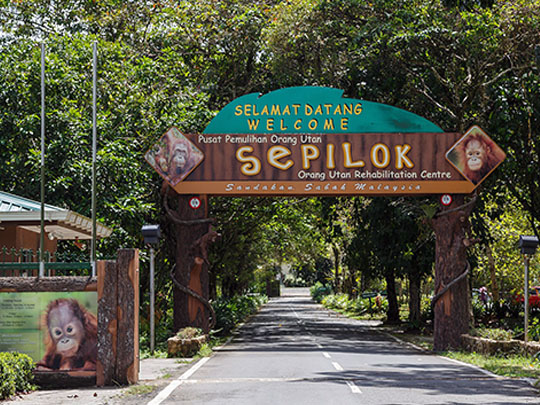
The Sepilok Orangutan Rehabilitation Centre lies in the Kabili-Sepilok Forest Reserve about 25 km west of Sandakan in Sabah, and when it opened in 1964 it was the first official orangutan rehabilitation project.
At Sepilok, orphaned orangutans, rescued from logging sites, plantations, hunting and the pet trade, learn to live in the forest again, and the centre has returned more than 300 of them to the wild.
Near Sepilok, a memorial park in Sandakan marks the Second World War camp whose roughly 2,400 Australian and British prisoners died there or on the forced marches to Ranau in 1945, and only six, all Australians who escaped, survived.
10 – Sipadan
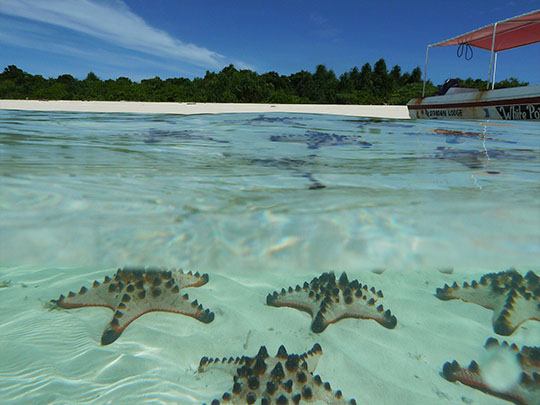

Sipadan is a small island in the Celebes Sea off Semporna in Sabah, formed by coral growing on an extinct volcano that rises about 600 m from the seabed, and in 2002 the International Court of Justice awarded it, with Ligitan, to Malaysia rather than Indonesia.
Divers come to Sipadan from neighbouring islands for Barracuda Point, where chevron barracuda gather in a spiralling vortex, and for green and hawksbill turtles, reef sharks and bumphead parrotfish.
A few metres from the beach at Sipadan the reef gives way to a wall that drops hundreds of metres, and Jacques Cousteau, who filmed here in 1989, is said to have called the island “an untouched piece of art”.