
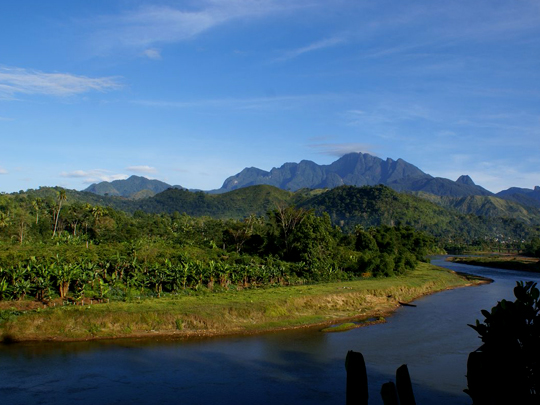
Wikimedia Commons / CC-BY-SA-3.0 / GFDL
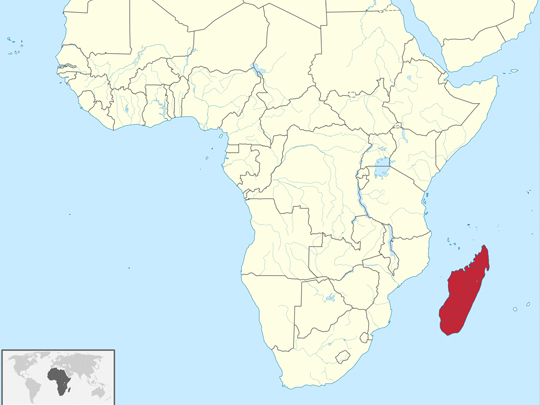
Capital: Antananarivo
Population: 32 million+
Language: French/Malagasy – Malagasy is an Austronesian language — its nearest relatives are spoken in Borneo, 7,500km away, a legacy of the seafarers who reached this island from Southeast Asia around 1,500 years ago.
1 – Marojejy National Park (also above)
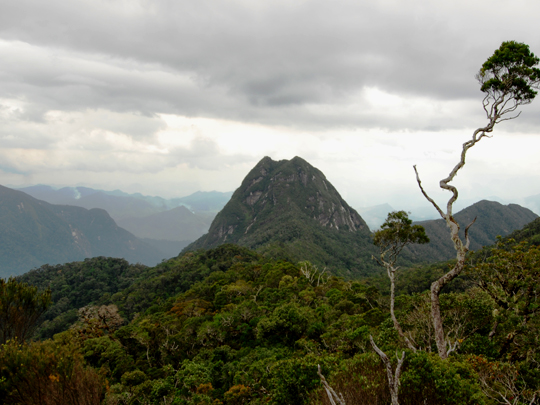
In the remote, misty mountains of northeastern Madagascar, Marojejy is one of the island’s wildest and most biodiverse parks — a UNESCO World Heritage rainforest climbing a jagged 2,000m massif, so pristine the botanist who first explored it called it “a marvel of nature.”
A demanding trail leads up through changing worlds — dense lowland jungle, dripping cloud forest, then eerie high-altitude moss forest near the summit — past orchids, tree ferns, chameleons and eleven kinds of lemur, all reached only on foot from camps along the way.
Marojejy is the last stronghold of the silky sifaka, a snow-white lemur nicknamed the “angel of the forest” — one of the rarest primates on Earth, with only a couple of hundred left in the wild and not a single one anywhere in captivity.
2 – Avenue of the Baobabs
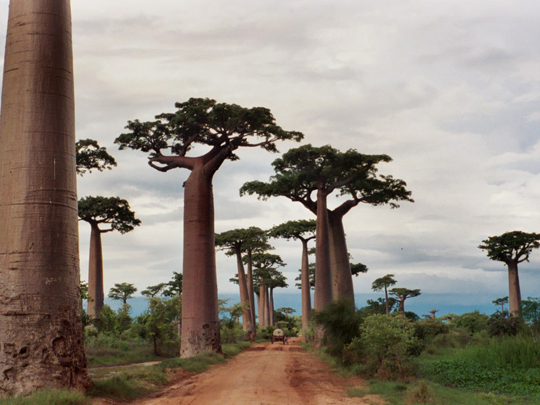
Along a dusty red road near Morondava in western Madagascar stands the island’s most iconic sight — the Avenue of the Baobabs, a stately line of around 25 giant Grandidier’s baobabs, some more than 800 years old, towering up to 30m over the plain.
Found nowhere else on Earth, these “upside-down trees” — their bare branches like roots clawing at the sky — hold enormous reserves of water in their swollen trunks to survive the long dry season; at sunrise and sunset they glow gold and cast long shadows, and the Malagasy revere them as “Renala,” the Mother of the Forest.
The avenue is really the ghost of a vanished forest: these giants once stood among dense woodland that has since been cleared for rice fields, and they survived only because baobab wood is no use for timber — so they were left standing while everything around them was felled.
3 – Isalo National Park
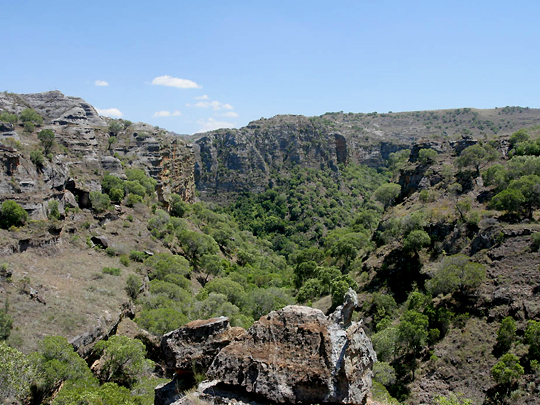
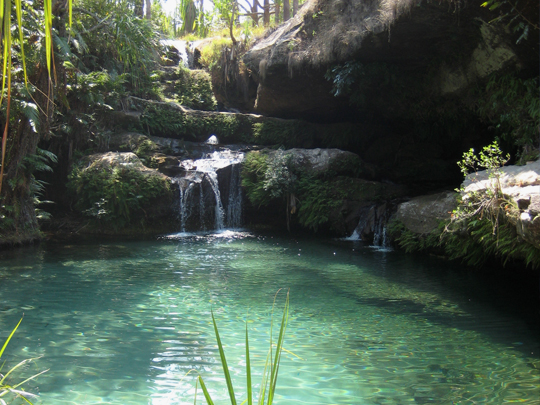
Rising from the dry grasslands of southern Madagascar, Isalo is the island’s most visited park and its most cinematic — a vast maze of sandstone canyons, cliffs and pinnacles sculpted over some 180 million years, so dramatic it’s nicknamed the “Grand Canyon of Madagascar.”
It’s a hiker’s dream: sun-baked plateaus that glow orange at sunset, deep gorges hiding palm-fringed oases and crystal-clear natural swimming pools beneath waterfalls, and ring-tailed lemurs so used to people they lounge on the rocks beside the trail.
The canyons are sacred to the Bara, the cattle-herding people of the south, who for centuries have laid their dead to rest in tombs high in the cliff faces — their resting places often marked by the skulls of zebu cattle.
4 – Ranomafana National Park
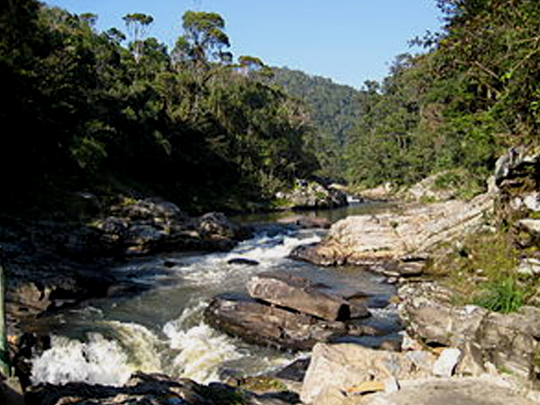
A steamy, mist-wrapped rainforest tumbling down the hills of southeastern Madagascar, Ranomafana owes its very existence to a lemur — in 1986 the scientist Patricia Wright came here hunting a lemur thought lost, and not only found it but discovered a brand-new species, prompting the park’s creation and, later, UNESCO World Heritage status.
Its dripping green slopes, threaded by the Namorona River and dotted with hot springs (Ranomafana means “hot water”), shelter a dozen kinds of lemur, chameleons, jewel-coloured frogs and rare birds — best sought on day hikes and after-dark night walks when the forest comes alive.
That newly discovered species, the golden bamboo lemur, has an astonishing trick — it feeds on giant bamboo shoots laced with cyanide, swallowing every day roughly enough poison to kill a person, yet somehow comes to no harm at all.
5 – Amber Mountain National Park
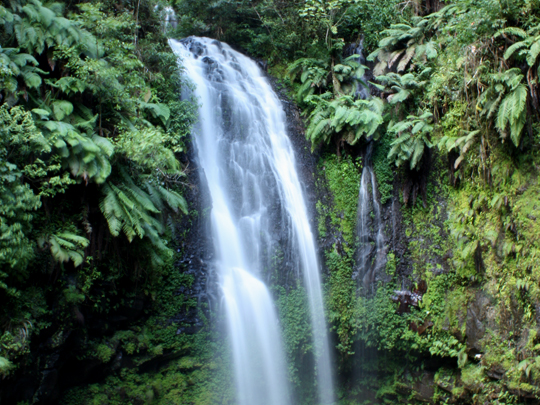
In the far north of Madagascar, a cool, mist-shrouded rainforest rises out of the hot, dry plains around Diego Suarez — Amber Mountain, a volcanic massif that in 1958 became the very first national park on the island.
Well-marked trails wind through dripping green forest to a string of beautiful waterfalls and hidden volcanic crater lakes, past crowned lemurs, jewel-coloured frogs and camouflaged leaf-tailed geckos, in a park cool and wet enough to feel a world away from the sun-baked coast nearby.
Look very carefully at the leaf litter and you might spot one of the planet’s tiniest reptiles — a Brookesia stump-tailed chameleon barely two centimetres long, small enough to perch on the tip of your finger.
6 – Lake Ravelobe
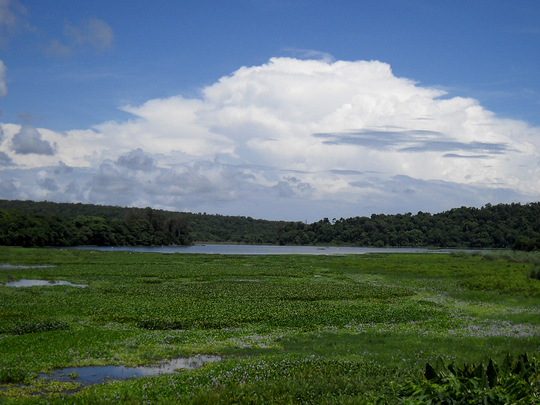
A tranquil, reed-fringed lake in the dry western forests of Ankarafantsika National Park, Lake Ravelobe takes its name from a WWII veteran turned outlaw who, legend says, met his end beneath its waters — and it has been held sacred ever since.
The lake is a magnet for wildlife: rare aquatic birds crowd its shores, among them the majestic Madagascar fish eagle, one of the rarest birds of prey on Earth, while the surrounding forest shelters the elegant Coquerel’s sifaka and other lemurs.
The local Sakalava people believe the lake’s Nile crocodiles are the spirits of Ravelobe himself and hold them sacred — calling them the “sighing ones” and, each year, sacrificing zebu cattle to them in exchange for their blessing and safe passage on the water.
7 – Ambohimanga
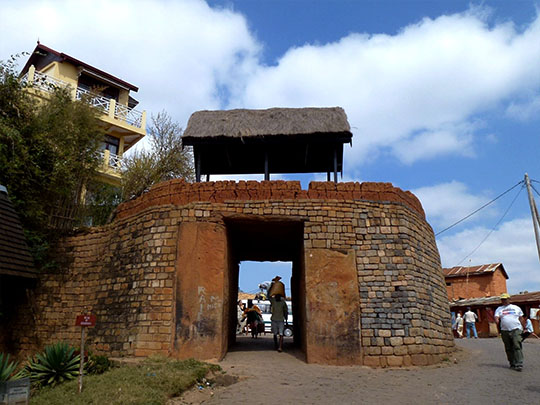
Twenty-four kilometres northeast of the capital stands one of the twelve sacred hills of Imerina, fortified as a royal city in the 18th century and closed to all foreigners by royal decree from 1810 until the French arrived — it was from this hill that King Andrianampoinimerina unified the Merina and founded the kingdom that came to rule most of the island, and it is Madagascar’s only cultural World Heritage Site.
Seven gates pierce the walls, the main one still sealed by the stone disc of some twelve tonnes that was rolled across it in times of danger; inside stand the king’s house, built from seven interlocking rosewood trunks and still furnished, the royal tombs, ceremonial bathing basins, a seat of justice beneath a great fig tree, and a sacred forest.
In 1897 the French pulled down the tombs and carried off the remains of the sovereigns, meaning to break the hill’s hold over the Malagasy — it didn’t work: the sacred houses were rebuilt in 2008, the remains brought home, and people still climb the hill to leave offerings.
8 – Antananarivo
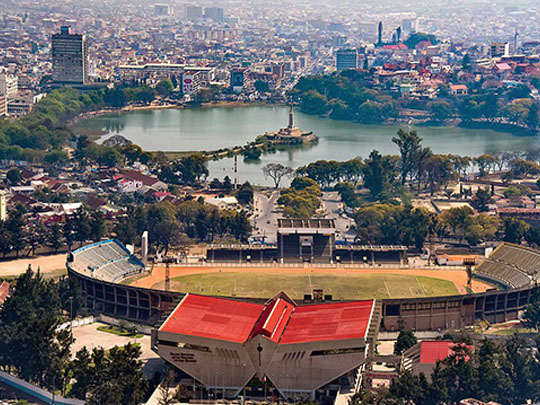
Madagascar’s capital is heaped across a dozen steep hills at 1,280m, founded when a Merina king seized the ridge in the 17th century and garrisoned it — the name means roughly “the city of the thousand”, after the soldiers he left to hold it — and it has been the seat of the kingdom, the French colony and the republic ever since.
The Rova crowns the highest ridge, the stone palace compound of the Merina monarchs, gutted by fire in 1995 and painstakingly rebuilt since; below it the city tumbles downhill in tall brick houses with carved wooden balconies, linked by flights of steps rather than streets, to the market halls of Analakely and the wide Avenue of Independence.
In the highlands around the city, families practise famadihana, the turning of the bones: every few years the ancestors are lifted from the family tomb, wrapped in fresh silk shrouds, carried shoulder-high through the village to music and dancing, and then returned — a party, not a funeral.
9 – Île Sainte-Marie
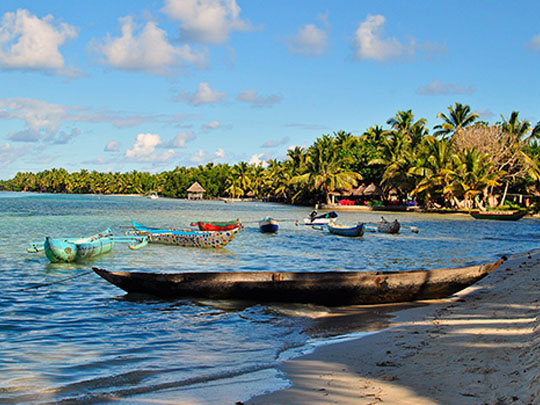
A long, narrow island off Madagascar’s east coast, Nosy Boraha was one of the great pirate havens of the golden age: sheltered bays, fresh water and fruit, and a position astride the route between the Red Sea and the Cape — by some reckonings a thousand pirates were based here between the 1690s and the 1720s.
A pirate cemetery sits on a headland above the bay, its headstones carved with skulls and crossed bones, with the ribs of wrecked ships still visible in the shallows below; south of the island lies the palm-covered islet of Île aux Nattes, and from July to September humpback whales come into the channel to calve.
This coast is also the supposed home of Libertalia, a pirate republic said to have run without slavery, with goods held in common and leaders chosen by vote — the story appears in a single book of the 1720s and no trace of the place has ever been found, but it was taken for real history for the best part of two centuries.