
Wikimedia Commons / CC-BY-SA-3.0 / GFDL
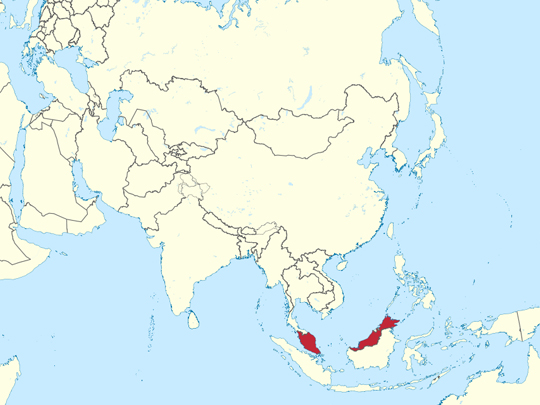
Capital: Kuala Lumpur
Population: 34.5 million+
Language: Malay/English
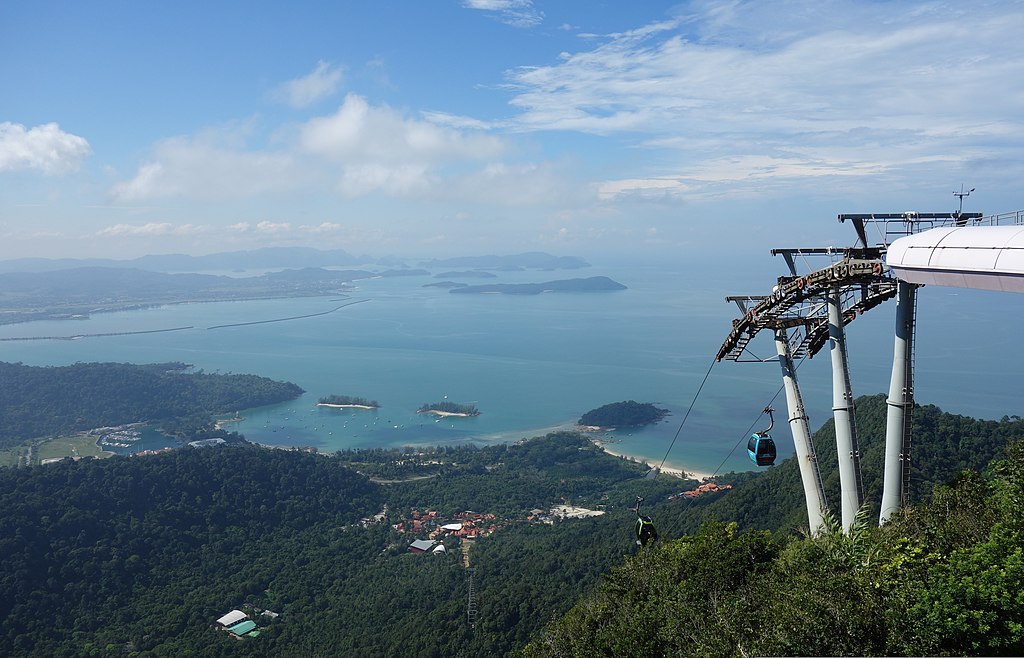
1 – Langkawi (also above)
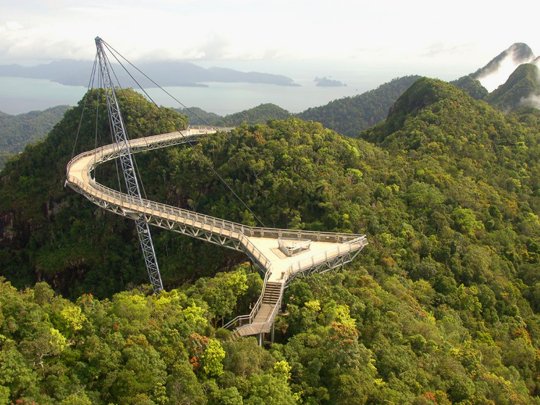
The Langkawi cable car climbs Gunung Machinchang on the main island of an archipelago of ninety-nine islands off Malaysia’s northwest coast, near the Thai border. Langkawi was made a UNESCO Global Geopark in 2007 — the first in Southeast Asia — and the cable car is there because of what the mountain is made of.
The cars run up to a station at 708 metres, and from there the Sky Bridge curves out over the drop: 125 metres of deck hung from a single inclined pylon, so it appears to float. Down below, Langkawi has beaches, mangroves, sea eagles, and the tomb of Mahsuri, a woman executed in the early 1800s who is said to have cursed the island for seven generations.
The rock you ride up is Cambrian sandstone laid down around 550 million years ago — the oldest exposed rock in Malaysia and among the oldest in Southeast Asia. Machinchang was a seabed before anything with a backbone existed. The cable car is a good ride; the geology underneath it is why UNESCO is involved at all.
2 – Batu Caves
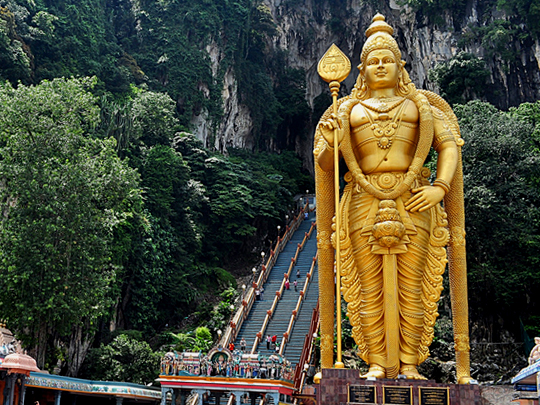
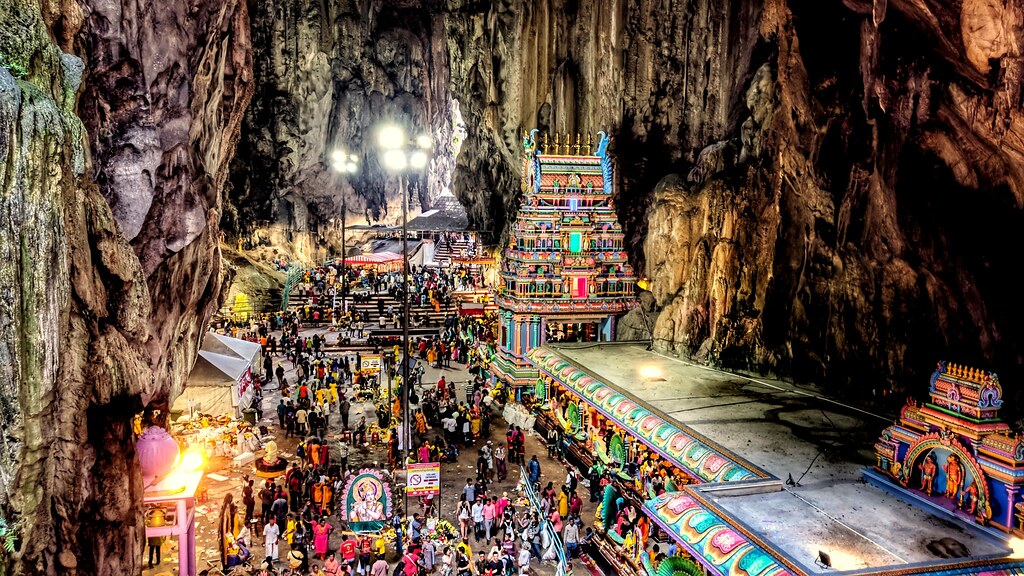
Batu Caves is a limestone outcrop on the northern edge of Kuala Lumpur, riddled with caverns that were used by the Temuan people and later mined for guano by Chinese settlers. In 1891 a Tamil trader, K. Thamboosamy Pillai, installed a statue of Murugan in the largest cave, and it has been a Hindu temple ever since.
You climb 272 steps at Batu Caves — repainted in rainbow colours in 2018 without heritage approval, which caused a considerable row — past a 42.7-metre gilded Murugan, the tallest statue of the god anywhere. The main cavern is open to the sky at one end. Macaques work the staircase and will take whatever you are holding.
At Thaipusam, in January or February, Batu Caves takes something like a million people over two days. Devotees carry kavadi — frames of steel and peacock feathers, some anchored by hooks and skewers through the skin — up all 272 steps. It is among the largest Hindu gatherings held anywhere outside India.
3 – Petronas Towers

The Petronas Towers went up in Kuala Lumpur between 1993 and 1998 as the headquarters of Malaysia’s state oil company, and at 451.9 metres they were the tallest buildings in the world until Taipei 101 passed them in 2004. They are still the tallest twin towers anywhere. César Pelli designed them.
The floor plan of the Petronas Towers is two overlapping squares forming an eight-pointed star, a pattern taken from Islamic geometry, with arcs filling the points; the towers step back six times as they rise. There is an observation deck on level 86, and the foundations run about 120 metres down because the bedrock under the site turned out to slope.
The skybridge between the Petronas Towers, 170 metres up at levels 41 and 42, is not fixed to either building. It is pinned so that it can slide in and out as the towers sway apart and together in the wind — a few hundred millimetres of movement. Bolt it rigidly and it would tear itself off.
4 – Taman Negara National Park
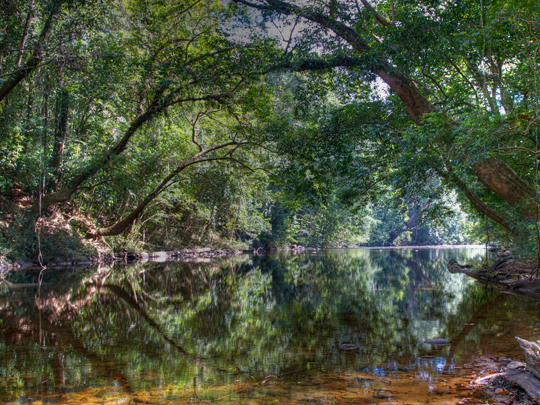
Taman Negara covers 4,343 square kilometres of lowland rainforest across three states in peninsular Malaysia. It was gazetted in 1938 as the King George V National Park and took its present name — which simply means “national park” — after independence. You reach Taman Negara by boat up the Tembeling river to Kuala Tahan.
There is a canopy walkway slung between trees around forty metres up and more than five hundred metres long, along with night walks, caves, Batek Orang Asli settlements, and the climb to Gunung Tahan at 2,187 metres, the highest point in peninsular Malaysia. Tigers, elephants and tapirs are there and are almost never seen.
Taman Negara is routinely called one hundred and thirty million years old, which is not quite what the evidence supports — no tree or patch of forest is anything like that age. What is true, and better, is that this part of the world was never glaciated and never dried out, so rainforest has covered it continuously while ice sheets came and went elsewhere. The habitat is ancient; the trees are not.
5 – Gunung Mulu National Park
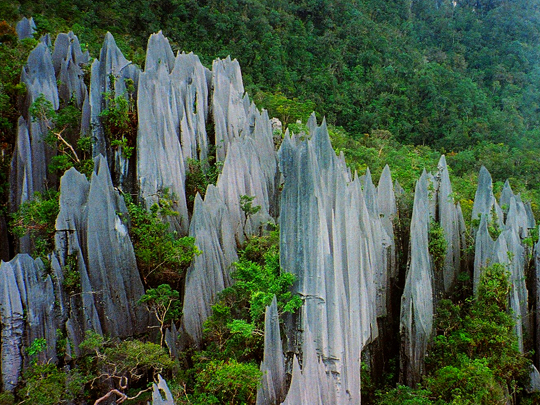
Gunung Mulu National Park is in Sarawak on Borneo, and UNESCO listed it in 2000 for its limestone as much as its biology. Underneath Mulu is one of the largest cave systems on earth — the Clearwater system alone has around 250 kilometres of surveyed passage, cut through soft limestone by rainwater over millions of years.
Deer Cave at Mulu is among the biggest cave passages anywhere, and at dusk two to three million wrinkle-lipped bats come out of it in a long spiralling ribbon that takes the better part of an hour to pass overhead. Above ground are the Pinnacles: forty-five-metre limestone blades standing up out of the forest on Gunung Api.
The Sarawak Chamber, found by British cavers in 1981, is the largest known cave chamber in the world by area — roughly 600 metres by 400, with the roof 70 metres up. No light anyone can carry reaches the far side, so nobody has ever seen the whole of it at once.
6 – Mount Kinabalu
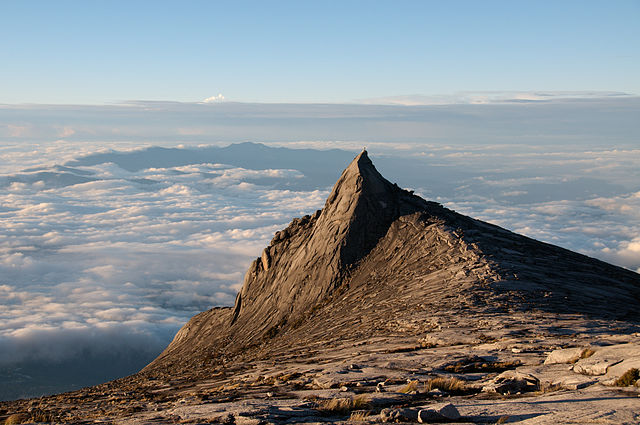
Mount Kinabalu rises to 4,095 metres in Sabah, on Borneo, and is the highest mountain between the Himalaya and New Guinea. Its granite core was pushed up through the surrounding rock and is still rising by a few millimetres a year. Kinabalu Park became Malaysia’s first UNESCO World Heritage Site in 2000.
The climb up Kinabalu takes two days, with a compulsory guide and a night at Laban Rata, finishing across bare granite before dawn. An earthquake in June 2015 killed eighteen people on the mountain, among them schoolchildren, and the routes were rebuilt afterwards. The Kadazan-Dusun regard the summit as the place the dead go.
Kinabalu Park holds somewhere between five and six thousand plant species — more than the whole of North America north of Mexico, on a single mountain. That includes around a thousand orchids, several kinds of Rafflesia, and Nepenthes rajah, a pitcher plant large enough to hold three and a half litres of fluid, which has been found with drowned rats in it.
7 – National Monument – Kuala Lumpur
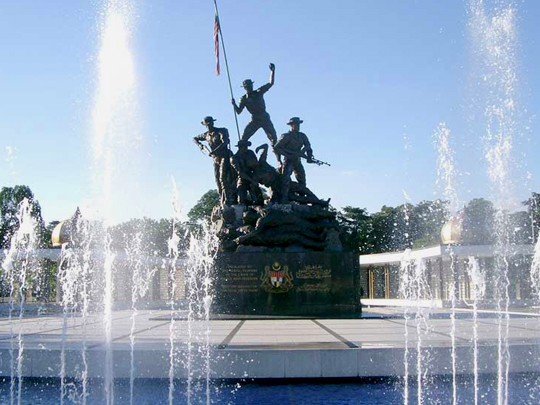
Tugu Negara, the National Monument, stands above the botanical gardens in Kuala Lumpur: seven bronze figures fifteen metres high, unveiled in 1966. It commemorates those who died under Japanese occupation and in the Malayan Emergency, the guerrilla war fought from 1948 to 1960, and it is generally described as the tallest freestanding group of bronze sculpture in the world.
Each of the seven figures at Tugu Negara stands for a quality — leadership, courage, unity, strength, vigilance, suffering, sacrifice — with the central one raising the flag above two fallen men. A First World War cenotaph from the colonial period stands nearby. Since 2010 the official Warriors’ Day ceremony has been held at Merdeka Square instead, following religious objections to honouring a figurative sculpture.
Tunku Abdul Rahman, Malaysia’s first prime minister, saw the Marine Corps War Memorial in Virginia in 1963 and wanted something like it — so he hired the man who made it. Felix de Weldon, sculptor of the Iwo Jima flag-raising, designed Tugu Negara and had it cast in Rome. That is why a monument to a guerrilla war in Malaya looks the way it does.
8 – Melaka and George Town
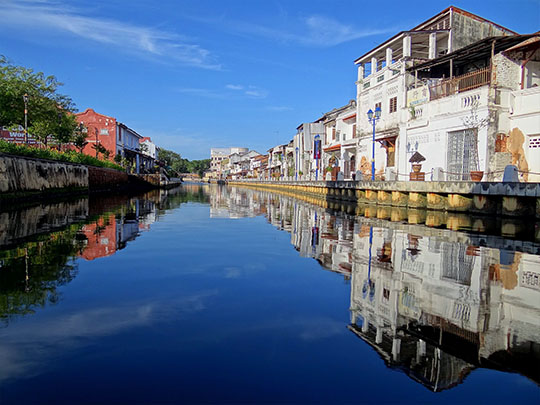
Melaka and George Town were inscribed together by UNESCO in 2008 as the Historic Cities of the Straits of Malacca. Melaka was founded around 1400 and grew into the great entrepôt of the Straits before falling to the Portuguese in 1511, the Dutch in 1641 and the British in 1824. George Town came much later, founded in 1786 as the first British settlement in Southeast Asia.
Melaka has the Dutch Stadthuys of 1650, the roofless St Paul’s on the hill above it, the Peranakan shophouses along Jonker Street, and a road where a mosque, a Chinese temple and a Hindu temple stand within a few hundred metres of each other. George Town has the clan jetties, the Khoo Kongsi clan house, Fort Cornwallis and a street of very much the same kind.
All that survives of the Portuguese fortress at Melaka is a single gatehouse, the Porta de Santiago. The British ordered A Famosa pulled down in 1806, and it was very nearly gone when a young East India Company officer intervened and had the demolition stopped. His name was Stamford Raffles, and about a decade later he founded Singapore.
9 – Sepilok
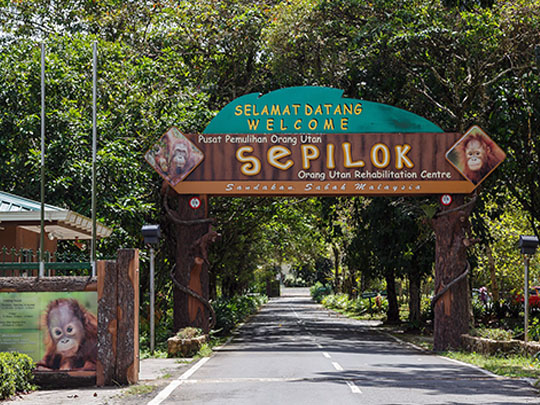
The Sepilok Orangutan Rehabilitation Centre sits inside the Kabili-Sepilok forest reserve near Sandakan in Sabah, on Borneo. It opened in 1964, among the first places of its kind anywhere, and takes in orphaned and confiscated orangutans — most of them out of logged forest and oil palm estates — and teaches them how to live in trees again.
Sepilok has feeding platforms twice a day, reached along boardwalks through the forest, and a nursery with a viewing gallery where the younger animals are taught to climb. Next door are the Bornean Sun Bear Conservation Centre, which does much the same for the smallest bear in the world, and the Rainforest Discovery Centre with its canopy walkway.
Orangutan is Malay — orang hutan, person of the forest — and they are the only great apes living outside Africa. A female has one infant roughly every eight years, the longest gap between births of any mammal on earth, and keeps it with her for most of that time. It is why a population can be halved in a decade and take a century to come back.
10 – Sipadan
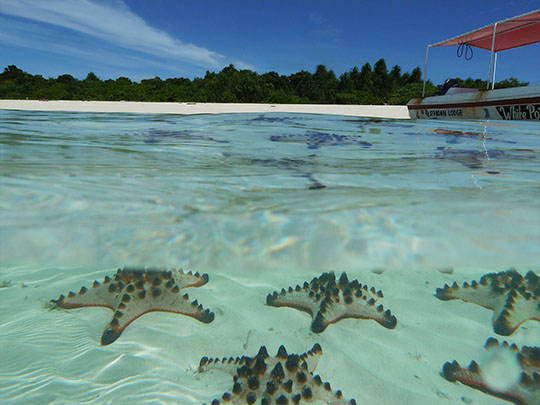

Sipadan is Malaysia’s only oceanic island. It sits off the continental shelf in the Celebes Sea east of Sabah, and it is the top of an extinct volcanic cone with six hundred metres of open water underneath it, capped by coral that has been building there for thousands of years. The island itself is about thirteen hectares — twenty-five minutes to walk round. Nobody stays on Sipadan.
The government closed the resorts in 2004 and made it a park, and divers now come across from Mabul or Kapalai on a capped number of daily permits, booked well ahead. Barracuda Point is the famous site, for the vortex of chevron barracuda that forms in the current; there are green and hawksbill turtles in numbers, whitetip and grey reef sharks, and bumphead parrotfish.
What makes Sipadan what it is happens about ten metres from the beach. That is where the reef ends and the wall starts, dropping six hundred metres to the floor of the Celebes Sea — so the open-ocean fish that normally live far offshore are within swimming distance of the sand. Jacques Cousteau filmed here in 1989 and said he had seen places like it forty-five years earlier, and not since.