
Photo: Martha de Jong-Lantink / Wikimedia Commons / CC-BY-SA-3.0 / GFDL
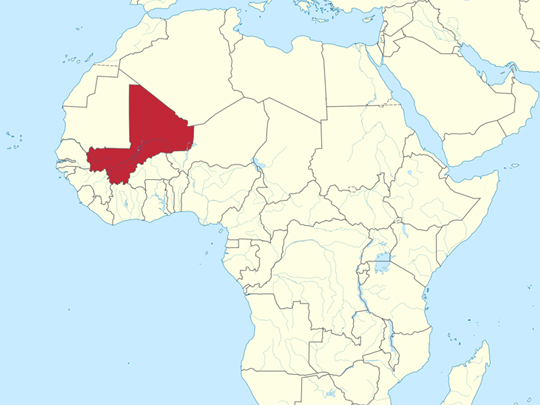
Capital: Bamako
Population: 25 million+
Language: 13 national languages – Bambara, Fula, Songhay, Tamasheq, Dogon, Soninke, Bobo, Bozo, Maninke, Minyanka, Senufo, Kassonke and Hassaniya Arabic.
1 – Djenne (also above)

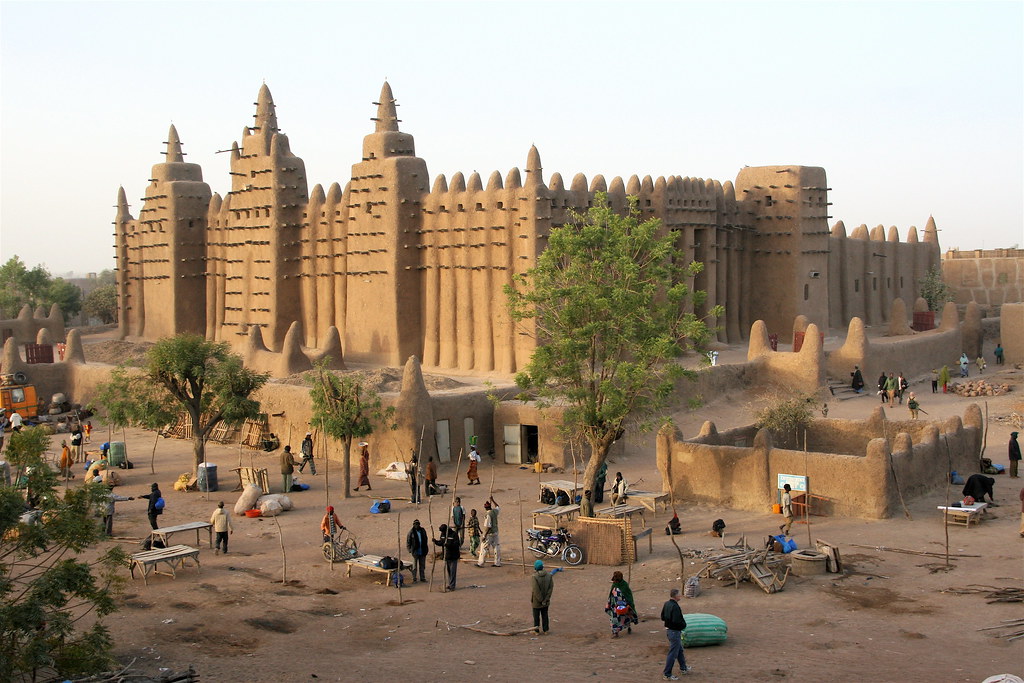
On an island in the flood plains of the Niger’s inland delta stands Djenné, one of the oldest cities in sub-Saharan Africa and a fabled hub of the trans-Saharan gold and salt trade — crowned by its Great Mosque, the largest mud-brick building on Earth.
A masterpiece of Sudano-Sahelian design, the mosque rises on a raised platform above the town, its smooth earthen walls bristling with projecting wooden beams and topped by conical spires crowned with ostrich eggs; around it spreads a UNESCO-listed old town of some 2,000 traditional mud houses.
Because rain would slowly melt it away, the entire town turns out once a year to re-plaster the mosque by hand in a single day — a joyous festival called the Crépissage, with music, races and thousands of people smearing on fresh mud, so that the great building is, in a sense, rebuilt every year.
2 – Mount Hombori
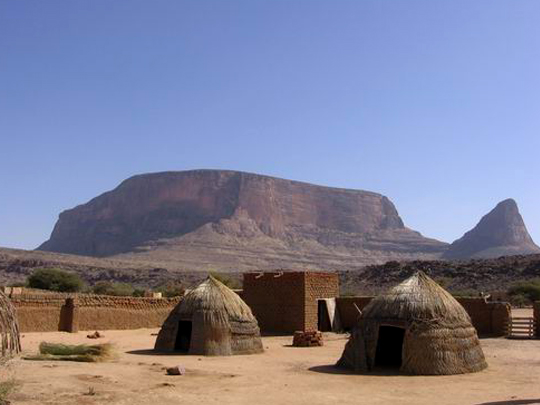
Rising abruptly from the flat Sahel of central Mali, Hombori Tondo is the country’s highest point at 1,155m — a great flat-topped sandstone mesa, the tallest of a whole range of table mountains and towers so dramatic they’ve been dubbed the “Dolomites of Mali.”
Ringed by sheer cliffs, its broad summit plateau is a green island of unusual plant and animal life above the plains, and was once a refuge for the elites of the mighty Songhai Empire; the villages at its foot make a base for exploring a desert of red rock, seasonal lakes and pink dunes.
This harsh, near-desert country is home to one of the last herds of desert-adapted elephants in Africa — the Gourma elephants, which trek vast distances across the Sahel around Hombori in the longest elephant migration on the continent.
3 – Hand of Fatima
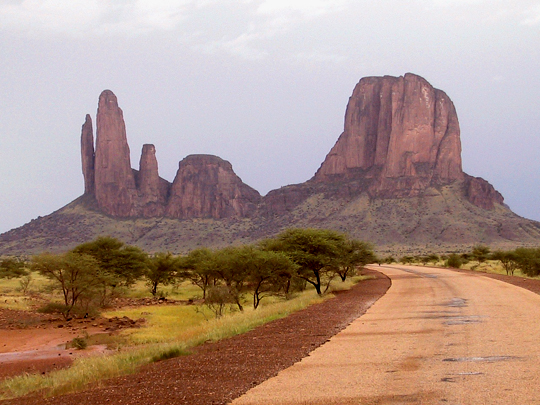
A short way from Hombori soars the Hand of Fatima — a cluster of colossal sandstone pillars thrusting up to 500m straight out of the plain, their fanned-out shape giving the formation its name, after the protective hand-shaped symbol (the Hamsa) of Islamic tradition.
Each of the great towers has its own name in the local Songhai tongue, and glowing orange, ochre and pink at sunrise and sunset, they rank among the most spectacular rock spires in all of Africa — a jaw-dropping sight for travellers on the long desert road east.
Those sheer, overhanging walls have made the Hand of Fatima a legendary destination for big-wall rock climbers — some of the finest and most remote climbing anywhere on the continent, where daring routes hundreds of metres high snake up the vertical sandstone.
4 – Timbuktu
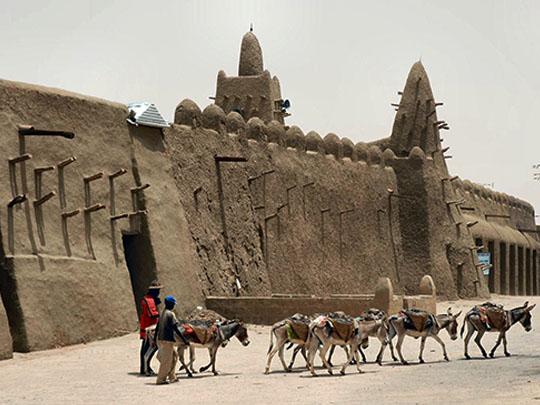

Where the Niger swings closest to the Sahara, Timbuktu began around 1100 as a Tuareg camp and grew into the hinge of two worlds — salt coming south out of the desert, gold coming north out of the forests — taken in 1325 by Mansa Musa of Mali, whose pilgrimage to Mecca famously wrecked the gold price in Cairo, and later ruled by the Songhai.
By the 16th century this was one of the intellectual capitals of the Islamic world, with thousands of students round the mosque of Sankoré and a manuscript trade in law, astronomy, medicine and poetry; the three great earthen mosques still stand, along with the mausoleums of the town’s saints.
When jihadists took the north in 2012 they destroyed fourteen of those mausoleums — and librarians, archivists and ordinary families smuggled some 350,000 manuscripts out to Bamako in metal trunks, rice sacks, on donkey carts and down the river by boat; the tombs were rebuilt by Malian masons, and the International Criminal Court tried the destruction as a war crime, the first case of its kind.
5 – Bamako

Sprawling along both banks of the great Niger River, Bamako is Mali’s teeming capital and one of the fastest-growing cities in Africa — its name means “crocodile river” in the Bambara tongue, and three crocodiles remain the city’s emblem.
It’s a hot, buzzing, friendly place of riverside life and colour — dive into the vast Grand Marché for textiles, gold and crafts, take in the excellent National Museum of Mali, and above all follow the sound of music drifting from its bars and clubs each night.
For Bamako is one of the music capitals of the world — home to Malian legends like Ali Farka Touré, Salif Keita and Toumani Diabaté, and to a hypnotic “desert blues” so deeply rooted that Mali is often called the birthplace of the blues itself.
6 – Dogon Country
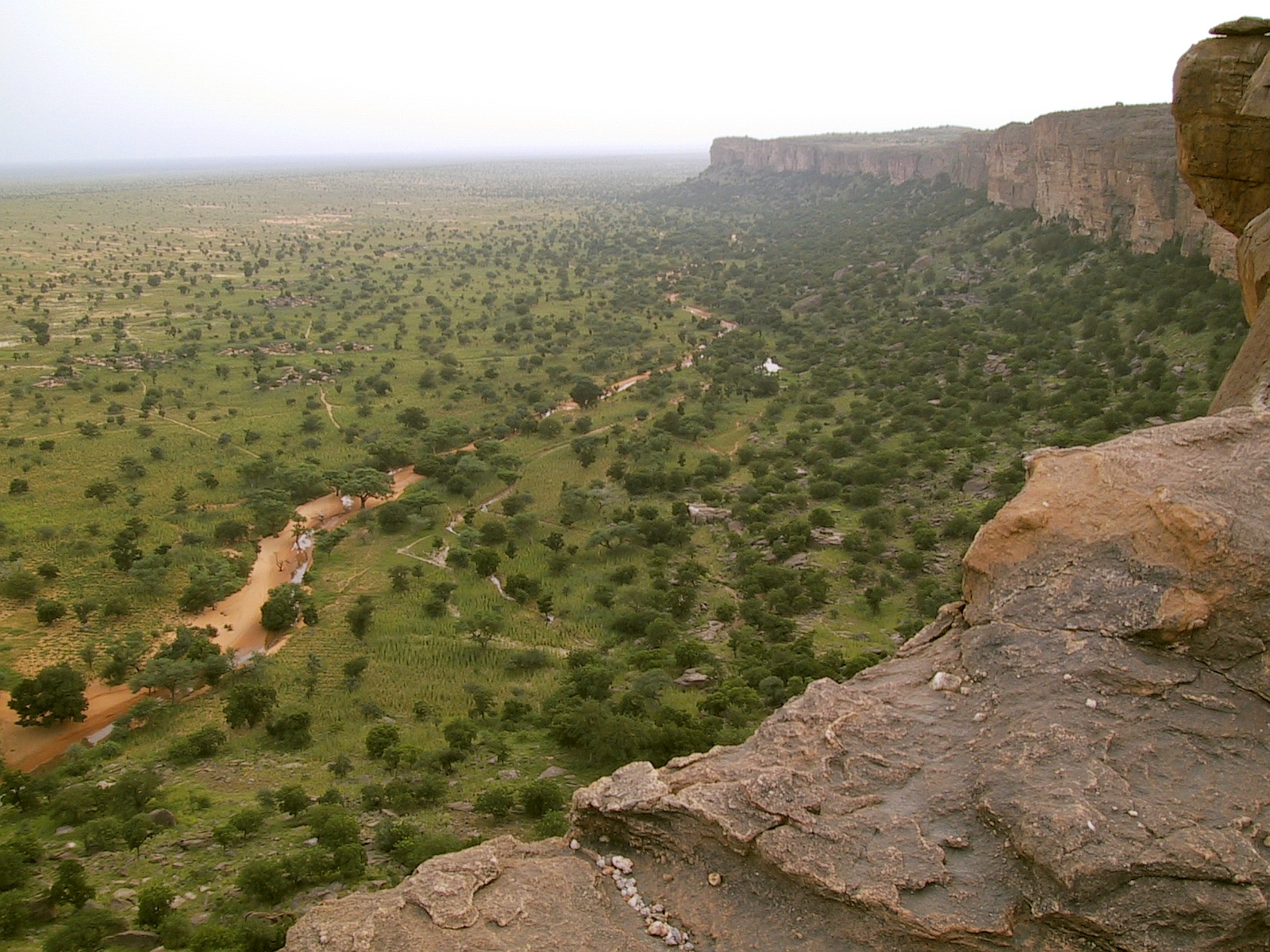
Along the foot and face of the great Bandiagara Escarpment — a 150km sandstone cliff soaring 500m above the plains of central Mali — cling the villages of the Dogon, a people who withdrew to these near-impregnable heights centuries ago to preserve their ancient animist way of life, on land now protected as a UNESCO World Heritage Site.
It’s one of Africa’s most spellbinding cultural landscapes: mud-brick villages studded with thatch-roofed granaries and low-roofed council houses, dramatic masked dances performed at funerals, and, tucked high in the cliff face above, the ancient burial caves of the mysterious Tellem people who lived here before them.
The Dogon are famous for an extraordinary cosmology centred on the star Sirius — they hold a great ceremony, the Sigui, just once every sixty years, and for a claim, made famous by a French anthropologist in the 1940s, that they knew of a companion star to Sirius invisible to the naked eye — a story later fieldwork could not replicate, and which most scholars now doubt.
7 – Tomb of Askia, Gao
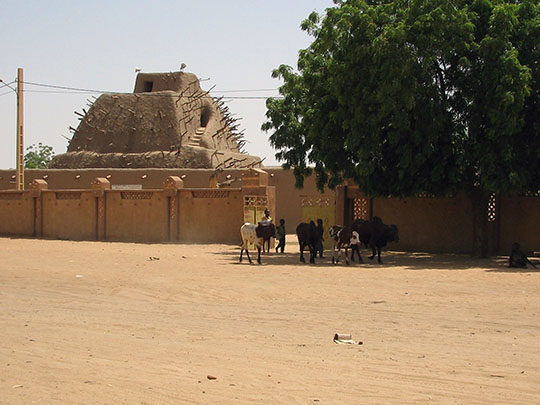
Downriver at Gao stands a stepped pyramid of earth seventeen metres high, raised in 1495 by Askia Mohammad I — who had seized the Songhai throne two years before and come back from Mecca determined to make Islam the religion of an empire that would become the largest West Africa has ever seen; it is the biggest historic monument in the region, UNESCO-listed in 2004.
Acacia stakes bristle from every face of the pyramid, and around it stand two flat-roofed mosques, a cemetery and an open-air assembly ground; the tomb is a working mosque still, and Askia lies alone inside it, later rulers of his dynasty buried out in the courtyard.
He built it forty years before he had any use for it: in 1528 his eldest son took the throne from him and banished him, half-blind, to a mosquito-ridden island in the Niger, where he spent nine years listening to his sons kill each other over his empire — until another son fetched him home to Gao, where he died, and was laid in the pyramid he had built for himself.
8 – Festival au Desert
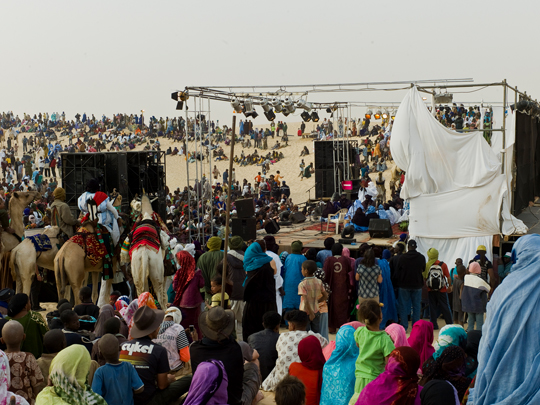
For a few magical years, the emptiness of the Sahara north of Timbuktu played host to one of the most extraordinary music festivals on Earth — the Festival au Désert, born in 2001 out of Tuareg peace gatherings, where nomads arrived on camels to camp and celebrate among the dunes.
It was a festival like no other: three days of camel races and dancing by day, and by night the hypnotic electric “desert blues” of Tuareg bands like the Grammy-winning Tinariwen, echoing across the sand beneath a canopy of stars.
Its fame drew rock royalty on pilgrimage across the desert — Robert Plant, Bono and Damon Albarn among them — but the music fell silent in 2012, when armed militants seized northern Mali and banned it outright, and the festival has not been able to return home since.