
Wikimedia Commons / CC-BY-SA-3.0 / GFDL
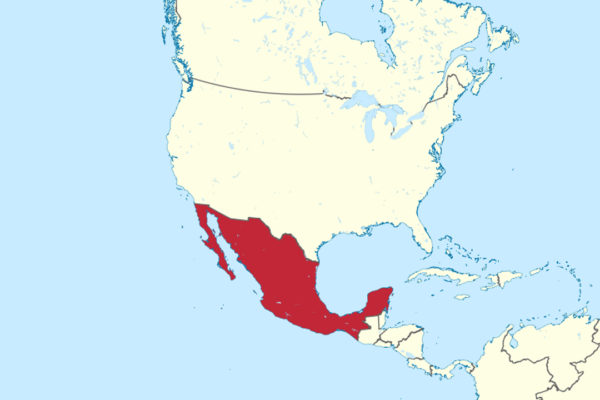
Capital: Mexico City
Population: 130.9 million+
Language: Spanish & 68 Indigenous languages
1 – Teotihuacan (also above)

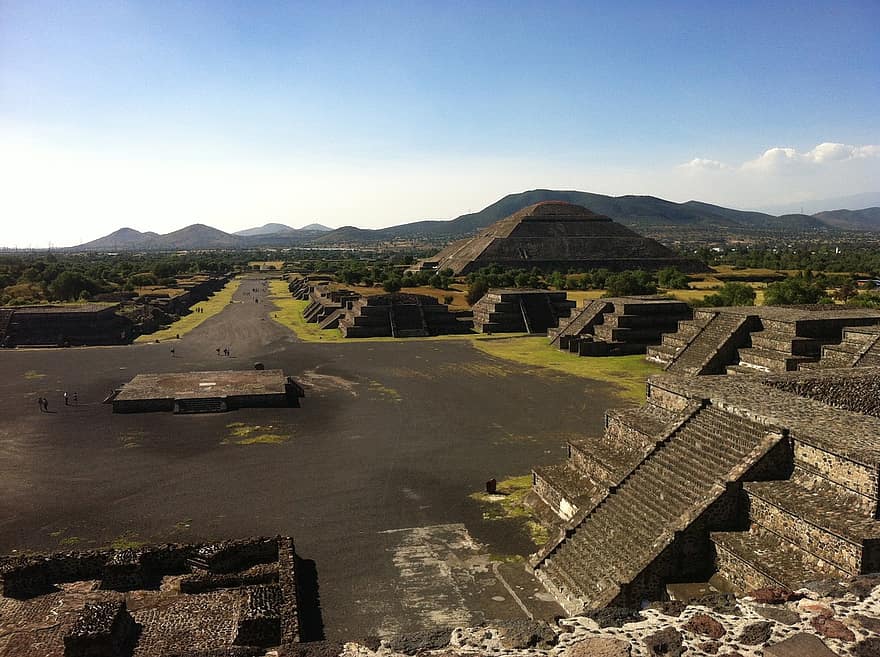
About 40–50 km north-east of Mexico City, Teotihuacan was one of the great cities of the ancient world at its peak, around 100–550 CE, with population estimates running past 100,000, and its builders’ own name for it is lost — “Teotihuacan” is what the Aztecs called it centuries after it fell.
Walk Teotihuacan’s Avenue of the Dead from the Pyramid of the Moon, climbable again since May 2025 to its first platform, past the Pyramid of the Sun, one of the largest pyramids in the Americas and closed to climbers since 2020, to the carved serpent heads of the Temple of the Feathered Serpent.
The Aztecs didn’t build Teotihuacan — it was already ruins when they found it — and the “Avenue of the Dead” is their misreading of temple platforms as tombs, while beneath the Feathered Serpent temple a tunnel found in 2003 led archaeologists to liquid mercury, announced in 2015.
2 – Mexico City
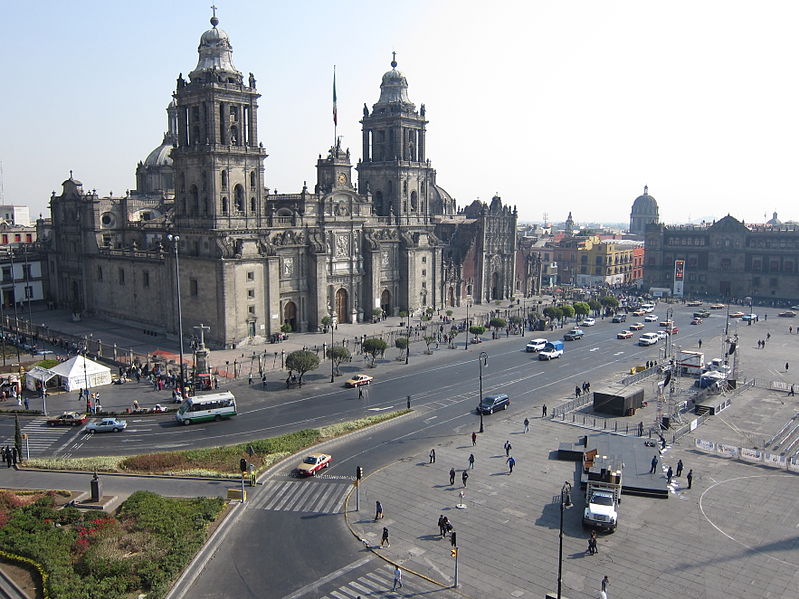
Built over Tenochtitlan, the island city in Lake Texcoco traditionally founded in 1325 and taken by Cortés on 13 August 1521, Mexico City still sits on the old lake bed, and parts of it are sinking by up to 50 cm a year.
Mexico City’s Zócalo is framed by the Metropolitan Cathedral, built from 1573 to 1813, the Palacio Nacional with Diego Rivera’s murals, and the Templo Mayor, dug out after electricity workers struck the Coyolxauhqui stone in 1978, and further out are Chapultepec Castle and the canals of Xochimilco.
In September 1847 the US Army hanged 50 men of the largely Irish San Patricio Battalion, led by John Riley of Clifden, 16 of them in San Ángel, where a plaque stands in Plaza San Jacinto — and Juan O’Donojú, son of Irish parents, signed away Spanish rule in 1821 and lies in Mexico City’s cathedral.
3 – Chichen Itza
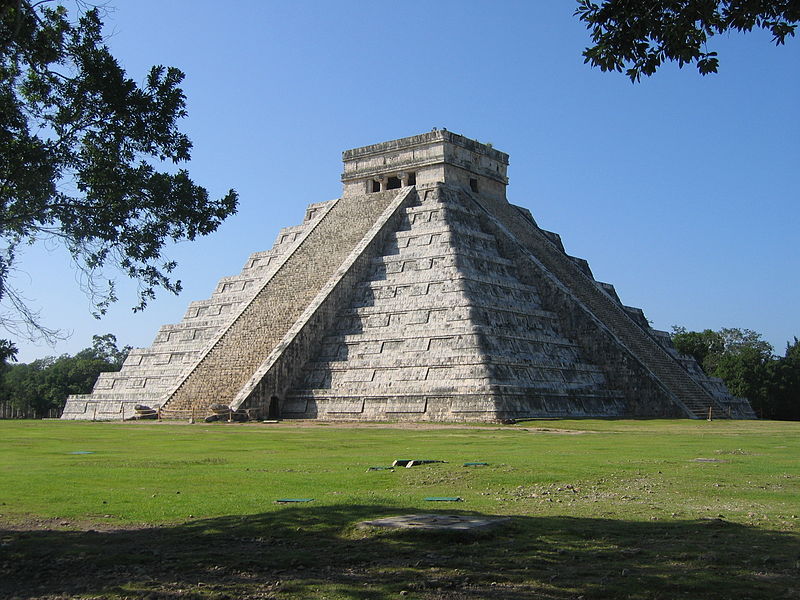
In the north of the Yucatán peninsula, Chichen Itza — “at the mouth of the well of the Itza” — was one of the great Maya cities from about 600 to 1200 CE, at its most powerful around 900–1050, and has been a UNESCO site since 1988.
Chichen Itza’s El Castillo, the pyramid of Kukulcán, closed to climbers since 2006, hides two older structures inside, the Great Ball Court is the largest in Mesoamerica at 168 metres, and a path leads to the Sacred Cenote, dredged by the American Edward Thompson in 1904–10 for finds shipped to Harvard.
The idea that virgins were thrown into the Sacred Cenote doesn’t survive the bones — most remains there are children, mainly boys, and a 2024 DNA study of 64 children buried nearby found all were male — and whether El Castillo’s equinox serpent shadow was ever intended is disputed.
4 – Guadalajara
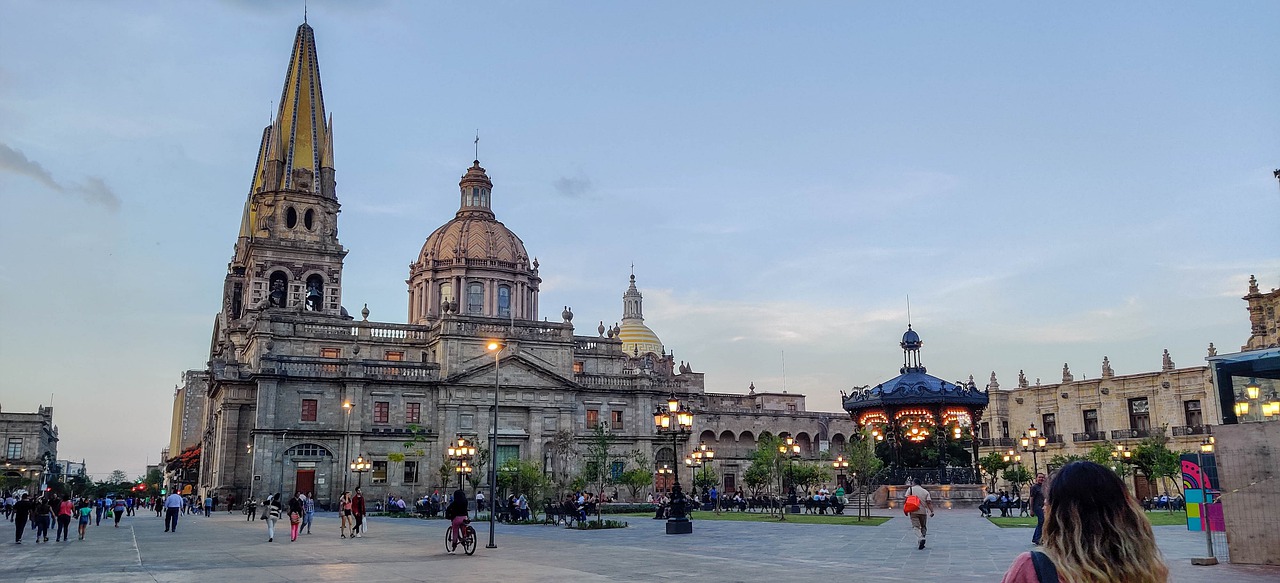
In the Atemajac Valley of western Mexico, Guadalajara was founded on its present site on 14 February 1542 after earlier attempts elsewhere, and is now the capital of Jalisco and Mexico’s third-largest metropolitan area, overtaken by Monterrey in the 2020 census.
Guadalajara’s Hospicio Cabañas, a UNESCO site since 1997, holds José Clemente Orozco’s 57 frescoes, with his Man of Fire in the dome, a walk from the cathedral, and beyond the city lie the crafts shops of Tlaquepaque and the agave fields around the town of Tequila.
Mariachi, on UNESCO’s intangible heritage list since 2011, is Guadalajara’s emblem, though Cocula’s claim to be its birthplace is contested by Nayarit and others, and the story that the word comes from the French mariage is wrong — it appears in a priest’s letter of 1852, a decade before the French arrived.
5 – Cancun
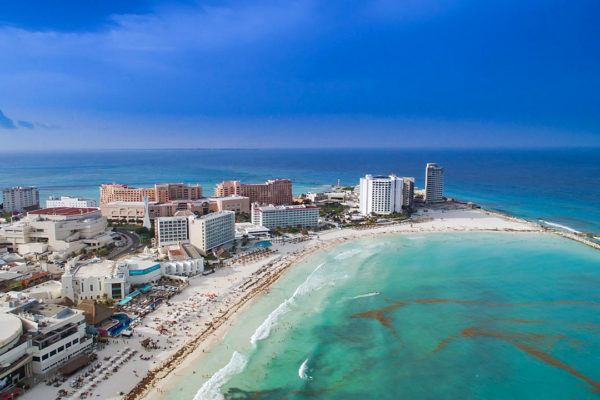
On the north-east tip of the Yucatán peninsula, Cancún was a near-empty sandbar until Mexico’s central bank chose it for a purpose-built resort, with work starting in January 1970 and the first hotel opening in 1974, when only three people are said to have lived on the island itself.
Cancún’s Hotel Zone runs along a long barrier island past the Maya ruins of El Rey, offshore the MUSA underwater museum, opened in 2010, has about 500 sculptures on the seabed, and ferries cross to Isla Mujeres.
The famous story that a computer chose Cancún comes from a 1972 New York Times headline — in fact a team of bankers, architects, engineers and economists spent two years on the choice — and today its airport is Mexico’s second-busiest, with nearly 30 million passengers in 2025.
6 – Monterrey
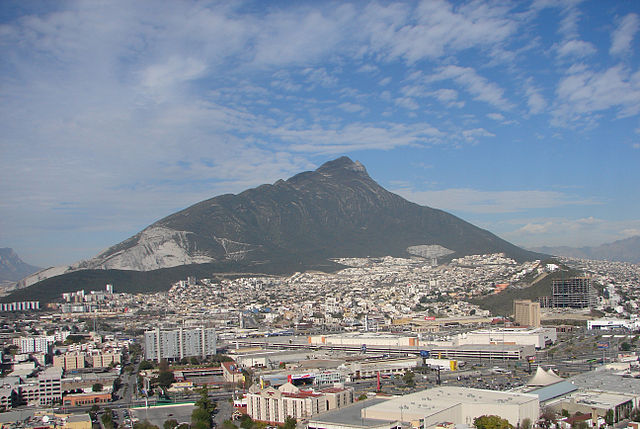
Below the Sierra Madre Oriental in north-east Mexico, Monterrey was founded on 20 September 1596 by Diego de Montemayor and 12 families, and in September 1846 it was the scene of a hard-fought battle of the US–Mexican War.
Monterrey’s Macroplaza runs through the centre, the old Fundidora steelworks of 1900, described as Latin America’s first, became Parque Fundidora in 2001, and the Cerro de la Silla and the Cerro de las Mitras, pictured, named for its likeness to a bishop’s mitre, frame the skyline.
In the 1846 battle at Monterrey the San Patricios, Irish-led deserters from the US Army, fought their first major action as Mexican artillery at the Citadel, and the city went on to become Mexico’s industrial capital, home to the Carta Blanca brewery of 1890 and now the country’s second-largest metro area.
7 – Acapulco
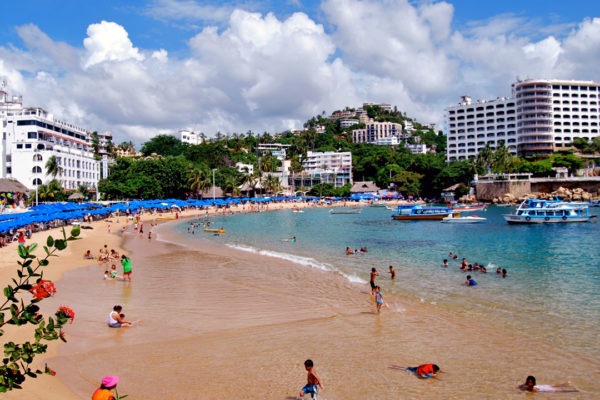
On a deep bay on the Pacific coast of Guerrero, Acapulco was from 1565 to 1815 the American end of the Manila galleon route to the Philippines, guarded by the Fort of San Diego, rebuilt after the 1776 earthquake and now a museum.
Acapulco’s La Quebrada cliff divers have plunged from up to about 35 metres since 1934, and in April 2025 Guinness recognised their five millionth head-first dive, while the hotels, wrecked when Hurricane Otis came ashore as a Category 5 on 25 October 2023, killing at least 52, were back to about 90% of their rooms by July 2026.
Acapulco was the jet set’s resort in the 1950s — JFK and Jackie honeymooned here in 1953, Elizabeth Taylor married Mike Todd here in 1957, and John Wayne and Johnny Weissmuller owned the Hotel Los Flamingos — though Elvis never came for Fun in Acapulco, which was shot on a Paramount lot.
8 – Cabo San Lucas
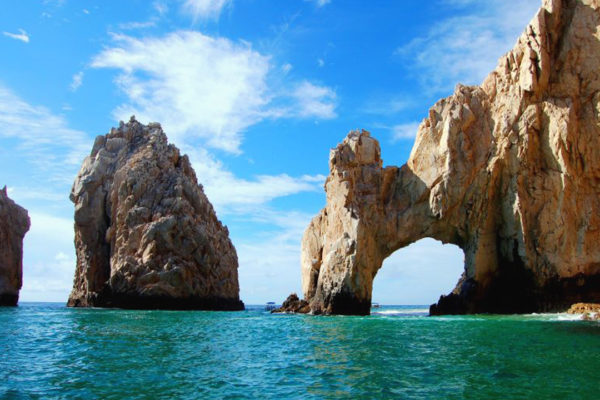
At the southern tip of the Baja California peninsula, Cabo San Lucas is where the Pacific meets the Sea of Cortés, and in November 1587 the English privateer Thomas Cavendish lay in wait off the cape and captured the Manila galleon Santa Ana, with about 100 pounds of gold aboard.
Boats from Cabo San Lucas run out to El Arco, the rock arch at Land’s End with its sea lions, past Lover’s Beach on the Sea of Cortés side and Divorce Beach on the Pacific, and in October the Bisbee’s Black & Blue marlin tournament pays out millions.
John Steinbeck sailed into Cabo San Lucas in March 1940 on the voyage that became Sea of Cortez, Sammy Hagar opened his Cabo Wabo cantina here in 1990, and the line calling the Sea of Cortés “the aquarium of the world” is always credited to Jacques Cousteau, though no one has found where he said it.
9 – Ixtapa

On the Guerrero coast north-west of Acapulco, Ixtapa was built from scratch on a coconut plantation and mangrove swamp as one of the central bank’s first two planned resorts, alongside Cancún, and opened in 1974, about 5 km from the old fishing town of Zihuatanejo.
Ixtapa’s hotels line its long beach, a cycle path runs out towards Playa Linda, where crocodiles bask in a fenced lagoon, small boats cross to Isla Ixtapa, and next door Zihuatanejo keeps its fishing harbour and town beaches.
Zihuatanejo is the dream at the end of The Shawshank Redemption (1994), but the final beach scene wasn’t filmed anywhere near Ixtapa — it was shot at Sandy Point on St Croix in the US Virgin Islands.
10 – Puerto Vallarta
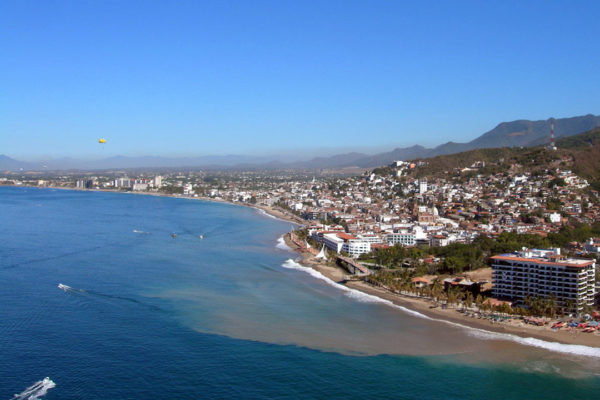
On Banderas Bay on the Pacific coast of Jalisco, Puerto Vallarta was a quiet port until 1963, when John Huston filmed The Night of the Iguana at nearby Mismaloya with Richard Burton, Ava Gardner and Deborah Kerr, and Elizabeth Taylor, both of them still married to others, came to be with Burton.
Puerto Vallarta’s Malecón seafront is lined with sculptures, the Church of Our Lady of Guadalupe wears a crown first raised in 1965 and replaced in 2009, Casa Kimberley, which Burton gave Taylor for her 32nd birthday, is joined to his house by a “bridge of love”, and humpback whales winter in the bay.
Huston took Irish citizenship in January 1964, while living at St Clerans in County Galway, and kept a home near Puerto Vallarta, where his statue stands on Isla Cuale — and the church crown is not a copy of Empress Carlota’s, whatever the old story says.
11 – Uxmal
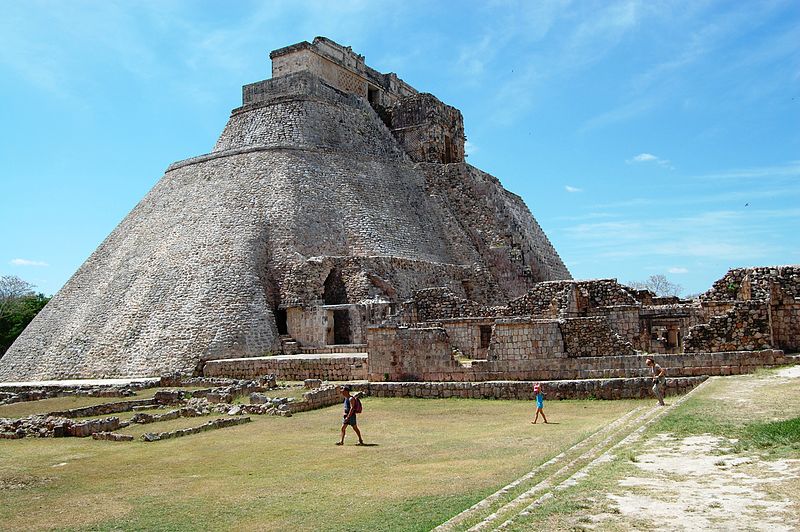
In the Puuc hills of Yucatán, about an hour south of Mérida, Uxmal was a Maya city that flourished around 700–1000 CE with up to about 20,000 people, and has been a UNESCO site since 1996.
Uxmal’s Pyramid of the Magician rises about 35 metres on an unusual oval base, beside the Nunnery Quadrangle, named by the Spanish for its convent-like courtyard, and the Governor’s Palace, all faced with the Puuc style’s stone mosaics and masks of the rain god Chaac.
Legend says a dwarf built Uxmal’s Pyramid of the Magician in a single night, but it went up in five phases over some 300 years — which also undercuts the usual translation of “Uxmal” as “thrice built” — and it was John Lloyd Stephens and Frederick Catherwood’s visits of 1840–42 that made it famous abroad.
12 – Tijuana
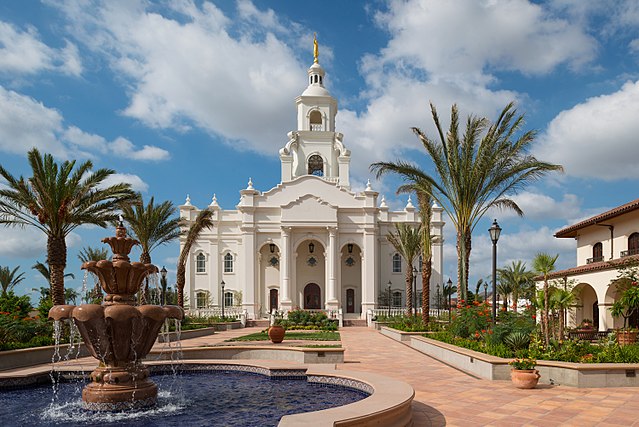
On the US border opposite San Diego, Tijuana dates its founding to a land plan of 11 July 1889, and it boomed during US Prohibition, when Hollywood came south to drink and gamble at the Agua Caliente resort, opened in 1928, and where a young dancer, Rita Cansino, later Rita Hayworth, was spotted.
Tijuana’s Cathedral of Our Lady of Guadalupe, pictured, begun in 1949 and a cathedral since 1964, stands downtown near Avenida Revolución, the CECUT cultural centre of 1982 has its domed cinema, “La Bola”, and the San Ysidro crossing is the busiest land border crossing in the Western Hemisphere.
The Caesar salad is credited to Caesar Cardini, an Italian immigrant cooking on Avenida Revolución in Tijuana in the 1920s, though his brother Alex and others have rival claims — while the “Tijuana Bibles” were made in the US, and Herb Alpert’s Tijuana Brass was a Los Angeles studio band.
13 – Pachuca

About 90 km north-east of Mexico City, Pachuca, the capital of Hidalgo, grew on silver found in 1552, and in 1554 Bartolomé de Medina put the patio process to work here, using mercury to extract silver in a method that spread across Spanish America.
Pachuca’s Reloj Monumental, pictured, unveiled on 15 September 1910 for the centenary of independence, stands over the main square, and the town’s bakeries and Paste Museum honour the Cornish miners who arrived in 1825 and brought the pasty, now the “paste”.
The Cornish miners also brought football, founding what’s usually called Mexico’s first club around 1900, and Pachuca’s clock was made by Dent of London, the firm behind the Great Clock of Westminster — but it’s a much smaller, different mechanism, not a copy of Big Ben.
14 – Oaxaca and Monte Albán
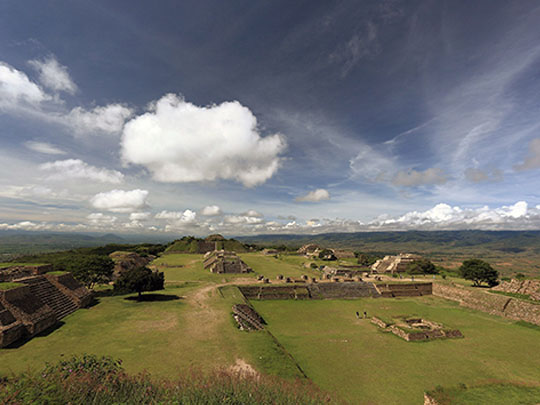
In a high valley in southern Mexico, Oaxaca was laid out by the Spanish in 1529 below Monte Albán, the Zapotec capital founded around 500 BCE on a levelled mountaintop some 400 metres above the valley floor, which declined after about 750 CE.
Oaxaca’s green-stone centre, a UNESCO site together with Monte Albán since 1987, is anchored by Santo Domingo, begun in 1572, whose old convent now holds the treasure of Monte Albán’s Tomb 7, found by Alfonso Caso in 1932, and every July the Guelaguetza festival fills the hill of El Fortín.
Monte Albán’s carved “Danzantes” were named for dancers in 1902, but most scholars now see them as captives or sacrificial victims, Oaxaca’s “seven moles” is a slogan for a far longer list, and Benito Juárez, born to Zapotec parents in the mountains north of Oaxaca in 1806, became Mexico’s first Indigenous president.
15 – Palenque
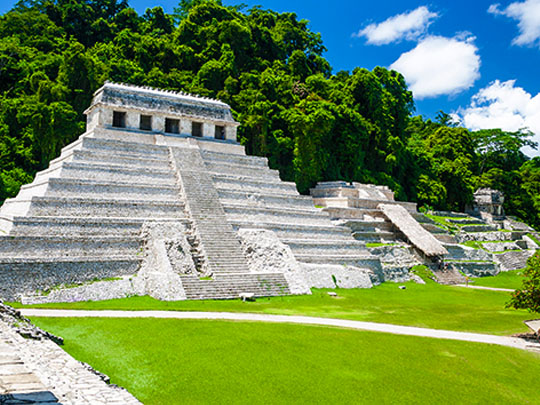

In the forested foothills of Chiapas, Palenque was a Maya city at its height around 500–700 CE, above all under K’inich Janaab’ Pakal, who took the throne aged 12 in 615 and reigned until his death in 683 at about 80.
Palenque’s Temple of the Inscriptions hides the stairway Alberto Ruz began clearing in 1949, which led him to Pakal’s tomb on 15 June 1952, beside the Palace and its tower, possibly an observatory, and Temple XIII, where the cinnabar-covered “Red Queen” was found in 1994 — yet UNESCO reckons only about a tenth of the city has been explored.
Erich von Däniken claimed in 1968 that Palenque’s sarcophagus lid shows a man at a spacecraft’s controls, but it depicts Pakal falling into the underworld at the foot of the World Tree, and Pakal’s jade death mask, stolen from the Anthropology Museum on Christmas Eve 1985, was recovered in 1989.
16 – Dolores Hidalgo and Guanajuato
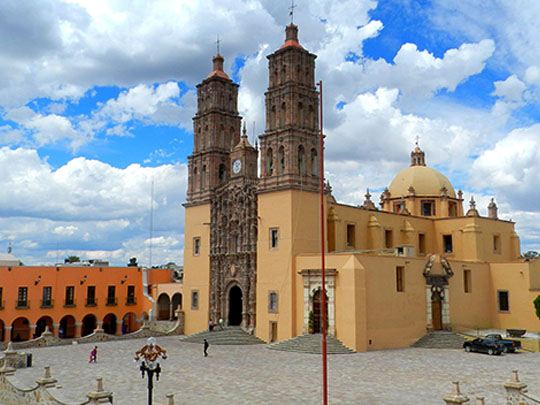
In the highlands of central Mexico, in the early hours of 16 September 1810, the priest Miguel Hidalgo rang the bell of his church in Dolores, the town now named Dolores Hidalgo, to call his parishioners to revolt, and twelve days later his army stormed the Alhóndiga granary in Guanajuato, opening Mexico’s War of Independence.
Guanajuato, which UNESCO calls the world’s leading silver centre of the 18th century, has streets running underground through old river tunnels, the Teatro Juárez, the house where Diego Rivera was born in 1886, and La Valenciana mine, while Dolores Hidalgo keeps Hidalgo’s parish church and the sombrero-shaped tomb of the singer José Alfredo Jiménez.
Nobody recorded what Hidalgo actually shouted in Dolores — not “¡Viva México!”, since there was no Mexico yet — and after he was shot in 1811 his head and three others hung in iron cages at the corners of the Alhóndiga until 1821, while El Pípila, the miner said to have burned its door, is tradition rather than record.
17 – Puebla
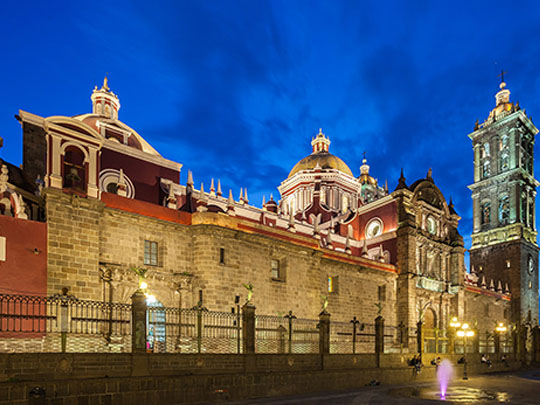
In a high valley south-east of Mexico City, Puebla de los Ángeles was founded in 1531 as a new Spanish town, and on 5 May 1862 General Ignacio Zaragoza beat a French army here, though the French took Puebla after a two-month siege the following year.
Puebla’s UNESCO-listed centre has the cathedral, consecrated in 1649 with towers of about 70 metres, the gold-leaf Capilla del Rosario of 1690 and the workshops of Talavera pottery, on UNESCO’s intangible heritage list since 2019, and at nearby Cholula a church of 1594 sits on top of the largest pyramid in the world by volume.
Cinco de Mayo is not Mexico’s Independence Day and is bigger in the US than in Puebla, the stories that nuns invented mole poblano and that chiles en nogada were created for Iturbide in 1821 don’t stand up, and Puebla’s Volkswagen plant built the last original Beetle on 30 July 2003.
18 – Querétaro
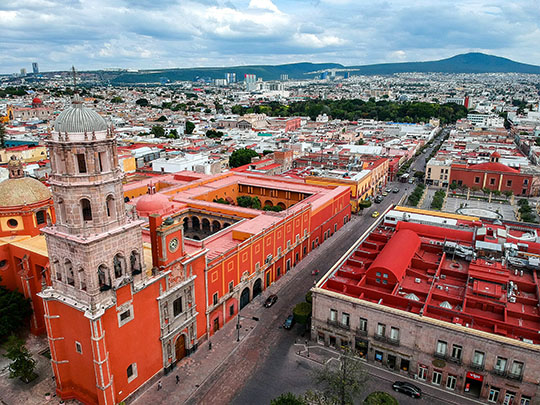

In the Bajío of central Mexico, Querétaro is traditionally said to have been founded in 1531 after St James appeared in the sky during a battle — a miracle chroniclers added two centuries later — and in 1810 Josefa Ortiz de Domínguez, “La Corregidora”, got a warning out from here to Hidalgo’s fellow plotters that they’d been discovered.
Querétaro’s UNESCO-listed centre pairs a Spanish grid with the winding streets of its Indigenous barrios, its aqueduct of 74 arches, finished in the 1730s, still strides into town, and in the Sierra Gorda to the north stand five Franciscan missions associated with Junípero Serra, a UNESCO site since 2003.
Querétaro has hosted three turning points: Mexico’s Congress ratified the 1848 treaty ceding about half its territory to the US here, Emperor Maximilian was tried in the Teatro de la República and shot on the Cerro de las Campanas on 19 June 1867, and the constitution still in force was proclaimed in the same theatre on 5 February 1917.
19 – The Monarch Butterfly Reserve
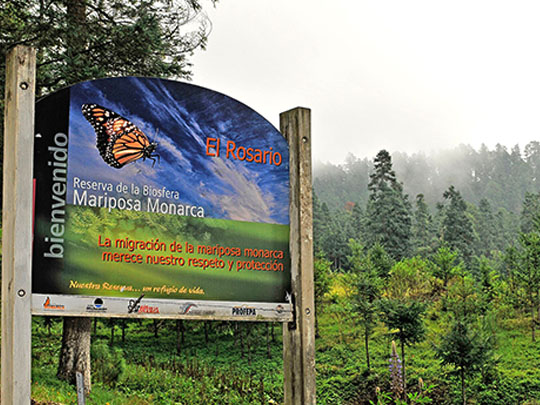
In fir-forested mountains about 100 km north-west of Mexico City, straddling Michoacán and the State of México, the Monarch Butterfly Biosphere Reserve shelters the monarchs that fly more than 4,000 km from Canada and the US to spend the winter here, and has been a UNESCO site since 2008.
From November to March the Monarch Butterfly Reserve’s sanctuaries, among them El Rosario, Sierra Chincua and Cerro Pelón, open to visitors who climb on foot or horseback to see trees bent under clustered butterflies, which arrive around the Day of the Dead and are said in local tradition to be returning souls.
Scientists only “found” the roosts in January 1975, when Catalina Aguado and Ken Brugger reached Cerro Pelón for the Canadian researcher Fred Urquhart, though local people had always known, and in winter 2025–26 the colonies covered 2.93 hectares, up on the year but far below the roughly 18 hectares of 1996–97.
20 – Copper Canyon
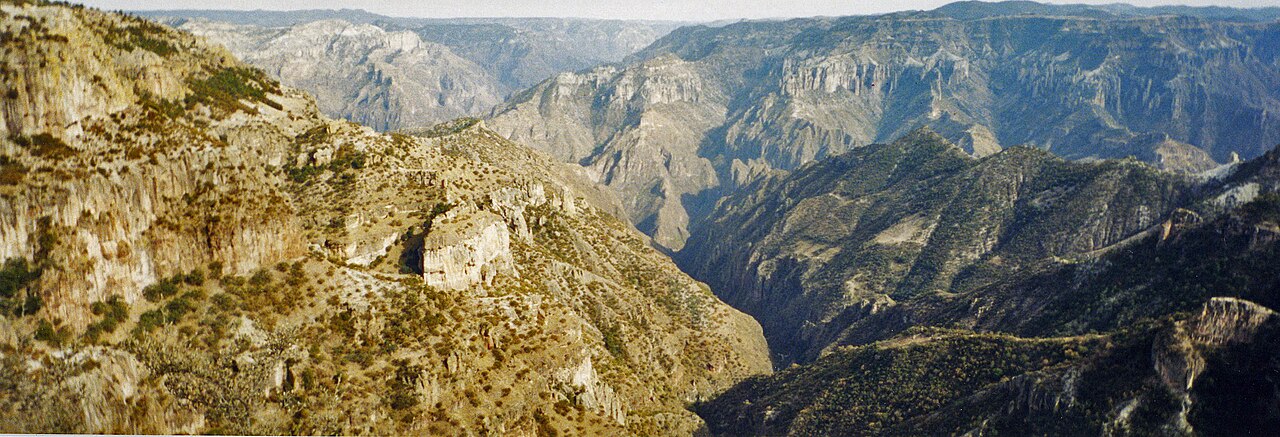
In the Sierra Madre Occidental of Chihuahua, Copper Canyon is a system of six canyons cut by rivers draining to the Río Fuerte, larger overall than the Grand Canyon, and home to the Rarámuri, or Tarahumara, famous for running great distances.
The El Chepe railway, opened in 1961 after work begun in the 1890s, crosses Copper Canyon country through some 86 tunnels and 37 bridges, stopping at Divisadero, where an adventure park has a cable car and a 2.5 km zip line, one of the longest anywhere, and a road drops to the old silver town of Batopilas.
Copper Canyon is named for green walls once mistaken, the story goes, for copper ore, the Rarámuri won worldwide fame through Christopher McDougall’s Born to Run (2009), and Batopilas’s silver drew Alexander Shepherd, a former governor of Washington DC, who ran its mines from 1880 until his death there in 1902.