
Sebastien Mirouze Paulirou / CC-BY-SA-3.0 / GFDL

Capital: St. Pierre
Population: 5,800+
Language: French
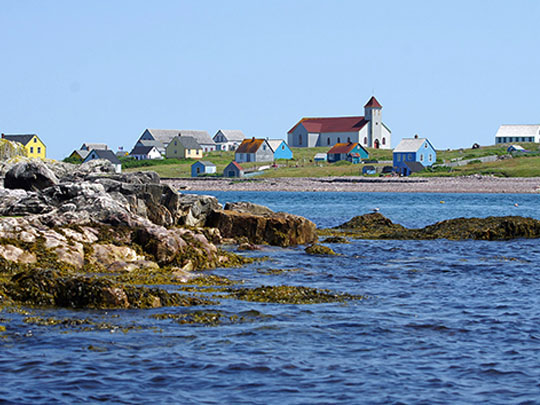
1 – Île aux Marins (also above)
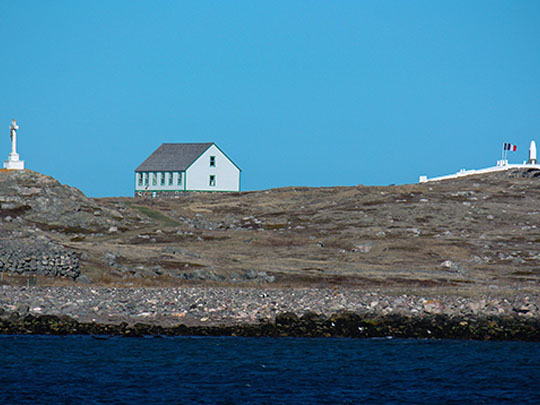
Just off Saint-Pierre harbour, Île aux Marins — Île aux Chiens until 1931 — was a fishing village of roughly 700 people at its peak in the 1890s, and its last year-round residents left in the 1960s.
A short boat ride from Saint-Pierre, Île aux Marins keeps its church of Notre-Dame-des-Marins, completed in 1874, its wooden houses, now mostly summer homes, and on the north shore the rusting remains of the German cargo ship Transpacific, which ran aground in fog on 18 May 1971.
On Île aux Marins on the night of 30–31 December 1888, Joseph Néel and Louis Ollivier killed a fisherman, and Néel’s execution in Saint-Pierre on 24 August 1889 needed a guillotine shipped in from Martinique — the story behind Patrice Leconte’s 2000 film La Veuve de Saint-Pierre, with Juliette Binoche, which moved it back to 1849.
2 – Saint-Pierre
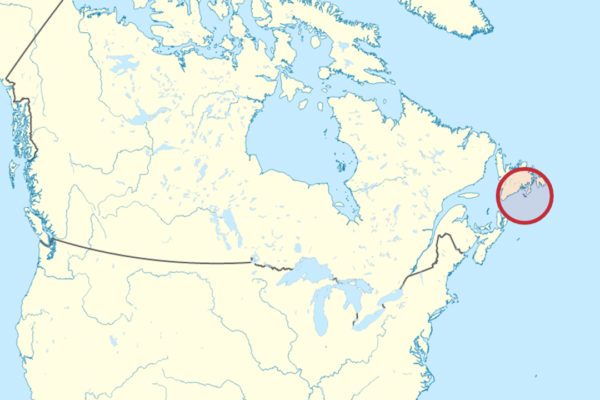
About 20 km off Newfoundland’s Burin Peninsula, Saint-Pierre is the capital of France’s last foothold in North America, a fishing base fought over for a century, whose people the British deported in 1778 and again in 1794, and which has been continuously French only since 1816.
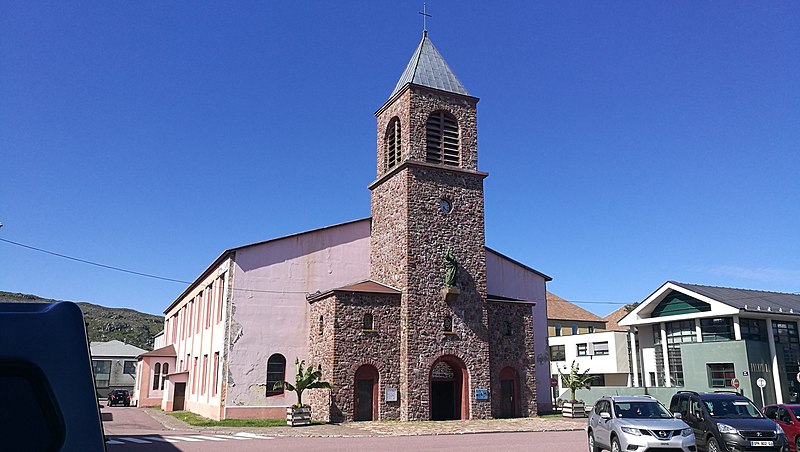
Saint-Pierre’s harbour is lined with brightly painted wooden houses, its church, rebuilt in 1905–07 after the 1902 fire and given a stone bell tower in 1975, has windows presented by Charles de Gaulle, and the Basque pelota court is a reminder of where many of the settlers came from.
During US Prohibition Saint-Pierre’s warehouses supplied the rum-runners with millions of litres of whisky — though the local legend that Al Capone came and left his hat at the Hôtel Robert has no evidence behind it — and before 1784, while Catholicism was restricted in Newfoundland, Irish families from Placentia Bay sailed over to Saint-Pierre to be married and baptised.
3 – Miquelon-Langlade
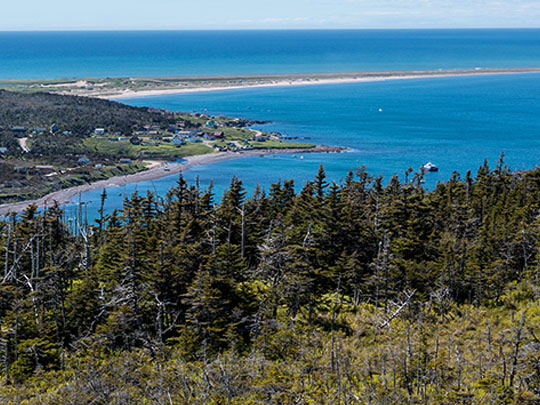
North-west of Saint-Pierre, Miquelon and Langlade are two islands joined by La Dune, a sand isthmus about 12 km long that closed in the late 18th century, and from 1763 Acadians uprooted from the Maritimes settled at Miquelon, whose 600 or so people are still mainly of Acadian and Basque descent.
Miquelon-Langlade’s only village sits at the northern end of Miquelon, harbour seals breed and grey seals visit in the Grand Barachois lagoon, horses roam the island in summer, and Langlade to the south is a place of summer cabins that empties in winter.
The waters off Miquelon-Langlade are nicknamed the “Mouth of Hell” for their hundreds of wrecks, but the ships didn’t build the isthmus, as is sometimes said — sand did that over some 3,000 years — and the horses aren’t wild, but privately owned and mostly stabled through the winter.