
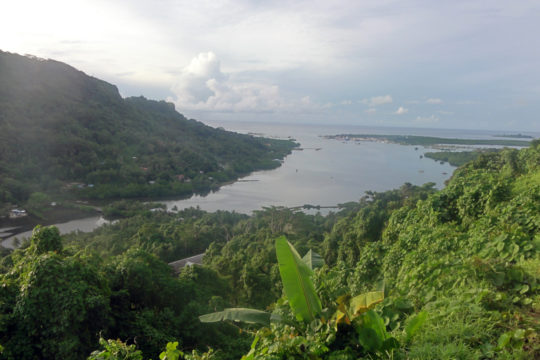
Department of Foreign Aff / Wikimedia Commons / CC-BY-SA-3.0 / GFDL
Capital: Palikir
Population: 75,000+
Language: English/ Chuukese/ Pohnpeian/ Kosraean/ Yapes
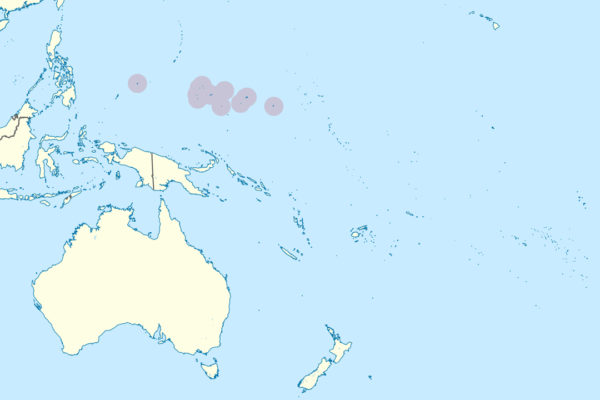
1 – Yap
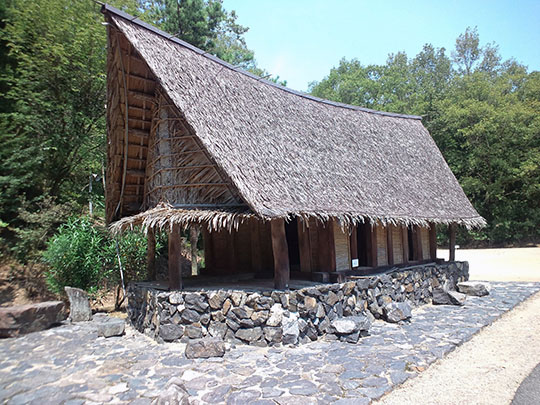
The westernmost state is a knot of four islands joined by bridges and mangrove channels, and it is home to the world’s most improbable currency: rai, limestone discs up to four metres across, quarried not on Yap at all but in Palau more than 400 km away and floated home on rafts towed behind outrigger canoes.
The discs stand in stone money banks along village paths and outside meeting houses, alongside thatched men’s houses in villages like Bechiyal; out in the harbour is O’Keefe’s Island, named for David Dean O’Keefe, an Irishman shipwrecked here in 1871 who made a fortune shipping rai from Palau and was played by Burt Lancaster in a 1954 Hollywood film.
A stone’s worth never depended on where it sat, only on its size, its craftsmanship and the story of how it was won — so when one huge rai went overboard on the voyage home and sank, everyone agreed it was still down there, and it carried on being owned, traded and inherited by people who had never laid eyes on it.
2 – Chuuk
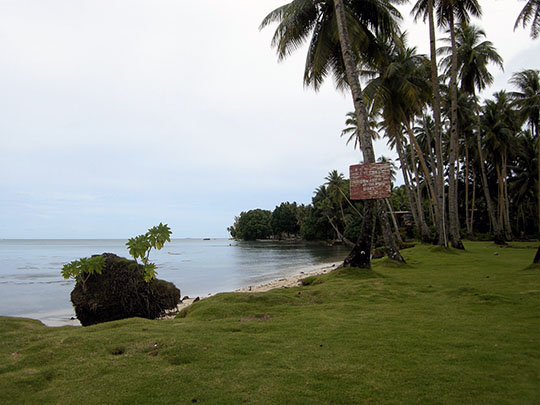
A ring of high volcanic islands inside a barrier reef some sixty kilometres across, Chuuk was taken from Germany by Japan in 1914 and built up between the wars into the Imperial Navy’s main forward base in the Pacific — the anchorage that supported operations against Guam, Wake and the Solomons, and which planners called the Gibraltar of the Pacific.
On 17 and 18 February 1944 American carrier aircraft caught the base in a two-day raid, sinking more than fifty ships and destroying over 250 aircraft, and the wrecks still lie on the lagoon floor with their cargo aboard — trucks, aircraft, bottles, tanks — in what is generally reckoned the finest wreck-diving site in the world.
A Chuukese dockworker named Kimiuo Aisek watched the raid from the shore at seventeen and remembered where the ships went down; nearly thirty years later he opened the lagoon’s first dive operation, guided the world to the wrecks and campaigned to have them protected — they are war graves now, and some still hold the dead.
3 – Nan Madol, Pohnpei
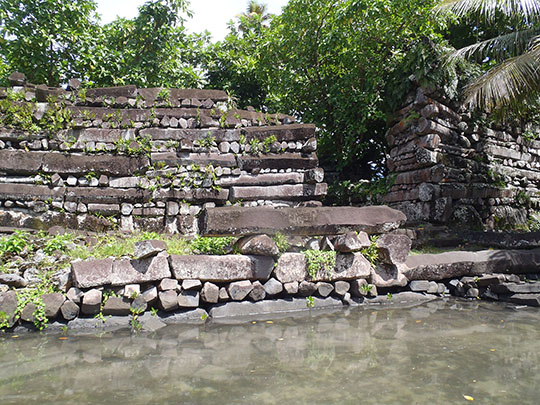
Out on the reef flats off Pohnpei’s southeast coast stands Nan Madol, a city of around a hundred artificial islets separated by tidal canals and built of stacked basalt columns and coral rubble from about 1180 onwards — the seat of the Saudeleur dynasty, who ruled Pohnpei until roughly 1628, and the only ancient city known to have been built on top of a coral reef.
You reach it by boat, or on foot at low tide, and the centrepiece is Nandauwas, the royal mortuary enclosure, whose walls of hexagonal basalt still stand around seven metres high; it was made a World Heritage site in 2016 and placed on the danger list at the same time, as mangrove roots are prising the stonework apart.
The stone weighs something in the order of 750,000 tonnes and was quarried on the far side of the island, which works out at roughly 1,900 tonnes a year for four centuries, moved without metal, pulleys or draught animals — nobody has ever worked out how, which is why Pohnpeian tradition puts it down to two sorcerer brothers and a flying dragon.
4 – Lelu, Kosrae
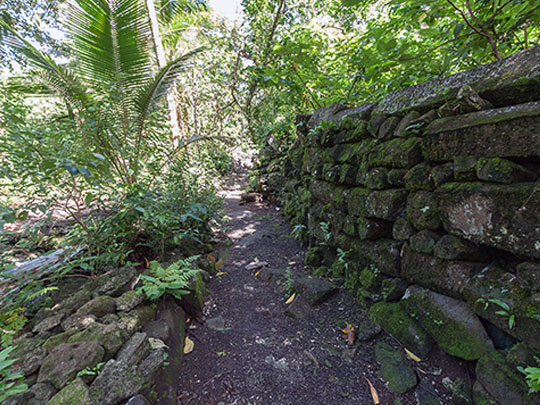
On a small island off the northeast coast of Kosrae, Lelu was the walled capital of the Kosraean kings, built up from around 1250 with canals, more than a hundred compounds and a seawall over a kilometre long — the twin city to Nan Madol, and by island tradition the place Isokelekel came from, the warrior who brought the Saudeleur down.
The ruins sit right behind the modern village and can be walked into: the dwelling compounds of the ruler and high chiefs behind basalt walls up to six metres high, stacked header-and-stretcher like a log cabin, along with sacred compounds and two enclosures holding the royal tombs.
Those tombs, called saru, were built not of basalt but of coral cut live from the reef — which has let scientists date them by the uranium in the coral to roughly 700 years old, older than anyone had expected, and good evidence that Lelu was its own achievement rather than a copy of its more famous neighbour.