
Wikimedia Commons / CC-BY-SA-3.0 / GFDL
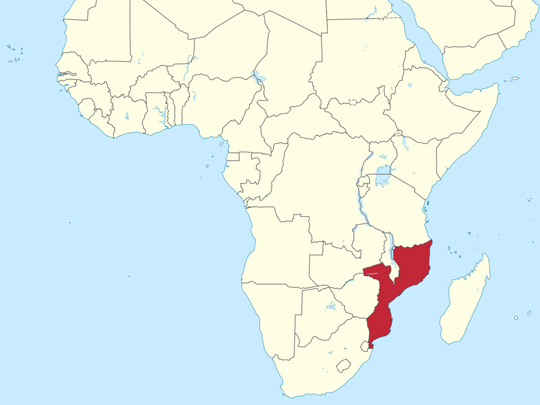
Capital: Maputo
Population: 36 million+
Language: Portuguese (also Emakhuwa, Xichangana, Cisena, Elomwe, Echuwabo)
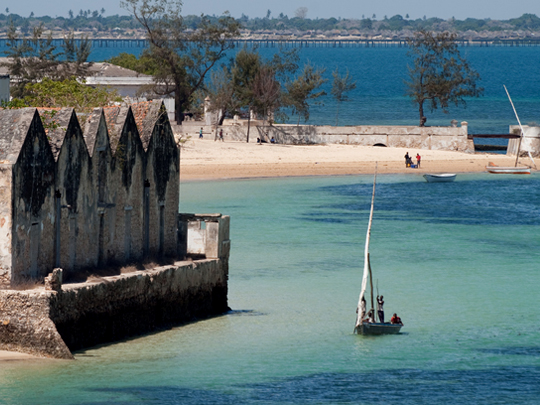
1 – Mozambique Island (above)
A tiny crescent of coral in the Indian Ocean off the north coast, Mozambique Island is one of Africa’s most historic places — an Arab-Swahili trading port for a thousand years before Vasco da Gama landed in 1498, and then, for nearly four centuries, the capital of Portuguese East Africa.
Linked to the mainland by a long bridge, the island is a UNESCO World Heritage Site of layered beauty: the coral-stone lanes, churches and palaces of “Stone Town” — guarded by the mighty Fort of São Sebastião, the oldest European fortress in sub-Saharan Africa — give way to the palm-thatched reed houses of “Macuti Town,” where most islanders live.
The whole country takes its name from this one little island — and the island, in turn, is named after a man: Mussa Bin Bique, an Arab trader and sheikh who held sway here when the first Portuguese ships arrived, and whose name the newcomers turned into “Moçambique.”
2 – Bazaruto Island
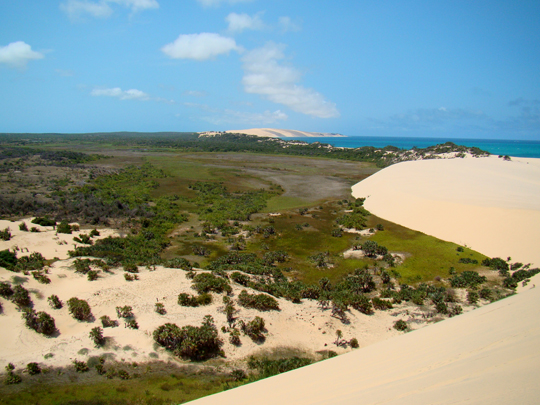
Five islands lie scattered in the warm Indian Ocean off southern Mozambique, protected since 1971 as the country’s oldest marine national park — and they are not really islands by origin at all, but the surviving high ground of a great sand peninsula that the rising sea cut off from the mainland.
Above the waterline they rise into dunes up to 90m high, with freshwater lakes and evergreen forest hidden behind them; below it lie some of East Africa’s finest coral reefs, home to more than 2,000 kinds of fish, with five species of sea turtle coming ashore to nest and dhows working the channels under sail.
The seagrass beds here hold the last viable population of dugongs in the whole western Indian Ocean — slow, whiskered, seagrass-grazing relatives of the manatee, and very probably the animal behind the mermaid: sailors squinting at a grey shape nursing its calf at the surface reported women in the water for centuries.
3 – Lake Malawi
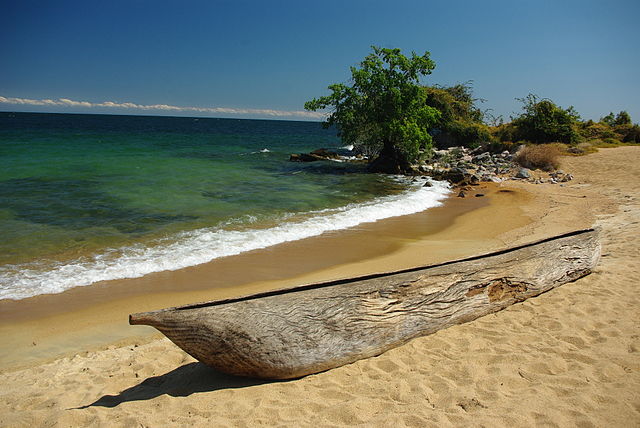
Along Mozambique’s remote northwestern edge lies the country’s share of one of Africa’s Great Lakes — known here as Lake Niassa, and in Malawi as Lake Malawi — a vast, deep freshwater sea of the Rift Valley that the explorer David Livingstone christened the “Lake of Stars.”
The Mozambican shore is the wild, untouched one: a string of sleepy fishing villages, empty golden beaches and clear warm water backed by forested hills, far from any crowds; its waters teem with jewel-coloured cichlid fish, and in 2011 it became Mozambique’s first protected freshwater lake.
Now and then the lake performs a strange trick — vast swarms of tiny lake flies hatch and rise from the surface in towering columns that look for all the world like smoke or spinning tornadoes; harmless and rich in protein, they’re gathered up by the handful and pressed into little “fly cakes” to be fried and eaten.
4 – Tofo Beach
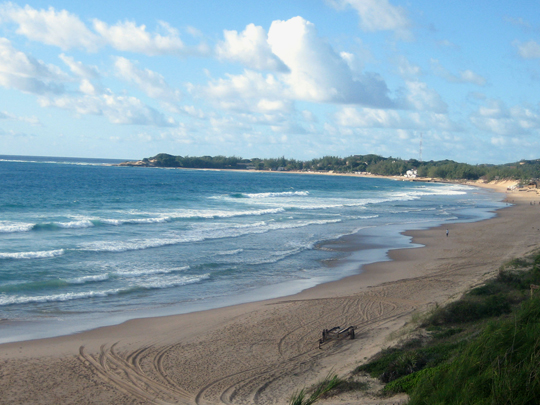
On the golden Indian Ocean coast of southern Mozambique, Praia do Tofo is a laid-back, palm-fringed beach village of sandy streets and seafood shacks — a backpackers’ and surfers’ favourite that has quietly become one of the great ocean-wildlife capitals of the world.
The warm, plankton-rich waters just offshore draw an astonishing cast of giants: divers and snorkellers head out on “ocean safaris” to glide beside manta rays with 7m wingspans, and between June and October humpback whales pass close by on their migration, breaching within sight of the sand.
Above all, Tofo is famed as a “whale shark capital” — one of the very few places on Earth where you can reliably swim alongside whale sharks, the largest fish in the sea, up to 14m long, cruising gently through the shallows in almost any month of the year.
5 – Gorongosa National Park
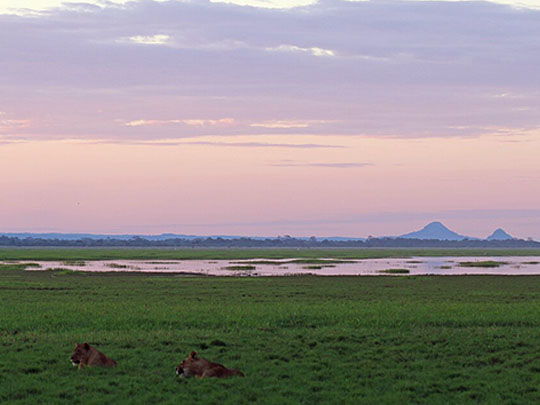
At the southern end of the Great Rift Valley, where a floodplain spreads out beneath Mount Gorongosa, lies a park protected since 1920 and declared national in 1960 — in its day among the finest game country in Africa, until the civil war of 1977 to 1992 turned it into a battlefield, soldiers ate the herbivores and ivory paid for weapons, leaving perhaps one large animal in ten alive.
It has been rebuilt since 2004 under a long partnership between the government and outside funding: waterbuck and buffalo now run to tens of thousands across the palm-dotted floodplain, lions breed in the fever-tree forests, wild dogs were returned in 2018, and a research laboratory works on the mountain’s rainforest above.
The war left a mark in the elephants themselves. Poaching was so heavy that tusklessness, normally rare, became common — around half the females who lived through it have no tusks at all, and they are passing the trait to their daughters: one of the clearest cases of human-driven evolution ever recorded.
6 – Maputo
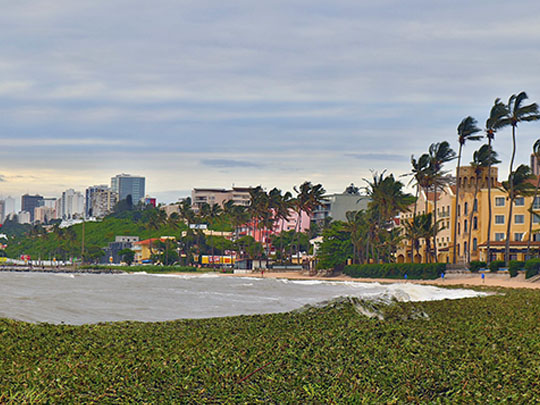
Mozambique’s capital stands on a great bay in the far south, built by the Portuguese as Lourenço Marques to serve as the port for the South African goldfields, and renamed at independence in 1975 — after which the new government named its avenues for the revolutionaries of the day, so that Mao Tse Tung crosses Karl Marx and Ho Chi Minh runs down to the sea.
The railway station of 1910 is the showpiece, a confection in mint green and white beneath a dome usually credited to Gustave Eiffel’s studio; nearby stands the Casa de Ferro, a prefabricated iron house shipped out in the 1890s and found to be uninhabitable in the heat, along with the old fortress, the fish market and streets of jacarandas.
When the war ended, a church-led scheme traded ploughs, bicycles and sewing machines for surrendered guns — and artists here turned the weapons into sculpture, among them a throne assembled from the parts of AK-47s that now sits in the British Museum.