
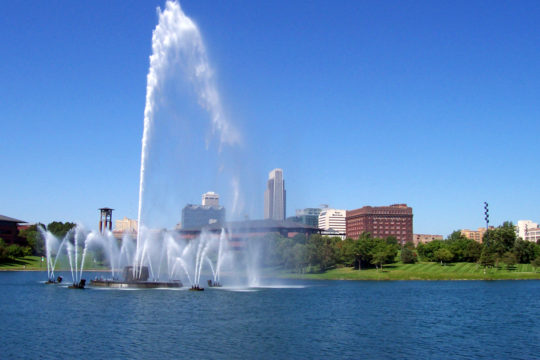
Wikimedia Commons / CC-BY-SA-3.0 / GFDL
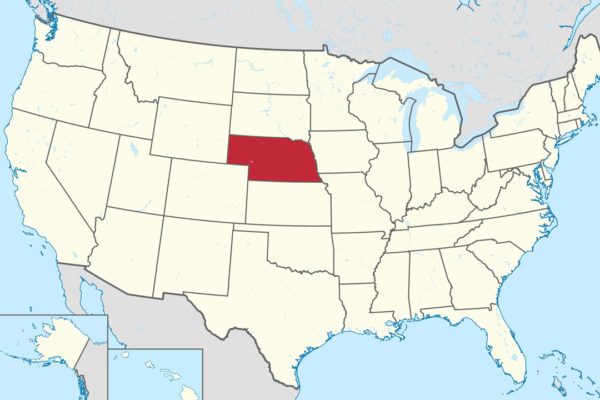
Capital: Lincoln
Population: 2 million+
Language: English
1 – Omaha (also above)
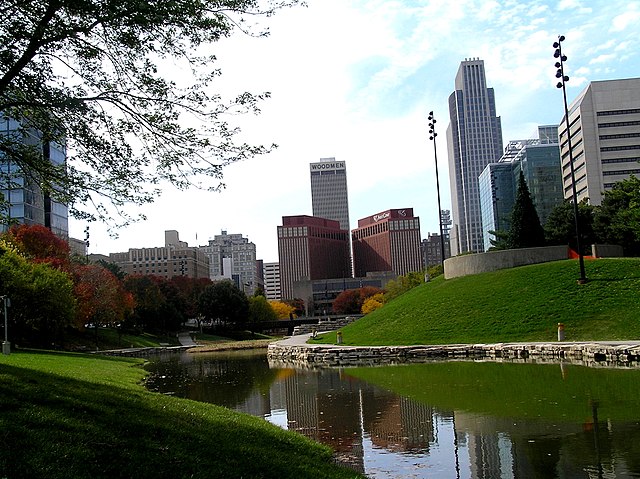
Omaha sits on the Missouri River across from Council Bluffs, Iowa, and was founded in 1854, months after the Omaha people ceded much of northeast Nebraska by treaty, and it’s where Union Pacific broke ground on the first transcontinental railroad on 2 December 1863.
Omaha’s highlights include the Durham Museum, inside the 1931 Art Deco Union Station, the Henry Doorly Zoo’s Desert Dome, billed as the world’s largest indoor desert, and the College World Series, played in Omaha since 1950.
Omaha is where Father Edward Flanagan, from Leabeg near Ballymoe, County Roscommon, opened his home for boys in 1917 before moving it to a farm west of the city that became Boys Town, and while Spencer Tracy won an Oscar playing him in 1938, the famous slogan “He ain’t heavy, he’s my brother” was in print years before Boys Town adopted it.
2 – Chimney Rock

Chimney Rock rises about 325 feet from base to tip above the North Platte valley near Bayard in western Nebraska, and it was one of the most-mentioned landmarks in the diaries of emigrants on the Oregon, California and Mormon trails.
Chimney Rock’s slender spire, visible for miles across the plains, was made a National Historic Site in 1956 and is looked after by History Nebraska, the state historical society.
Chimney Rock’s early Lakota name translates as “elk penis”, which prim pioneer travellers softened to “Elk Peak”, and the rock went on to feature on Nebraska’s state quarter in 2006.
3 – Arbor Lodge
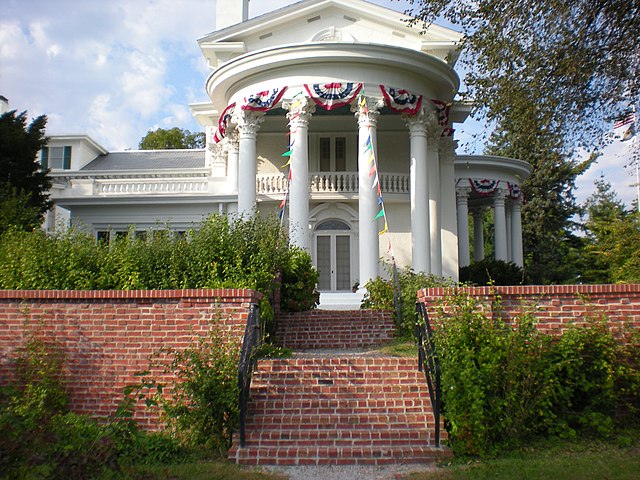
Arbor Lodge in Nebraska City was the home of J. Sterling Morton, a newspaper editor who proposed Arbor Day, first held on 10 April 1872, when more than a million trees were planted across Nebraska.
Arbor Lodge grew from a four-room house into a 52-room mansion, set in an arboretum with a terraced Italian garden, and Morton’s son Joy gave the estate to the state in 1923.
Arbor Lodge’s Mortons went far: J. Sterling became US Secretary of Agriculture under Grover Cleveland, and his son Joy founded Morton Salt, whose umbrella girl and “When it rains, it pours” slogan date from 1914.
4 – Kearney
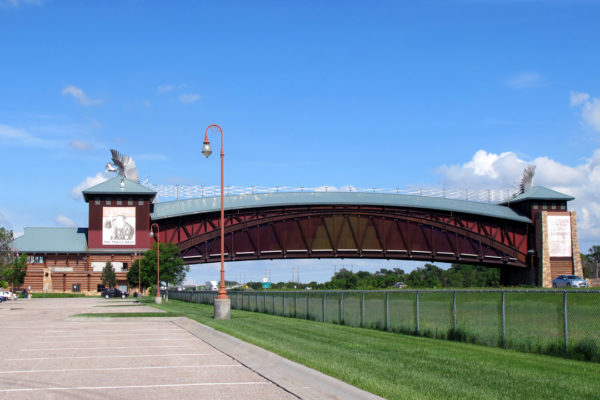
Kearney sits on the Platte River in central Nebraska and grew up near Fort Kearny, an army post founded in 1848 to protect travellers on the Oregon Trail, with the town itself laid out in 1871.
Kearney’s sights include the Great Platte River Road Archway, a museum built as a bridge right over Interstate 80 that opened in 2000, Fort Kearny State Historical Park and the Museum of Nebraska Art, and every spring roughly 80% of the world’s sandhill cranes stop on the Platte nearby.
Kearney is named after Fort Kearny, which honoured General Stephen Watts Kearny, but a post office spelling mistake gave the town its extra “e”, and nobody ever bothered to fix it.
5 – Scotts Bluff National Monument
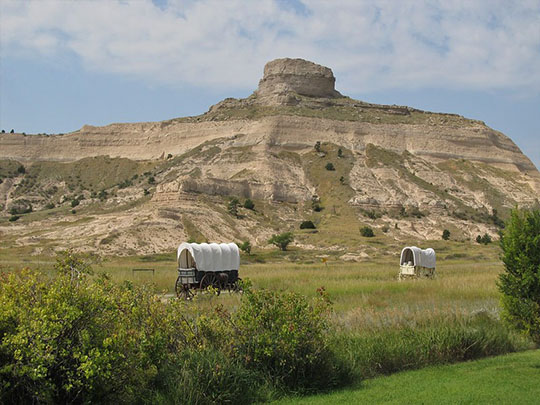
Scotts Bluff National Monument rises about 800 feet above the plain beside the North Platte River, just west of Gering in western Nebraska, a landmark known to Native people as Me-a-pa-te, “the hill that is hard to go around”, and it was made a national monument in 1919.
Scotts Bluff National Monument’s Summit Road, built in the 1930s by Depression-era work crews, climbs 1.6 miles through three tunnels, said to be the only road tunnels in Nebraska, while the Oregon Trail Museum shows paintings and photographs by William Henry Jackson, who crossed the plains with a wagon train in 1866.
Scotts Bluff takes its name from fur trapper Hiram Scott, who died near the bluff in 1828, but the legend of how he died can’t make up its mind: abandoned by his companions, left at his own request or killed, with his bones found anywhere from 60 to 100 miles from where he was last seen alive.
6 – Lewis & Clark Landing
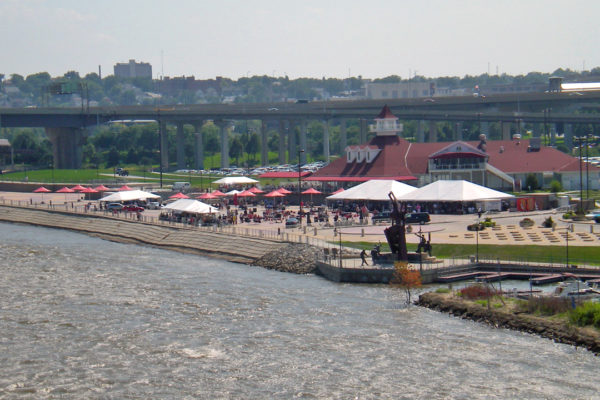
Lewis & Clark Landing is a riverfront park in downtown Omaha, opened in 2003 on the site of a lead refinery that operated for more than 125 years, and it’s named for the Corps of Discovery, which camped in present-day Omaha on 27 July 1804.
Lewis & Clark Landing is the starting point for the Bob Kerrey Pedestrian Bridge, a 3,000-foot cable-stayed span to Council Bluffs with the state line painted on the deck, so you can stand in Nebraska and Iowa at once, and the National Park Service’s Lewis and Clark National Historic Trail headquarters sits right beside it.
Council Bluffs, just across the bridge from Lewis & Clark Landing, takes its name from the expedition’s first council with the Oto and Missouria on 3 August 1804, but that meeting was actually held on the Nebraska side, about 20 miles north near Fort Calhoun.
7 – Lincoln
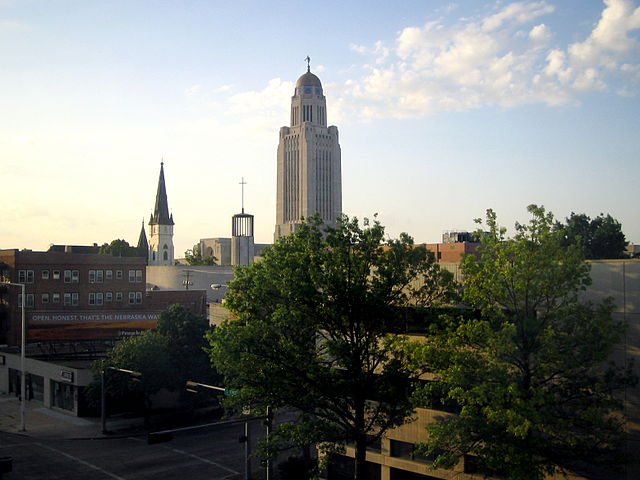
Lincoln took the state capital from Omaha in 1867, when the tiny village of Lancaster was chosen and renamed Lincoln, the name added by an Omaha senator who hoped it would push lawmakers sympathetic to the Confederacy to vote the move down, a trick that backfired.
Lincoln’s skyline is ruled by Bertram Goodhue’s State Capitol, built between 1922 and 1932, whose 400-foot tower, the second-tallest of any US state capitol after Louisiana’s, is crowned by a statue called The Sower, while the city is also home to the University of Nebraska, founded in 1869, and William Jennings Bryan’s home, Fairview.
Lincoln is the seat of the only single-chamber state legislature in the US, a nonpartisan body that first met in 1937 after a campaign led by Senator George Norris, who cited Queensland, Australia, as an example.
8 – Ashfall Fossil Beds
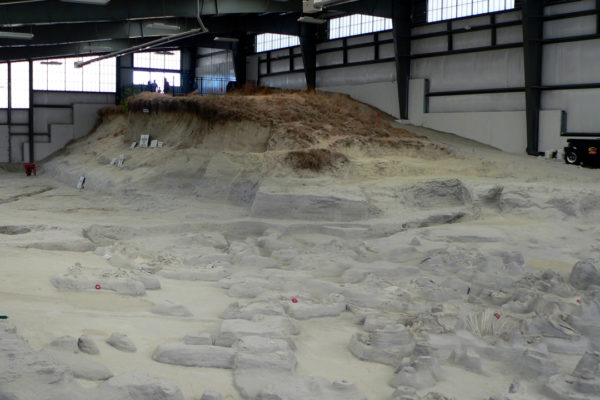
Ashfall Fossil Beds lies near Royal in northeast Nebraska, where about 12 million years ago a massive eruption from the Yellowstone hotspot, then under southwest Idaho, buried the area in volcanic ash, and the site was found in 1971 when palaeontologist Mike Voorhies spotted a young rhino’s skull poking out of a gully on a farm.
Ashfall Fossil Beds’ Rhino Barn shelters a dig floor of complete, articulated skeletons of barrel-bodied rhinos, three-toed horses, camels and birds, including a mother rhino with her unborn calf, and the site became a National Natural Landmark in 2006.
The animals at Ashfall Fossil Beds weren’t killed in a sudden blast but died slowly over weeks from lung failure after breathing the ash, and their bones still show the tell-tale growths of a condition called Marie’s disease.
9 – Malcolm X House Site
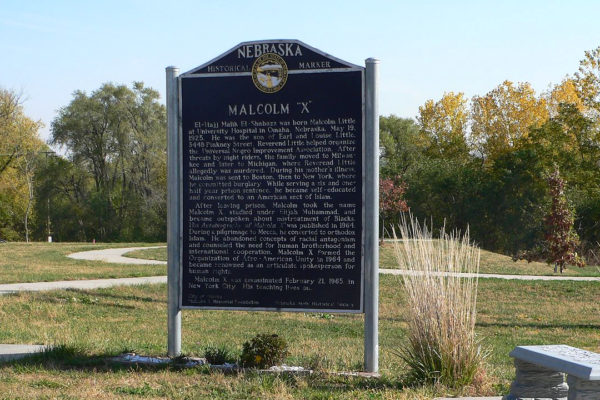
Malcolm X House Site, at 3448 Pinkney Street in North Omaha, marks where Malcolm Little was born on 19 May 1925 to Earl Little, a Baptist preacher who organised for Marcus Garvey’s movement, and his Grenada-born wife Louise, before the family left Omaha in 1926 after threats.
Malcolm X House Site has no house to see, since later owners unaware of its history tore it down in 1965, but it’s listed on the National Register of Historic Places, and the Malcolm X Memorial Foundation was set up there in 1971 by Rowena Moore, whose father had owned the land.
Malcolm X recalled in his Autobiography that armed night riders smashed the family’s windows in Omaha while his father was away and his mother was pregnant with him, a story that rests on family memory, and in 2024 he became the first Black person inducted into the Nebraska Hall of Fame, with a bronze bust in the State Capitol.
10 – Gerald Ford Birthsite
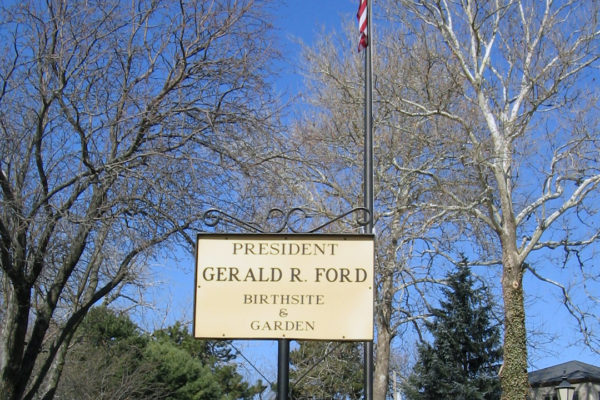
Gerald Ford Birthsite, at 3202 Woolworth Avenue in Omaha, is where the 38th president was born Leslie Lynch King Jr. on 14 July 1913, in his grandparents’ mansion, before his mother fled her violent husband when the baby was just 16 days old and later married Gerald Ford, whose name her son took.
The Gerald Ford Birthsite and Gardens has a colonnade echoing the White House, a kiosk with narration recorded by Ford himself and the Betty Ford Rose Garden, all built on the empty lot after the mansion burned in 1971 and was demolished, thanks to a local businessman who bought the land when Ford became president.
Gerald Ford, born at this Omaha birthsite, is the only US president never elected either president or vice president, and he first met his biological father as a teenager, when Leslie King Sr. turned up in 1930 at the Grand Rapids diner where Ford worked.
11 – O’Neill
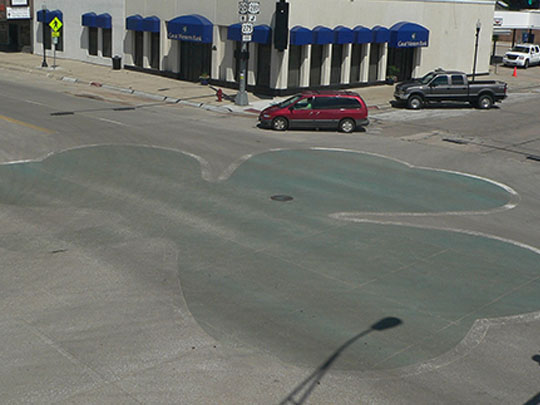
O’Neill, the county seat of Holt County in north-central Nebraska, was founded in 1874 by Irish settlers led by John O’Neill, born in 1834 in Clontibret, County Monaghan, and a Union officer in the Civil War, and in 1969 Governor Norbert Tiemann named it the “Irish Capital of Nebraska”.
O’Neill’s main crossroads, where US Highways 20 and 281 meet, is marked by a giant green shamrock, repainted every year for St Patrick’s Day and billed by the town as the world’s largest, and a bronze statue of General O’Neill stands outside the Holt County Courthouse.
Before he settled in Nebraska, John O’Neill led the Fenian invasion of Canada in 1866, capturing Fort Erie and beating Canadian volunteers at Ridgeway, the Fenians’ only success, though his later raids in 1870 and 1871 both ended with his arrest, and he died in Omaha in 1878.
12 – Fort Robinson
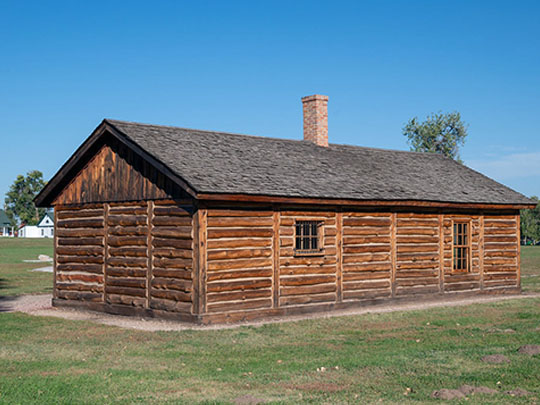
Fort Robinson, near Crawford in northwest Nebraska’s Pine Ridge country, began in 1874 as Camp Robinson beside the Red Cloud Agency, and it’s where Crazy Horse surrendered in May 1877 and was fatally stabbed with a bayonet on 5 September 1877 as soldiers tried to force him into the guardhouse.
Fort Robinson, a state park since the mid-1950s, was home to the Black troopers of the 9th and 10th Cavalry from 1885 to 1907, and in the Second World War it trained about 5,000 dogs for the army’s K-9 Corps, held German prisoners of war and ran what’s billed as the world’s largest army remount depot for horses and mules.
In the winter of 1878–79, 149 Northern Cheyenne under Dull Knife were held captive at Fort Robinson, and on 9 January 1879 they broke out into the snow, and by the time the last were caught about two weeks later around 60 Cheyenne and 11 soldiers were dead.
13 – Agate Fossil Beds
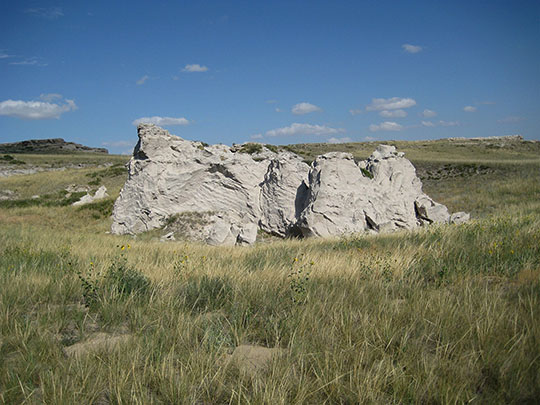
Agate Fossil Beds National Monument sits on the Niobrara River near Harrison in northwest Nebraska, where rancher James Cook found bone beds on his Agate Springs Ranch that teams from the Carnegie Museum and the University of Nebraska dug in the early 1900s, revealing animals from about 20 million years ago.
Agate Fossil Beds’ hills are packed with the bones of Menoceras, a pony-sized rhino that probably died in droves at a drying waterhole, alongside the clawed horse-relative Moropus and Daeodon, the “terrible pig”, while the visitor centre shows the James H. Cook Collection of gifts from Cook’s friend, the Oglala Lakota chief Red Cloud, including Red Cloud’s own shirt.
Agate Fossil Beds’ “devil’s corkscrews”, spiral fossils six to eight feet deep, baffled geologist Erwin Barbour, who in 1892 took them for giant freshwater sponges or plant roots, until beaver skeletons were found inside them in the early 1900s, proving they were the burrows of the extinct land beaver Palaeocastor.
14 – Homestead National Historical Park
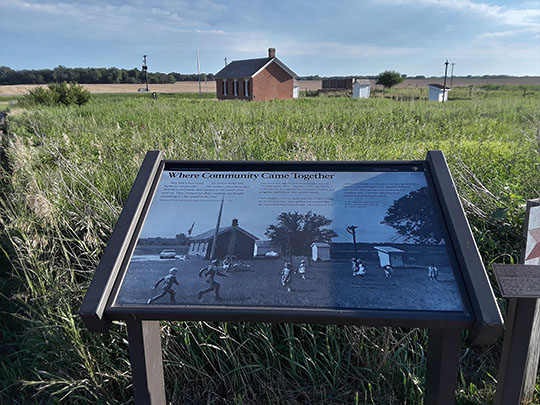
Homestead National Historical Park, just west of Beatrice in southeast Nebraska, sits on Daniel Freeman’s claim and tells the story of the Homestead Act, signed by Abraham Lincoln on 20 May 1862, which handed out around 270 million acres, roughly 10% of the US, through some 1.6 million successful claims.
Homestead National Historical Park’s Heritage Center is designed to suggest a plough breaking the sod, and the park also has the Freeman School, a one-room schoolhouse built in 1872 and used until 1967, and about 100 acres of tallgrass prairie restored from 1939, the oldest such restoration in the National Park Service.
Daniel Freeman is often called America’s first homesteader, but the story that he talked the land office clerk into opening just after midnight on 1 January 1863 has no evidence behind it, he later sued over Bible readings at the Freeman School and won at the Nebraska Supreme Court in 1902, while the last homestead patent wasn’t granted until 1988, in Alaska.