
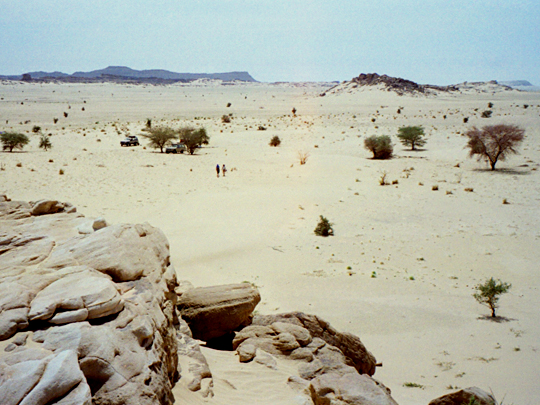
Wikimedia Commons / CC-BY-SA-3.0 / GFDL
Capital: Niamey
Population: 28 million+
Language: Hausa (Official), French, English & 9 other languages.
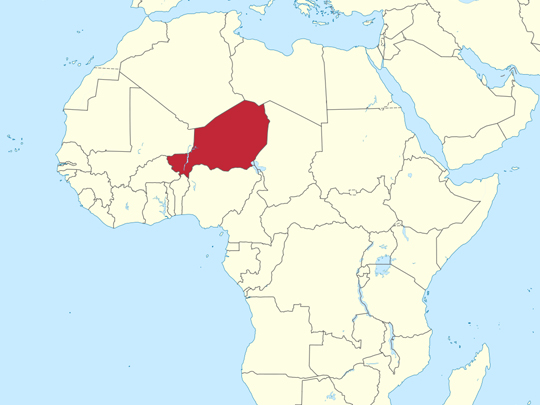
1 – Sahara (Ténéré) Desert (also above)
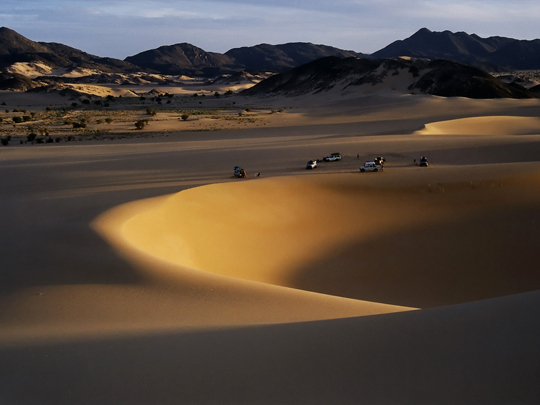
In the far northeast of Niger lies the Ténéré — a vast, blindingly empty sea of sand at the heart of the Sahara, so featureless and desolate that its name in the Tuareg tongue means, quite simply, “nothing,” or “emptiness.”
For centuries this furnace of dunes has been crossed by the azalai, the great Tuareg salt caravans — camels roped nose-to-tail plodding the ancient route between the oasis town of Agadez and the salt pans of Bilma; beneath the sand lie dinosaur fossils and the traces of a green, lake-filled Sahara that vanished long ago.
For hundreds of years a single acacia — the Tree of Ténéré — stood here utterly alone, the only tree for 400km in any direction and a sacred landmark for the caravans; so famous it was marked on maps of the whole Sahara, it survived everything the desert could throw at it, only to be knocked down in 1973 by a passing truck, reportedly driven by a drunk driver.
2 – Air Mountains
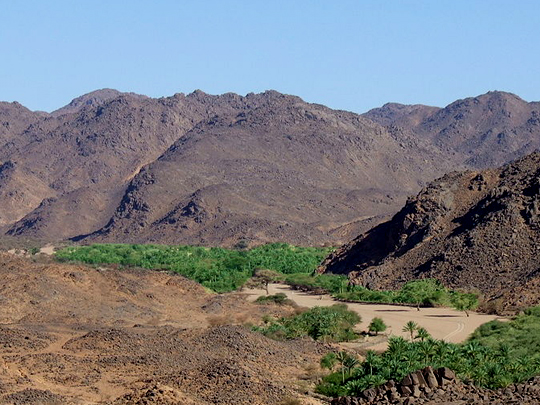
Rising abruptly from the Sahara in northern Niger, the Aïr is a vast triangular massif of granite and long-dead volcanoes — the heartland of the nomadic Tuareg — crowned by Mont Bagzane, at just over 2,000m the highest point in the country.
High enough to catch the seasonal rains, the Aïr is a surprising island of green in the desert: hidden among its arid peaks and lava flows lie palm oases like Timia, with orchards, gardens and even a seasonal waterfall fed by rock pools in the dry riverbeds, while the old caravan town of Agadez guards the southern gateway.
Carved into a rocky outcrop on the edge of the Aïr are the Dabous Giraffes — two life-sized giraffes, one over five metres tall, engraved into the stone some 8,000 years ago when the Sahara was still green: among the largest and finest works of prehistoric rock art found anywhere on Earth.
3 – The Grand Mosque of Niamey
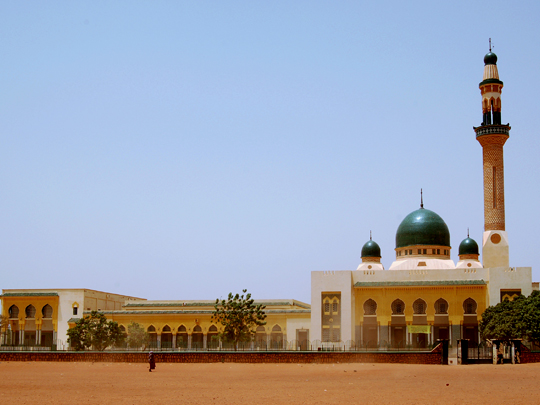
The largest mosque in Niger and the spiritual heart of its capital, the Grand Mosque of Niamey rises near the banks of the Niger River in a country that is almost entirely Muslim — a striking modern landmark of latticed arches crowned by a brilliant green dome.
Its tall minaret is one of the few high points in the low, sprawling city; visitors who don’t mind the effort can climb its 171 spiralling steps to a gallery at the top, rewarded with a sweeping 360° view over the rooftops of Niamey and the wide, brown river beyond.
The mosque came from an unlikely benefactor — it was built in the 1970s and 80s with money from Libya’s Muammar Gaddafi, part of his sweeping campaign to spread Libyan influence and Islam across the Sahel, and to this day locals still know it as the “Gaddafi Mosque.”
4 – Agadez
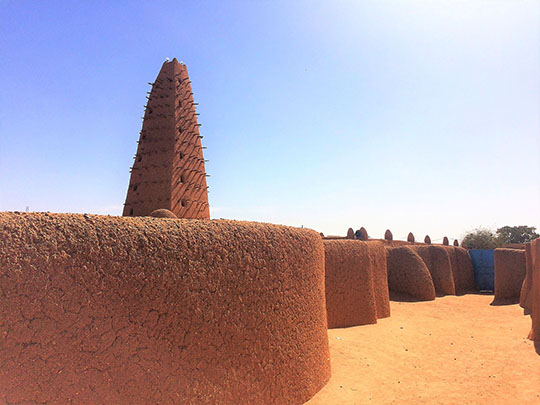

Where the Aïr massif runs out into the Sahara stands Agadez, “the gateway to the desert” — a town that grew in the 15th and 16th centuries around the Sultanate of Aïr, when Tuareg groups settled along the lines of their old encampments and left a street plan the place still follows, and which became the great crossroads of the trans-Saharan trade; UNESCO listed the historic centre in 2013.
Some 20,000 people still live in it, across eleven irregular quarters of earthen houses, with the Sultan’s palace at the heart of them and the sultanate itself still functioning; in the workshops around the market, silversmiths go on beating out the Agadez cross.
The mosque was raised in 1515 from banco, the local mud, and its minaret stands 27m high — the tallest mud-brick structure anywhere on Earth — bristling with projecting timbers that double as permanent scaffolding whenever the walls need re-rendering, with a narrow stair inside climbing to a view out over the rooftops to the sand.
5 – Zinder

Niger’s second city, close to the Nigerian border, began as a Hausa village called Zengou until Kanuri aristocrats arrived in 1736, built the walled quarter of Birni and made it the capital of the Sultanate of Damagaram — which grew wealthy on the caravan road running between the Sahara, Kano and Bornu, and shook off Bornu’s overlordship altogether in the 19th century.
Birni still holds the sultan’s clay palace of around 1850, its walls worked in bold relief patterns and still the family home, with the Great Mosque beside it; around them the old Hausa quarter keeps its vernacular architecture, and enormous granite boulders sit among the houses as though dropped there.
The French took the city in 1899 and made it the capital of their new territory in 1911 — then moved the capital in 1926 to Niamey, at the time a village on the river, largely because they feared a Hausa rising here; Niger has been run from that village ever since.
6 – The Kouré Giraffes
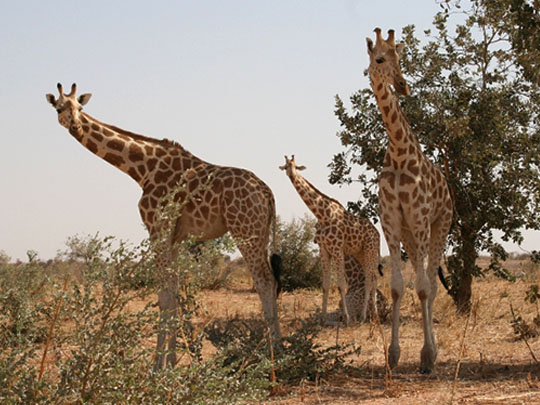

An hour southeast of Niamey, in a stretch of bush and farmland on the Tiger Plateau, live the last wild giraffes in West Africa — a pale, lightly marked subspecies that once ranged from Senegal to Lake Chad and was reduced by hunting and habitat loss to a few dozen animals by the mid-1990s.
They live outside any national park, entirely unfenced, browsing the tops of the trees among millet fields and villages; with no lions or hyenas left in the region they are remarkably unbothered, and visitors go out with a local guide and approach them on foot.
Their recovery is one of the quiet successes of the Sahel and was managed without a fence, a ranger force or a park: farmers who lose trees and crops to them have gone along with their presence, guides are drawn from the villages the giraffes walk through, and the population has climbed back into the hundreds.