
Wikimedia Commons / CC-BY-SA-3.0 / GFDL
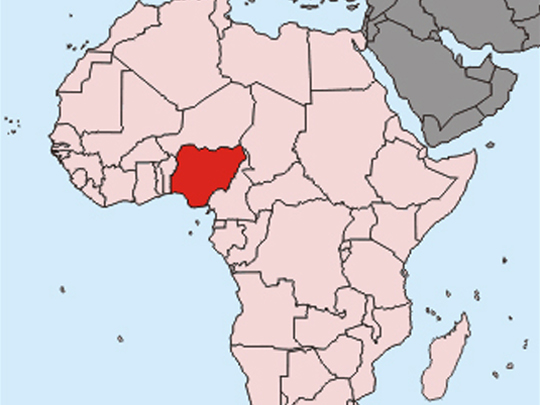
Capital: Abuja
Population: 230 million+
Language: English (with over 500 languages, such as Hausa, Yoruba and Igbo)
1 – Cross River National Park
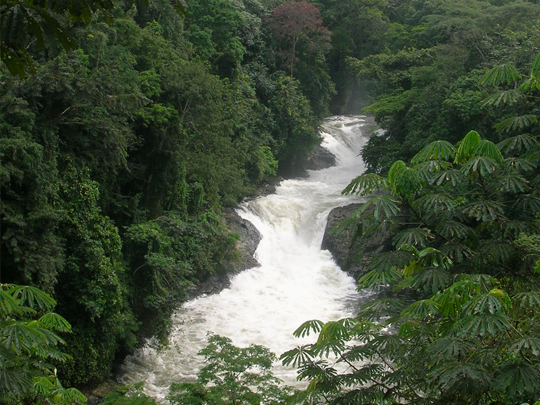
(Kwa Falls – above)
In the humid, mountainous southeast of Nigeria, Cross River National Park protects the country’s largest surviving rainforest — one of the oldest in all of Africa, evolved over some 60 million years — a UN-recognised biodiversity hotspot spilling across the border into Cameroon.
Its dense, dripping canopy shelters an astonishing cast — forest elephants, chimpanzees, the rare drill, and one of the richest concentrations of primates on the continent — while the Kwa Falls tumble through a steep, jungle-choked gorge into a deep plunge pool.
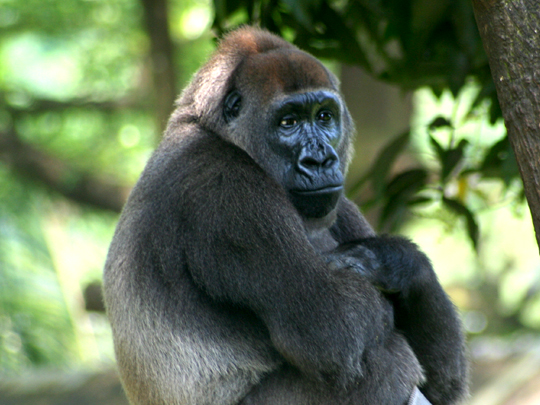
Hidden in these forests lives the world’s rarest gorilla — the Cross River gorilla, of which perhaps only a couple of hundred survive on Earth, all of them in this remote stretch of mountain jungle straddling the Nigeria-Cameroon border, and so elusive they are almost never seen.
2 – Yankari National Park
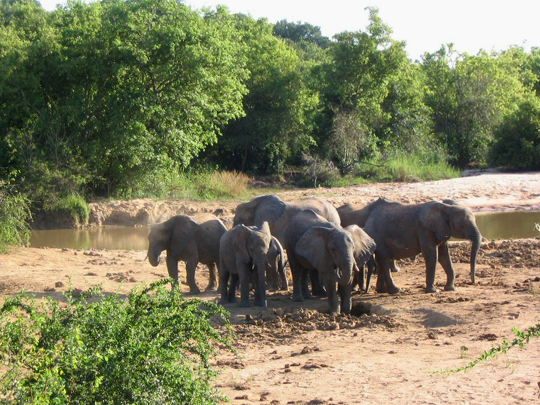
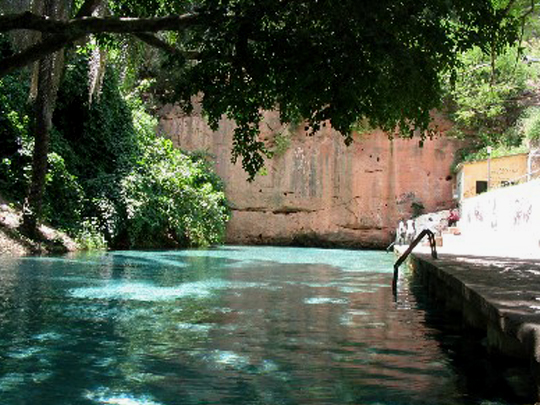
In the savanna woodlands of northeastern Nigeria, Yankari is the country’s best-known and richest wildlife reserve — a vast expanse of grassland and gallery forest along the Gaji River that shelters Nigeria’s largest surviving herds of elephants, one of the last strongholds of big game in the country.
Morning and evening game drives here turn up elephants, buffalo, baboons, antelope, hippos and crocodiles, along with over 350 kinds of bird; poaching has thinned the wildlife over the years, but Yankari remains West Africa’s most important refuge for savanna elephants.
The park’s real jewel isn’t an animal but a spring — the Wikki Warm Spring, where crystal-clear water bubbles up from beneath a limestone cliff at a balmy 31°C, forming a natural swimming pool so pure and inviting that visitors can bathe in it at any hour, day or night.
3 – Zuma Rock
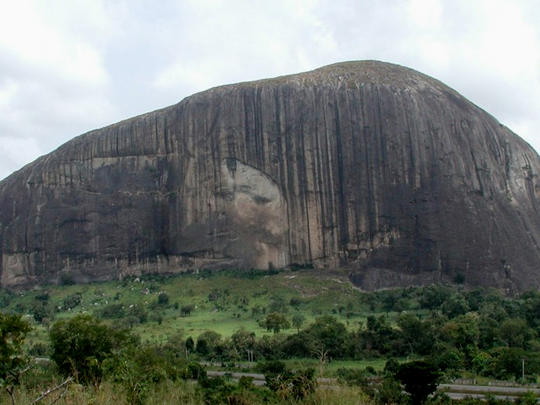
Looming over the plains just north of the capital, Abuja, Zuma Rock is a colossal natural monolith — a single dome of igneous rock rising some 300m sheer from the ground, roughly twice the height of Australia’s Uluru, and famous enough to be nicknamed the “Gateway to Abuja.”
Centuries of rain have weathered its surface into an uncanny likeness of a giant human face — with eyes, a nose and a mouth — which is why the local Gwari people long revered the rock as the home of powerful spirits, and used its sheer flanks as a natural fortress against invaders.
So iconic is Zuma Rock that Nigerians carry it around in their pockets — its image has been printed on the country’s 100-naira banknote since 1999.
4 – Oguta Lake
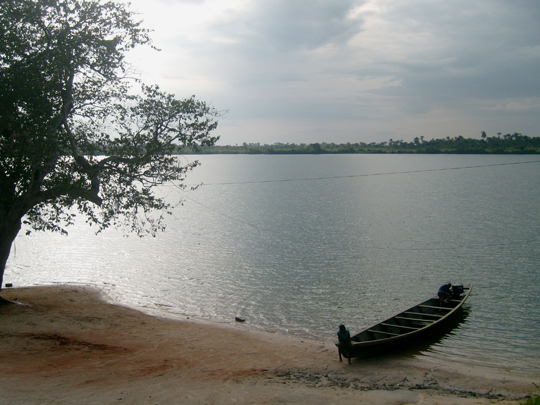
Set deep in the rainforest of the Niger Delta, in Imo State, Oguta Lake is the largest natural lake in southeastern Nigeria — a long, clear “finger lake” of blue-green water, sacred to the Igbo people and watched over by Uhamiri, the revered goddess of the lake.
A tranquil place of boating, fishing and birdlife, with a lakeside resort and even a colonial-era golf course, it also hides a wartime past — during the Biafran war of the late 1960s the lake was used as a naval base, and an old bunker still lurks in the bushes on its shore.
The lake’s great wonder is a line you can actually see: where the muddy-brown Urashi River meets Oguta’s blue-green water, the two refuse to blend, flowing side by side without ever mixing — which local legend explains as a husband and wife, now a river-god and lake-goddess, who quarrelled and have kept apart ever since.
5 – Osun-Osogbo Sacred Grove
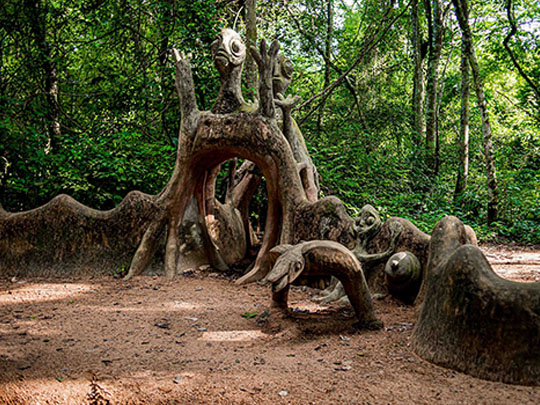
On the edge of the city of Osogbo, in the Yoruba heartland of southwestern Nigeria, lies the Osun-Osogbo Sacred Grove — a dense, ancient forest along the Osun River, held sacred for over 400 years as the dwelling place of Osun, the Yoruba goddess of the river and fertility, and today a UNESCO World Heritage Site.
Every Yoruba town once had a sacred grove, but nearly all have vanished — this is the last great survivor, its shady paths winding past some forty shrines and a host of strange, dreamlike sculptures of gods and spirits, many raised in the 20th century by an Austrian artist, Susanne Wenger, who became an Osun priestess and devoted her life to saving the forest.
Each August the grove draws hundreds of thousands to the Osun festival — and among them come pilgrims from across the Atlantic: for the worship of Osun, carried to the Americas by enslaved Yoruba, lives on in Brazil’s Candomblé and Cuba’s Santería, and their devotees journey back to this Nigerian forest as a spiritual homeland.
6 – Benin City
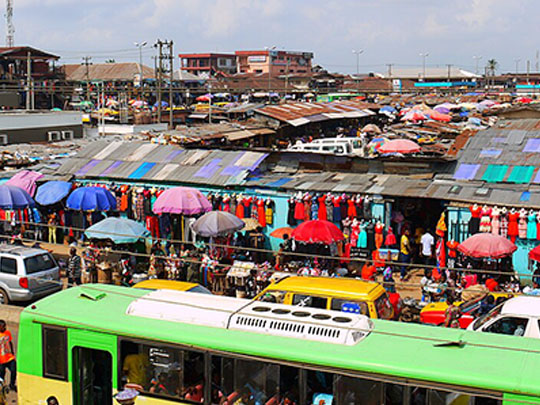

Capital of the Kingdom of Benin from around the 13th century, this was the seat of the Oba, a divine monarch presiding over a rigid system of craft guilds — a city Portuguese visitors in the 1500s compared favourably with Lisbon, and one ringed by the Walls of Benin, a vast network of earthen ramparts and ditches reckoned among the largest earthworks ever raised anywhere.
The Oba still reigns from his palace at the centre of town; the National Museum holds bronzes and carved ivories, sections of the old moats survive around the city, and on Igun Street the brass-casters’ guild goes on working by the lost-wax method their families have used for centuries.
In February 1897 a British expedition burned the city and carried off several thousand of its brass plaques and ivories, sold across Europe to cover the costs — and Victorian Britain, faced with their quality, simply refused to accept Africans had made them, proposing Portuguese, Egyptian, even lost-European origins; the castings date to the 13th century and the technique far earlier.
7 – Kano
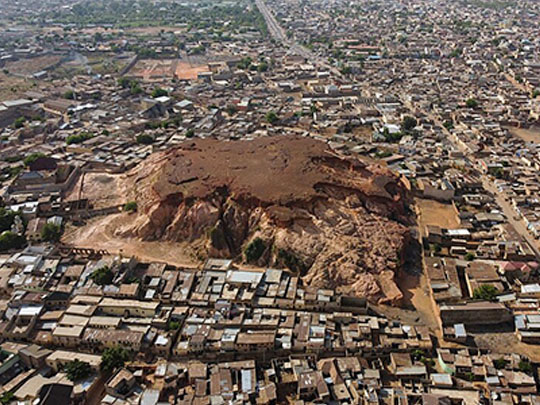

The great city of the Hausa north has been walled since around the 11th century and grew rich as the southern terminus of a trans-Saharan caravan route — gold, salt, leather and cloth moving north, and a kingdom that became an emirate under the Sokoto Caliphate in 1805, whose Emir still holds court here.
Stretches of the old mud walls and their gates still stand; within them are the Emir’s palace of Gidan Rumfa, begun in the 15th century, the Gidan Makama museum, and the labyrinth of Kurmi market, trading since the 1400s, with Dala Hill rising above the rooftops.
At Kofar Mata, clay pits sunk around 1498 are still worked by hand — the last indigo dye pits of their kind in Africa, where cloth is dipped and beaten to a blue-black shine; cloth from pits like these went north by camel for centuries, and it is where the Tuareg of the Sahara got the colour that had Europeans calling them the blue men of the desert.
8 – Lagos
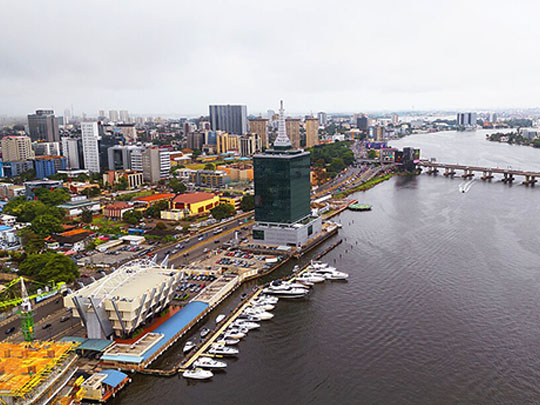
Africa’s largest city, approaching eighteen million people, began as a Yoruba settlement on islands in a lagoon, grew into a Portuguese-era slaving port, was bombarded and seized by Britain in 1851 and annexed a decade later — and served as Nigeria’s capital until Abuja took the title in 1991.
Freedom Park occupies the site of a colonial prison in the old centre, with the National Museum nearby, Balogun market spilling over several streets, and beach bars strung along Lekki; an hour west at Badagry, small museums and a path down to the shore mark one of the coast’s old slave-trading points.
This is also the home of Nollywood, which grew out of cheap straight-to-video films in the early 1990s and now turns out well over two thousand titles a year — by sheer volume the second-largest film industry on Earth, ahead of Hollywood and behind only India.