
Wikimedia Commons / CC-BY-SA-3.0 / GFDL
Capital: Kigali
Population: 14.5 million+
Language: Kinyarwanda, English, French and Kiswahili
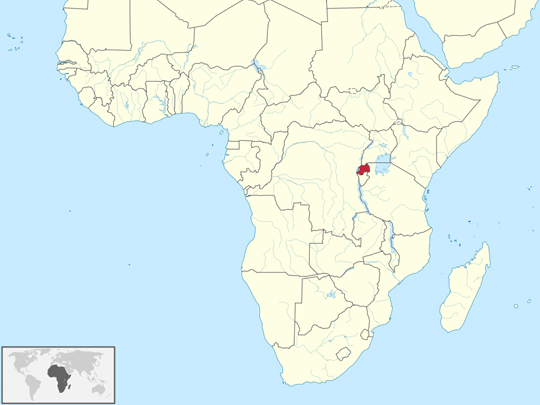
1 – Volcano National Park (also above)
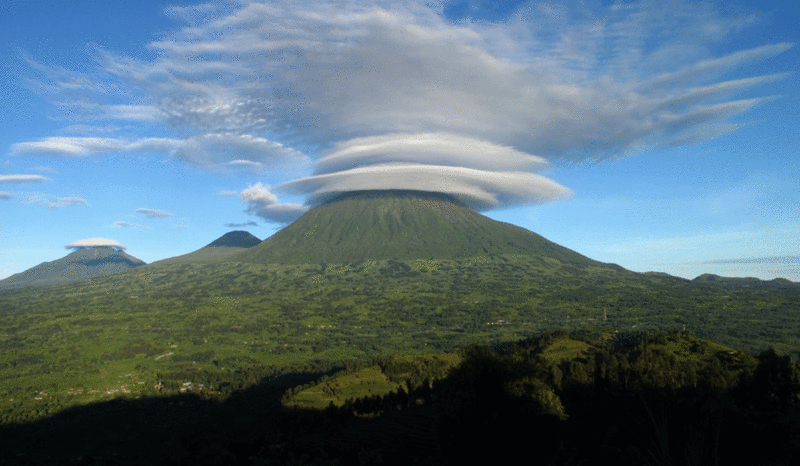
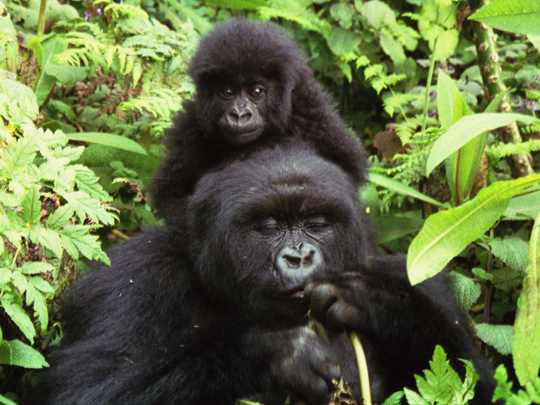
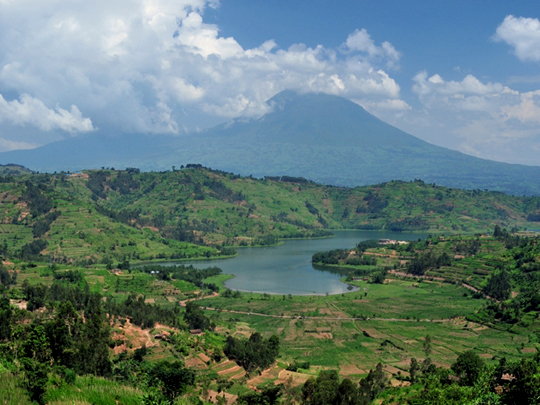
In the misty, forested highlands of northwestern Rwanda, Volcanoes National Park drapes the slopes of five of the great Virunga volcanoes — one of Africa’s oldest national parks, and, along with a handful of neighbouring forests, the last refuge on Earth of the critically endangered mountain gorilla.
This is the world’s most reliable place to trek to the gorillas: after a hike up through bamboo and jungle you spend a spellbinding hour just metres from a wild family of these gentle giants; the park also shelters rare golden monkeys, and its volcanoes — including 4,507m Karisimbi, Rwanda’s highest — offer superb climbs.
These are the very forests where the American scientist Dian Fossey lived among the gorillas for eighteen years and fought to save them from extinction — until she was murdered here in 1985, most likely by poachers — a story told in the book and famous film Gorillas in the Mist; her grave lies deep in the park, beside those of the gorillas she loved.
2 – Akagera National Park
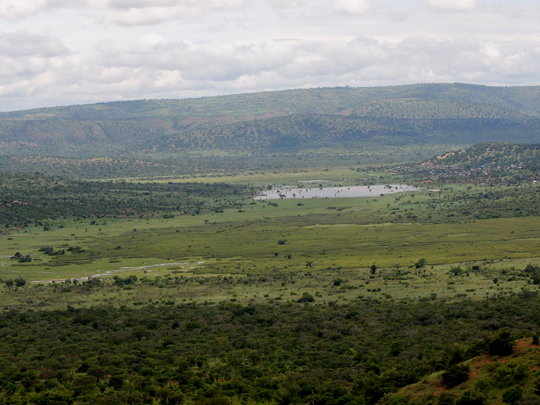
In the warm lowlands of eastern Rwanda, along the Tanzanian border, Akagera is the country’s only savanna park — a beautiful mosaic of rolling grassland, acacia woodland and papyrus-fringed lakes that forms the largest protected wetland in East-Central Africa.
It’s one of Africa’s great comeback stories: wildlife here was all but wiped out in the turmoil that followed Rwanda’s 1994 genocide, but since 2010 lions, elephants and both black and white rhino have been brought back, restoring the full “Big Five,” while boat trips on Lake Ihema glide past pods of hippo, basking crocodiles and rare shoebill storks.
The park takes its name from the Kagera River along its edge — and that river holds a secret: fed by streams rising in the highlands to the west, the Kagera is reckoned to be the most remote source of the Nile, meaning the greatest river in the world begins its journey somewhere near here.
3 – Lake Kivu
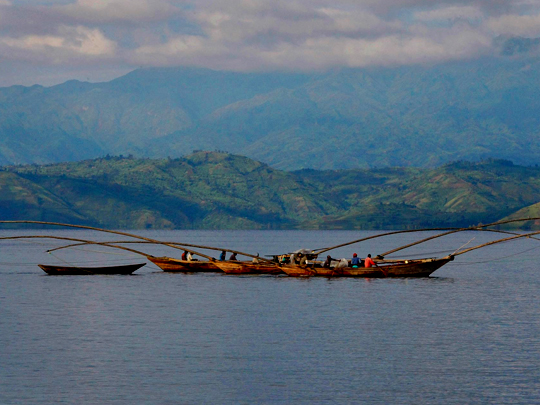
Cradled among steep green hills on Rwanda’s western border with the Congo, Lake Kivu is one of the great lakes of the African Rift — a vast, calm expanse of glittering water dotted with islands, its shores lined with beaches and easygoing towns that make it Rwanda’s favourite place to relax.
Resort towns like Gisenyi and Kibuye draw visitors to swim, kayak and island-hop in warm water free of crocodiles and hippos, or to follow the scenic “Congo Nile Trail” that winds along the shore past coffee plantations and fishing villages, whose singing paddlers head out at dusk.
But beneath its serene surface, Lake Kivu hides a menace — it’s one of only three “exploding lakes” on Earth, its depths saturated with vast volumes of carbon dioxide and methane that could one day erupt in a suffocating gas cloud; today Rwanda cleverly turns the danger to advantage, pumping up the methane to generate much of the country’s electricity.
4 – Musanze Caves
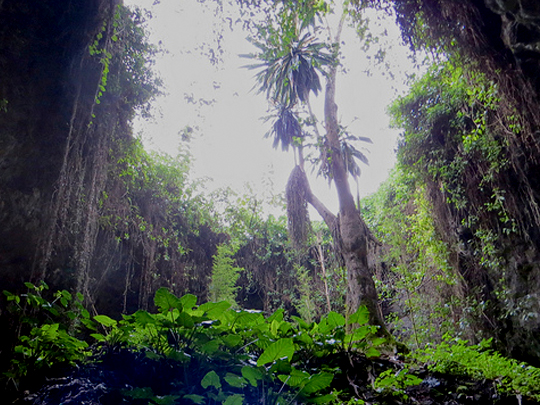
At the foot of the Virunga volcanoes near the town of Musanze, in Rwanda’s green northern hills, lie the Musanze Caves — a labyrinth of dark volcanic tunnels winding some 2km underground, formed by the same fiery eruptions that built the mountains above.
Guided by helmet and torch, visitors descend through a cathedral-sized entrance into a cold, echoing world of chambers and passages, dripping ceilings and thousands of roosting bats; for centuries the caves served as a place of refuge — a hiding place for kings, a site where clans once crowned their leaders, and, in the dark days of the 1994 genocide, a shelter for people fleeing the violence.
The caves are lava tubes — hollow tunnels left behind when rivers of molten rock poured down from the nearby volcanoes: the surface cooled into a hard crust while the lava beneath kept flowing and drained away, leaving these vast, empty passages frozen in the stone.
5 – Kigali

Rwanda’s capital began in 1907 as a German colonial post on a ridge above the valley, took over as capital at independence in 1962, and was the centre of the genocide against the Tutsi in 1994, in which around a million people were killed across the country in a hundred days; it is today among the cleanest and most orderly cities in Africa, spread over a dozen green hills.
The Kigali Genocide Memorial at Gisozi, where more than 250,000 victims are buried, was inscribed by UNESCO in 2023 as one of four memorial sites listed together; elsewhere the city offers the Kandt House museum in the home of its German founder, the vast sprawl of Kimironko market, and hillsides stacked with new building.
On the last Saturday of every month the country simply stops: from eight until eleven, shops shut and traffic thins while Rwandans from villagers to the president turn out for umuganda — building, cleaning, digging terraces — and then hold a community meeting about what to do next.
6 – The King’s Palace at Nyanza
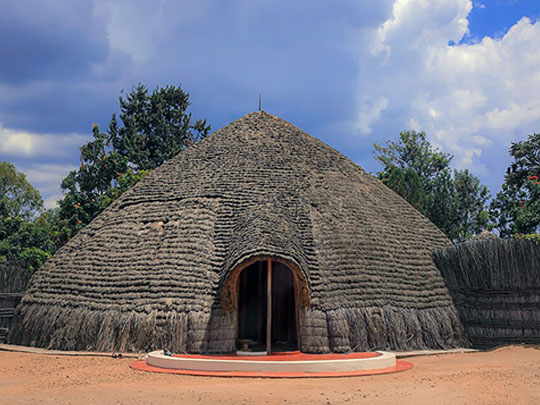
At Nyanza in the southern hills stood the court of the Mwami, the kings who ruled Rwanda for centuries and whose dynasty the Belgians finally swept away in 1961 — the royal household settled here permanently in the early twentieth century, making this the last seat of a monarchy older than any European presence in the region.
The royal residence has been rebuilt by traditional methods: an enormous dome of woven reeds and thatch, dark and cool inside, with the milk hut beside it where the king’s milk was kept; a short walk away stands the brick palace the Belgians built for Mutara III in the 1930s, now a museum of the dynasty’s last years.
Kept at the palace still are the Inyambo, the sacred royal cattle — long-horned beasts whose horns arch more than a metre above their heads, bred for the court, trained to parade before the king, and to this day sung to by their herders, who compose praise poems for individual animals.
7 – Nyungwe Forest National Park


Draped along the Congo-Nile ridge in Rwanda’s southwest, Nyungwe is the largest block of montane rainforest left in the region — old enough to have survived the last ice age, when much of Africa’s forest died back, which is why so much of what lives here lives nowhere else; protected since 1933, a national park since 2005, and Rwanda’s first UNESCO World Heritage Site in 2023.
Thirteen kinds of primate move through it, from chimpanzees to troops of Angolan colobus hundreds strong, alongside more than 300 bird species and 200 orchids — and a steel canopy walkway runs out across a ravine 50m above the forest floor.
This forest is Rwanda’s water tower, shedding something like 70% of the country’s fresh water: rain falling on one side of the ridge runs down to the Congo and out into the Atlantic, while rain falling a few paces away on the other side sets off for the Nile and the Mediterranean.