

dconvertini / Wikimedia Commons / CC-BY-SA-3.0 / GFDL
Capital: Oslo
Population: 5.6 million+
Language: Norwegian (written as Bokmål and Nynorsk); Sámi.

1 – Geirangerfjord (also above)

Geirangerfjord snakes 15 km into the mountains of Møre og Romsdal as an arm of the Storfjord system, welcomed its first shipload of tourists in 1869 and was listed by UNESCO in 2005, together with Nærøyfjord, as one of the West Norwegian Fjords.
Look out for the Seven Sisters waterfall facing the Suitor across the water, the Bridal Veil falls, the abandoned cliff-ledge farms of Skageflå and Knivsflå, the 11 hairpins of the Eagle Road up to the Ørnesvingen viewpoint, the postcard rock at Flydalsjuvet and the view from Dalsnibba at almost 1,500 m.
Norway’s disaster movie The Wave (2015) is set in Geiranger and imagines the collapse of Åkneset, a real unstable mountainside under constant watch, and it drew on the Tafjord rockslide of 1934, when a fjord tsunami killed 40 people.
2 – Tromsø

Tromsø sits mostly on the island of Tromsøya, well north of the Arctic Circle, and since its 1794 town charter it has been the launch pad for Arctic hunting trips and polar expeditions, including Roald Amundsen’s final flight in June 1928, when he took off to search for Umberto Nobile’s crashed airship Italia and was never seen again.
Highlights include the Arctic Cathedral, a striking 1965 parish church with a huge stained-glass east wall, the Fjellheisen cable car up to Fjellstua at 421 m, the Polaria Arctic aquarium, the harbourside Polar Museum and, in winter, the northern lights.
For five weeks in 1940 Tromsø was Norway’s makeshift capital, until King Haakon VII and the government sailed for Britain aboard HMS Devonshire on 7 June, and on 12 November 1944 RAF Lancasters armed with Tallboy bombs capsized the battleship Tirpitz just off the island of Håkøya, with around 1,000 men killed.
3 – Oslo

Oslo, at the head of the Oslofjord, was traditionally founded by Harald Hardrada around 1048, rebuilt beside Akershus Fortress as Christiania by King Christian IV after the fire of 1624, became the capital of independent Norway in 1814 and only got its old name back in 1925.
Walk on the marble roof of the Opera House, then take in Akershus Fortress, the Royal Palace, the more than 200 sculptures of Vigeland Park, The Scream at MUNCH, the polar ship Fram, the Kon-Tiki raft, the City Hall where the Nobel Peace Prize is presented and the Holmenkollen ski jump.
On 9 April 1940 the guns and torpedoes of Oscarsborg Fortress sank the German cruiser Blücher in the Drøbak Sound, buying time for the king, government and gold reserve to escape the city, and on the Akershus quayside Antony Gormley’s eight empty chairs mark where the ship Donau took 529 Jews towards Auschwitz on 26 November 1942, part of 773 deported from Norway, of whom around 34 survived, according to the Norwegian government.
4 – Atlantic Ocean Road
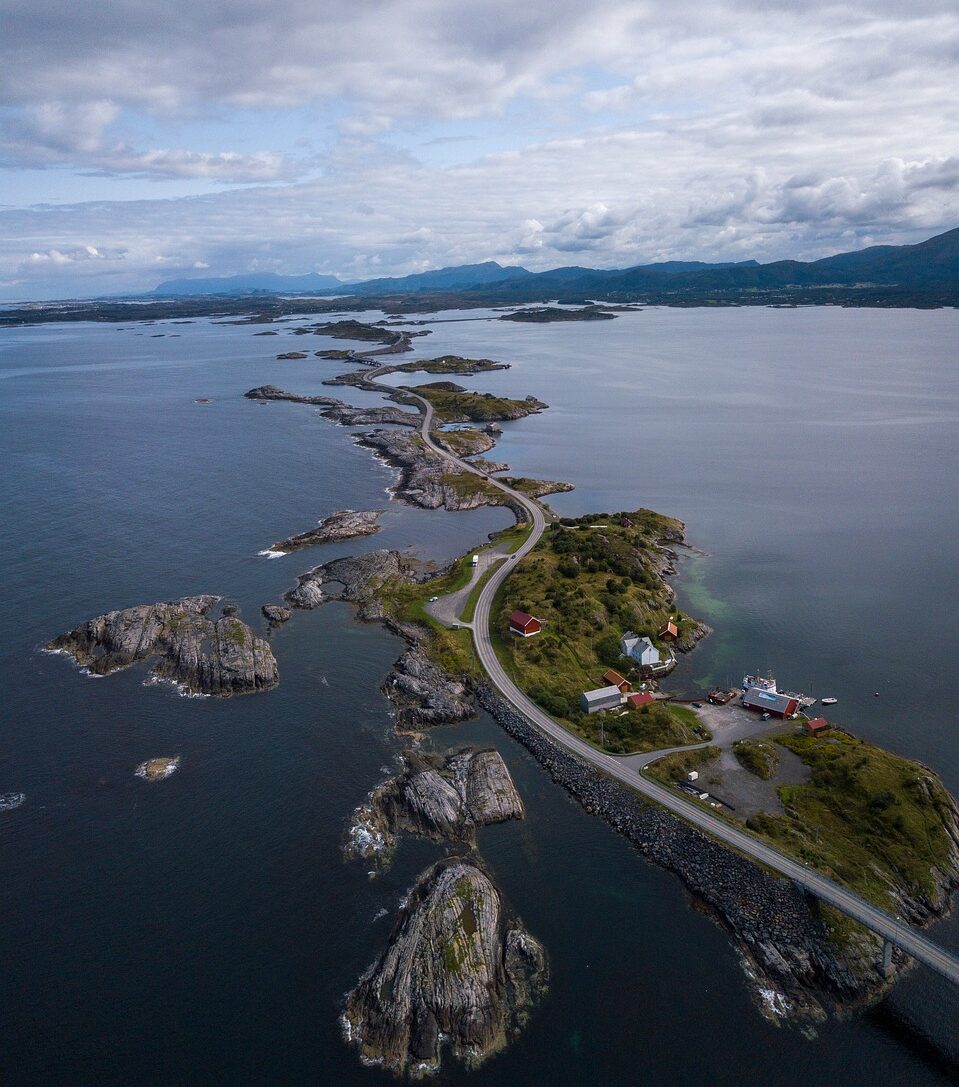
The Atlantic Ocean Road (Atlanterhavsvegen) hops 8.3 km across islets and skerries between Averøy and Hustadvika in Møre og Romsdal on eight bridges, was built between 1983 and 1989 through 12 storms and was voted Norway’s construction of the century in 2005.
The star is the Storseisundet Bridge, a 260 m curve that from some angles appears to climb into thin air, with walkways at the Eldhusøya and Geitøya rest stops, and the fishing village of Bud and Ergan Coastal Fort, a German WWII fortress turned museum, at one end of the 36 km scenic route.
James Bond’s Aston Martin V8 Vantage races along the road in No Time to Die (2021), more than ten carmakers have shot adverts here, and the tolls meant to run for 15 years paid off the road in ten.
5 – Stavanger

Stavanger, on the southwest coast in Rogaland, grew up around a cathedral begun around 1100 and dedicated to St Swithun of Winchester, and was transformed into Norway’s oil capital after Phillips Petroleum struck the Ekofisk field in the North Sea in 1969.
Explore Stavanger Cathedral, Norway’s oldest and best-preserved medieval cathedral, in continuous use for some 900 years, the white wooden houses of Gamle Stavanger, the Norwegian Petroleum Museum, built to look like an oil platform from the sea, and the three 10 m Swords in Rock (Sverd i fjell) at Hafrsfjord, where Harald Fairhair won a battle traditionally dated to 872.
On 9 April 1940 German paratroopers dropped onto nearby Sola airfield and overcame a lone Norwegian machine-gun post in one of the first opposed parachute assaults in history, and within hours more than 2,000 troops had been flown in.
6 – Lofoten Islands

The Lofoten Islands rise like a wall of peaks off the Nordland coast, well above the Arctic Circle, where the winter run of skrei cod has fed a stockfish trade for over a thousand years, and on 4 March 1941 British and Norwegian commandos raided their fish-oil factories in Operation Claymore, seizing Enigma rotor wheels and code material that helped Bletchley Park.
Stay in a rorbu fisherman’s cabin and work your way through Reine, Henningsvær with its rocky-islet football pitch, the old fishing village of Nusfjord, Å at the very end of the E10 with its fishing village and stockfish museums, the climb up Reinebringen and the Lofotr Viking Museum at Borg, with its rebuilt 83 m chieftain’s longhouse, the largest Viking-age house ever found.
The tidal currents of Moskstraumen off the southern tip of Lofoten gave English the word maelstrom through Edgar Allan Poe’s 1841 story and Jules Verne’s Twenty Thousand Leagues Under the Seas, though in reality it’s a system of powerful tidal eddies rather than the ship-swallowing whirlpool of fiction.
7 – Fjærlandsfjorden

Fjærlandsfjorden runs about 25 km north from the Sognefjord in Vestland, and the village of Fjærland at its head could only be reached by boat until the Fjærland Tunnel opened in 1986.
Visit the Norwegian Glacier Museum, designed by Pritzker Prize-winner Sverre Fehn and opened in 1991, head up to Bøyabreen and Supphellebreen, two arms of Jostedalsbreen, the largest glacier in mainland Europe, and browse Norway’s Book Town, where second-hand books are sold from old barns, a ferry waiting room and a former bank.
The tunnel was opened by former US Vice-President Walter Mondale, whose family name and roots come from Mundal in Fjærland.
8 – Kjeragbolten

Kjeragbolten is a boulder of about 5 m³ jammed in a crevice on the mountain of Kjerag, on the south side of the Lysefjord in Rogaland, where it was left behind as the ice age glaciers melted.
The big moment is stepping out onto the boulder itself, almost 1,000 m above the fjord, on a hike from Øygardstølen at the top of the Lysebotn hairpins that also takes in the Kjerag plateau and views of the Kjeragfossen waterfall.
The sheer north face of Kjerag, which drops almost 1,000 m to the water, is one of the world’s best-known BASE-jumping sites, and Matt Harding danced on Kjeragbolten in his viral 2006 video Where the Hell is Matt?
9 – Ålesund

Ålesund spreads across the islands of Aspøya, Nørve and Hessa on the coast of Møre og Romsdal, and after a fire on the night of 23 January 1904 left over 10,000 people homeless but killed only one, the town was rebuilt in stone and brick by 1907 in the Art Nouveau style known in Norway as Jugendstil.
Climb the 418 steps up Aksla to the Fjellstua viewpoint, visit the Jugendstilsenteret in the old Swan Pharmacy, and find the statues in Byparken of Kaiser Wilhelm II, who sent relief ships after the fire, and of Rollo, founder of Normandy, whom Norse sagas claim came from nearby Giske.
During the occupation thousands of Norwegians escaped across the North Sea to Britain in small fishing boats from this coast, Ålesund was reportedly nicknamed “Little London” by the Gestapo, and the Englandsfarten monument on Skateflukaia honours those who made the crossing.
10 – Bergen

Bergen, on a west coast where it rains on around 200 days a year, was traditionally founded by King Olav Kyrre in 1070, served as the royal seat in the 13th century and for some 400 years was home to the Hanseatic League’s Kontor, the only one of its four overseas trading offices to survive.
Wander the gabled wooden wharf of Bryggen (UNESCO-listed in 1979), Haakon’s Hall, built for a royal wedding in 1261, the fish market, the Fløibanen funicular up Mount Fløyen and Troldhaugen, the home of Edvard Grieg, where he and his wife Nina lie in a cliffside tomb.
On 20 April 1944 the Dutch ship Voorbode, loaded with over 100 tonnes of explosives, blew up in the Vågen harbour of Bergen, killing more than 150 people, throwing ships ashore and leaving Haakon’s Hall a shell.
11 – Trondheim

Trondheim, where the River Nid meets the Trondheimsfjord, was founded as Nidaros in 997 by Olaf Tryggvason according to the sagas, and became the great pilgrim goal of medieval Northern Europe after the body of St Olav was enshrined here following his death in battle in 1030.
See Nidaros Cathedral, built over Olav’s traditional grave and the coronation church of Norway’s kings, the Archbishop’s Palace with the crown regalia, the Old Town Bridge, the wooden houses of Bakklandet with the Trampe, the world’s first bike lift, Kristiansten Fortress and the German Dora 1 U-boat bunker from WWII.
Hitler planned to turn Trondheim into a major German naval base, with a new city called Nordstern for up to 300,000 Germans, designed by Albert Speer, at Øysand southwest of the city, but only fragments were ever built.
12 – Svalbard

Svalbard is a high-Arctic archipelago about 60% covered in ice, placed under Norwegian sovereignty by the Svalbard Treaty, signed in Paris in 1920, which gives treaty states equal rights to its resources, and in September 1943 the battleships Tirpitz and Scharnhorst shelled its mining settlements at Barentsburg and Longyearbyen.
Base yourself in Longyearbyen, named after the American mine owner John Munro Longyear, see the entrance to the Svalbard Global Seed Vault, the Soviet ghost town of Pyramiden with the world’s northernmost Lenin monument, the Russian mining town of Barentsburg, the glaciers and, from a safe distance, polar bears.
It’s a myth that dying is illegal in Longyearbyen, but coffin burials did stop because the permafrost keeps bodies from decomposing, and scientists have taken samples from victims of the 1918 flu buried there.
13 – Lysefjorden
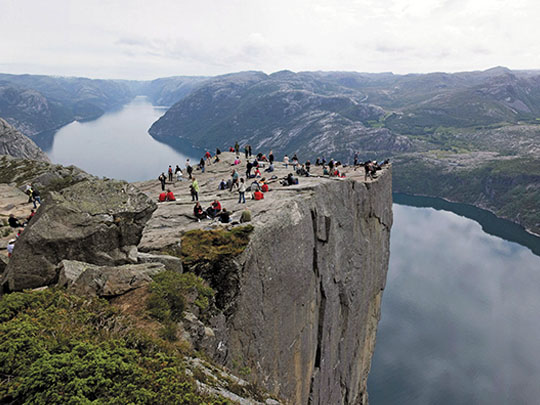
The Lysefjord cuts 42 km inland east of Stavanger between pale granite walls, its name said to mean “light fjord”, and the village of Lysebotn at its head is reached by a 29 km road with 27 hairpin bends, one inside a tunnel, built in the 1980s for a hydropower scheme.
Hike to Preikestolen (Pulpit Rock), a flat-topped cliff 604 m above the water, take a fjord cruise past sheer walls and waterfalls, and climb the 4,444 wooden steps at Flørli, billed as the world’s longest wooden staircase, beside the pipeline of a 1918 power station.
Tom Cruise and Henry Cavill dangle from Preikestolen in the climax of Mission: Impossible – Fallout (2018), and that summer about 2,000 people hiked up for a screening of the film on the rock itself.
14 – Rjukan and Vemork
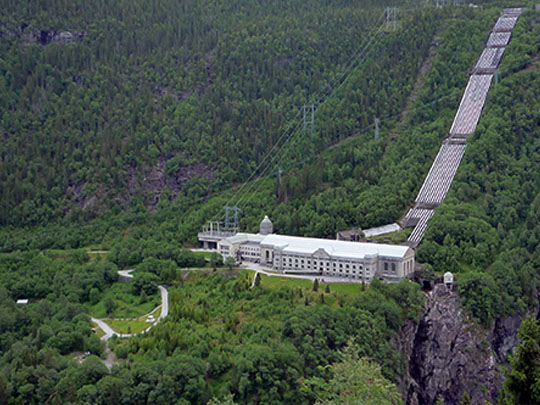
Norsk Hydro built Rjukan almost from scratch in a deep Telemark valley in the 1910s around Vemork, the world’s largest power station when it opened in 1911, and because the town sits in shadow for half the year, giant mirrors were set up on the mountainside in 2013 to beam sunlight onto the square, a century after founder Sam Eyde first suggested it.
Explore the Norwegian Industrial Workers Museum inside the Vemork power station, with its heavy-water cellar, see the old railway ferries moored at Mæl on Lake Tinn and take in the wider Rjukan–Notodden Industrial Heritage Site, listed by UNESCO in 2015.
On the night of 27–28 February 1943 nine Norwegian commandos led by Joachim Rønneberg wrecked the heavy-water plant at Vemork without firing a shot, and the story, including the 1944 sinking of the ferry Hydro on Lake Tinn that killed 18 people, became The Heroes of Telemark (1965), starring Kirk Douglas and Limerick-born Richard Harris.
15 – Narvik
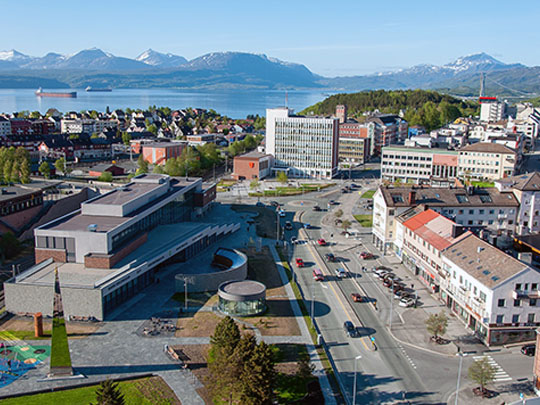
Narvik sits at the head of the Ofotfjord in Nordland and grew up around an ice-free harbour where the Ofoten Line, opened in 1902, brings Swedish iron ore from Kiruna to the ships, which is exactly why both sides fought for it in 1940.
Visit the Narvik War Museum, which holds Captain Bernard Warburton-Lee’s Victoria Cross and an Enigma machine, the cemetery with its Commonwealth, French and German war graves and Polish memorial, the warship wrecks in the surrounding fjords that draw divers, and the cable car up Fagernesfjellet.
In April 1940 two naval battles in the fjords of Narvik cost Germany all ten destroyers it sent and earned Warburton-Lee a posthumous VC, and on 28 May Norwegian, French, Polish and British troops retook the town in what is often called the first Allied land victory of the war.
16 – Eidsvoll
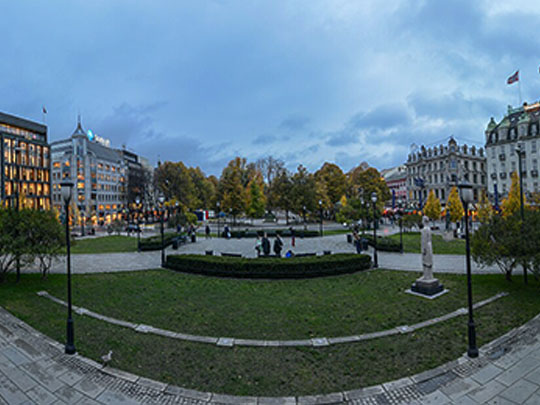
Eidsvoll, north of Oslo in Akershus, is where 112 elected representatives met in the manor house of the Eidsvold ironworks between April and May 1814 and drew up Norway’s constitution, dated 17 May 1814, which is celebrated as the national day.
Eidsvoll Manor (Eidsvollsbygningen) was restored to how it looked in 1814 for the bicentenary, with the hall where the representatives debated, a gallery of their portraits and parkland bought for the nation by public subscription in the 19th century.
The constitution is often called the world’s second-oldest written national constitution in force, though its original text barred Jews from the kingdom until a campaign led by the poet Henrik Wergeland got the clause removed in 1851.
17 – Stiklestad
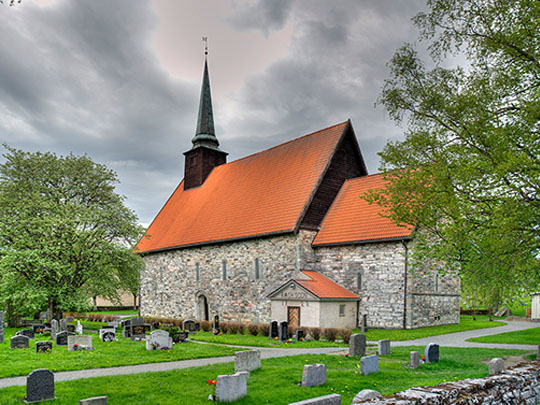
Stiklestad, in the Verdal valley about 80 km north of Trondheim, is where King Olav Haraldsson was killed by a peasant army loyal to Cnut, traditionally on 29 July 1030, and within about a year he was declared a saint, turning his death into the founding story of Christian Norway.
See Stiklestad Church, built around 1180 on the spot where tradition says Olav fell, the Stiklestad National Culture Centre with its folk museum, and the open-air Saint Olav Drama, staged every summer around Olsok, the feast of St Olav.
The sagas say the sun went dark as Olav fell, though the only eclipse visible there that year came on 31 August, and his cult spread as far as Viking Dublin, where St Olave’s Church stood on Fishamble Street and a plaque marks the spot.
18 – Røros
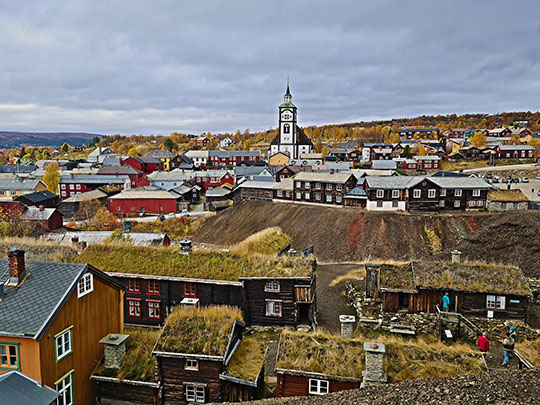
Røros, high on a plateau in Trøndelag, was a copper-mining town for 333 years from 1644 to 1977, was burned by Swedish troops in 1679 and was listed by UNESCO in 1980, with the listing extended in 2010 to take in the surrounding mining district known as the Circumference.
Wander streets of about 2,000 wooden houses, see Røros Church, nicknamed Bergstadens Ziir and one of the largest churches in Norway, visit the Smelthytta smelting museum, head underground at the Olavsgruva mine and, in February, catch the Rørosmartnan winter market, held since 1854.
It’s one of the coldest places in Norway, having dropped below −50 °C, Disney’s Frozen team visited Røros for winter inspiration, and local writer Johan Falkberget’s mining-town novels became the 1969 film An-Magritt, starring Liv Ullmann.
19 – Kirkenes

Kirkenes sits on an arm of the Varangerfjord in far eastern Finnmark, a few kilometres from the Russian border, and grew up as an iron-mining town after the Sydvaranger company was founded in 1906.
Go underground at Andersgrotta, the WWII bomb shelter beneath the town centre, visit the Borderland Museum and the Liberation Monument, sleep at the Snowhotel, join a safari for the king crabs that Soviet scientists brought from the Pacific in the 1960s and head down the Pasvik valley towards the point where Norway, Finland and Russia meet.
Kirkenes is often described as one of the most-bombed places in Europe after Malta, with over 1,000 air-raid alarms in WWII, and on 25 October 1944 Soviet forces liberated it, the first part of Norway to be freed, while retreating German troops burned their way across Finnmark.