

Wikimedia Commons / CC-BY-SA-3.0 / GFDL
Capital: Warsaw
Population: 37 million+
Language: Polish

1 – Kraków (also above)

Kraków, on the Vistula beneath Wawel Hill, was Poland’s royal capital for more than five centuries, crowning its kings from 1320 until the court moved to Warsaw around 1600, and its historic centre was on UNESCO’s very first World Heritage List in 1978.
Start at the Main Market Square with the Cloth Hall and St Mary’s Basilica, whose trumpet call breaks off mid-note for a legendary Tatar arrow first written down in a 1928 American novel, then take in Wawel Castle and Cathedral, the synagogues of Kazimierz, Oskar Schindler’s Enamel Factory and the salt-carved chapels of the Wieliczka mine just outside town.
Under German occupation Kraków became the capital of the General Government in October 1939, its Jews were forced into a ghetto in Podgórze in 1941, and Steven Spielberg shot the ghetto scenes of Schindler’s List (1993) in nearby Kazimierz because the real ghetto streets looked too modern.
2 – Warsaw

Warsaw, on the Vistula in central Poland, took over as capital when King Sigismund III moved the royal court from Kraków between 1596 and 1611, and its Royal Castle saw the passing of the Constitution of 3 May 1791.
See the rebuilt Old Town and Royal Castle, Łazienki Park with its summer Chopin concerts, the pillar in Holy Cross Church that holds Chopin’s heart, the POLIN Museum of the History of Polish Jews, the Warsaw Rising Museum, Marie Curie’s birthplace on Freta Street and the Palace of Culture and Science, a Soviet “gift” originally named after Stalin.
After the Ghetto Uprising of April 1943 and the 63-day Warsaw Uprising of 1944, in which about 150,000 civilians died according to the Warsaw Rising Museum, German forces destroyed more than 85% of the historic centre, according to UNESCO, and the Old Town was rebuilt with help from Bernardo Bellotto’s detailed 18th-century paintings of the city.
3 – Gdańsk

Gdańsk, where the Vistula meets the Baltic, grew rich as a Hanseatic port, was the League of Nations’ Free City of Danzig from 1920 to 1939, and at dawn on 1 September 1939 the German battleship Schleswig-Holstein opened fire on the Polish depot at Westerplatte in the opening battle of WWII.
Walk the Long Market to Neptune’s Fountain, see the medieval Crane on the waterfront and St Mary’s, one of the largest brick churches in the world, then visit the Museum of the Second World War, Westerplatte and the European Solidarity Centre beside the shipyard where Lech Wałęsa’s Solidarity movement was born in 1980.
Irish diplomat Seán Lester from Carrickfergus served as the League of Nations High Commissioner in Danzig from 1934 to 1937, protesting at the Nazi-led city government’s persecution of Jews and opponents, and the Seán Lester Room in the New Town Hall, his former residence, honours him in Gdańsk.
4 – Toruń

Toruń, on the Vistula, was founded by the Teutonic Knights in 1233, rose against them in 1454 and demolished their castle, and in 1466 hosted the Second Peace of Thorn, which brought Gdańsk, Malbork and Warmia under Polish rule.
Explore the UNESCO-listed medieval Old Town, which came through WWII largely undamaged, with its Old Town Hall, the ruins of the Teutonic castle, the Leaning Tower and two gingerbread museums, while the ring of 19th-century forts outside held British prisoners of war in the German camp Stalag XX-A.
Nicolaus Copernicus was born in Toruń in 1473, in a house on Kopernika Street that tradition names as his birthplace, and the city’s gingerbread, recorded since the late 14th century, won praise from Chopin when he visited in 1825.
5 – Poznań

Poznań, on the Warta in Greater Poland, is one of the cradles of the Polish state and a leading contender for the site of Mieszko I’s baptism in 966, and its cathedral on Ostrów Tumski, the oldest in Poland, holds the tombs of Mieszko and his son Bolesław the Brave.
Catch the mechanical goats butting heads on the Renaissance Town Hall at noon, then visit the Imperial Castle built for Kaiser Wilhelm II and remodelled as a residence for Hitler, Fort VII, the first German Nazi camp in occupied Poland, and the Enigma Cipher Centre honouring the Poznań-trained mathematicians who first broke Enigma.
Paweł Strzelecki, born just outside Poznań in 1797, ran British Relief Association aid in Sligo, Mayo and Donegal during the Great Famine, setting up school feeding that reached about 200,000 children at its peak in 1848.
6 – Lublin

Lublin, in eastern Poland, gave its name to the Union of Lublin of 1569, which joined Poland and Lithuania into the Polish-Lithuanian Commonwealth, and before WWII about a third of the city was Jewish, making it a great centre of Jewish learning.
Visit Lublin Castle and its Holy Trinity Chapel, a Gothic royal chapel painted with Byzantine-Ruthenian frescoes completed in 1418, the Old Town and the Grodzka Gate, once the gateway to the Jewish quarter, and the Yeshiva Chachmei Lublin, whose founder Rabbi Meir Shapiro started the Daf Yomi daily Talmud study followed by Jews worldwide.
Operation Reinhard, in which about 1.7 million Jews were murdered according to USHMM, was directed from Lublin, and on the edge of the city stands Majdanek, a German Nazi camp in occupied Poland where about 78,000 people were murdered according to the State Museum at Majdanek, captured almost intact in July 1944.
7 – Malbork Castle

Malbork Castle, on the Nogat river south-east of Gdańsk, was begun by the Teutonic Knights in the late 13th century, became the seat of their Grand Master in 1309 and is listed by Guinness as the world’s largest brick castle.
Explore the High, Middle and Low Castles, the Grand Master’s Palace, the vaulted Grand Refectory and the castle church with its restored Virgin and Child statue, all part of what UNESCO, which listed it in 1997, calls the most complete example of a Gothic brick castle complex.
Malbork withstood a Polish-Lithuanian siege after the Battle of Grunwald in 1410 but was sold to Poland by the Order’s own unpaid mercenaries in 1457, and after the Nazis used it for propaganda and Hitler Youth ceremonies, about half of it was wrecked in the fighting of 1945 and then painstakingly restored.
8 – Wrocław

Wrocław, spread across islands on the Oder, has been Piast, Bohemian, Habsburg and Prussian, and as the German city of Breslau it became Polish under the 1945 Potsdam settlement, its German population expelled and replaced largely by Poles displaced from the east, including from Lwów.
Take in the Market Square and its Gothic Old Town Hall, the churches of Ostrów Tumski (Cathedral Island), the Racławice Panorama, a 114 m painting brought from Lwów and kept out of sight for decades by the communist authorities, and Max Berg’s UNESCO-listed Centennial Hall.
Hundreds of small bronze dwarfs dotted around Wrocław honour the Orange Alternative, an absurdist anti-communist protest movement, and in WWII Breslau was declared a fortress and held out under Soviet siege until 6 May 1945, four days after Berlin surrendered.
9 – Tatra National Park

Tatra National Park, set up in 1954 on the Polish side of the Tatra Mountains, forms a cross-border UNESCO Biosphere Reserve with its Slovak neighbour, and the resort of Zakopane below it grew into Poland’s “winter capital”.
Hike to Morskie Oko, a lake an international court awarded to Galicia over Hungary in 1902, see Giewont with its 1901 summit cross, ride Poland’s first cable car up Kasprowy Wierch and climb Rysy, where Poland’s highest point sits on the Slovak border, then visit the Zakopane-style Villa Koliba in town.
In WWII Tatra couriers, Olympic skier Bronisław Czech among them, smuggled reports, money and people over the passes towards Hungary, while the Gestapo turned Zakopane’s Palace guesthouse into a headquarters known as the “Torture House of Podhale”, and Czech himself later died in Auschwitz.
10 – Auschwitz-Birkenau
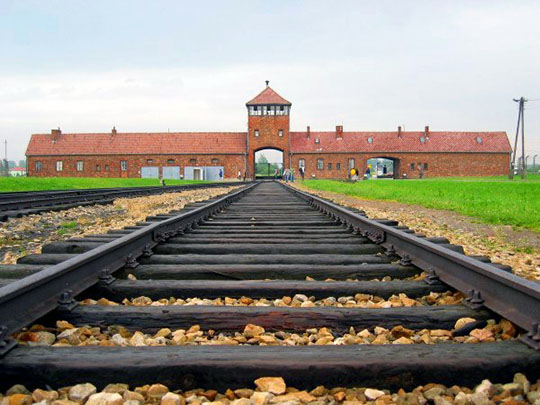

Auschwitz-Birkenau, on the edge of Oświęcim, was the largest German Nazi concentration and extermination camp in occupied Poland, opened in June 1940 with a transport of 728 Polish political prisoners, and the Auschwitz-Birkenau State Museum and USHMM estimate that at least 1.1 million people were murdered there, about 1 million of them Jews.
The memorial, founded in 1947 and listed by UNESCO in 1979, takes in the brick blocks of Auschwitz I, including Block 11 and the Death Wall, and at Birkenau the railway ramp inside the camp and the ruins of the gas chambers and crematoria the SS blew up in January 1945.
The Red Army reached Auschwitz on 27 January 1945, the date the UN chose in 2005 for International Holocaust Remembrance Day, and among those murdered there were Dublin-born siblings Ephraim and Lena Saks and Ettie Steinberg, who grew up in Dublin.
11 – Treblinka
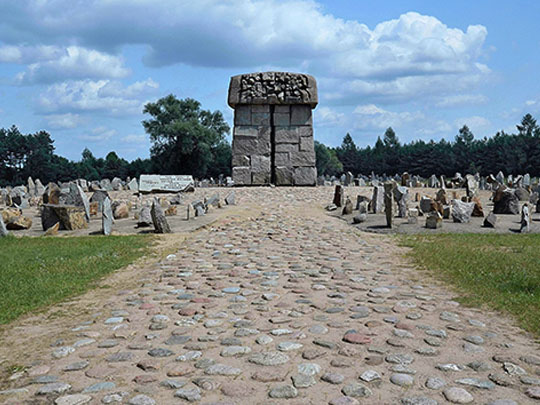
Treblinka, in the forests of Masovia, was a German Nazi extermination camp in occupied Poland, part of Operation Reinhard, where about 925,000 Jews were murdered between July 1942 and 1943 according to USHMM, among them about 265,000 deported from the Warsaw Ghetto in the summer of 1942.
The camp was razed, so the memorial unveiled in 1964 marks it with about 17,000 jagged granite stones like gravestones, a line of concrete sleepers tracing the railway, a symbolic cremation pit of black basalt and a single named stone for Janusz Korczak, who was deported with about 200 orphans from his Warsaw orphanage.
On 2 August 1943 prisoners at Treblinka rose up and a few hundred escaped, and soon afterwards the SS dismantled the camp, ploughed the ground, planted lupins and built a farm on top to hide what had happened.
12 – Jasna Góra
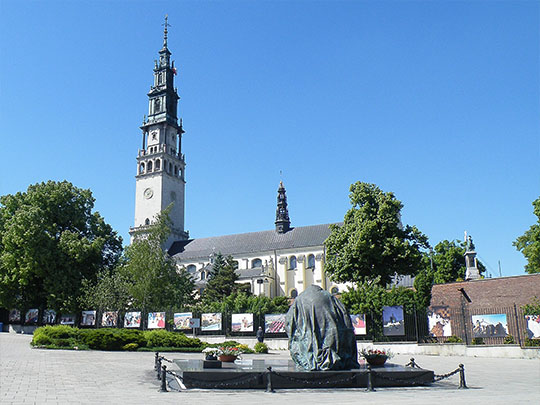

Jasna Góra, a Pauline monastery on a hill in Częstochowa founded in 1382, is the national shrine of Poland, and in 1655 Prior Augustyn Kordecki held its walls for about 40 days against a Swedish siege, after which King John II Casimir proclaimed Mary Queen of Poland in 1656.
See the Chapel of the Miraculous Image, the basilica, the 106 m tower, the treasury and the Stations of the Cross on the ramparts, and watch for the walking pilgrims from Warsaw, who have made the trip every year since 1711, through partitions and wars.
Legend says St Luke painted the Black Madonna on the table of the Holy Family, but scholars date it anywhere from Byzantium in the 6th–9th centuries to Italy in the 13th–14th, and the scars on her face come from raiders, traditionally said to be Hussites, who slashed the image in 1430.
13 – Wolf’s Lair
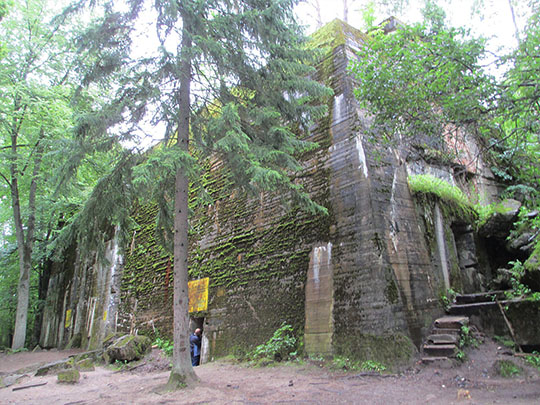
Wolf’s Lair (Wilczy Szaniec), hidden in the Masurian forest at Gierłoż near Kętrzyn in what was then East Prussia, was Hitler’s eastern headquarters, where he spent more than 800 days between June 1941 and November 1944.
Explore about 18 ha of shattered, overgrown bunkers with walls several metres thick, which the Germans blew up in January 1945 but couldn’t fully destroy, and the site of the briefing hut, marked by a memorial plaque, with a reconstruction of the barrack interior.
On 20 July 1944 Colonel Claus von Stauffenberg’s briefcase bomb went off at a briefing here, killing four men, but a heavy oak table shielded Hitler from the worst of the blast, and Tom Cruise’s Valkyrie (2008) recreated Wolf’s Lair on a replica set in Germany.
14 – Zamość
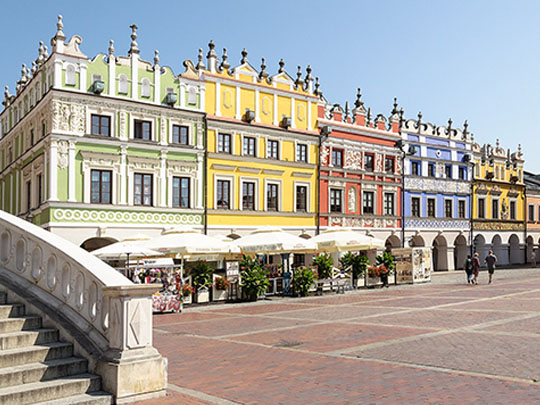
Zamość, in south-east Poland, was founded in 1580 by Chancellor Jan Zamoyski, who had studied in Padua, and laid out by the Paduan architect Bernardo Morando as a Renaissance “ideal city”, listed by UNESCO in 1992, and Rosa Luxemburg was born here in 1871.
Take in the 100 m by 100 m Great Market Square with its Town Hall and colourful Armenian merchants’ houses, Zamoyski Palace, the Academy founded in the 1590s and the fortress bastions, plus the Rotunda, a 19th-century fort where an estimated 6,000–8,000 people died as Gestapo prisoners.
The fortress repelled the Cossacks in 1648 and the Swedes in 1656, and in WWII the Nazis planned to rename the town Himmlerstadt and expelled more than 110,000 Poles from about 300 villages in the surrounding region in 1942–43.
15 – Churches of Peace
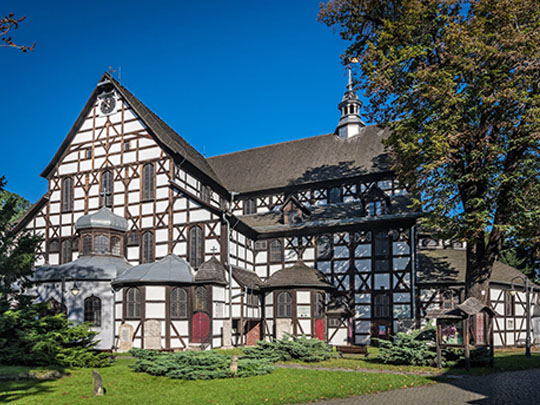
The Churches of Peace in Jawor and Świdnica, in Lower Silesia, came out of the 1648 Peace of Westphalia, which let the Lutherans of Habsburg Silesia build three churches, and the two survivors were listed by UNESCO in 2001.
Step inside to tiers of painted wooden galleries, the Baroque pulpit, altar and great organ of Świdnica and the painted gallery panels of Jawor, in what UNESCO calls the largest timber-framed Baroque church buildings in Europe, with Świdnica alone holding about 7,500 people.
The conditions were meant to make them fail, with timber, clay and straw only, outside the town walls, no tower or bells and just a year to build, yet the churches have stood since the 1650s, came through WWII intact and passed after 1945 to the small Lutheran church of Poland.