

Wikimedia Commons / CC-BY-SA-3.0 / GFDL
Capital: Lisbon
Population: 11.4 million+
Language: Portuguese

1 – Sintra (also above)

Sintra, in the hills about 25 km west of Lisbon, was taken from the Moors in 1147 and became a favourite retreat of Portuguese royalty, and UNESCO listed its Cultural Landscape in 1995 as the first centre of European Romantic architecture.
Pick your palace: the Pena Palace, built in the 1840s and 1850s for Ferdinand II on the ruins of a monastery, the National Palace with its two giant conical kitchen chimneys, the Moorish Castle, Quinta da Regaleira with its spiralling Initiation Well, and Monserrate, then head for Cabo da Roca, the westernmost point of mainland Europe.
Lord Byron hailed “Cintra’s glorious Eden” in Childe Harold’s Pilgrimage after his visit in 1809, though the same passage takes a swipe at the Convention of Cintra of 1808, which let a defeated French army sail home.
2 – Porto

Porto, on the hillsides above the mouth of the Douro, grew from the Roman settlement of Portus Cale, which gave Portugal its name, and on 12 May 1809 Dublin-born Arthur Wellesley, the future Duke of Wellington, surprised the French by crossing the river in wine barges.
Explore the UNESCO-listed riverfront of Ribeira, the Dom Luís I Bridge by Théophile Seyrig, Eiffel’s former partner, São Bento station with its 20,000 or so azulejo tiles, the cathedral, the Stock Exchange Palace, the Kadoorie synagogue of 1938 and the port lodges across the river in Vila Nova de Gaia.
Henry the Navigator was born in Porto in 1394, traditionally in the riverside Casa do Infante, and legend says the city earned its nickname of tripeiros (tripe-eaters) in 1415, when it gave all its meat to the fleet he fitted out on the Douro for the conquest of Ceuta and kept only the tripe for itself.
3 – Belém Tower

Belém Tower was built around 1514–1520 by Francisco de Arruda on a rock islet in the Tagus to guard the approach to Lisbon, and UNESCO listed it in 1983, together with the nearby Jerónimos Monastery, as a monument of the Age of Discovery.
Look for the Manueline rope carvings, armillary spheres and Order of Christ crosses, then walk to the 56 m Padrão dos Descobrimentos, first built for the 1940 Portuguese World Exhibition as the rest of Europe went to war, and the Pastéis de Belém bakery, baking to the monks’ recipe since 1837.
A carved rhinoceros on Belém Tower probably shows the rhino that landed in Lisbon in 1515, the animal Albrecht Dürer made famous without ever seeing it, and nearby the Bom Sucesso convent was founded in 1639 for Irish women barred from religious life at home.
4 – Algarve

The Algarve, the southern coast of mainland Portugal, takes its name from the Arabic al-Gharb, “the west”, stayed under Moorish rule until Afonso III took Faro in 1249, and from Lagos the ships of Henry the Navigator sailed down the coast of Africa, bringing back captives sold there in 1444 in what is often called the first slave market of modern Europe.
See the red walls of the castle at Silves, once the Moorish capital Xelb, the sea grottoes of Ponta da Piedade, the Slave Market museum in Lagos, the walled old town of Faro with its Chapel of Bones and Cape St Vincent, the south-western tip of mainland Europe.
Historians regard Henry’s famous “school of navigation” at Sagres as a myth, but one Algarve story from WWII is real: in November 1943 Faro fishermen, one of them just 13, rowed out to save six crew of a downed US Navy patrol bomber.
5 – Lisbon

Lisbon, on the Tagus estuary, was taken from the Moors in 1147 by Afonso Henriques with English, Flemish and German crusaders, became the capital in the 13th century, and on 1 November 1755 an earthquake, tsunami and fire killed tens of thousands, leading to the Marquis of Pombal’s grid-planned rebuilding of the Baixa.
Ride Tram 28 through Alfama up to São Jorge Castle, walk the Baixa down to Praça do Comércio, catch a fado night, on UNESCO’s intangible heritage list since 2011, and find the old Irish College of St Patrick, founded in the 1590s to train Irish priests and open until 1834.
In WWII neutral Lisbon was the last open port for refugees escaping to the Americas, the “great embarkation point” of Casablanca, and on 25 April 1974 a song on the radio, “Grândola, Vila Morena”, signalled the Carnation Revolution that ended the dictatorship.
6 – Évora

Évora, in the plains of the Alentejo, was retaken from the Moors in 1165, became a favourite city of the Avis kings in the 15th and 16th centuries, and its walled historic centre was listed by UNESCO in 1986.
See the 1st-century Roman Temple, long called the Temple of Diana on the strength of a 17th-century legend, the cathedral, the Chapel of Bones lined with the bones of about 5,000 people, the Água de Prata aqueduct and, outside town, the Almendres Cromlech, a stone circle whose earliest phases are far older than Stonehenge.
Cork Jesuit Conor O’Mahony held the chair of moral theology at the University of Évora in the 1630s and later wrote a book arguing Ireland should choose its own Catholic king, which the Confederation of Kilkenny had burned by the hangman.
7 – Aveiro

Aveiro sits on the Ria de Aveiro lagoon, has made salt since Roman times, and lost its trade when a storm closed its harbour mouth in 1575, recovering only after a new channel was cut through the sandbar in 1808.
Glide along the canals that earned Aveiro the nickname “Venice of Portugal” in a painted moliceiro boat, once used to gather seaweed, then take in the Art Nouveau houses, the salt pans, the Museum of Aveiro in the old Convent of Jesus, the sweet ovos moles and the striped houses of nearby Costa Nova.
In WWII the cod schooners of Portugal, with the Ria de Aveiro at the heart of the industry, painted their hulls white so U-boats could identify them as neutral, and the fleet became known as the White Fleet.
8 – Madeira

Madeira, out in the Atlantic, was claimed for Portugal in 1419 by João Gonçalves Zarco and Tristão Vaz Teixeira, grew rich on sugar worked largely by enslaved people, and its fortified wine became a favourite of English merchants and America’s founding fathers.
Explore Funchal, ride a wicker toboggan down from Monte, where the last Habsburg emperor, Charles I, is buried, walk the levadas, more than 2,000 km of irrigation channels, through the UNESCO-listed Laurisilva laurel forest, and take tea at Reid’s Palace, open since 1891.
In 1940 about 2,000 Gibraltarian evacuees, mostly women and children, were shipped to Madeira for safety, and the island’s most famous son, Cristiano Ronaldo, born in Funchal in 1985, gave his name to its airport in 2017.
9 – Óbidos

Óbidos, a walled hilltop town in western Portugal, was taken from the Moors in 1148, and King Dinis gave it to Queen Isabel as a wedding gift, starting a tradition that made it the “town of the queens” until 1834.
Walk the ramparts, see the Church of Santa Maria, stay in the castle, which in 1951 became the first heritage building converted into a pousada, browse the bookshop in a church and sip ginjinha cherry liqueur from a chocolate cup.
UNESCO named Óbidos a City of Literature in 2015, and the town was home to Josefa de Óbidos, born in Seville in 1630 and one of the most prolific Baroque painters in Portugal, who is buried in its Church of São Pedro.
10 – Coimbra

Coimbra, on the Mondego river, was the first capital of Portugal for over a century until the mid-13th century, and its university, founded in Lisbon in 1290, settled here for good in 1537, while Afonso Henriques, the first king of Portugal, lies in the Monastery of Santa Cruz.
See the UNESCO-listed university, including the Biblioteca Joanina, where a colony of bats eats the insects that would damage the books, the Old Cathedral and Quinta das Lágrimas, where legend says a spring rose from the tears of the murdered Inês de Castro.
The University of Coimbra counts among its alumni Waterford Franciscan Luke Wadding, who studied theology there from 1609 to 1613, the dictator António Salazar and Aristides de Sousa Mendes, the Bordeaux consul whose 1940 visas saved thousands of refugees.
11 – Azores

The Azores are nine volcanic islands about 1,600 km west of mainland Portugal, settled from 1439, and Angra do Heroísmo on Terceira became the port of call for fleets returning from the Indies and the Americas, listed by UNESCO in 1983.
See the twin green and blue lakes of Sete Cidades, climb Mount Pico, at 2,351 m the highest point in Portugal, walk the lava-walled vineyards of Pico (UNESCO 2004), watch whales and visit the marina at Horta, painted by passing sailors.
In 1943 Portugal granted Britain bases on the Azores, citing the alliance of 1373, to close the mid-Atlantic air gap against U-boats, and in May 1919 the US Navy’s NC-4 flying boat stopped at Horta on the first flight across the Atlantic, weeks before Alcock and Brown landed in Ireland non-stop.
12 – Benagil Cave, Algarve

Benagil Cave (Algar de Benagil) is a sea cave beside the old fishing hamlet of Benagil in Lagoa, carved out of Miocene limestone by the waves, with a round opening in its domed roof where rainwater wore through.
See Benagil from the water by licensed boat or guided kayak, or walk the cliff-top Seven Hanging Valleys trail between Praia da Marinha and Vale de Centeanes, which passes the fenced-off skylight above the cave.
In 2015 the Guardian named Benagil one of ten natural wonders of the world that most people had never heard of.
13 – Azenhas do Mar

Azenhas do Mar, a clifftop village in Colares parish on the Sintra coast, takes its name, “watermills of the sea”, from the mills on the stream below, and once lived from milling, wine and fishing.
Admire the whitewashed houses tumbling down the cliff to a tide-filled seawater pool and beach, then head for neighbouring Praia das Maçãs, reached from Sintra by a vintage tram that ran all the way to Azenhas from 1930 to 1955.
The Colares vines around Azenhas are planted in sand, which kept out the phylloxera that devastated Europe’s vineyards in the 19th century, so many grow on their own ungrafted roots.
14 – Batalha
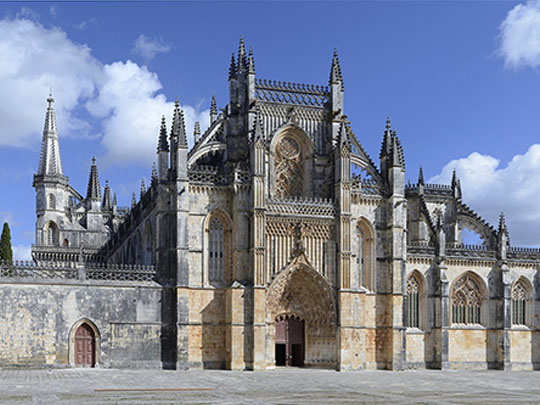
Batalha, in central Portugal, was built by King João I to keep a vow to the Virgin after his army, helped by about 200 English longbowmen, beat Castile at nearby Aljubarrota in August 1385 and secured independence for Portugal, and UNESCO listed the monastery in 1983.
Wander the Royal Cloister with its Manueline tracery, the Chapter House under its unsupported star vault, the Unfinished Chapels, abandoned before they were completed, and the Founder’s Chapel, where João I and Philippa of Lancaster lie hand in hand on their tomb, beside their sons, including Henry the Navigator.
Since April 1921 a guard of honour has watched over two unknown Portuguese soldiers of WWI in the Chapter House at Batalha, one from Flanders and one from Africa, while the popular story of a blind architect sleeping under its vault comes from an 1851 novel by Alexandre Herculano.
15 – Guimarães
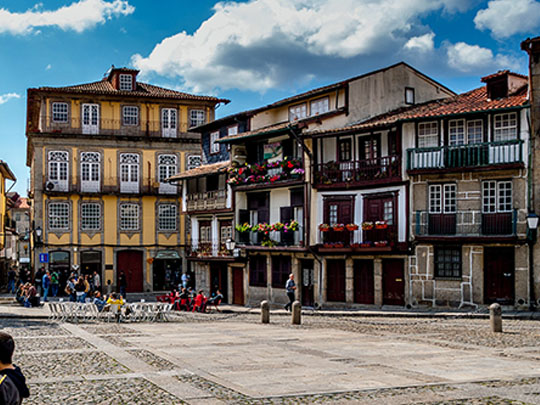
Guimarães, in the Minho north-east of Porto, grew around a castle built by Countess Mumadona Dias in the 10th century against Viking and Moorish raids, and on 24 June 1128 Afonso Henriques defeated his mother’s faction nearby at São Mamede, the first step towards an independent Portugal.
See the castle, with Afonso Henriques traditionally held to have been born here, the Palace of the Dukes of Braganza, largely a 20th-century reconstruction, the medieval squares around Largo da Oliveira in the UNESCO-listed historic centre and the cable car up to Penha.
“Aqui nasceu Portugal” (“Portugal was born here”) is written across a tower of the old town wall of Guimarães, and on 4 June 1940, as war spread across Europe, the restored castle reopened to launch the Estado Novo’s celebrations of Portugal’s founding and restored independence.
16 – Tomar
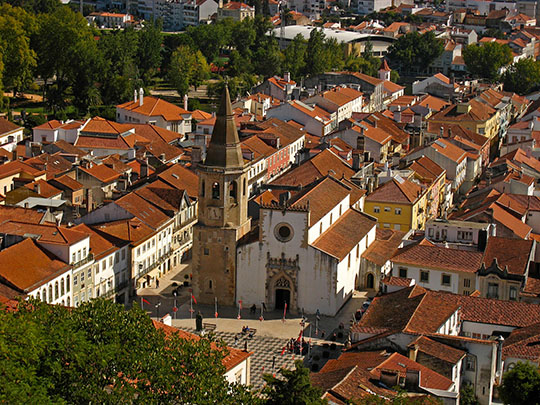
Tomar, in central Portugal, grew around a castle founded around 1160 by Gualdim Pais, Grand Master of the Knights Templar, and when the Templars were suppressed in 1312, Portugal folded their knights and wealth into the new Order of Christ, which made Tomar its seat in the 14th century.
Explore the Convent of Christ, listed by UNESCO in 1983, with its round Templar church (the Charola) inspired by the round churches of Jerusalem, the Manueline window by Diogo de Arruda, the great Renaissance cloister and the Pegões aqueduct, then visit the 15th-century synagogue in town, the oldest standing in Portugal.
The wealth of the Order of Christ, administered by Henry the Navigator, helped pay for the voyages of discovery, and in 1581 Portuguese nobles meeting at Tomar recognised Philip II of Spain as their king, beginning 60 years of Spanish rule.
17 – Douro Valley
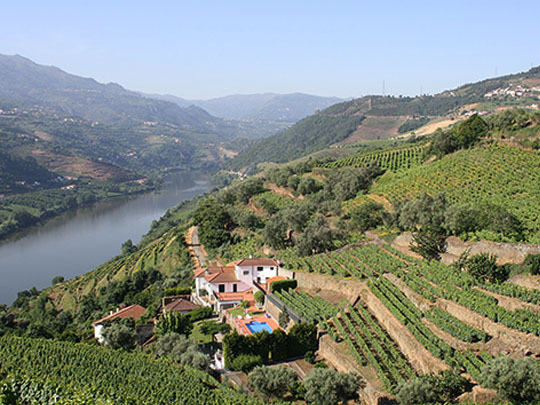
The Douro Valley, upriver from Porto, has terraced schist hillsides shaped by some 2,000 years of winemaking, boomed after the 1703 Methuen Treaty cut English duties on Portuguese wine, and in 1756 the Marquis of Pombal set its boundaries in what is often called the world’s first regulated wine appellation.
Ride the Douro railway line along the river, see the 1937 azulejo panels of grape harvests and rabelo boats at Pinhão station and the Douro Museum at Peso da Régua, tour the quintas of the UNESCO-listed Alto Douro Wine Region and head upriver to the Palaeolithic rock engravings of the Côa Valley.
In 1861 Baron Joseph James Forrester, the Englishman who mapped the Douro, drowned when his boat was wrecked in the Valeira gorge, said to have been dragged down by a belt of coins, while legend says the wine matriarch Dona Antónia Ferreira was saved by her billowing skirts.
18 – Fátima
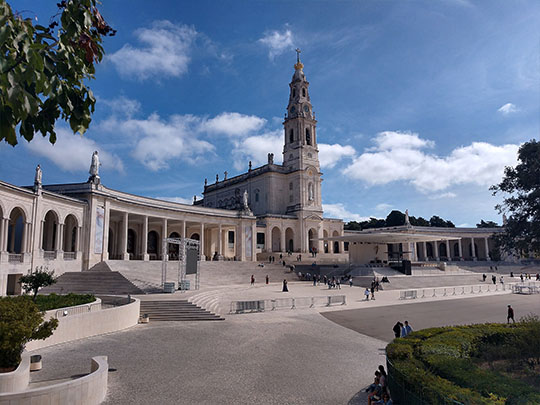
Fátima, in the hills of central Portugal, became one of the world’s great Marian shrines after three shepherd children, Lúcia dos Santos and her cousins Francisco and Jacinta Marto, said a lady appeared to them at Cova da Iria on the 13th of each month from May to October 1917, and on 13 October tens of thousands reported seeing the sun “dance”.
See the Chapel of the Apparitions on the spot, the Basilica of Our Lady of the Rosary with the tombs of the three children, the vast Basilica of the Most Holy Trinity, dedicated in 2007, and Valinhos, where the children said the August apparition took place.
Francisco and Jacinta, canonised in 2017, are the youngest non-martyrs ever made saints, and Our Lady’s statue at Fátima wears a gold crown paid for by Portuguese women in 1942, devotees say in thanks for keeping Portugal out of WWII, set with the bullet from the 1981 attempt on the life of Pope John Paul II.