
Alexandre Péribé / CC-BY-SA-3.0 / GFDL

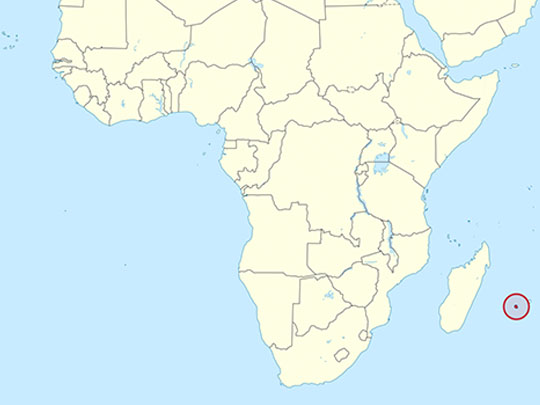
Capital: Saint-Denis
Population: 900,000+
Language: French and Réunion Creole
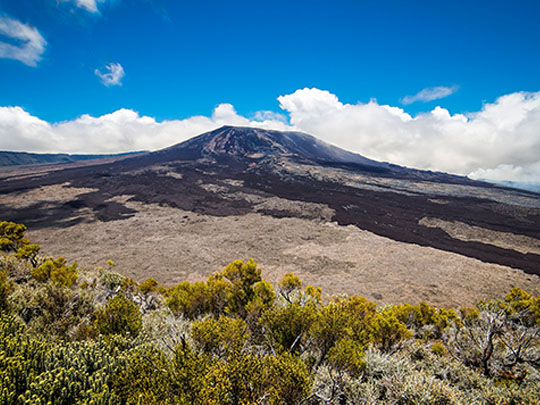
1 – Piton de la Fournaise (also above)
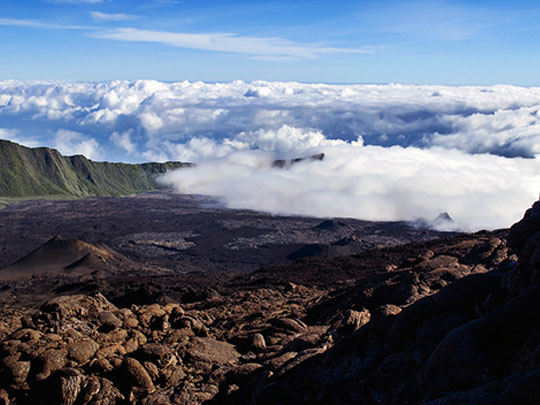
Piton de la Fournaise, a 2,632 m shield volcano about half a million years old in the south-east of Réunion, is described by its observatory as one of the most active volcanoes in the world, and forms part of the Pitons, cirques and remparts inscribed by UNESCO in 2010.
Piton de la Fournaise’s sights include the Pas de Bellecombe viewpoint over the horseshoe-shaped Enclos Fouqué caldera, about 8 km wide, the small cone of Formica Leo, the Dolomieu crater, the Plaine des Sables and the lava flows of the Grand Brûlé on the coast.
Piton de la Fournaise sent lava into Piton Sainte-Rose in April 1977, where it surrounded the church, burned its gate and stopped at the entrance, after which the church became Notre-Dame-des-Laves, and in April 2007 the floor of the Dolomieu crater dropped about 340 m during the largest eruption on record.
2 – Cirque de Mafate
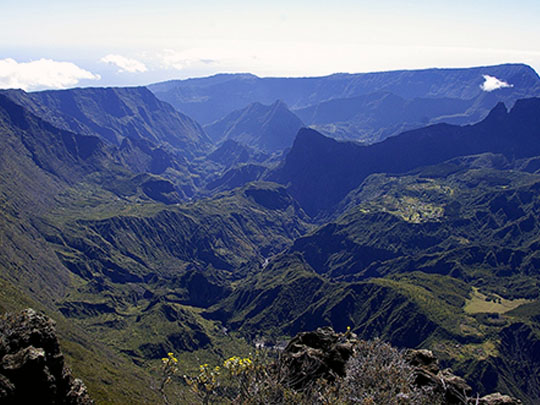

Cirque de Mafate, a basin of about 10,000 ha carved by erosion beneath the Piton des Neiges, the island’s highest peak at about 3,070 m, gave refuge from the early 18th century to maroons, people who had escaped slavery, and was later settled by poor white farmers.
Cirque de Mafate’s sights include its hamlets (îlets), among them Marla below the Col du Taïbit, La Nouvelle, Roche Plate and Aurère, the walls of the cirque rising more than 1,000 m, and the flat-topped Bronchard, said to have been a meeting place of maroon chiefs.
Cirque de Mafate takes its name, by one account, from a maroon chief said to have been killed by François Mussard’s slave-hunters in 1751, or perhaps from a Malagasy word meaning “deadly”, and no road enters it, so supplies come by helicopter and teachers walk to its schools.
3 – Saint-Paul
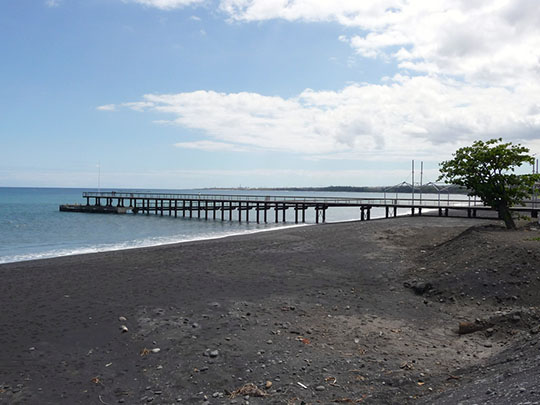
Saint-Paul, on the west coast, is where the first permanent settlers landed in November 1663, the Frenchman Louis Payen with another Frenchman and ten Malagasy companions, and it was the island’s capital until 1738, before a British force under the Irish general Henry Sheehy Keating raided it in 1809.
Saint-Paul’s sights include the seaside cemetery of 1788, the Grotte des Premiers Français, a cave traditionally linked to the first settlers, the old landing stage (Débarcadère), the Villa Rivière and the Étang de Saint-Paul wetland.
Saint-Paul’s seaside cemetery holds a grave traditionally attributed to the pirate Olivier Levasseur, “La Buse”, although he was hanged in 1730, decades before the cemetery was created, while the poet Leconte de Lisle, born in Saint-Paul in 1818, was reburied there in 1977 at his own wish.
4 – Saint-Denis
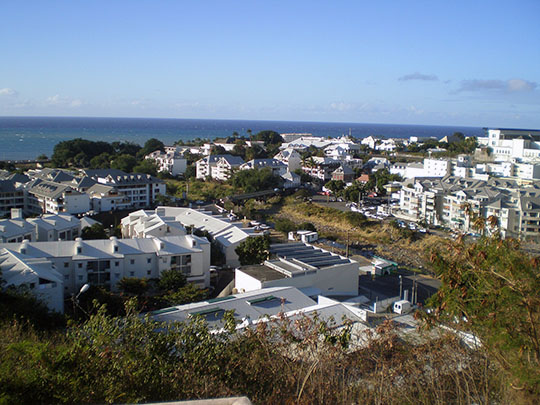

Saint-Denis, on the north coast, replaced Saint-Paul as the island’s capital in 1738, and its Préfecture began as a building of the French East India Company before becoming the governor’s residence in 1770.
Saint-Denis’s sights include the Creole villas of the Rue de Paris, the Jardin de l’État, laid out in the 1760s and 1770s with spices brought in by Pierre Poivre, which became home to a natural history museum opened in 1855, the Noor-e-Islam Mosque of 1905 and the old cannons of the Barachois seafront.
Saint-Denis was the birthplace in 1888 of Roland Garros, who made the first non-stop flight across the Mediterranean in 1913 and is remembered on the Barachois by a statue seated on a propeller, though his name is best known from the Paris tennis stadium named after him in 1928.