
Wikimedia Commons / CC-BY-SA-3.0 / GFDL
Capital: Moscow
Population: 145 million+
Language: Russian (more than thirty other languages hold official status).

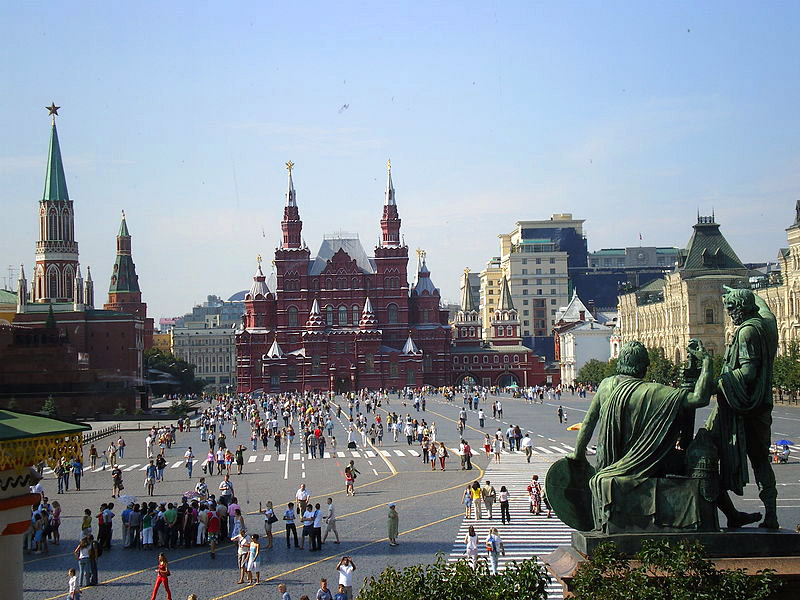
1 – Red Square, Moscow (also above)
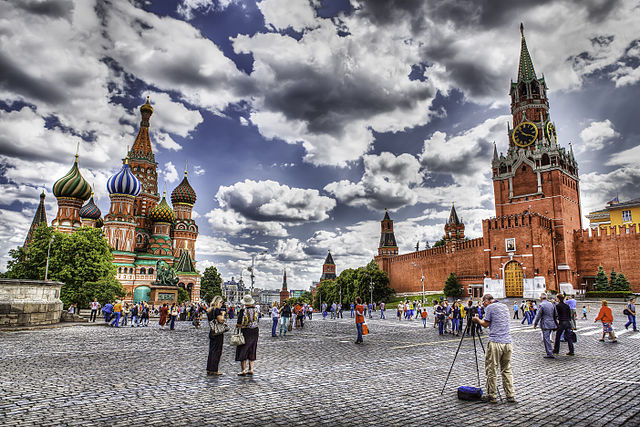
Red Square runs along the eastern wall of the Kremlin, cleared in the 1490s as open ground below the new walls and long a market, and UNESCO listed it with the Kremlin in 1990, its name dating from long before the Bolsheviks.
Take in St Basil’s Cathedral, built for Ivan the Terrible in the 1550s to mark the capture of Kazan, with nine chapels on a single foundation, where the legend that Ivan blinded its architect is undone by records of Postnik working at Kazan afterwards, plus the GUM arcade of 1893, the State Historical Museum and the Kremlin wall.
On 7 November 1941, with German armies closing on Moscow, troops paraded across Red Square and marched straight on to the front, and at the Victory Parade of 24 June 1945 captured German standards were thrown down at the foot of Lenin’s Mausoleum.
2 – Great Kremlin Palace
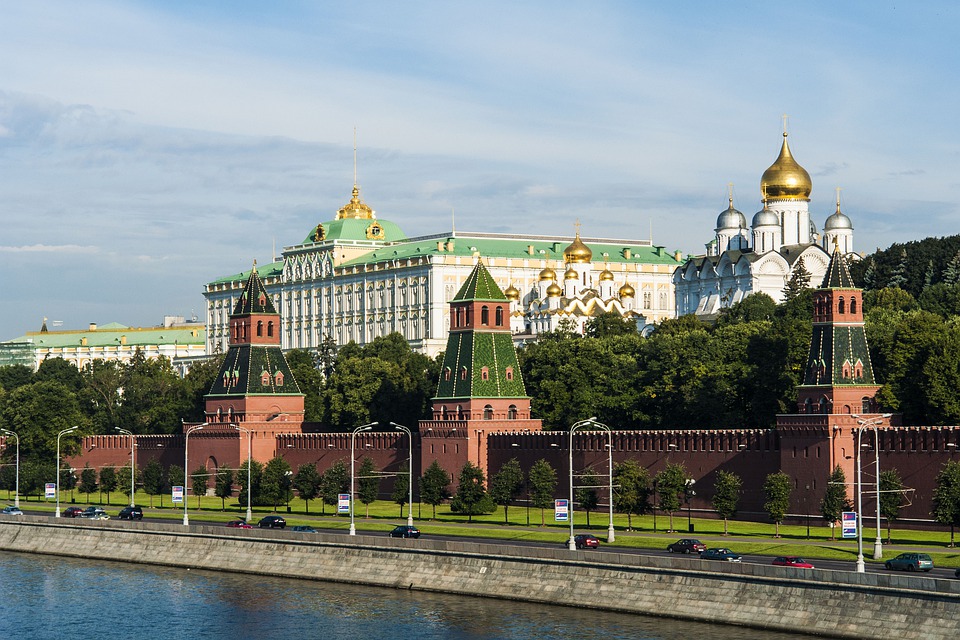
The Great Kremlin Palace, a long yellow-and-white block above the Moscow River inside the Kremlin walls, was built in 1838–49 by a team under Konstantin Thon for Nicholas I, more than a century after Peter the Great moved the court to St Petersburg, to give the tsars a grand Moscow residence.
Behind the facade lie five halls named for the empire’s orders of chivalry, the largest being St George’s Hall, its plaques listing units and holders of the Order of St George, while the wider Kremlin holds Cathedral Square, the Tsar Bell, the Tsar Cannon and the Armoury.
In 1941 the architect Boris Iofan camouflaged the Kremlin against German bombers, painting roofs to look like ordinary houses and disguising its towers, and the Great Kremlin Palace later became the official residence of the president of Russia.
3 – Grand Peterhof Palace
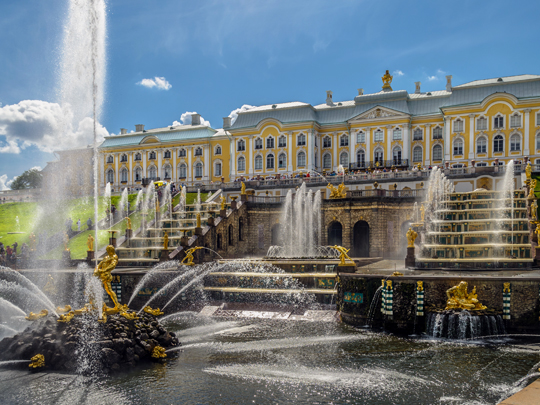
The Grand Peterhof Palace, on the Gulf of Finland roughly 25–30 km west of St Petersburg, was begun by Peter the Great in 1714 and enlarged by Rastrelli in the 1740s and 1750s, and German troops who held Peterhof from 1941 to 1944 left the palace blown up and burned.
Below the palace, the Grand Cascade has 64 fountains and more than 200 sculptures, all fed by gravity, with no pumps, through about 20 km of channels from springs on the Ropsha heights, and the fountains first ran in 1721.
The gilded Samson tearing open a lion’s jaws marks Peter’s 1709 victory over Sweden at Poltava, where Limerick-born Peter Lacy fought before rising to field marshal in Russian service, and after the original Samson was taken during the occupation, a replica returned to Peterhof in 1947.
4 – Church of the Saviour on Blood, St Petersburg
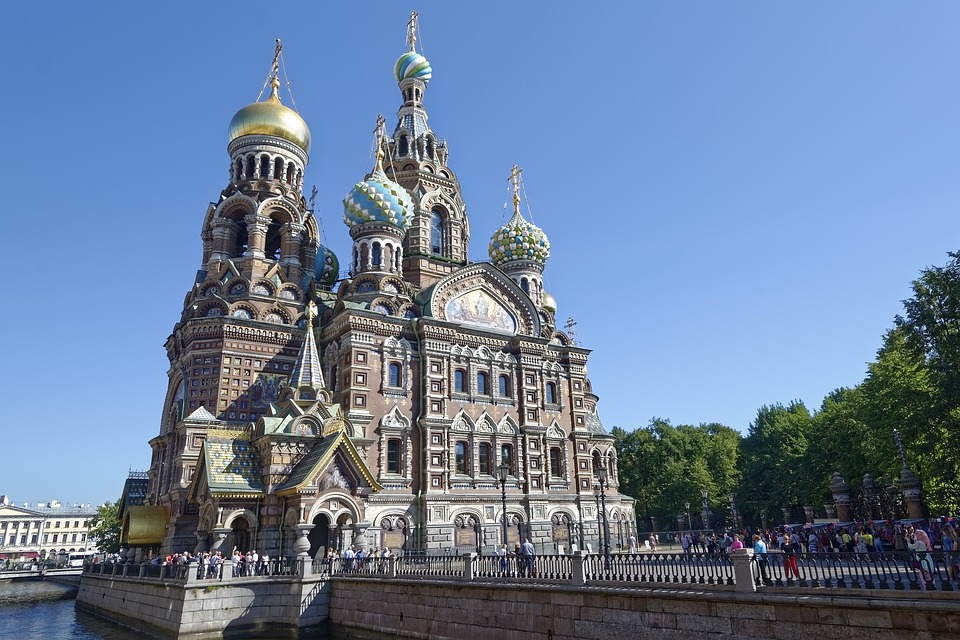
The Church of the Saviour on Spilled Blood stands on the Griboedov Canal in St Petersburg, on the spot where Tsar Alexander II was fatally wounded by a revolutionary’s bomb on 13 March 1881, and his son Alexander III had it built between 1883 and 1907.
Step inside for about 7,000 m² of mosaics covering the walls and ceilings, and the shrine built over the original cobblestones where the tsar fell.
During the Siege of Leningrad the church served as a morgue, a German shell lodged in the building was removed by sappers only in 1961, its Soviet-era use as a vegetable store earned it the nickname “Saviour on Potatoes”, and after a restoration said to have taken 27 years, longer than the original build, it reopened as a museum in 1997.
5 – Bolshoi Theatre, Moscow
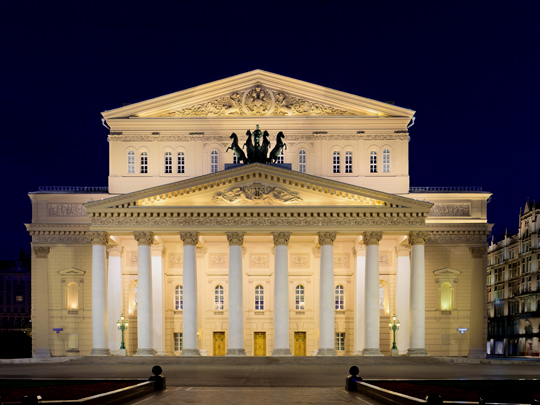
The Bolshoi Theatre company is traditionally dated to 1776, when Catherine II granted Prince Pyotr Urusov the right to stage performances in Moscow, and after the 1825 theatre burned in 1853, Alberto Cavos rebuilt it in 1856.
Admire the columned portico crowned by Pyotr Klodt’s bronze quadriga of Apollo, then the auditorium, closed from 2005 to 2011 for a renovation planned to take three years, officially costing 21 billion roubles, though critics alleged far more.
On 28 October 1941 a 500 kg German bomb broke through the facade of the Bolshoi and exploded in the lobby, and the theatre reopened after repairs in 1943, while its portico appeared on the 100-rouble note from 1997 until a 2022 redesign.
6 – Catherine Palace, Tsarskoye Selo
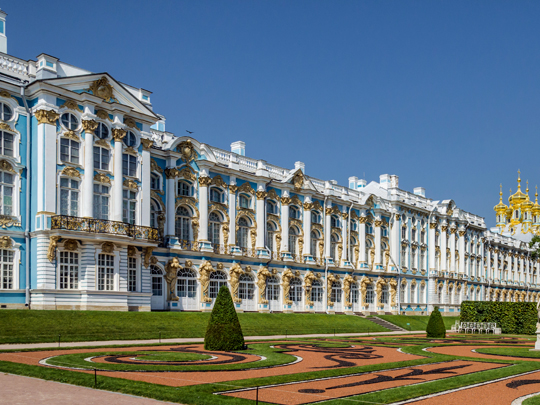
The Catherine Palace at Tsarskoye Selo, about 25–30 km south of St Petersburg, was rebuilt by Rastrelli in the 1750s for Empress Elizabeth from the smaller palace of her mother, Catherine I, and was largely destroyed during the German occupation in WWII, with restoration beginning in 1957.
See the azure-and-white facade, some 300 m long, the Great Hall, the neoclassical rooms designed by Scottish architect Charles Cameron for Catherine the Great and the reconstructed Amber Room, recreated in 2003.
The original Amber Room, more than six tonnes of amber given to Peter the Great by Frederick William I of Prussia in 1716, was dismantled by German troops in 36 hours in 1941 and shipped to Königsberg in 27 crates, and searches since the war have failed to find it, with many historians thinking it was probably destroyed in 1945.
7 – Kazan Cathedral

Kazan Cathedral, on Nevsky Prospekt in St Petersburg, was built in 1801–11 to house the icon of Our Lady of Kazan, to a design by Andrey Voronikhin, who was born a serf on the Stroganov estates and freed in his mid-twenties.
Walk through the sweeping colonnade of 96 Corinthian columns, half of a plan whose matching second colonnade was never built, then see the tomb of Field Marshal Mikhail Kutuzov inside.
Kutuzov is said to have prayed at Kazan Cathedral before leaving to fight Napoleon in 1812, and was buried here in 1813 among trophies including the keys of captured cities, and in 1932 the Soviet state turned the cathedral into the Museum of the History of Religion and Atheism.
8 – Winter Palace & Alexander Column, St. Petersburg
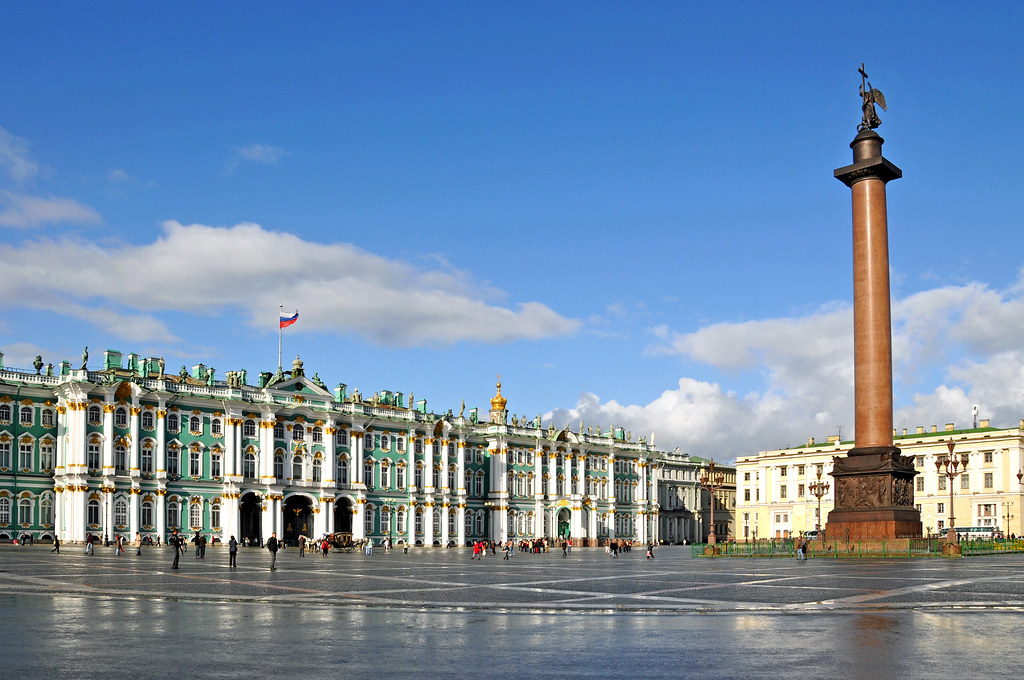
The Winter Palace, the fourth on the site, was built by Rastrelli in 1754–62 for Empress Elizabeth and was the official residence of Russia’s emperors until 1917, and the Alexander Column in front honours Alexander I and the defeat of Napoleon.
Explore the Hermitage, which uses the Winter Palace, with its more than 1,000 rooms, as its main building, then look at Montferrand’s column, a single granite shaft of about 600 tonnes raised by about 3,000 men in under two hours in 1832 and held in place by nothing but its own weight.
The famous picture of crowds storming the Winter Palace in October 1917 comes from a 1920 re-enactment, and in WWII more than a million objects from the Hermitage were evacuated east while people sheltered in its basements during the siege.
9 – Bronze Horseman, Saint Petersburg
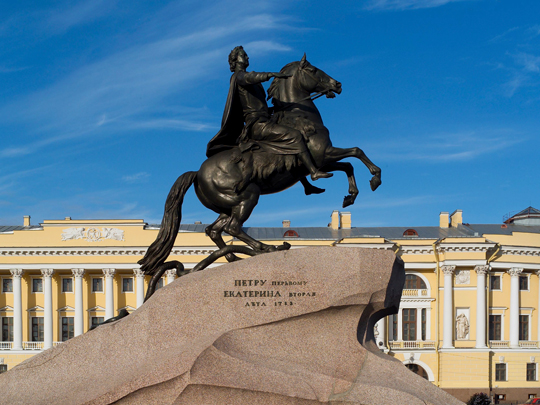
The Bronze Horseman, on Senate Square in St Petersburg, is Catherine the Great’s monument to Peter the Great, unveiled in 1782 with the inscription “Petro Primo Catharina Secunda” (to Peter the First from Catherine the Second).
See Étienne Falconet’s rearing horse with a serpent beneath its hooves, standing for Peter’s enemies and doubling as a third support, on the Thunder Stone, a granite boulder of about 1,500 tonnes dragged about 6 km from Lakhta by 400 men using capstans and bronze balls in 1769–70.
Guinness World Records names the Thunder Stone the largest stone moved by human power alone, Falconet left Russia in 1778 without seeing the statue unveiled, and during the Siege of Leningrad the Bronze Horseman was buried under sandbags and boards, in keeping with a legend that the city would not fall while it stood.
10 – Lenin’s Mausoleum
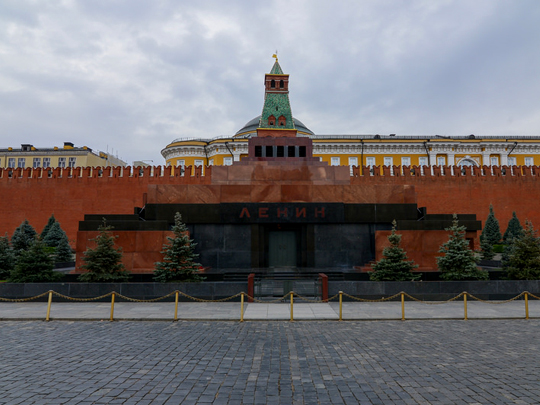
Lenin’s Mausoleum, against the Kremlin wall on Red Square, holds the embalmed body of Lenin, who died in January 1924, and the building by Alexey Shchusev, completed in 1930, was the third in six years after two wooden versions.
Beside Lenin’s Mausoleum lies the Kremlin Wall Necropolis, with the graves of Stalin, Brezhnev, Andropov and Chernenko and the remains of Yuri Gagarin in the wall itself, while inside the mausoleum Lenin’s organs and brain have been removed and his eyes replaced.
In July 1941 Lenin’s body was secretly evacuated to Tyumen in Siberia and returned only in March 1945, so when Stalin took the salute from the mausoleum at the November 1941 parade, the tomb beneath him was empty.
11 – Mamayev Kurgan, Volgograd
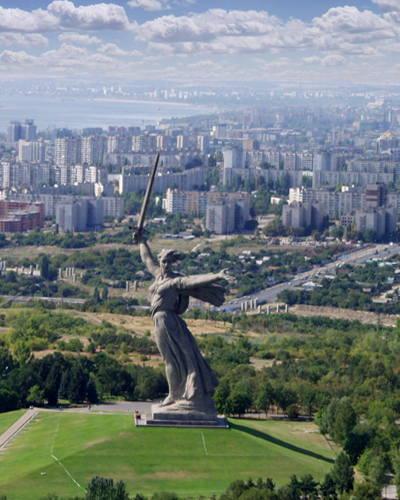
Mamayev Kurgan, the hill marked Height 102.0 on wartime maps, overlooked Stalingrad and the Volga crossings and changed hands repeatedly during the Battle of Stalingrad (1942–43), for which estimates of total casualties range from about 800,000 to 1.5 million.
Climb the steps, said to number 200 for the days of the battle, past ruined-wall reliefs to the Hall of Military Glory, where a giant hand holds a torch bearing the eternal flame, an honour guard stands watch and some 7,200 names line the walls.
More than 34,000 soldiers are buried on Mamayev Kurgan, and The Motherland Calls, 85 m from base to sword tip, was the tallest statue in the world when it was finished in 1967, its 8,000 tonnes simply standing on its foundation, held in place by its own weight.
12 – Lake Baikal
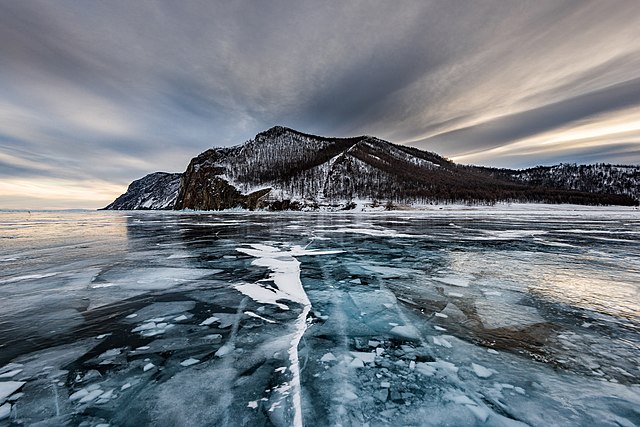
Lake Baikal, in southern Siberia, fills an active continental rift some 25 million years old, making it the oldest lake in the world and, at about 1,640 m, the deepest, and UNESCO listed it in 1996.
Come in winter, when Baikal freezes over under ice up to about two metres thick, to stand on a lake that holds about a fifth of the world’s unfrozen surface fresh water, more than all five North American Great Lakes combined.
Lake Baikal is home to tens of thousands of nerpa, often described as the only seal species that lives exclusively in fresh water, and how their ancestors reached a lake so far from any ocean is uncertain, though most theories point to Arctic ringed seals.
13 – Valley of Geysers, Kamchatka
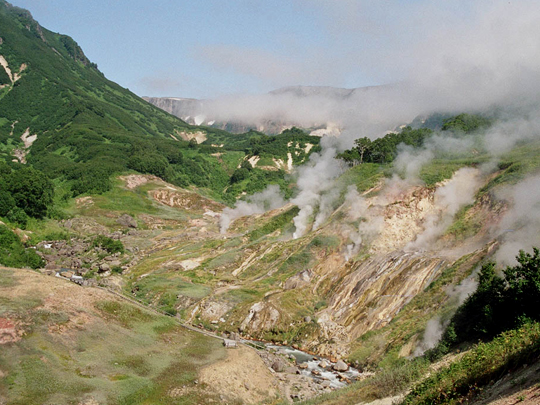
The Valley of Geysers, a gorge of about 6 km in the Kronotsky Reserve on the Kamchatka Peninsula, was unknown to science until April 1941, when geologist Tatyana Ustinova and guide Anisifor Krupenin came upon its first geyser, and it is part of the Volcanoes of Kamchatka UNESCO site (1996).
See dozens of geysers along the Geysernaya River, in what is often ranked the second-largest geyser field in the world after Yellowstone, together with hot springs, mud pots and steam vents.
On 3 June 2007 a landslide dammed the river and buried geysers in the Valley of Geysers, including Pervenets (“Firstborn”), the first Ustinova found, and in 2014 a further landslide and mudflow breached the dam and drained most of the lake, letting some flooded geysers erupt again.
14 – Mount Elbrus
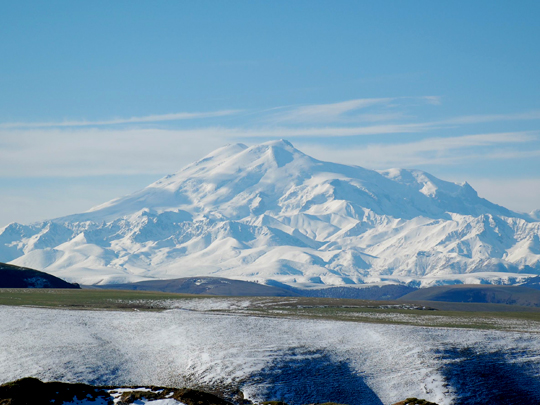
Mount Elbrus, a volcano in the Caucasus of southern Russia that last erupted around AD 50, rises to 5,642 m and is counted as Europe’s highest mountain under the usual boundary along the Caucasus watershed, though older boundaries make Mont Blanc the highest.
Its twin summits were first climbed in 1829 (east) by local guide Khillar Khachirov with a Russian imperial expedition and in 1874 (west) by a British party with Swiss guide Peter Knubel, and cable cars carry visitors up the slopes to about 3,800 m.
On 21 August 1942 German mountain troops raised the Reich war flag on the summit of Elbrus, which according to Albert Speer left Hitler furious, and Soviet climbers took the flags down in February 1943.
15 – Dormition Cathedral, Vladimir
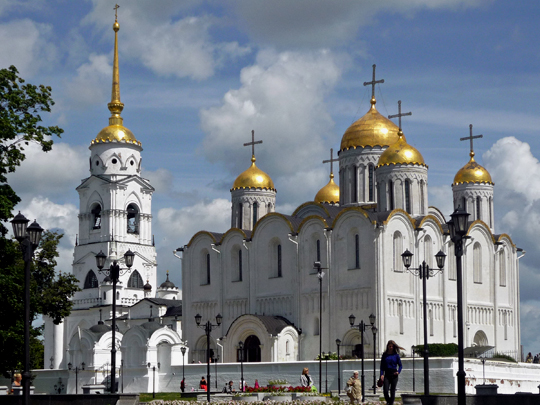
The Dormition Cathedral in Vladimir, above the Klyazma river, was built in 1158–60 by Prince Andrei Bogolyubsky and enlarged with five domes after a fire in 1185, and in February 1238, according to the chronicles, Mongol invaders set it alight with the prince’s family, the bishop and townspeople sheltering inside.
See the white limestone walls, the gilded domes and about 300 m² of frescoes painted in 1408 by Andrei Rublev and Daniil Chorny, including a Last Judgement, in a cathedral that is part of the UNESCO-listed White Monuments of Vladimir and Suzdal (1992).
The Dormition Cathedral was the largest church in Russia for centuries, and Ivan III’s Italian architect Aristotele Fioravanti was sent to study it before building the Dormition Cathedral in the Moscow Kremlin in the 1470s.
16 – Novodevichy Convent, Moscow
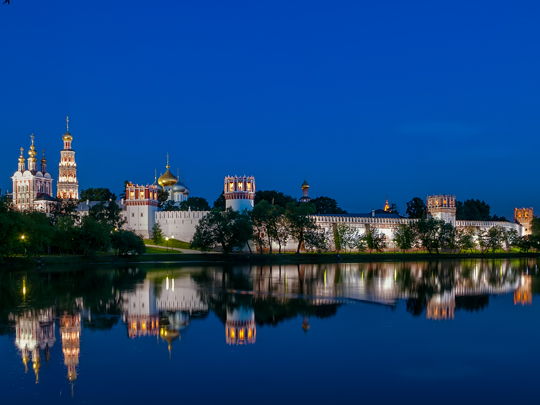
Novodevichy Convent was founded in 1524 by Vasili III, a decade after he took Smolensk, as one of a ring of fortified monasteries guarding Moscow’s southern approaches, and Peter the Great confined his half-sister and former regent Sophia there in 1689.
See the walled ensemble, listed by UNESCO in 2004, with the Smolensk Cathedral at its heart and the Moscow Baroque towers and bell tower added in the 1680s and 1690s.
The cemetery beyond the south wall of Novodevichy holds Gogol, as well as Khrushchev, buried there in 1971 without the honours given to his predecessors in the Kremlin wall, and later Yeltsin and Gorbachev.
17 – The Trans-Siberian Railway
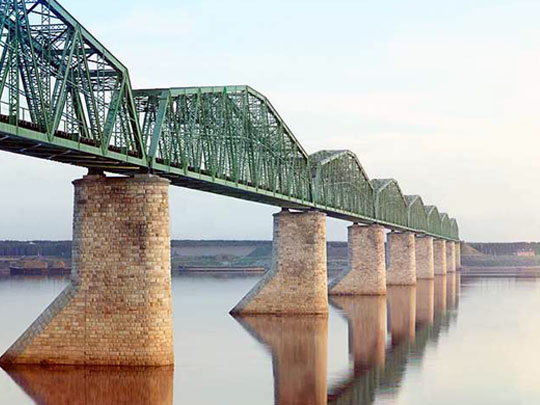
The Trans-Siberian Railway runs 9,289 km from Moscow to Vladivostok, begun in 1891 when Tsarevich Nicholas inaugurated it at Vladivostok, and ran entirely on Russian soil only from 1916, when the bridge over the Amur at Khabarovsk opened.
The journey takes about six days, crossing the Urals and the West Siberian Plain and following the southern shore of Lake Baikal to Vladivostok, seven hours ahead of Moscow, with branches heading south as the Trans-Mongolian and Trans-Manchurian lines.
In 1941 more than 1,500 factories were moved east beyond the Urals as German armies advanced, and Lend-Lease supplies from the United States shipped to Vladivostok travelled west along the Trans-Siberian to the front.
18 – Kizhi Pogost
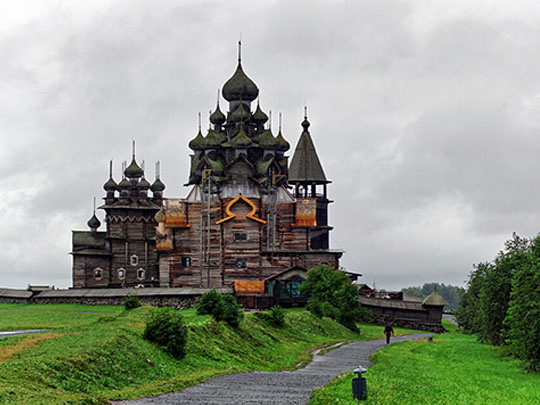
Kizhi Pogost, on a narrow island in Lake Onega in Karelia, is a walled churchyard with two wooden churches and a bell tower, listed by UNESCO in 1990, and the area around it was under Finnish occupation from 1941 to 1944.
See the Church of the Transfiguration of 1714, 37 m tall with 22 domes covered in aspen shingles, the nine-domed Church of the Intercession of 1764 and the bell tower, built in 1862 and rebuilt in 1874.
Legend says the Transfiguration Church at Kizhi was built without a single nail and that its carpenter, Nestor, threw his axe into the lake when he finished, and although the log walls are indeed nailless, nails were used in the domes and shingles.
19 – Piskaryovskoye Cemetery
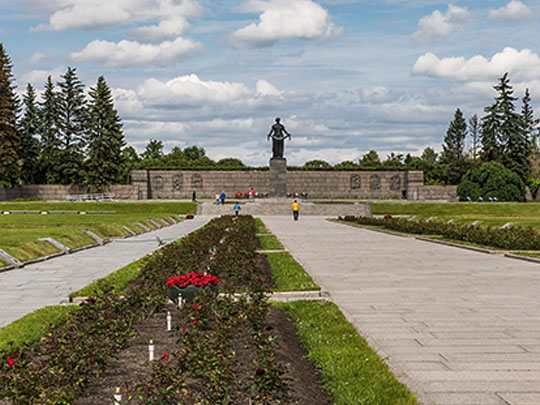
Piskaryovskoye Memorial Cemetery, on the northern edge of St Petersburg, holds some half a million people in 186 mass graves, most of them civilians who died in the Siege of Leningrad (8 September 1941 – 27 January 1944), in which estimates of civilian deaths range from about 700,000 to more than a million, and its memorial opened on 9 May 1960.
Walk the 480 m path from the eternal flame past the grassy mounds, each marked only with a year, to the bronze Mother Motherland by Vera Isaeva and Robert Taurit, with Olga Bergholz’s verse on the wall behind ending “No one is forgotten, and nothing is forgotten”.
The museum at Piskaryovskoye shows a copy of the diary of schoolgirl Tanya Savicheva, which records the deaths of her family one by one and ends “Only Tanya is left”, and on 9 August 1942 the city’s starving radio orchestra played Shostakovich’s Seventh “Leningrad” Symphony, broadcast by loudspeaker towards the German lines.
20 – Veliky Novgorod
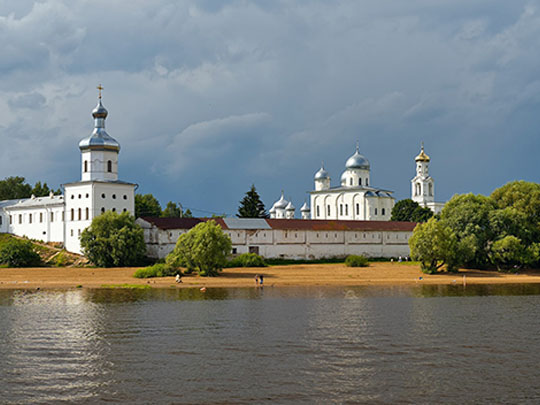
Veliky Novgorod, on the Volkhov River just below Lake Ilmen, is where Rurik was invited to rule in 862, according to the Primary Chronicle, and it governed itself as the Novgorod Republic, with its own veche assembly, from 1136 until Ivan III annexed it to Muscovy in 1478.
See the Kremlin (Detinets), St Sophia Cathedral, built in 1045–50 and one of Russia’s oldest churches, with 12th-century bronze doors made in Magdeburg, the Millennium of Russia monument of 1862 and the outlying medieval churches, all listed by UNESCO in 1992.
Since 1951 archaeologists in Novgorod have dug up more than 1,100 medieval letters written on birch bark, including the 13th-century alphabet drills and doodles of a small boy called Onfim, and during the German occupation of 1941–44 the Millennium monument was taken apart for shipment to Germany but was put back up in 1944.
21 – Solovetsky Islands
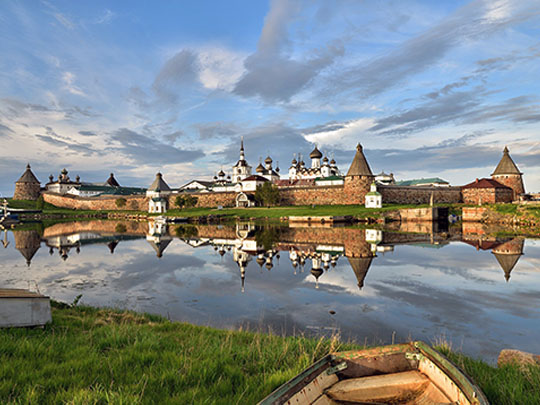
The Solovetsky Islands, in the White Sea, grew around a monastery founded in the 1430s and ringed in the 1580s and 1590s by fortress walls built of huge boulders, and in July 1854, during the Crimean War, British warships shelled the monastery for hours without success.
Explore the boulder-walled kremlin and its cathedrals, the hermitages and canals of the monks, Sekirnaya Hill and the prehistoric stone labyrinths, all part of the UNESCO listing of the Solovetsky Islands in 1992.
From 1923 to 1939 the monastery held one of the first Soviet special prison camps, which historians describe as a prototype for the Gulag, and in 1990 a boulder from the Solovetsky Islands was set up on Lubyanka Square in Moscow as a memorial to the victims of political repression.
22 – Yekaterinburg
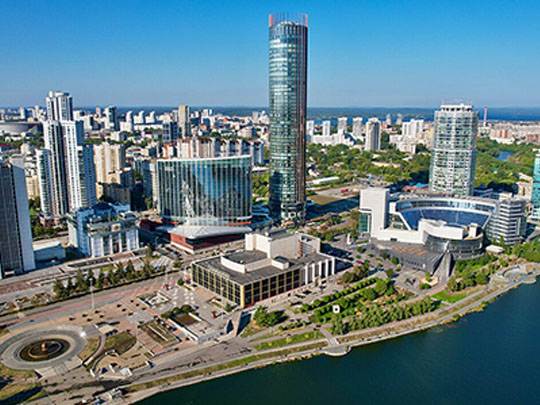
Yekaterinburg, on the eastern slope of the Urals just east of the boundary between Europe and Asia, was founded in 1723 as an ironworks town and named after Catherine I, the wife of Peter the Great, and it was called Sverdlovsk from 1924 to 1991.
See the Church on the Blood, consecrated in 2003 with its altar over the site of the basement where the Romanovs died, the monastery at Ganina Yama, where their bodies were first thrown into a mine pit, and the Europe–Asia border markers just west of the city.
On the night of 16–17 July 1918 Nicholas II and his family were shot in the basement of the Ipatiev House in Yekaterinburg, their remains were identified by DNA in the 1990s and reburied in St Petersburg in 1998, and DNA tests in 1994 also showed that Anna Anderson, who had long claimed to be Grand Duchess Anastasia, was not a Romanov.
23 – Kaliningrad
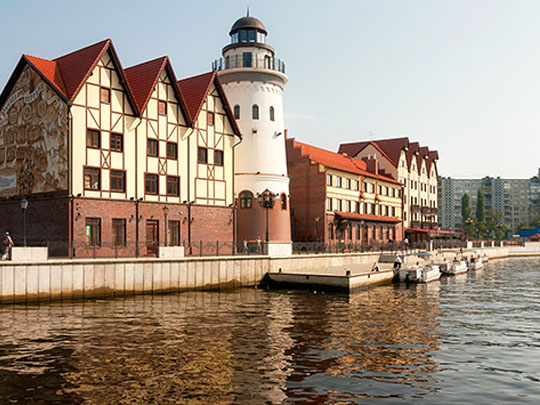
Kaliningrad was founded as Königsberg by the Teutonic Knights in 1255 and became capital of the Duchy of Prussia, where Frederick I crowned himself King in Prussia in 1701, and after the Soviet assault of April 1945 it was placed under Soviet administration, renamed in 1946 and its remaining German population expelled in 1947–48.
See the rebuilt cathedral on Kneiphof island with the tomb of Immanuel Kant, who was born and died in the city, the Amber Museum in a 19th-century fortress tower and, out on the coast, the Curonian Spit, a UNESCO site shared with Lithuania, in a region holding about 90% of the world’s amber deposits.
The Seven Bridges of Königsberg puzzle led Leonhard Euler to prove in the 1730s that no walk could cross each bridge exactly once, a solution counted as the first theorem of graph theory, and RAF raids in August 1944 and the April 1945 assault left most of the old city of Kaliningrad in ruins.
24 – Kazan Kremlin
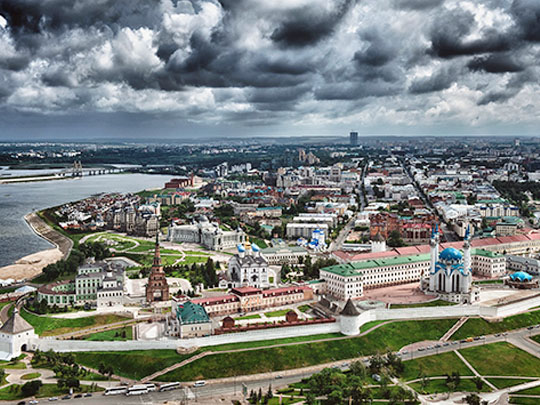
The Kazan Kremlin stands above the meeting of the Kazanka and the Volga in Kazan, capital of Tatarstan, and was the stronghold of the Kazan Khanate until Ivan the Terrible captured it in 1552, and UNESCO, which listed it in 2000, calls it the only surviving Tatar fortress in Russia.
Inside the white walls, see the Annunciation Cathedral, the leaning Söyembikä Tower, the blue-and-white Qolşärif Mosque, built in 1996–2005 and named after the imam who died defending the city in 1552, the Spasskaya Tower gate and the Hermitage-Kazan Centre.
Outside the southern walls of the Kazan Kremlin stands the 1966 monument to the Tatar poet Musa Cälil, guillotined by the Nazis in Berlin in 1944, whose poems written in prison, the “Moabit Notebooks”, won him a posthumous Lenin Prize.