
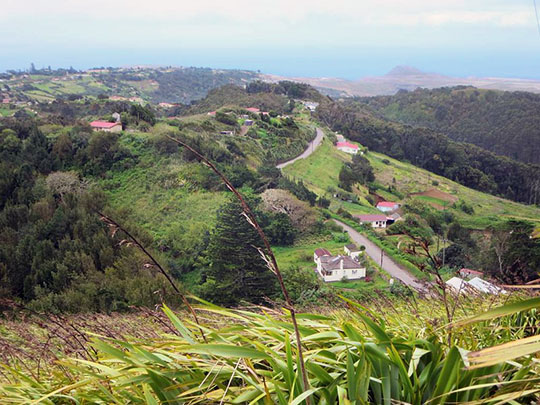
“Longwood” by David Stanley, CC BY 2.0
Capital: Jamestown
Population: 5,000+
Language: English
1 – Longwood House (also above)
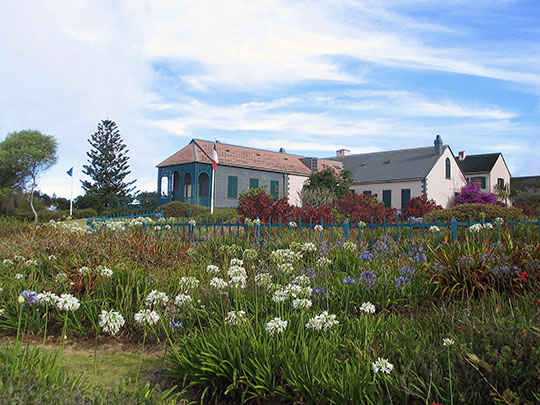

Longwood House, inland on Saint Helena, was Napoleon’s home in exile from 10 December 1815 until his death on 5 May 1821, under the watch of Governor Sir Hudson Lowe, born in Galway to an English father.
Longwood House’s sights include the rooms where Napoleon lived and died, the Briars pavilion where he lodged on arrival in October 1815 and his tomb in the Sane Valley, which he called the Valley of the Geraniums, all held by France since 1858 or 1959.
Longwood House saw Napoleon tended by the Irish surgeon Barry O’Meara, dismissed in 1818 after quarrelling with Lowe, while his grave stayed nameless for 19 years because the French wanted “Napoléon” and Lowe insisted on “Napoleon Bonaparte.”
2 – Jamestown, Rupert’s Valley
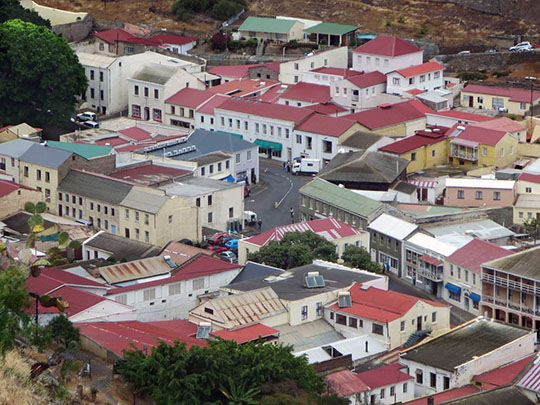
Jamestown, founded by the English East India Company in 1659 and named after the Duke of York, fills a narrow valley running inland from James Bay, where the tanker RFA Darkdale was torpedoed at anchor by U-68 on 22 October 1941, with the loss of 41 lives.
Jamestown’s sights include the Castle, the Georgian buildings of Main Street, St James’ Church, completed in the 1770s and often described as the oldest Anglican church south of the Equator, and Jacob’s Ladder, whose 699 steps began in 1829 as an inclined railway up to Ladder Hill Fort.
Jamestown’s neighbour, Rupert’s Valley, received more than 25,000 Africans freed from slave ships by the Royal Navy between 1840 and the 1860s, and excavations in 2006–08 uncovered 325 of them, among at least 5,000 thought by the archaeologists to be buried there.
3 – Edinburgh of the Seven Seas
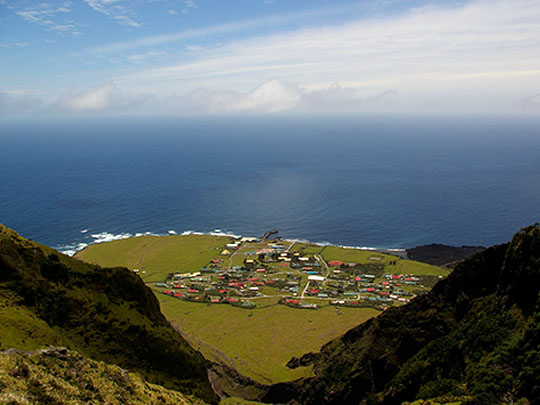
Edinburgh of the Seven Seas, on Tristan da Cunha, began with a British garrison landed in 1816 so the island could not be used to free Napoleon, and Corporal William Glass of Kelso, Scotland, stayed on with his family when the soldiers left in 1817, founding the settlement.
Edinburgh of the Seven Seas’ sights include the cone of the 1961 volcano beside the village, Calshot Harbour and Queen Mary’s Peak, which rises to 2,062 m above the settlement.
Edinburgh of the Seven Seas, named after Prince Alfred, Duke of Edinburgh, who visited in 1867, was abandoned when an eruption began beside it on 10 October 1961 and all 264 islanders were taken to Britain, returning in 1963 and naming their harbour after Calshot, the Hampshire camp where they had lived.