

Wikimedia Commons / CC-BY-SA-3.0 / GFDL
Capital: Edinburgh
Population: 5.5 million+
Language: English, Scots and Scottish Gaelic.

1 – Edinburgh (also above)

Edinburgh, the capital of Scotland, grew up around a castle on an extinct volcanic plug, and UNESCO listed its medieval Old Town and its Georgian New Town, laid out to James Craig’s plan of 1767, in 1995 as a major centre of the 18th-century Enlightenment.
Walk the Royal Mile from Edinburgh Castle, home to the Honours of Scotland and the Stone of Scone, down to the Palace of Holyroodhouse and the Scottish Parliament, then climb Arthur’s Seat, another extinct volcano, or Calton Hill for the view.
On 16 October 1939 German bombers attacked warships in the Firth of Forth near Edinburgh in the first German air raid on Britain of WWII, and the Cowgate, then known as “Little Ireland”, was where James Connolly, executed after the 1916 Rising, was born in 1868.
2 – Eilean Donan

Eilean Donan sits on a small tidal island where Loch Duich, Loch Long and Loch Alsh meet in the western Highlands, and its name most probably comes from St Donnán, an Irish saint martyred on Eigg in 617.
Cross the arched stone footbridge to the keep, rebuilt by Lt Col John MacRae-Gilstrap and completed in 1932, so the castle you see is mostly a 20th-century reconstruction of the 13th-century stronghold of the Mackenzies of Kintail.
In 1719 a few dozen Spanish soldiers held Eilean Donan for the Jacobites until Royal Navy frigates bombarded it and a landing party blew it up with the defenders’ own gunpowder, and the rebuilt castle went on to star in Highlander (1986) and The World Is Not Enough (1999).
3 – Loch Ness

Loch Ness fills a long, deep trench along the Great Glen Fault and holds about 7.5 km³ of water, the greatest volume of any loch in the British Isles, and Urquhart Castle on its shore was blown up in 1692 so the Jacobites could not use it.
Explore the ruins of Urquhart Castle and its Grant Tower, then follow the shore to Drumnadrochit and to Fort Augustus, where the Caledonian Canal enters the loch.
The earliest “monster” story comes from Adomnán’s Life of Columba, written about 700, in which the Donegal-born saint drives off a beast in the River Ness, the famous 1934 “Surgeon’s Photograph” of Nessie was exposed as a hoax in the 1990s, and in 1985 a Wellington bomber that ditched in Loch Ness on 31 December 1940 was raised from the bottom.
4 – Stirling

Stirling grew up around a castle on a volcanic plug above the River Forth, long called the “key to the Highlands”, and on 11 September 1297 William Wallace and Andrew Moray destroyed an English army as it crossed the narrow bridge over the Forth below Stirling Castle.
See Stirling Castle, where Mary, Queen of Scots was crowned in 1543, with its restored Great Hall and the carved oak Stirling Heads, then climb the National Wallace Monument on Abbey Craig, finished in 1869, to see the sword believed to be Wallace’s.
Braveheart (1995), Mel Gibson’s Oscar-winning film about William Wallace’s victory at Stirling, was shot mostly in Ireland, with Irish Army reservists playing both armies, and its Battle of Stirling Bridge famously has no bridge.
5 – Glasgow

Glasgow, on the River Clyde, grew from the church of St Mungo, buried here in 614, into a merchant and shipbuilding city whose Clydebank yards launched the Lusitania, HMS Hood, the Queen Mary and the QE2, and its cathedral, consecrated in 1197, is the only mainland Scottish medieval cathedral to come through the Reformation largely intact.
See Glasgow Cathedral and St Mungo’s tomb in its lower church, the City Chambers in George Square, opened by Queen Victoria in 1888, and Charles Rennie Mackintosh’s Glasgow School of Art.
On the nights of 13 and 14 March 1941 German bombers struck Clydebank in the worst destruction and loss of civilian life in Scotland during the war, killing 528 people there and leaving only a handful of its 12,000 or so houses undamaged, while the Glasgow City Chambers later played the Vatican in Heavenly Pursuits (1986).
6 – Aberdeen

Aberdeen sits on the North Sea coast between the mouths of the Dee and the Don, received its earliest surviving charter from William the Lion in 1179, and grew into a great trading port that became the centre of Britain’s North Sea oil industry after the Forties field was found in 1970.
See King’s College in Old Aberdeen, founded in 1495, the fortified granite St Machar’s Cathedral and the soaring front of Marischal College, often described as the second-largest granite building in the world after the Escorial in Spain.
Aberdeen suffered more than 30 German raids in WWII, and on 21 April 1943 its worst raid killed 98 civilians and 27 servicemen in about 45 minutes, hitting Bedford Road and the Middlefield area hardest.
7 – Fingal’s Cave

Fingal’s Cave cuts into Staffa, a small uninhabited island off Mull built of six-sided basalt columns that formed as lava cooled some 50–60 million years ago, the twin of the Giant’s Causeway in Antrim, and the naturalist Joseph Banks made it famous after his visit in 1772.
Boat trips land beside the columns, where a causeway path leads into Fingal’s Cave, and puffins breed on Staffa, cared for by the National Trust for Scotland since 1986.
The cave takes its name from Fingal, James Macpherson’s version of Fionn mac Cumhaill in the Ossian poems, legend makes Staffa the Scottish end of Fionn’s causeway from Antrim, and Mendelssohn’s Hebrides overture grew out of his 1829 trip to the islands, which included Staffa.
8 – Fort William

Fort William, at the head of Loch Linnhe below Ben Nevis, at 1,345 m the highest mountain in the UK, grew around a fort first built in 1654 for Cromwell’s army and rebuilt in 1690, when it was named after William III.
Climb Ben Nevis, finish the West Highland Way, see the eight locks of Telford’s Neptune’s Staircase at Banavie on the Caledonian Canal and ride the Jacobite steam train over the Glenfinnan Viaduct, which appears in four Harry Potter films.
In WWII more than 25,000 men trained with live ammunition at the Commando Basic Training Centre at Achnacarry near Fort William, and the Commando Memorial at Spean Bridge, unveiled in 1952, looks out over the hills that were their training ground.
9 – Isle of Skye


The Isle of Skye, largest of the Inner Hebrides, was MacLeod and MacDonald country, where in 1746 Flora MacDonald smuggled the fugitive Bonnie Prince Charlie across the sea disguised as her Irish maid, “Betty Burke”, and later a flashpoint of the Highland Clearances.
See the jagged Cuillin, the Old Man of Storr and the Quiraing, the pleated cliffs of Kilt Rock and Dunvegan Castle, seat of the MacLeod chiefs since the 13th century.
In 1882 crofters at the Braes on Skye, inspired partly by Ireland’s Land League, clashed with police sent from Glasgow, a stand that led to the Crofters’ Holdings Act of 1886, and some 50 dinosaur footprints at Brothers’ Point are among the oldest stegosaur tracks known.
10 – Glen Coe, Scottish Highlands

Glen Coe, in the western Scottish Highlands, is what remains of an ancient volcano, and on 13 February 1692 soldiers who had been guests of the MacDonalds of Glencoe for over a week turned on their hosts, killing 38 by the traditional count, under an order arranged by the Master of Stair and signed by William III.
Walk beneath the Three Sisters of Bidean nam Bian and Buachaille Etive Mòr, see the reconstructed turf house at the National Trust for Scotland visitor centre and find Ossian’s Cave, named for Oisín, son of Fionn mac Cumhaill, who tradition says was born in the glen.
Glen Coe gave geologists the first detailed description of a collapsed volcanic crater in 1909, and it forms the backdrop to Skyfall (2012), while Hagrid’s hut was built near Clachaig Gully for Harry Potter and the Prisoner of Azkaban.
11 – Inverness

Inverness stands where the River Ness meets the Moray Firth, was awarded city status in 2000 as the capital of the Highlands, and Shakespeare set Macbeth’s castle here.
See Inverness Castle, built in 1835 on the medieval site, the wooded Ness Islands and the Town House of 1882, then head east to the Clava Cairns, a Bronze Age burial site of chambered cairns and standing stones thought to have inspired the stones in Outlander.
On 7 September 1921 Lloyd George broke off his Highland holiday to hold the first British Cabinet meeting outside London in the Inverness Town House, and the “Inverness Formula” drafted there became the basis for the talks that led to the Anglo-Irish Treaty.
12 – Loch Lomond

Loch Lomond, the largest lake in Great Britain by surface area, straddles the Highland Boundary Fault north-west of Glasgow and lies at the heart of Loch Lomond and The Trossachs, established in 2002 as the first national park in Scotland.
Climb Ben Lomond, the most southerly Munro, wander the village of Luss and take a boat to the islands, among them Inchcailloch, with its medieval church ruins, and Inchmurrin, the largest freshwater island in the British Isles.
On Inchcailloch in Loch Lomond, St Kentigerna, daughter of a King of Leinster, lived as a hermit until her death in 733 or 734, and the song “The Bonnie Banks o’ Loch Lomond”, first published around 1841, is often read as a Jacobite soldier’s farewell, though its origins are unknown.
13 – Iona
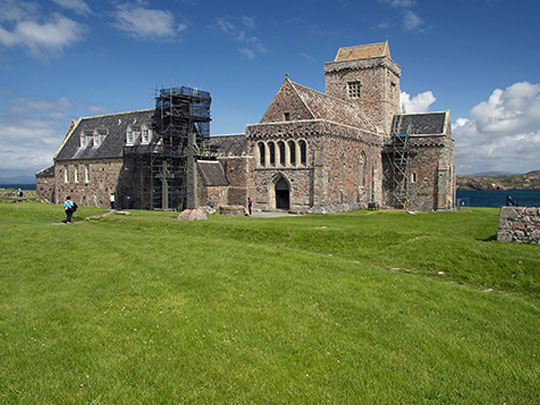
Iona, a small island off the south-west tip of Mull in the Inner Hebrides, is where Columba, born in Donegal around 521, landed from Ireland with 12 companions in 563 and founded the monastery that became the mother house of the Columban Church.
Take the short ferry from Fionnphort to see Iona Abbey, its living quarters rebuilt from 1938 by the Iona Community, St Martin’s Cross, standing in the same spot for over 1,200 years, the medieval nunnery and Reilig Odhráin, where tradition says dozens of early kings lie, Duncan and Macbeth among them.
The Book of Kells was probably made on Iona around 800, before Viking raids, including the killing of 68 monks in 806, drove much of the community to Kells in County Meath, and in Shakespeare’s Macbeth Duncan’s body is “carried to Colmekill”, Iona’s old name.
14 – Heart of Neolithic Orkney
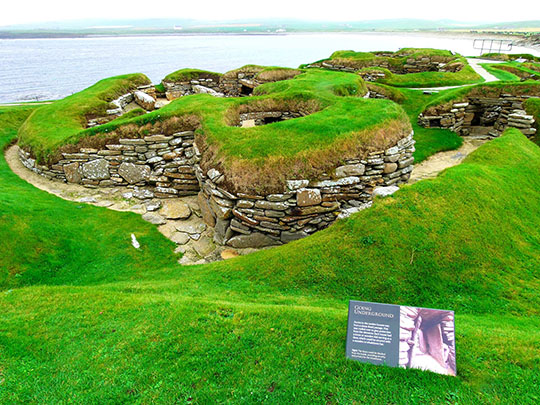
The Heart of Neolithic Orkney, on Mainland Orkney off Scotland’s north coast, brings together four Stone Age monuments around 5,000 years old, Skara Brae, Maeshowe, the Stones of Stenness and the Ring of Brodgar, listed by UNESCO in 1999.
See Skara Brae, a village uncovered by a storm in 1850 with its stone dressers and box-beds in place, walk the Ring of Brodgar, built with 60 stones in a circle more than 100 m across, and stoop into Maeshowe, where the setting sun lights the back wall for weeks around the winter solstice.
Maeshowe belongs to the same family of passage tombs as Newgrange, and Norse visitors who broke into it in the 12th century left more than 30 runic inscriptions, including “Ingigerth is the most beautiful of women” and a claim that a great treasure lies hidden to the north-west.
15 – Culloden
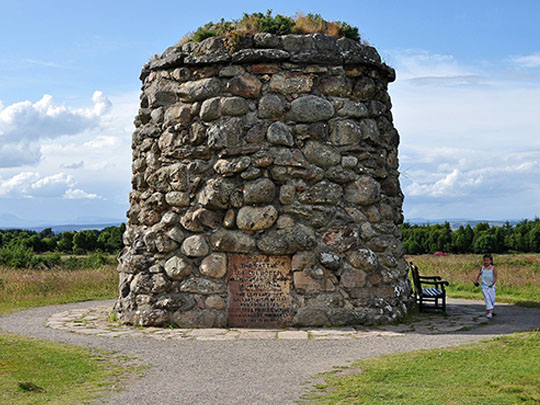
Culloden, on Drummossie Moor east of Inverness, is where on 16 April 1746 the Duke of Cumberland’s government army crushed Bonnie Prince Charlie’s Jacobites in under an hour, ending the last Jacobite rising in what is often called the last pitched battle on British soil.
Walk the battlefield past the clan grave markers and the memorial cairn raised in 1881, see the thatched Leanach Cottage and the Well of the Dead, and start at the National Trust for Scotland visitor centre, opened in 2007–08.
Around 1,250–1,500 Jacobites died at Culloden against roughly 50 government soldiers, the ground was chosen by Charles’s Kerry-born adjutant-general, John O’Sullivan, and the Irish Picquets, about 300 men from France’s Irish Brigade, held off the government dragoons while the Highlanders fled.
16 – Bannockburn
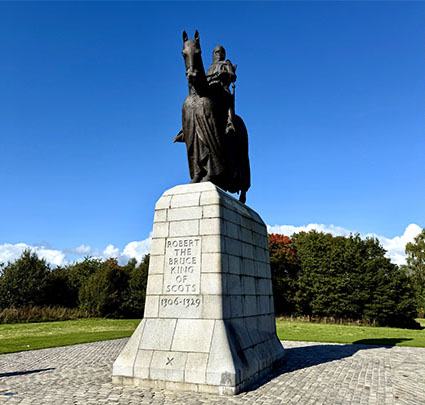
Bannockburn, just south of Stirling, is where on 23–24 June 1314 Robert the Bruce routed the larger army of Edward II, which had marched north to relieve the English garrison besieged in Stirling Castle, in the decisive Scottish victory of the Wars of Independence.
See the Rotunda and Pilkington Jackson’s bronze statue of Bruce on horseback, unveiled in 1964 for the battle’s 650th anniversary, and the National Trust for Scotland’s battle centre, though the exact battlefield is debated.
On the first day at Bannockburn Bruce killed the English knight Henry de Bohun with a blow of his axe, breaking its shaft, and the victory opened the way for his brother Edward to land in Ulster in May 1315, be hailed King of Ireland and die at Faughart, near Dundalk, in 1318.
17 – Arbroath Abbey
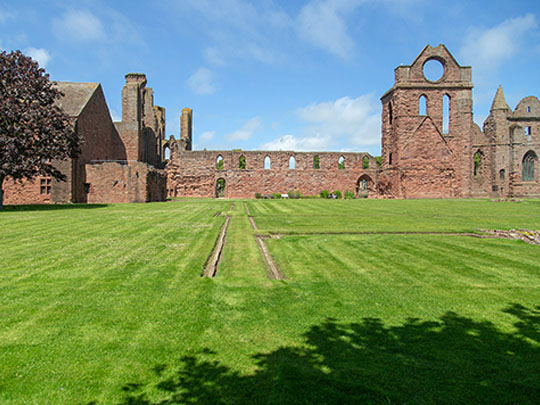
Arbroath Abbey, on the Angus coast north-east of Dundee, was founded in 1178 by William the Lion in memory of Thomas Becket, and William was buried before its high altar in 1214.
Explore the red sandstone ruins and the great round window, the “Round O”, once lit as a beacon for sailors, then the visitor centre, which tells the story of the abbey and its famous letter.
The Declaration of Arbroath, a letter sent in 1320 to Pope John XXII, insists that “as long as a hundred of us remain alive, never will we on any conditions be subjected to the lordship of the English”, and on 11 April 1951 the Stone of Destiny, taken from Westminster Abbey by Glasgow students on Christmas Day 1950, turned up on the high altar of Arbroath Abbey draped in a saltire.
18 – Cairngorms National Park
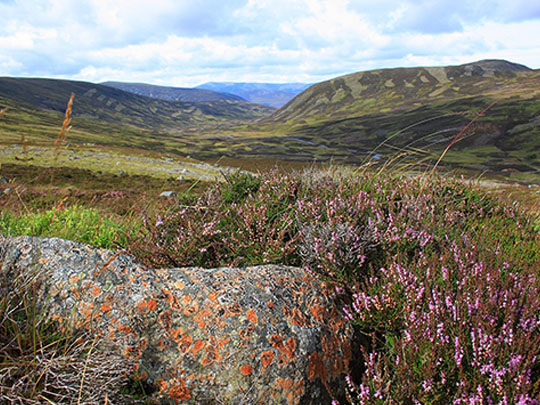

The Cairngorms, in the eastern Highlands, form the heart of Cairngorms National Park, created in 2003 and covering 4,528 km², about 6% of Scotland, with Ben Macdui, at 1,309 m the second-highest mountain in Britain.
Walk the old Caledonian pinewoods around Glenmore and Loch Morlich, meet Britain’s only free-ranging reindeer herd, reintroduced in 1952, ride the funicular up Cairn Gorm, where a 173 mph gust was recorded in 1986, and visit Balmoral, bought by Prince Albert in 1852.
In WWII Norway’s Kompani Linge trained in the Cairngorms around Glenmore, and men from the company carried out the 1943 raid on the Vemork heavy-water plant, while on Ben Macdui the scientist Norman Collie said he fled from giant footsteps in the mist in 1891, the root of the legend of the Big Grey Man.